Basketball Betting Tips From 20+ Years of Profitable Handicapping
By Sports Betting TikTok
Basketball betting involves wagering on NBA and college basketball games through point spreads, moneylines, totals, and props at licensed sportsbooks. Successful basketball bettors use pace data, efficiency metrics, and situational analysis to find value. The Best Bet on Sports delivers expert basketball betting picks backed by over 20 years of results.
Basketball is the only major American sport where each team touches the ball roughly a hundred times a night. That volume is what makes it feel random — a cold shooting quarter can bury a better team — and it is also exactly why the sport is beatable. Over a hundred possessions, the underlying quality of a roster shows up with more reliability than in football, where fourteen drives and one fumble decide a Sunday. The Best Bet on Sports has spent more than two decades separating the possessions that carry signal from the ones that carry nothing but noise.
What follows is not recycled advice from a gambling blog. It is the actual framework our analysts use to price an NBA or college basketball game: the four statistics that decide who wins, the structural rule differences that make the two levels two entirely different betting sports, and the in-game spots where the live market reliably overreacts.
Membership
Get the picks
Live betting picks across NFL, NCAAF, NBA, NCAAB, MLB and WNBA — delivered by Email and Discord the moment we spot value.
● Get The Picks
Choose your package
Tap any tier to select · Subscribe in one tap
👇 Tap any package to select it
✓ You're selecting
25 Units · $99.95/month
25 unit picks per month. Sweet spot for most bettors — plenty of action without going all-in.
- ✓25 live betting selections/month
- ✓Email + Discord delivery
- ✓All sports (NFL, NCAAF, NBA, NCAAB, MLB)
- ✓Mix of 1, 2, 3, 5-unit rated plays
- ✓Cancel anytime
Secure PayPal · Cancel anytime · No hidden fees · 21+ · +$367K verified
Four Numbers Decide a Basketball Game. Points Per Game Is Not One of Them.
Dean Oliver's Four Factors framework has survived twenty years of basketball analytics because nothing has beaten it. Every possession ends in one of a small number of ways, and four measurements capture almost all of the variance in who wins: how efficiently you shoot, how often you turn it over, how many of your misses you rebound, and how often you get to the line.
They are not weighted equally. Shooting efficiency carries the most explanatory power by a wide margin, and the right way to measure it is effective field goal percentage — a stat that credits a made three-pointer as worth 1.5 times a made two, because it is. A team shooting 46 percent from the field while taking forty threes a night is a fundamentally better offense than a team shooting 48 percent that lives in the mid-range, and raw field goal percentage tells you the opposite. Turnover rate matters next, because a turnover is the only outcome that produces zero shot attempts. Offensive rebounding and free throw rate follow.
Why Points Per Game Lies to You
A team averaging 118 points per game looks like an offensive juggernaut until you notice they play at the fastest tempo in their league. Give a mediocre offense fifteen extra possessions a night and it will score like a good one. That is why our projections are built on points per 100 possessions rather than points per game. Pace tells you how many chances a team gets; efficiency tells you what they do with them. Confusing the two is the single most common error in NBA betting analysis, and it is why so many recreational bettors are permanently on the wrong side of totals involving up-tempo teams.
Pace also controls totals in a way that is more mechanical than most bettors appreciate. When two fast teams meet, the total should climb; when two deliberate half-court teams meet, it should fall. The market handles the obvious cases. Where it struggles is early in the season, before pace figures stabilize, and in college basketball, where a single coach's tempo philosophy can swing a projected total by eight or nine points and the number still opens near a generic baseline.
The NBA and College Basketball Are Two Different Betting Sports
Bettors talk about "basketball" as one market. It is not. The rulebooks diverge in ways that change how a game is scored, how long it lasts, and how much information you have before tip-off. If you carry NBA instincts into a Tuesday-night conference game, the rules themselves will beat you.
- Length and shot clock: an NBA game runs 48 minutes on a 24-second clock; men's college basketball runs 40 minutes in two halves on a 30-second clock. That combination is why NBA teams average roughly 100 possessions per game and college teams sit closer to 67. A college total of 140 and an NBA total of 230 can describe the exact same offensive efficiency.
- Zone defense is legal and viable in college: the NBA's defensive three-second rule effectively bans a team from parking a center in the paint, which is why NBA defenses are almost entirely man-based. College has no such rule. A well-drilled 2-3 zone can suppress an opponent's efficiency by several points per 100 possessions, and a matchup between a zone team and an offense with no reliable outside shooting is one of the cleanest under spots on the board.
- The bonus works differently: men's college basketball now awards two free throws on the opponent's fifth team foul of each half, with foul counts resetting at halftime. The old one-and-one is gone. That single change removed a chunk of late-game variance from college totals and made foul-rate modeling more predictive than it was a few seasons ago.
- The three-point line is not in the same place: the NBA arc sits at 23 feet 9 inches at the top and 22 feet in the corners; the men's college line is closer, at 22 feet 1.75 inches. Shooting percentages between the two levels are not directly comparable, and any model that treats them as interchangeable is mispricing every game it touches.
- Home court is worth more in college: NBA home advantage has compressed over the last decade to something in the neighborhood of two points. In college it remains meaningfully larger, and at genuine cauldrons — Allen Fieldhouse, Cameron Indoor, The Pit — larger still. Altitude adds a real layer of its own; visiting teams playing in Denver's thin air fade late in ways the box score predicts poorly.
The Injury Report Asymmetry Nobody Talks About
The most exploitable structural difference between the two levels has nothing to do with the rules of play. The NBA requires teams to file a public injury report on a fixed schedule, and its player participation policy further constrains when healthy stars can sit in nationally televised games. Everyone — the books, the public, and us — receives the same lineup information at the same moment.
College basketball has no equivalent requirement. A starting guard can be ruled out an hour before tip-off with no filing, no timestamp, and no obligation on the program to say anything at all. Lineup news travels through beat writers, student radio, and warm-up video. That asymmetry is not a nuisance; it is the edge. It is why a college number can sit stale for hours after the information that should move it already exists, and why our college basketball picks are sourced differently than our NBA picks.
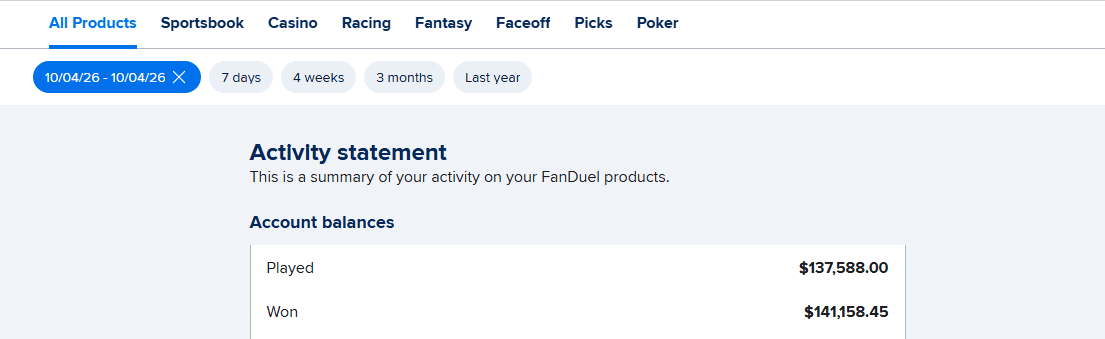
For basketball betting to be profitable long-term, you need analysis from a team that has actually beaten the books. The Best Bet on Sports has been limited on all six major U.S. sportsbooks — FanDuel, DraftKings, Caesars, BetMGM, Fanatics, and ESPN BET — after our live betting, including basketball, produced $367,520+ in verified profit. When the books restrict your action, it validates your edge, and that validated edge is what drives every basketball betting pick we deliver.
Live Betting a Game of Runs
Basketball is the best live betting sport in existence, and the reason is structural. Scoring arrives every twenty or thirty seconds, the clock stops constantly, and the in-game line has to reprice after nearly every trip down the floor. A market that reprices that often is a market that overreacts.
The canonical spot is the early run. A team opens on a 15-2 burst and the live spread lurches four or five points. But a 15-2 run in the first eight minutes is thirteen points of separation generated across maybe ten possessions — a sample far too small to have revealed anything durable about either roster. Basketball is a game of runs precisely because shooting variance mean-reverts, and the trailing team's true efficiency has not changed. Betting into that overcorrection, at a number the pre-game model already told us was wrong, is the most repeatable in-game edge in the sport.
Distinguishing a Run From a Real Shift
Not every run is noise, and treating them all as noise is how live bettors go broke. Some runs encode real information: a starting center picks up two fouls in ninety seconds and the backup cannot defend the pick-and-roll. A star lands awkwardly and the training staff walks him to the tunnel. A coach switches to a zone the opponent has no shooters to punish. Those are not variance. Those are new inputs, and the correct response is to move your projection, not to fade the move.
The discipline is knowing which is which in real time, with money at stake and a line moving every possession. Our analysts watch the games live, track lineup combinations, and check every in-game swing against the pre-game projection before acting. This is the specific work that got our accounts restricted at all six major books — you can see how it performs across full seasons on the verified results page.
Ready to Win More Basketball Bets?
Six U.S. sportsbooks have limited our accounts. $367,520-plus in verified profit. Get tonight's NBA and college basketball card delivered before tip-off.
View Packages & PricingFive Basketball Angles That Have Survived Two Decades
Markets adapt, and an angle that prints for three seasons can be fully priced by the fourth. These five have persisted because each one rests on a knowable variable that the closing number still undervalues.
1. The road end of a back-to-back, in the second half
Fatigue does not show up in the first quarter. It shows up in fourth-quarter defensive rotations and in three-point percentage after halftime, when legs are gone. The market has long since priced the full-game spread for a back-to-back. It prices second-half lines and live totals far less carefully, and that is where the residual value sits.
2. First-half totals in college basketball
Full-game totals absorb the overwhelming majority of both sharp money and oddsmaker attention. First-half numbers are frequently derived rather than independently modeled — roughly half the full game, nudged for the fact that scoring skews later. But tempo is not uniform across halves, and teams that play deep benches and press early behave very differently before the break than after it.
3. Zone defenses against jump-shooting-poor offenses
Because the NBA's defensive three-second rule does not exist in college, a committed zone team can wall off the paint for forty minutes. When that team draws an opponent shooting under 31 percent from deep, the offense has no answer: it cannot get to the rim and it cannot punish from outside. Totals in those matchups routinely open five points too high.
4. The public's overcorrection when a star is ruled out
When a marquee player is scratched, recreational money hammers the other side, and the book — knowing that money is coming — moves the number preemptively. The line frequently travels further than the player's actual on-court value justifies. Supporting casts absorb usage, minutes redistribute to rotation players who are better than their reputations, and the short-handed team covers a spread that was never priced for them to be competitive.
5. Conference tournament teams playing for their season
A bubble team that needs one more win to secure an at-large bid plays at an intensity no power rating captures. Meanwhile the regular-season champion with a double bye has already locked its seed and is managing minutes. Motivation is the least quantifiable variable in sports and the most reliably mispriced. Conference tournament week has produced some of our strongest college basketball stretches for exactly that reason — and it feeds directly into the basketball picks we release each March.
How a Basketball Card Gets Built
Pace-adjusted efficiency ratings are recalculated after every game. Matchup projections then account for how each team performs against opponents in the same tempo tier and defensive style, layered with rest differentials, travel distance, time zone shifts, and the latest lineup information. Once conference play begins in college, our ratings switch to conference-only data — a November win over a non-Division I opponent tells us nothing about a February road game.
The final step is comparison against the market. If our projection disagrees by at least 1.5 points on the spread or 3 points on the total, the game enters the release queue. Everything else gets filed away. On a fifteen-game NBA night with a full college slate underneath it, that filter typically leaves two to four plays. The temptation to force a fifth is the trap that volume sets, and refusing it is most of the job.
Picks reach subscribers by email and in the members area — by noon Eastern for early college tip-offs and by 3:00 PM Eastern for the evening NBA slate. Every release carries the bet type, the unit rating on a 1-to-5 scale, the best available number at the time of release, and the reasoning behind it. Nobody should be asked to place a bet they do not understand. On nights when the board offers nothing, the card is empty and we say so.
The Basketball Record, Published in Full
Every basketball play is documented on the results page, split by NBA and college, by bet type, and by season. Losses are published alongside wins, because a record with the losing months removed is not a record — it is a highlight reel, and the industry is full of them.
Basketball is a long-sample sport. An 82-game NBA season and a thirty-plus game college season mean any two-week stretch can run hot or cold without saying anything about the underlying process. Judge a basketball service across a full season, compare the documented record against the cost of a subscription, and decide whether the arithmetic works for your bankroll. Analyst background and methodology are documented on the basketball handicappers page.
The Best Bet on Sports · 1.5M followers on TikTok
Sports Betting TikTok is the live betting account behind The Best Bet on Sports, covering NFL, NCAAF, NBA, NCAAB, MLB and WNBA markets in real time. The account has been limited on all six major U.S. sportsbooks — FanDuel, DraftKings, Caesars, BetMGM, Fanatics and ESPN BET — for winning on live betting, with $367,520 in verified profit since 2005. View full profile →
Past results do not guarantee future performance. Must be 21 or older to wager.
Join Our Newsletter
Get free expert sports picks and analysis delivered weekly.
Frequently Asked Questions
What is the best basketball betting strategy for beginners?
The best basketball betting strategy for beginners is to focus on point spreads and game totals before exploring props or parlays. Learn how pace of play, offensive efficiency, and defensive ratings affect scoring. Track every wager you place, use flat unit sizing, and build expertise on a small number of teams before expanding. Avoid chasing losses after a bad night and treat your bankroll like an investment portfolio.
How do basketball point spreads work?
Basketball point spreads assign a margin of victory the favorite must cover for a bet to win. If a team is -6.5, they must win by 7 or more points. The underdog at +6.5 covers if they lose by 6 or fewer, or win outright. Unlike football where key numbers like 3 and 7 dominate, basketball margins distribute more evenly across a wider range, making half-point differences less impactful.
Is live betting on basketball profitable?
Live betting on basketball can be profitable when you understand momentum swings and regression to the mean. In-game lines often overreact to early scoring runs or cold shooting stretches. Experienced bettors look for inflated lines after a team goes on a 12-0 run, knowing the opponent will likely respond. Our analysts identify these overreactions and target value in real time throughout every NBA and college basketball slate.
What basketball stats matter most for betting?
The most important basketball stats for betting include offensive and defensive efficiency ratings, pace of play, rebounding differential, turnover rate, and three-point shooting percentage. For totals, focus on pace and combined efficiency. For spreads, look at net rating, strength of schedule, and performance in close games. Advanced metrics like effective field goal percentage and free throw rate attempt are more predictive than raw points per game.
Should I bet NBA or college basketball?
Both markets offer value, but they reward different skills. NBA lines are sharper because of the volume of data and public attention, but the longer season creates fatigue and rest-related edges. College basketball has softer lines due to the sheer number of teams and less public information, but higher variance because of smaller sample sizes and the impact of individual matchups. Many profitable bettors focus on one or the other to build deeper expertise.
How does The Best Bet on Sports pick basketball winners?
We combine proprietary pace-adjusted efficiency models with situational analysis including rest schedules, travel distance, injury reports, and referee tendencies. Every pick goes through a multi-step process that starts with our power ratings, filters through situational factors, and compares our projected line to the market number. We only release a pick when we find a significant edge, typically releasing 2-4 basketball plays per day during the season.