Football Betting Secrets From the Best Sports Handicappers

Football betting secrets from professional handicappers boil down to one core principle: treating betting as a long-term investment with a defined, measurable edge rather than a weekend hobby driven by gut feelings and media narratives. Professional handicappers win between 54 and 58 percent against the spread over full seasons by building independent power ratings, tracking injuries beyond headline names, exploiting situational schedule spots, and maintaining strict emotional discipline through every inevitable losing streak that variance produces.
The biggest football betting secret from top handicappers is deceptively simple: they treat betting as a long-term investment with a defined edge, not a weekend hobby driven by gut feelings. Professional handicappers win between 54 and 58 percent against the spread over full seasons by building independent power ratings, tracking injuries beyond headline names, exploiting situational schedule spots, and maintaining emotional discipline through every losing streak.
After two decades covering the sports betting industry at The Best Bet on Sports, I have watched countless bettors come and go. The ones who build real, sustainable profits share common traits that recreational gamblers never develop. The secrets I am about to share are not magical formulas. They are process-driven habits that compound over months and years into meaningful financial returns. The bettors who stick around long enough to see those returns are the ones who internalize these principles.
What Do Professional Football Handicappers Know That You Don't?
The gap between a professional handicapper and a casual bettor is not luck. It is not insider information. It comes down to a repeatable process that the professional executes every single week regardless of recent results. Here is what the best in the business prioritize that casual bettors overlook.
Injury reports beyond the headline names represent the single biggest informational edge available to anyone willing to do the work. Everyone knows when a starting quarterback is out. The public adjusts. The line moves. By the time you hear about it on ESPN, the value is gone. Sharp handicappers track offensive line changes, nickel corner injuries, special teams personnel shifts, and practice participation reports that the public never sees. A backup right guard might not make the news, but he can swing a game by 3 points because the defensive coordinator will attack that weak spot all afternoon.
Situational analysis accounts for the human factors that statistical models miss. Letdown spots after a massive emotional win, revenge games, travel schedules, short weeks, and divisional familiarity all factor into professional picks. A team coming off a massive Monday Night Football victory and traveling cross-country for a 1 PM kickoff the following Sunday is a textbook fade opportunity. The public loads up on the team that just looked dominant on national television, inflating the line and creating value on the opponent.
Weather data separates sharp handicappers from casual bettors more than most people realize. Wind speed over 15 mph affects passing games dramatically. Rain and cold temperatures push games under the total. Sharp handicappers check hourly forecasts at the specific stadium location, not just the game-day city summary. A forecast showing 22 mph gusts at kickoff is worth 2 to 3 points on the total.
How Do Top Handicappers Find Value in Football Betting Lines?
Value is the foundation of every profitable football betting strategy, and understanding value is the secret that separates professional bettors from recreational ones. A game does not need to be a lock to represent value. If a handicapper believes a team has a 55 percent chance to cover but the line implies only a 48 percent probability, that is a value play regardless of whether that specific game wins or loses.
The best handicappers build their own power ratings independent of the market. They assign point values to every team, adjust weekly based on performance and personnel changes, and then compare their numbers to the opening lines. When their projected line differs from the market line by more than 1.5 points, they have a potential play. When the discrepancy exceeds 2.5 points, they have a high-confidence play.
Line movement tracking is another weapon in the professional arsenal. When a line moves from minus 3 to minus 3.5 despite 70 percent of public bets landing on the other side, that tells you sharp money is pushing the number. Following where the money goes rather than where the tickets fall is a fundamental edge that experienced NFL handicappers exploit regularly. Reverse line movement is one of the most reliable indicators of sharp-side value in football betting.
| Line Movement Signal | What It Means | How Professionals React |
|---|---|---|
| Line moves with public | Public money moving number | Often fade the public side |
| Line moves against public | Sharp money overpowering tickets | Follow the money, not tickets |
| Line stays despite heavy action | Book comfortable with exposure | Look for value on lighter side |
| Line moves then reverses | Steam move followed by correction | Wait for settled number |
| Key number crossing (3, 7) | Significant probability shift | Evaluate if value remains |
Closing line value is the ultimate measure of handicapping skill. If you consistently bet at numbers better than the closing line, you have a genuine edge regardless of short-term results. Professional handicappers track their closing line value obsessively because it validates their process independent of variance.
Why Is Discipline the Real Secret to Football Betting Success?
Every professional handicapper I have worked with at The Best Bet on Sports tells you the same thing: the hardest part of this job is not finding winners. It is having the discipline to pass on games that do not meet your criteria. This discipline is the secret that nobody wants to hear because it is not exciting.
A typical NFL Sunday offers 13 to 16 games. Sharp handicappers might play 3 or 4 sides and a couple of totals. That restraint is painful when you want action on every game, but it is essential. Forcing bets on games where you have no edge is the fastest way to destroy a bankroll. The math is unforgiving. Adding three marginal plays to your card at 50 percent expected value dilutes the positive expected value of your strong plays and drags your overall win rate toward break-even.
Discipline also means sticking to flat betting or a consistent unit system through every streak, hot or cold. Chasing losses with double-sized bets after a bad Sunday is the hallmark of amateur behavior. The professionals take their losses, review their process to see if the losses came from bad analysis or bad luck, and move on to the next week with the same measured approach. The game does not owe you a winning streak because you just had a losing one.
Emotional detachment from individual game outcomes is the final component of discipline. Professional handicappers care about process, not results, on any single game. A well-analyzed play that loses is better for long-term profitability than a poorly analyzed play that wins, because the process behind the winning play will not replicate.
What Role Does Data Play in Modern Football Handicapping?
Data analysis has transformed football handicapping over the past decade, and the handicappers who have embraced the analytical revolution have separated themselves from those who rely solely on traditional methods. The secret is not just having data. It is knowing which data actually predicts future performance and which data is noise.
Advanced metrics like EPA, or Expected Points Added, evaluate every play based on the situation and context rather than raw yardage. A 5-yard gain on 3rd and 4 is more valuable than a 5-yard gain on 1st and 10, and EPA captures that distinction. DVOA adjusts for opponent quality, giving you a more accurate picture of team strength than raw statistics. Success rate measures offensive consistency, which is more predictive of future performance than yards per play because it filters out garbage-time production.
Pace-of-play data directly affects total projections. A team that runs 75 plays per game creates more scoring opportunities than one that runs 55, and matching pace-of-play tendencies between opponents reveals whether a game is likely to go over or under. Red zone efficiency splits reveal whether teams convert opportunities into touchdowns or settle for field goals, which directly impacts total projections and spread analysis.
Third-down conversion rates broken down by distance grouping reveal offensive efficiency in ways that aggregate conversion rates miss. A team converting 45 percent of third downs sounds good until you see that 80 percent of their conversions come on 3rd and 3 or shorter. Against a defense that prevents positive early-down gains, that conversion rate plummets. Pressure rate and blitz pickup data reveal offensive line quality better than sack totals because sacks are partially quarterback-dependent.
How Do Professional Handicappers Prepare for Each NFL Week?
The weekly preparation cycle for a professional handicapper follows a structured timeline that begins Sunday night and culminates Saturday afternoon. Understanding this process reveals why professionals consistently find edges that casual bettors miss.
Sunday night through Monday involves reviewing the weekend's games, updating power ratings, and noting any injuries or performance shifts that affect the following week. This is raw data collection combined with initial adjustments to the model.
Tuesday through Wednesday is the research phase. This is when professionals dive into the upcoming schedule, identify potential situational advantages, and compare their early-week numbers against the opening lines that sportsbooks release. Games with significant discrepancies between the model and the market get flagged for deeper analysis.
Thursday and Friday involve refinement. Injury reports, practice participation, and weather forecasts are integrated into the analysis. Lines that showed value earlier in the week are evaluated against current numbers. If the line has moved toward the handicapper's number, the value may have diminished. If it has moved away, the value has increased.
Saturday is the final decision day. Handicappers finalize their selections, confirm that their edge still exists at the current line, and release their picks to subscribers. This disciplined timeline ensures that every pick has been thoroughly researched and that the decision is based on complete information rather than early-week hunches.
Can You Really Make Money Following Football Handicappers?
Yes, but only if you follow the right ones and manage your bankroll properly. A legitimate handicapper with a verified track record of 55 percent or better against the spread will grow your bankroll over a full season if you bet consistently and avoid over-sizing your wagers. The math is straightforward and verifiable.
The trap most followers fall into is cherry-picking games. If you subscribe to a quality football betting service, play every recommended pick at the recommended unit size. Skipping games you disagree with defeats the purpose of following an expert. You hired the handicapper because their process is better than yours. Trust that process completely or do not subscribe at all.
Another trap is following too many handicappers simultaneously. When you follow three services, their plays inevitably conflict, and you end up using your own judgment to decide which service to follow on each game. That means you are effectively handicapping the games yourself while paying three subscription fees. Pick one service whose methodology you trust and follow it completely.
The financial math works when the numbers align. At 100 dollars per unit and 10 picks per week, a handicapper hitting 55 percent generates roughly 150 dollars per week in profit after juice. Over a 20-week NFL season, that compounds to approximately 3,000 dollars. Subtract the subscription cost, and the net profit is still substantial relative to the investment.
What Separates Long-Term Winners From Everyone Else?
The bettors who are still profitable after 5, 10, and 20 years in this industry share characteristics that go beyond pick selection. They have internalized the secrets I have outlined in this guide and turned them into daily habits.
Long-term winners track everything. They log every bet with the date, the line, the odds, the unit size, and the result. They review their results monthly to identify patterns. They know which bet types produce their strongest edge, which conferences they handicap best, and which situations consistently cost them money.
Long-term winners evolve their process. The handicapping methods that worked in 2010 do not all work in 2026. Market efficiency has increased, data availability has exploded, and the betting public has become more sophisticated. Winners adapt by incorporating new metrics, new data sources, and new analytical tools while retaining the core principles that have always worked.
Long-term winners manage their expectations. They understand that a 55 percent season is an excellent outcome, that losing months are normal, and that the path to profitability is measured in years rather than weeks. This perspective prevents the emotional volatility that destroys recreational bettors.
Frequently Asked Questions
What win percentage do professional football handicappers actually hit?
Legitimate professional handicappers typically win between 54 and 58 percent against the spread over a full season. Anyone claiming 65 percent or higher over a meaningful sample size is inflating their record. At standard minus 110 juice, 54 percent is profitable, 56 percent generates strong returns, and 58 percent is elite. Check our results page for verified performance data.
How many games per week should I bet on following a handicapper?
Quality handicappers generally release between 3 and 6 plays per NFL Sunday. Following all released picks at consistent unit sizes produces the best results. Avoid services that push 10 or more plays per week, as higher volume usually signals lower selectivity and weaker edges per play.
Where can I find verified handicapper records?
Look for services that use third-party record verification through independent monitoring sites. At The Best Bet on Sports, transparency in tracking results is a core value. Check our NFL handicappers page and football picks hub for analysts with documented, verified performance histories spanning multiple seasons. See how the pros build their process in the football handicapping system explained and best football prediction sites 2026 guides.
Is it better to follow one handicapper or diversify across several?
Following one handicapper whose methodology you understand and trust produces better results than following multiple services. When you follow several handicappers, you inevitably cherry-pick, which defeats the purpose of expert guidance. Commit fully to one service and evaluate their performance over a complete season before making changes.
How much should I expect to pay for quality football handicapping picks?
Quality football picks services typically range from 50 to 200 dollars per month. Services charging thousands of dollars per season should demonstrate proportionally strong verified track records. The subscription cost should always be small relative to your betting volume. If you are betting 50 dollar units, a 300 dollar monthly subscription is difficult to justify mathematically.
Do football betting secrets apply to both NFL and college football?
The core principles of value identification, bankroll management, and emotional discipline apply to both markets. However, the specific edges differ. NFL markets are sharper with fewer pricing errors. College football markets offer more inefficiency but require deeper roster knowledge. The best bettors apply universal principles through sport-specific lenses. Visit our football picks page for expert analysis across both NFL and college football.
How long does it take to become profitable at football betting?
Most bettors need at least one to two full seasons of disciplined, tracked betting before they can evaluate whether their approach is genuinely profitable. Short-term results are dominated by variance. A 100-bet sample size is the minimum needed to draw preliminary conclusions about your edge, and a 500-bet sample provides much more reliable data. Patience is the final secret that most bettors refuse to accept.
The Best Bet on Sports · 1.5M followers on TikTok
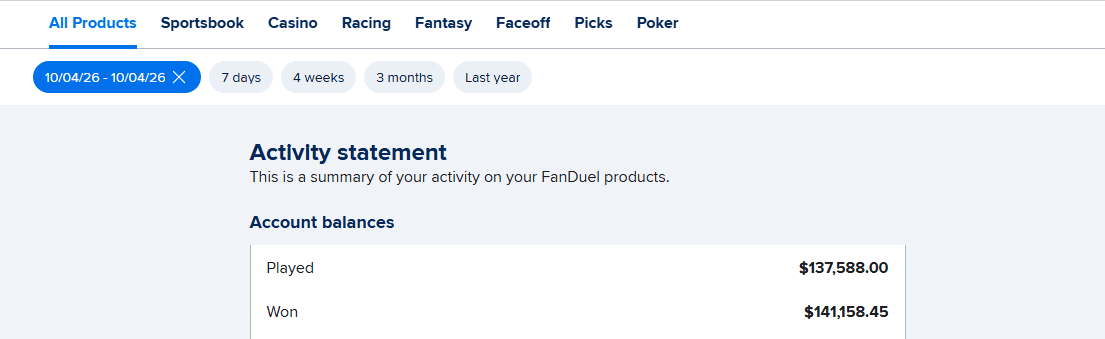
Sports Betting TikTok is the live betting account behind The Best Bet on Sports, covering NFL, NCAAF, NBA, NCAAB, MLB and WNBA markets in real time. The account has been limited on all six major U.S. sportsbooks — FanDuel, DraftKings, Caesars, BetMGM, Fanatics and ESPN BET — for winning on live betting, with $367,520 in verified profit since 2005. View full profile →
Past results do not guarantee future performance. Must be 21 or older to wager.
Related Articles
How to Find Reliable Football Handicappers You Can Trust
NFL Prop Bet Picks: How to Find Value and Win More
NFL Teasers: How to Bet Teasers and Find the Best NFL Teaser Picks
NFL Win Totals Over/Under 2026: Early Lines, Value Spots, and Betting Strategy
Best Football Prediction Sites 2026: What to Look For
Best NFL Handicapper with a Proven Record: How to Find One That Actually Wins
Get real live betting picks
From $39.95/mo · Cancel anytime · Email + Discord delivery
● Get The Picks
Choose your package
Tap any tier below to select · Subscribe in one tap
👇 Tap any package to select it
✓ You're selecting
25 Units · $99.95/month
25 unit picks per month. Sweet spot for most bettors — plenty of action without going all-in.
- ✓25 live betting selections/month
- ✓Email + Discord delivery
- ✓All sports (NFL, NCAAF, NBA, NCAAB, MLB)
- ✓Mix of 1, 2, 3, 5-unit rated plays
- ✓Cancel anytime
Secure PayPal · Cancel anytime · No hidden fees · 21+ · +$367K verified
+$367,520 verified · Limited on 6 sportsbooks · 20 years documented · See Proof
Join Our Newsletter
Get free expert sports picks and analysis delivered weekly.