NFL Quarterback Offseason Moves: Betting Value for the 2026 Season

NFL quarterback offseason moves create the biggest betting value opportunities for the 2026 season. Teams that upgraded or downgraded at QB will produce mispriced win totals, division futures, and week-1 spreads. Here's how to identify and exploit those edges before oddsmakers fully adjust.
NFL quarterback offseason moves create the biggest betting value opportunities for the 2026 season. Teams that upgraded or downgraded at QB will produce mispriced win totals, division futures, and week-1 spreads. Oddsmakers set early lines before full depth charts are established, and bettors who track roster moves can find genuine edges before the market corrects.
Every spring, the NFL betting calendar enters a critical window. Draft selections are finalized, free agency shuffles rosters, and training camps are still months away. Yet sportsbooks begin posting 2026 season win totals and division futures almost immediately after the Super Bowl. That gap — between when lines go up and when the full picture is clear — is where sharp bettors do their best work.
Quarterback changes are the single greatest predictor of win-total swing year over year. A team moving from an elite QB to a middle-tier starter can lose three to five wins off their expected total. Conversely, a franchise that lands a top-ten QB via trade or free agency often sees its win total jump four to six games. The public and casual bettors react to names, while sharp bettors react to film, advanced metrics, and supporting cast analysis.
Why QB Movement Dominates Offseason Betting Value
Football is the most QB-dependent sport in professional athletics. Contrast that with baseball, where a single pitcher affects roughly one in five games, or basketball, where three quality starters can compensate for a mediocre point guard. In the NFL, a franchise quarterback touches the ball on every offensive snap and influences every defensive plan the opponent runs.
Research consistently shows that QB DVOA (Defense-adjusted Value Over Average) explains more variance in team wins than any other single statistic. Teams in the top quartile of QB DVOA win approximately 68% of their games. Teams in the bottom quartile win roughly 34%. That 34-point swing dwarfs any other positional gap in football.
When a team changes quarterbacks — especially from a top-half starter to a bottom-half one, or vice versa — the market needs two to three weeks to fully price that in. During that window, there is exploitable value in win totals, division futures, and conference champion odds.
Identifying the Three Tiers of QB Movement
Not all QB changes are created equal. For betting purposes, it helps to sort offseason moves into three tiers based on expected win-value impact:
Tier 1 — Elite-to-Replacement or Vice Versa: These are the clearest opportunities. A team that traded away a perennial Pro Bowl QB and replaced him with a veteran backup or rookie will see significant regression. The initial win total posted by books often reflects the previous year's record rather than the new quarterback reality. Our NFL picks analysis consistently targets these situations in the opening weeks of futures markets.
Tier 2 — Lateral Moves with Context: A team swaps one mid-tier QB for another of similar pedigree, but the supporting cast or scheme fit is dramatically different. These require deeper analysis. A quarterback who excelled in a spread-RPO system may struggle in a pro-style offense behind a new coordinator. Conversely, a QB who looked limited in a run-heavy scheme may flourish with an air-raid playcaller. This is where schedule-adjusted metrics and offensive line analysis pay dividends.
Tier 3 — Internal Continuity or Minor Backups: Teams that re-signed their starter or handed the job to a known backup with similar upside as the prior incumbent. These moves carry the least betting value from a QB-movement angle, though the supporting cast changes around them still matter.
How to Analyze Supporting Cast Strength
Even the best quarterback performs below expectations behind a porous offensive line or without weapons. Before betting any futures driven by QB movement, run through this checklist:
- Offensive Line Rankings: Pro Football Focus grades O-lines on pass blocking efficiency. Teams ranked in the top-10 allow their QBs to operate significantly cleaner pockets. A QB upgrade means little if the line is bottom-five.
- Receiver Depth: Target distribution matters. A QB stepping into an offense with two legitimate WR1 threats and a reliable TE operates with far more play-design flexibility than one relying on a single go-to option.
- Coaching Continuity: First-year head coaches and coordinators almost always underperform early. A new QB plus a new offensive coordinator produces compounding uncertainty — books love to price these teams near their potential ceiling before any data exists.
- Divisional Context: Win totals are partly a function of schedule. A team in a weak division benefits from six easy matchups built into every year. A team navigating a gauntlet division faces an inherent cap on wins regardless of QB quality. Our football picks page breaks down divisional value throughout the season.
The Sportsbook Limitation Factor
One characteristic that separates serious analysts from casual bettors is understanding why certain information gets priced differently. When a major QB move happens — a blockbuster trade, a surprise retirement, an unexpected free-agent signing — books adjust lines almost immediately on the primary market (spread, moneyline). But futures, particularly win totals and division odds, sometimes lag by 48 to 72 hours.
This is especially true for smaller-market teams that attract less public attention. A QB change in Green Bay or Dallas gets priced within hours. The same level of change for a team like Carolina or Las Vegas might create a two-day window where value exists.
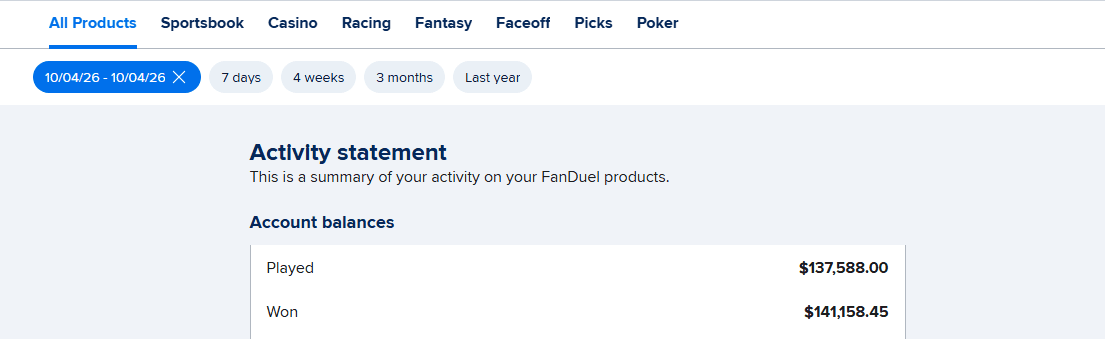
It's worth noting that The Best Bet on Sports has been limited on all six major U.S. sportsbooks — FanDuel, DraftKings, Caesars, BetMGM, Fanatics, and ESPN BET — specifically because our analysts identify and act on these pricing inefficiencies faster than casual bettors. Sportsbooks don't limit losing customers. They limit customers who consistently find value before the market corrects.
Draft-Pick QB Impact on Team Futures
Every April, two to four quarterbacks get selected in the first round of the NFL Draft. This immediately affects futures markets for the teams that drafted them. The question bettors need to answer is not whether the rookie QB is talented — the question is whether he'll start Week 1, and if so, what's the realistic win ceiling for a rookie-QB team.
Historically, rookie QBs selected in the top-10 picks start a majority of their team's games in Year 1. Their teams average between 7 and 9 wins — better than the average expansion or rebuild team, but rarely elite. Books know this and typically set win totals for rookie-QB teams in the 6.5 to 8.5 range.
The edge comes in identifying whether the rookie landed in a situation with an elite running game, a dominant defense, and a manageable schedule. Those teams outperform the 7-9 range. Teams that drafted a top QB to carry a mediocre roster rarely reach double-digit wins. View our college football picks page for background on how these QBs performed in their final college seasons.
Offseason QB Movement and Live Betting
QB changes also create live betting opportunities once the regular season begins. Quarterbacks who changed teams need three to five weeks before their command of a new system reaches full efficiency. During that adjustment period, their teams tend to play closer games than expected, especially in the second half when reads become more complex.
This predictable efficiency curve creates patterns that live bettors can exploit. If a new QB is starting for a team favored by 7 or more, and the game is tight entering the fourth quarter, the live spread often still reflects the pregame number. But the reality — a QB still adapting to his system — creates value on the underdog in-game. Our live betting analysis provides weekly guidance on these situational edges.
Division Futures: The Clearest Long-Term Angle
For the 2026 season, the most consistent value plays from QB movement will appear in division futures, not weekly spreads. Division futures pay out over a 17-game season, giving you maximum time for sample size to reflect the true quality of the team.
When a division has one clear QB upgrade and two or three rivals without meaningful improvements, the upgraded team's division odds often don't fully reflect the shift. A team that went from 8-9 last year with a middling starter to a legitimate playoff-caliber quarterback might jump from +350 division odds to +180 — but the true probability might justify +140 or shorter based on the QB talent differential.
Stack this analysis against opponent quality. A team making a QB upgrade while playing a division with two rebuilding franchises should be priced very differently from one upgrading within a loaded conference. Our NFL betting hub publishes quarterly futures updates throughout the offseason.
Building a Futures Betting Framework
The best approach to offseason futures is to build a systematic framework rather than reacting to individual moves emotionally. Here's the process The Best Bet on Sports uses when evaluating every QB-driven futures opportunity:
| Step | Action | Tool |
|---|---|---|
| 1 | Identify all QB changes (starters only) | Transaction wire, beat reporters |
| 2 | Grade the change using DVOA, EPA/play | PFF, RBSDM |
| 3 | Assess supporting cast delta | Roster transactions, depth charts |
| 4 | Evaluate coaching continuity and scheme fit | HC/OC transaction tracker |
| 5 | Compare current market price to implied probability | Odds calculators |
| 6 | Identify timing of opening line vs. current line | Odds history tools |
| 7 | Place when value exceeds 5% above true probability | Execution |
This systematic approach eliminates the emotional bias that drives most casual futures bettors. When you isolate QB value independently from roster noise, you find opportunities that the market takes days or weeks to price correctly.
When to Fade the Public Narrative
The most dangerous futures plays in any offseason are the ones the public is excited about. A high-profile quarterback who signs with a storied franchise generates enormous media coverage and public betting interest. That interest inflates the team's odds artificially — often by 15 to 20% beyond true probability.
Fading these situations is not about being contrarian for its own sake. It's about recognizing that when the public piles into a futures market, the book balances by shortening the price. The underlying team quality hasn't changed, but your expected return shrinks substantially. In these cases, finding the undervalued division rival — often a team that gets less media coverage but made equally important roster improvements — is where real edge lives.
That same logic carries over to the Aaron Rodgers Steelers betting impact, which covers the adjacent setup in detail.
Related Strategy Reading
For deeper context on the angles covered above, our analysis of top nfl handicappers review and nfl win totals over under pairs well with this guide; our NFL handicappers reflect these same principles applied to live games; you can review our verified results for verified profit data.
Frequently Asked Questions
How much does a quarterback change affect NFL win totals?
A quarterback change can swing a team's expected win total by three to six games, depending on the talent gap between the old starter and the new one. Moving from an elite QB to a mid-tier replacement typically costs three to four wins. Moving in the opposite direction — from a struggling starter to a legitimate franchise QB — adds four to six wins in most market models.
When is the best time to bet NFL futures after quarterback moves?
The best window is typically within 48 to 72 hours of a major QB transaction. Books adjust quickly on weekly spreads but sometimes lag on division futures and win totals. Betting before the market corrects gives you the most favorable price. Once a move dominates the sports news cycle, the line will move against you.
Should I bet win totals or division futures for QB-driven value?
Division futures offer more value because they pay out over the full 17-game sample. Win totals require you to be right about absolute game count, which has more variance. Division futures only require you to be right about relative quality within a four-team group, which is a simpler analytical question. For QB-upgrade situations in weak divisions, division futures are typically the highest-value wager.
How do I evaluate whether a rookie QB will start Week 1?
Track training camp reports starting in late July. Beat reporters and team insiders publish daily updates on competition. If the rookie is receiving first-team reps consistently by the second week of camp, he's on track to start. Also watch for how the coaching staff frames the competition — language like "open competition" usually means the veteran will start early unless the rookie dominates.
Do sportsbooks limit bettors who win consistently on NFL futures?
Yes. Sportsbooks — including FanDuel, DraftKings, Caesars, BetMGM, Fanatics, and ESPN BET — actively limit or restrict customers who demonstrate consistent winning patterns. The Best Bet on Sports has been limited on all six major books precisely because our futures analysis consistently finds pricing errors before the market corrects. This is a well-documented practice in the industry.
How do offensive line changes interact with QB betting value?
Offensive line quality is the most important factor after QB talent itself. A top-tier QB behind a bottom-five O-line performs at a significant discount. A mid-tier QB behind a top-five O-line often outperforms expectations. Before betting any QB-driven futures, verify the O-line quality using PFF pass-blocking grades from the prior season and note any significant line additions or losses in the offseason.
What's the biggest mistake bettors make when evaluating QB-driven futures?
The most common mistake is over-weighting name recognition and media narrative. A well-known veteran QB on a new team generates huge public interest, which inflates his new team's futures price. The analytical error is treating "famous quarterback" as synonymous with "valuable bet." Talent matters far more than reputation, and the price you pay determines your return. Our sports handicappers page explains how we distinguish between public narrative and analytical value.
The Best Bet on Sports · 1.5M followers on TikTok
Sports Betting TikTok is the live betting account behind The Best Bet on Sports, covering NFL, NCAAF, NBA, NCAAB, MLB and WNBA markets in real time. The account has been limited on all six major U.S. sportsbooks — FanDuel, DraftKings, Caesars, BetMGM, Fanatics and ESPN BET — for winning on live betting, with $367,520 in verified profit since 2005. View full profile →
Past results do not guarantee future performance. Must be 21 or older to wager.
Related Articles
2026 NFL Draft Rounds 2–7: Best Remaining Prospects and Futures Betting Value
The NFL Running Back Market Reset: Real Betting Impact
2026 NFL Draft Round 1 Results: Mendoza Goes #1, Rams Shock With Ty Simpson, Cowboys Win the Night
NFL Draft 2026: Round 1 Analysis, Team Needs, and Futures Betting Value
NFL Draft 2026 Betting Guide: Best Props, Order Predictions, and Round 1 Value
2026 NFL Draft Betting Odds: Who Goes No. 1 and the Best Prop Bets
Get real live betting picks
From $39.95/mo · Cancel anytime · Email + Discord delivery
● Get The Picks
Choose your package
Tap any tier below to select · Subscribe in one tap
👇 Tap any package to select it
✓ You're selecting
25 Units · $99.95/month
25 unit picks per month. Sweet spot for most bettors — plenty of action without going all-in.
- ✓25 live betting selections/month
- ✓Email + Discord delivery
- ✓All sports (NFL, NCAAF, NBA, NCAAB, MLB)
- ✓Mix of 1, 2, 3, 5-unit rated plays
- ✓Cancel anytime
Secure PayPal · Cancel anytime · No hidden fees · 21+ · +$367K verified
+$367,520 verified · Limited on 6 sportsbooks · 20 years documented · See Proof
Join Our Newsletter
Get free expert sports picks and analysis delivered weekly.