Heisman Odds 2026: How the Trophy Market Prices Value
By Sports Betting TikTok
Heisman odds price a vote of roughly 928 ballots — 870 media votes split evenly across six geographic regions, every living former winner, and one aggregated fan vote — counted 3-2-1 and closed the Monday after conference championship weekend, before any bowl game is played. Quarterbacks took 20 of the last 25. The Best Bet on Sports is limited on all six major U.S. sportsbooks. Verified profit: $367,520+.
The Heisman is the only major award in American sports whose electorate is drawn on a map. Eight hundred seventy media ballots are divided into six regions of exactly 145 voters each, and a region gets the same weight whether it produces four national contenders or none. Add every living former winner and a single collective fan vote and you have an electorate of roughly 928 that behaves nothing like the fifty-person panel deciding the NFL MVP. Understanding that structure — plus a 3-2-1 count and a deadline that lands before the bowls — explains far more about where a Heisman number sits than any projection of passing yards. This page walks through the electorate, the deadline nobody accounts for, the positional history, the signature-game effect, and how the futures read feeds the live in-game work that produced $367,520 in verified profit.
For the season-long title market see the College Football Playoff picks 2026 page and, for the professional award with a completely different electorate, the NFL MVP odds page. For ongoing weekly coverage see the college football picks pillar, and for the broader gridiron market see the football picks page.
The Electorate Is the Market
A Heisman price is a forecast of how roughly 928 ballots will be filled out on a Monday in early December. Almost everything that makes this market beatable comes from the specific shape of that electorate and that deadline — not from a talent evaluation. What follows is the general framework the team works from; the specific futures positions and live alerts go to subscribers via Email and Discord rather than onto a public page.
1. Eight Hundred Seventy Ballots, Drawn on a Map
The media portion of the Heisman electorate is 870 votes, and it is not distributed by where the football is. It is distributed by geography: six regions — Far West, Mid-Atlantic, Midwest, Northeast, South, and Southwest — each holding exactly 145 votes. The South, which produces a disproportionate share of national contenders every year, carries precisely as much voting power as the Northeast. Add roughly sixty ballots belonging to living former winners and one aggregated fan vote, and the full electorate lands near 928.
The exploitable consequence is vote-splitting. When a single region produces three legitimate candidates, those candidates carve up a fixed 145-vote pool while a lone contender in a quieter region banks his region nearly whole. A candidate's competition is not only the national field; it is the other players inside his own regional bloc. That interaction is almost never reflected in a posted price, which treats each candidate as an independent line rather than as part of a structure where one contender's rise mechanically suppresses his neighbor's ceiling.
2. Three Names, Counted 3-2-1
Each voter lists three players: three points for first, two for second, one for third. That flat weighting across only three slots produces a specific kind of race. Because the gap between a first-place vote and a third-place vote is just two points, breadth matters — a candidate who appears third on ballots across all six regions accumulates a total that a regional favorite with concentrated first-place support cannot easily overcome. It also means a truly national consensus produces staggering margins; Joe Burrow's 2019 season yielded the widest voting margin in the trophy's history, because he was not merely first on most ballots, he was on nearly all of them.
Compare that to the professional side, where fifty Associated Press voters fill a five-slot ballot weighted 10-5-3-2-1. Same general idea, materially different math, and it is a good reason not to import intuitions from one award into the other. The mechanics are laid out on the NFL MVP odds page.
3. The Deadline Falls Before the Bowls — and Some Vote Even Earlier
This is the mechanic that most Heisman commentary gets wrong. Ballots are emailed to the electorate on the Monday of conference championship week and are due the Monday after those championship games are played. For the 2026 cycle, ballots are due December 7, with finalists named that evening and the ceremony the following Saturday, December 12. Bowl season and the College Football Playoff happen weeks later, against a result that is already fixed. And because voters receive their ballots before the title games, a portion of the electorate submits without having watched conference championship weekend at all.
The betting implications are direct. Postseason performance cannot rescue or sink a candidacy, so any thesis that depends on a Playoff run is built on a mechanic that does not exist. Caleb Williams won in 2022 after USC lost its conference championship game and missed the Playoff — the ballots were already cast. What actually matters is a candidate's standing across September, October, and November, and a strong late-November showing is worth more than an equally strong performance three weeks later, because only one of them happens before the deadline.
4. Twenty of the Last Twenty-Five Were Quarterbacks
From 2000 through 2024, quarterbacks won 20 of 25 Heisman Trophies. The five exceptions map the boundary precisely: Reggie Bush in 2005 and Mark Ingram in 2009; Derrick Henry in 2015 behind a 2,219-yard rushing season; DeVonta Smith in 2020 with 1,856 receiving yards and 23 touchdowns in a conference-only schedule; and Travis Hunter in 2024, whose case rested on playing both ways at a level nobody else in the sport could match. Roughly one non-quarterback per five years, each requiring a season with no modern peer at the position.
A long price on a running back or receiver is therefore usually a correct price on a very unlikely event rather than an overlay. The team stakes those as small lottery positions and concentrates its core read on quarterbacks whose offenses, supporting casts, or team win totals the board has under-priced. Roster churn makes that read harder in college than in the pros: returning production carries more weight here than in almost any other market, because a proven starter arrives with name recognition an unproven transfer has to earn on the field before voters will spend a ballot slot on him.
5. The Signature Game Beats the Consistent Season
Nine hundred voters do not watch every candidate every week. They watch the games that are on, and they remember moments. That is why one nationally televised performance against a ranked opponent routinely outweighs three months of quiet excellence. Johnny Manziel became the first freshman ever to win the trophy in 2012 in large part on a road upset of the top-ranked team in the country — a single November afternoon that reframed an entire candidacy. Lamar Jackson won in 2016 for a Louisville team that finished 9-4, having effectively banked the vote with early-season performances that everyone saw before the schedule turned.
Practically, this means reading a candidate's schedule the way you would read a win total. Count the marquee windows: ranked opponents, primetime kickoffs, standalone broadcast slots. A quarterback with three of those on the calendar has three chances to build a memory in front of the full electorate; a quarterback whose toughest games land in a regional noon window has fewer, regardless of talent. Weekly coverage of those specific matchups runs through the college football picks pillar.
6. A Thin Market — and the Live Edge Underneath It
The Heisman board is far less liquid than the NFL MVP board. Fewer dollars go through it, limits are smaller, and the overround across the full field is wider — every realistic candidate is listed at once and the combined implied probability sits well above 100 percent. That cuts both ways. The margin is a real cost, and it is heaviest on the favorites, so hammering the shortest price is usually the worst value available. But a thin market also means the long end of the board is sloppier than a sharp NFL futures market would ever allow, and that is where preseason value tends to hide.
The futures read is ultimately reconnaissance for the work that pays. Heisman contenders are attached to high-scoring offenses in the best television windows, which is exactly where college live markets are deepest — and college live betting is more volatile than its professional equivalent, because scoring swings are more violent and the pace variance between programs is enormous. On those games the edge is the one that got the accounts limited at all six major books: reading live game script — a shootout forming, a defense settling in after halftime, a pace shift following a long scoring drive — faster than the in-game model reprices the live total, alternate spreads, live moneyline, and the passing and scoring props. Alerts fire the moment the read diverges from the posted live line, via Email and Discord. The full workflow is on the live betting picks page.
Six Inputs Behind a Heisman Futures Read
These are the structural drivers the team weighs when deciding whether a Heisman number carries value — the regional map, the ballot math, the December deadline, the positional history, the signature-game effect, and the live edge underneath. None of them predict a specific winner; together they explain why the posted price is where it is.
Geography is weighted, not population
The 870 media ballots are split into six regions at exactly 145 voters each — Far West, Mid-Atlantic, Midwest, Northeast, South, and Southwest — regardless of how much football each region produces. A region stacked with contenders splits its own vote; a region with one clear candidate delivers a bloc. The regional map is a real input, and almost nobody prices it.
Three names, flat weighting
Each voter lists three players at three, two, and one point. With only three slots and a narrow spread, simply appearing on ballots nationwide carries weight, and a fragmented field can be decided by a few hundred points. It is a materially different count from the NFL MVP's five-slot 10-5-3-2-1 ballot, and it produces different winners.
Decided before the bowls kick off
Ballots go out the Monday of championship week and are due the Monday after the title games — December 7 for the 2026 cycle, with the ceremony that Saturday. Some voters submit before the conference championships are even played. Nothing in the bowl season or the Playoff can move the result, because the result already exists.
20 of the last 25
From 2000 through 2024, quarterbacks took 20 of 25 trophies. The exceptions — Bush, Ingram, Henry's 2,219 rushing yards, DeVonta Smith's 1,856 receiving yards and 23 scores, and two-way Travis Hunter — define the bar. Skill-position tickets are correctly long, and should be staked as lottery positions.
One night outweighs three months
Voters remember moments, and a national television window against a ranked opponent is worth more than a month of quiet production. Johnny Manziel became the first freshman winner in 2012 largely off a road upset of the top-ranked team. Read a candidate's schedule for marquee windows the way you would read a win total.
Where the real work happens
The futures read is reconnaissance. Heisman contenders are attached to high-total offenses in the best television windows, which is exactly where college live markets are deepest and most volatile. The repeatable profit is reacting to live game script faster than the in-game model reprices the total, alternate spreads, and the prop menu.
For week-to-week coverage that informs the in-season Heisman read see the college football picks pillar and the College Football Playoff picks 2026 page. Verified cashed tickets live on the results page.
Membership
Get the picks
Live betting picks across NFL, NCAAF, NBA, NCAAB, MLB and WNBA — delivered by Email and Discord the moment we spot value.
● Get The Picks
Choose your package
Tap any tier to select · Subscribe in one tap
👇 Tap any package to select it
✓ You're selecting
25 Units · $99.95/month
25 unit picks per month. Sweet spot for most bettors — plenty of action without going all-in.
- ✓25 live betting selections/month
- ✓Email + Discord delivery
- ✓All sports (NFL, NCAAF, NBA, NCAAB, MLB)
- ✓Mix of 1, 2, 3, 5-unit rated plays
- ✓Cancel anytime
Secure PayPal · Cancel anytime · No hidden fees · 21+ · +$367K verified
The Track Record That Limited the Account on Six Sportsbooks
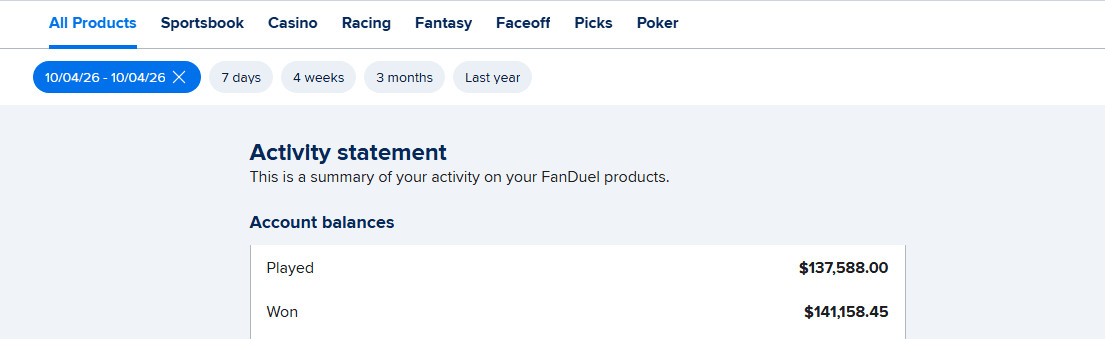
College football Saturdays are among the highest-liquidity betting days of the year at every major operator, and the games featuring Heisman-caliber quarterbacks carry the deepest live markets on the slate. The lifetime career statements below reflect heavy football pre-game and live in-game contribution to the total wagered volume and net profit figures. Limitation on each of these books was driven heavily by live betting performance on marquee, high-total games across multiple seasons.
| Sportsbook | Lifetime Wagered | Net Profit | Account Status |
|---|---|---|---|
| FanDuel | $14,500,000 | +$67,823 | Limited |
| DraftKings | $2,800,000 | +$71,051 | Limited |
| Caesars | $7,600,000 | +$88,645 | Limited |
| 3-Book Subtotal | $24,900,000 | +$227,519 | All limited |
| All 6 Books Combined | $30M+ wagered | +$367,520 | All 6 limited |
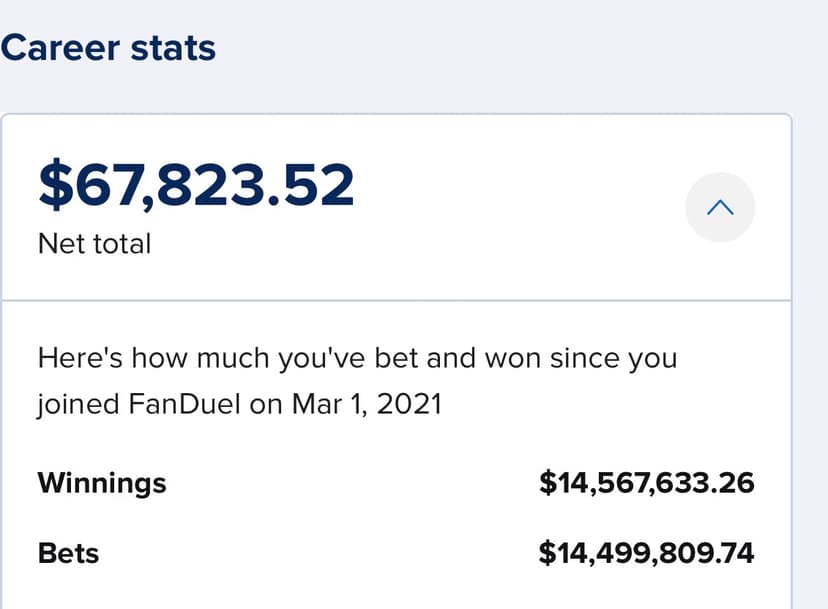
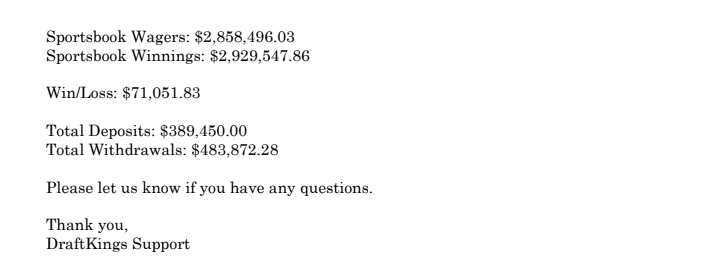
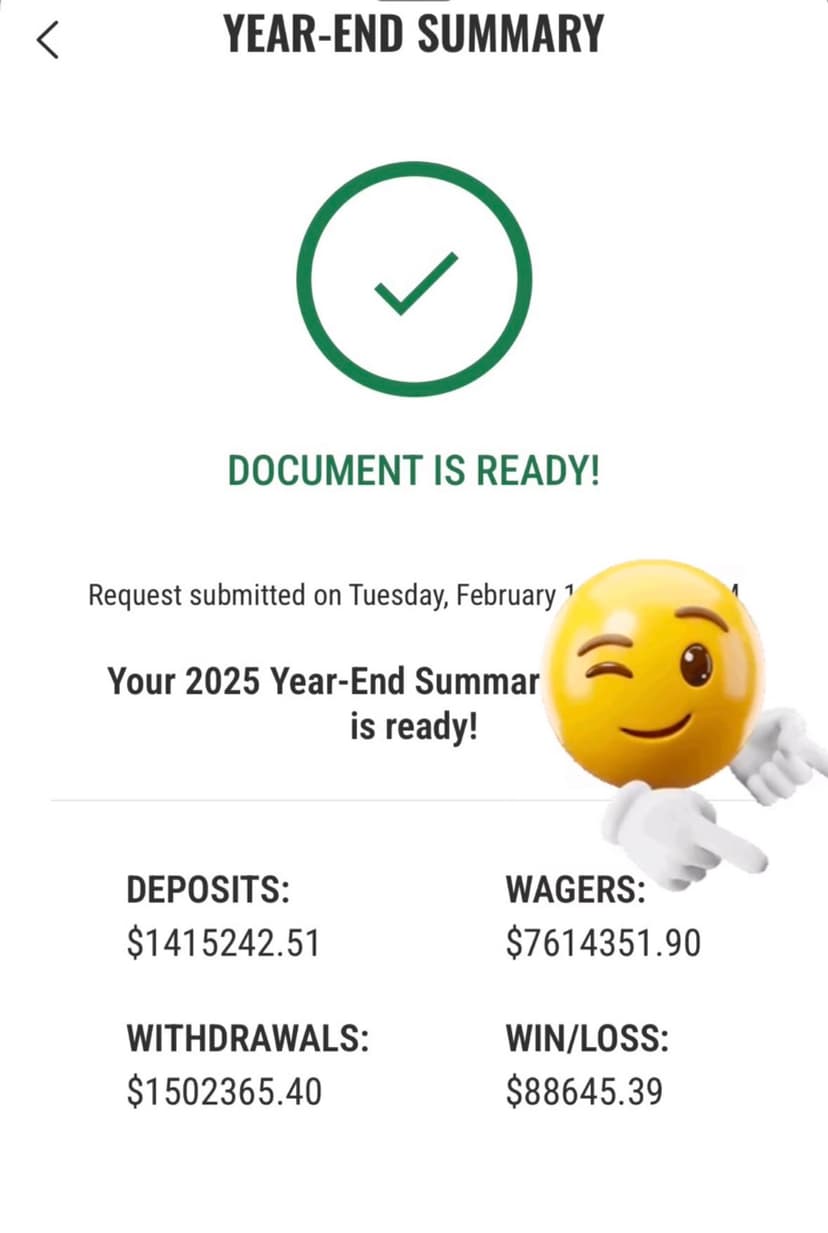
The remaining $140,001 of the $367,520 lifetime figure spans BetMGM, Fanatics, and ESPN BET. Statement screenshots from those three books are archived on the results page.
Verified Live College Football Betting Tickets
A representative sample of cashed live college football betting tickets from prior seasons, many from games featuring Heisman-caliber quarterbacks and high-volume offenses. Each ticket was placed during the in-game window after an alert dispatched to subscribers via Email and Discord. Full bet slip archive is on the public results page.
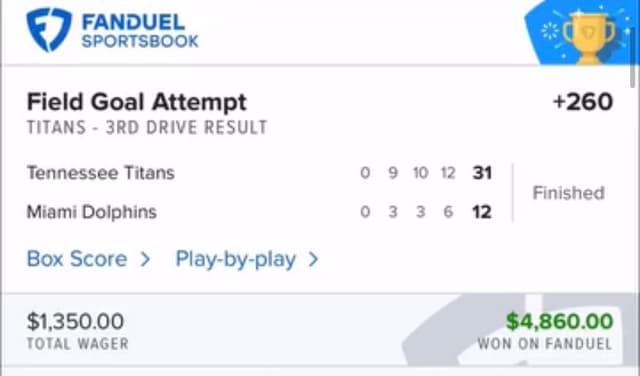
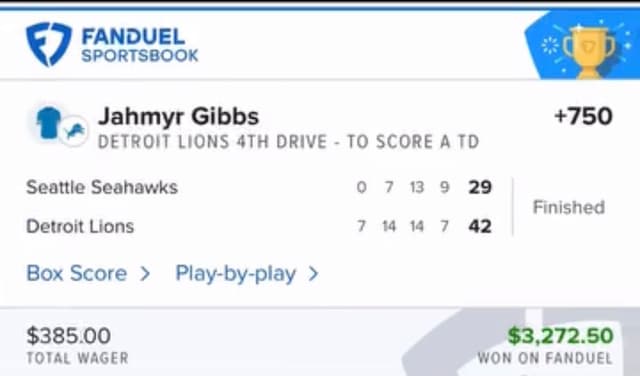
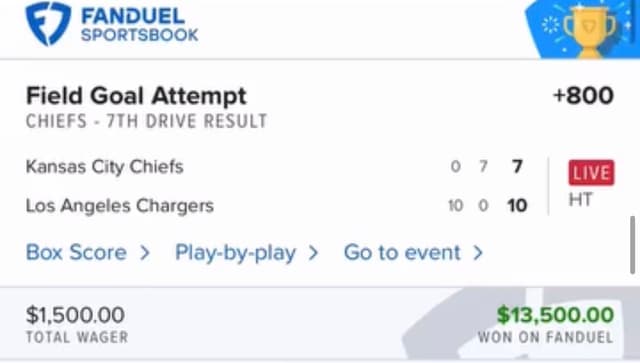
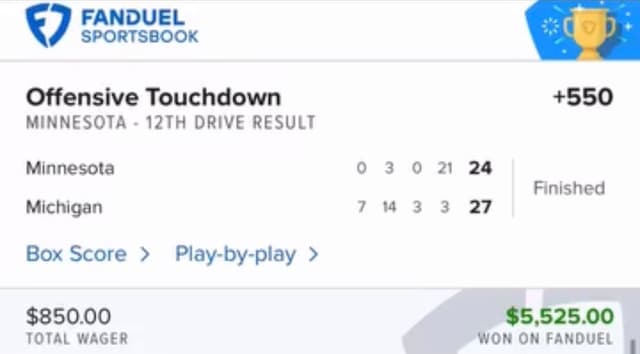
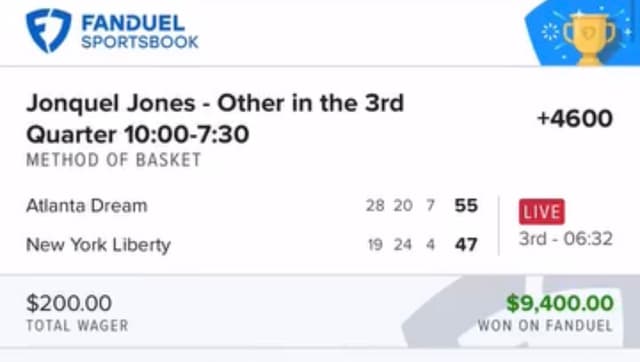
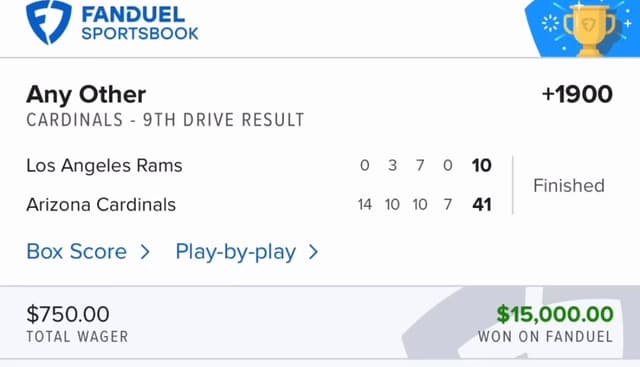
Past results do not guarantee future performance. Must be 21+ to wager.
Where Preseason Heisman Value Actually Hides
August is the window with the longest prices and the least information, and the two facts are related. Nothing has been played, the depth charts are provisional, and the board is anchored almost entirely on returning production and preseason narrative. That anchoring is the opportunity. In a sport with roster turnover this severe, the market reliably over-weights the familiar name and under-weights the proven passer stepping into a materially better situation — an upgraded offensive line, a new coordinator whose scheme fits, a schedule that hands him three national windows instead of one.
Two structural cautions belong alongside that. The first is the regional map: before taking a price, look at who else is in that candidate's region, because a bloc of 145 votes split three ways is a lower ceiling than the national field suggests. The second is that college statistics need discounting by opponent. Voters have grown more skeptical of numbers accumulated against overmatched non-conference opposition, and a September stat line built on two such games carries less weight in December than the raw totals imply.
It is also worth being honest about what a futures ticket is. There is no meaningful secondary market — most books will not let you sell a Heisman position, cash-out values are punitive when offered at all, and the only real hedge is laying another side at a different number. The exit closes the first week of December. A preseason Heisman ticket should be staked as a long shot you intend to hold to the deadline, not as a position you expect to trade.
Which is why the trophy market functions as a map rather than a revenue line. It tells the team which offenses will be in the best windows carrying the highest totals every Saturday, and those are the games where the live market has to reprice every thirty seconds against a model that is fast but imperfect. That is where the verified profit and the six limitations came from, and it is what subscribers receive through the three live betting packages, with unit sizing scaled to bankroll. Award betting is probabilistic; nothing here forecasts a winner. Understanding the electorate tells you which prices are wrong, not whose name gets called in December.
Get Live Betting Picks During Games
Every package delivers the team's Heisman futures reads plus live in-game alerts via Email and Discord the moment the team identifies a mispriced live line. Discounted first month on every plan. No long-term contract.
See Live Betting PackagesPast results do not guarantee future performance. Must be 21 or older to wager.
Frequently Asked Questions
Everything readers ask about Heisman odds, who votes, when the ballots close, and the live edge on the games.
Frequently Asked Questions
Who actually votes for the Heisman Trophy?
The Heisman electorate is roughly 928 ballots and is structured unlike any other major award. The largest bloc is 870 media votes, distributed evenly across six geographic regions — Far West, Mid-Atlantic, Midwest, Northeast, South, and Southwest — at exactly 145 voters per region. Every living former Heisman winner also gets a ballot, which adds around 60 more votes. Finally, a nationwide fan vote is aggregated into a single collective ballot. The regional structure is the part bettors underuse: because each region carries identical weight regardless of how much football that part of the country actually produces, a candidate playing in a media-thin region is competing for the same 145 votes as a candidate in a region packed with contenders.
How is the Heisman ballot counted?
Each voter names three players, and the count is weighted three points for first place, two for second, and one for third. That is a much flatter structure than the Associated Press five-slot ballot used for NFL MVP, and it produces a different kind of winner. With only three slots and a narrow point spread, a candidate has to be on the ballot at all to score, so appearing third on a large number of ballots is worth real ground. It also means a genuinely dominant national consensus produces enormous margins — Joe Burrow's 2019 season yielded the widest voting margin in the trophy's history — while a fragmented field can be decided by a few hundred points spread across six regions.
Does Heisman voting happen before the bowl games and the Playoff?
Yes, and this is the most misunderstood fact in the entire market. Ballots are emailed to the electorate on the Monday of conference championship week and are due the Monday after those title games are played — for the 2026 cycle, ballots are due December 7 with the ceremony the following Saturday, December 12. Bowl games and the College Football Playoff are played long after the result is locked. Some voters submit before the conference championship games are even contested. A candidate cannot win the Heisman with a Playoff performance, and a candidate cannot lose it in a bowl. Anyone treating Playoff success as a driver of the vote is betting a mechanic that does not exist.
Do non-quarterbacks ever win the Heisman?
Rarely, and always with an extraordinary case. Of the 25 winners from 2000 through 2024, 20 were quarterbacks. The five exceptions show exactly what the bar looks like: Reggie Bush in 2005, Mark Ingram in 2009, Derrick Henry in 2015 behind a 2,219-yard rushing season, DeVonta Smith in 2020 with 1,856 receiving yards and 23 touchdowns in a conference-only schedule, and Travis Hunter in 2024 as a genuine two-way player. That is roughly one non-quarterback per five years, and each needed a statistical season with no modern peer at the position. Long prices on skill players are usually correct prices on very unlikely outcomes, which is why The Best Bet on Sports stakes them as lottery positions rather than core bets.
Does the Heisman winner have to play for a Playoff team?
It helps enormously, but it is not a rule, and the exceptions are where preseason value tends to hide. Voters equate value with winning marquee games in front of a national audience, so a candidate whose team is ranked and contending collects attention a candidate on an unranked team never gets. But the deadline undercuts the strictest version of that logic: Caleb Williams won in 2022 after USC lost its conference championship game and missed the Playoff entirely, because ballots were already in. Lamar Jackson won in 2016 for a Louisville team that finished 9-4, having effectively clinched the vote with early-season performances. Ranking trajectory during September through November is what matters, not the final resting place of the team.
Why is The Best Bet on Sports limited at all six major U.S. sportsbooks?
A book limits an account when its risk desk decides that account beats the closing line often enough to threaten the hold. The Best Bet on Sports carries formal restrictions at FanDuel, DraftKings, Caesars, BetMGM, Fanatics, and ESPN BET, and in every case the limitation followed live in-game wagering rather than pre-game sides. Published statements show FanDuel at $14.5M wagered with $67,823 net profit, DraftKings at $2.8M wagered with $71,051 net, and Caesars at $7.6M wagered with $88,645 net; the remaining $140,001 of the $367,520 lifetime figure spans the other three books. College football Saturdays, with their high totals and violent scoring swings, were a major contributor.
How do subscribers receive Heisman futures reads and live alerts?
Reads and in-game alerts dispatch simultaneously to Email and Discord. Discord push is typically the fastest channel and is the recommended primary for anyone acting inside a live window; Discord lands second; Email is last because mail clients poll on an interval instead of receiving a push. The 1-Unit Live Betting Package covers one-unit alerts at $199 the first month and $299 per month after. The 2-3 Unit Expert Live Package covers up to three-unit alerts at $299 first month, $500 per month after. The VIP 5-Unit Live Package covers the full one-to-five unit range at $500 first month, $1,000 per month after.
The Best Bet on Sports · 1.5M followers on TikTok
Sports Betting TikTok is the live betting account behind The Best Bet on Sports, covering NFL, NCAAF, NBA, NCAAB, MLB and WNBA markets in real time. The account has been limited on all six major U.S. sportsbooks — FanDuel, DraftKings, Caesars, BetMGM, Fanatics and ESPN BET — for winning on live betting, with $367,520 in verified profit since 2005. View full profile →
Past results do not guarantee future performance. Must be 21 or older to wager.
Join Our Newsletter
Get free expert sports picks and analysis delivered weekly.