NFL Rookie of the Year Odds2026: How the Award Market Prices OROY & DROY
By Sports Betting TikTok
NFL Rookie of the Year odds are two season-long futures markets — Offensive and Defensive — priced far more by landing spot, draft capital, and immediate snap share than by college talent, because a voter can only reward a rookie who actually plays. The Best Bet on Sports is limited on all six major U.S. sportsbooks for winning too much live. Verified profit: $367,520+. Picks via Email and Discord.
NFL Rookie of the Year odds are a pair of season-long futures markets — one for Offensive Rookie of the Year, one for Defensive Rookie of the Year — deciding which first-year player wins each Associated Press award across the full eighteen-week regular season. Neither board is a raw talent ranking. Both are priced by forces the casual bettor underweights: the opportunity gate that hands the award to whoever actually plays and produces, the draft capital that signals organizational commitment to a rookie's snaps, and the position bias that puts quarterbacks and running backs at the top of the offensive board and edge rushers and linebackers at the top of the defensive one. This page covers how both rookie markets are built, where value hides before and after the draft, and the live-betting edge on the games those rookies play — the same workflow that produced $367,520 in verified profit and a limitation on every major U.S. sportsbook.
For the individual-award market that rewards the best player on a winning team see the NFL MVP odds page and the season-long title market on the Super Bowl 2027 odds page. For the futures market on where teams finish see the NFL division winner odds page, and for ongoing weekly coverage see the NFL picks pillar.
How the Team Approaches the NFL Rookie of the Year Futures Market
A rookie award prediction is not a guess at the most talented first-year player — it is a read on two media-voted markets shaped by opportunity, draft capital, and production. Each rookie board prices every drafted player with a path to snaps at once, reprices on landing spot and then on results, and rewards finding a rookie whose true award probability is higher than the posted price implies. The sections below walk through how both markets are built and where the team concentrates its read. These are general, strategic frameworks — the specific futures positions and live alerts are sent to subscribers via Email and Discord, not posted publicly.
1. How Rookie of the Year Futures Markets Are Priced
Each Rookie of the Year futures market lists moneyline odds for every drafted rookie with a realistic path to playing time, and each price reflects the book's estimate of that player winning the award. Because the book applies a margin across the whole class, the combined implied probability of all rookies sits well above 100 percent — that overround is the structural cost of holding any rookie ticket from now until the season ends. The favorites are rarely good value, because the shortest prices carry the heaviest margin and reflect the market's consensus story about which rookie has the clearest immediate role. The team's read starts from a rookie's true award probability — a blend of projected production and the opportunity that makes production possible — and looks for rookies the market has mispriced relative to that estimate.
2. Why Landing Spot and Opportunity Outrank Talent
The single most important filter in rookie award pricing is opportunity, because the award goes to production and production requires snaps. A talented rookie stuck behind an established veteran, on a scheme that suppresses his position's volume, or in a defensive rotation rarely posts the counting stats a Rookie of the Year needs — regardless of draft pedigree. The same rookie dropped into an immediate three-down role, a high-volume offense, or a vacant starting spot carries a dramatically shorter price. This is why the market often prices a mid-round rookie with a clear path ahead of a higher-drafted rookie buried on the depth chart. When the team likes a rookie's award price, it is almost always because it likes that rookie's projected snap share and scheme fit, and the two reads reinforce each other.
3. Why QBs and RBs Dominate the OROY Board
Offensive Rookie of the Year skews heavily toward quarterbacks and running backs because they get the ball in their hands from day one and accumulate the passing and rushing counting stats voters cite most. A first-round quarterback handed the Week 1 starting job, or a running back with a clear lead-back role, sits at the top of the OROY board because the opportunity is guaranteed and the stats follow. Rookie wide receivers can win, but they usually need an unusually clean route to target volume, since most rookie pass-catchers ramp up behind veterans. The practical consequence is that the OROY read treats the board as a quarterback-and-running-back market first, and prices rookie receivers or linemen as higher-variance tickets that only become core positions when the immediate role lines up. The team's core OROY read narrows to the rookies whose guaranteed workload the market may have under-priced.
4. How the DROY Board Prices Differently
Defensive Rookie of the Year runs on a different set of statistics, and pricing it well means understanding which defensive roles produce visible, countable numbers. Sacks, takeaways, and tackles for loss are the currency of the DROY vote, which is why edge rushers and every-down off-ball linebackers dominate the board while rotational interior linemen and cover corners — whose best games are often the quiet ones — carry longer prices. A vacant starting edge spot, a green-dot linebacker role, or a defense that generates pressure volume is frequently worth more to a DROY price than raw draft position. The team's DROY read weighs the path to countable production and the scheme's pressure and turnover profile as heavily as the player's pedigree, because the award rewards the numbers a casual box score can see.
5. Finding Value Before the Draft and Through Camp
Rookie futures trade through three distinct windows, and the value lives in the repricing between them. Before the draft, prices are longest but the read is pure projection — you are betting on where a player lands as much as on the player himself, because landing spot has not been set. Right after the draft, the board reprices hard as depth-chart fit comes into focus, and that first repricing window is where much of the structural edge sits for a bettor who mapped opportunity in advance. Through training camp and the preseason, beat reporting on the starting job, injuries ahead on the depth chart, and package usage move the number again before Week 1 locks it. Because the horizon is long and the variance is high, an early rookie position is sized as a long-shot ticket. The team separates all three windows and ships reads on each to subscribers via Email and Discord.
6. In-Season Repricing and the Live-Betting Edge
Once games begin, both rookie boards reprice every week on production and narrative, and they swing harder than the MVP market because rookies are less established — a single injury, benching, or role change can collapse a price overnight, while a fast Week 1 through Week 4 start can shorten one just as quickly. Late-season storylines carry weight too: a rookie surging into December while an early leader fades can flip the market, and DROY in particular can hinge on a late run of sacks or takeaways. The in-season edge is reacting to where production and voter momentum are heading before the number catches up — and that same speed advantage drives the live-betting work. Tracking which rookies are in each award conversation tells the team which games carry the deepest live markets and the most in-game prop volume. On those games, the edge is the one that limited the account on all six major U.S. sportsbooks: reacting to live game script faster than the in-game model reprices the live total, alternate spreads, live moneyline, and the rushing and receiving prop menu. Live alerts dispatch the moment a mispriced live line appears, via Email and Discord.
For the broadest weekly coverage see the football picks hub and the NFL picks pillar. For the live in-game workflow itself see the live betting picks page.
Six Inputs Behind an NFL Rookie of the Year Futures Read
A fair rookie award price weighs far more than a college-production ranking. The six inputs below are the structural drivers the team weighs when deciding whether an OROY or DROY number carries value — from the landing spot that decides whether a rookie even plays to the live-betting edge on the games those rookies play. None of these are predictions of a specific winner; they are the framework behind how the team reads both markets.
Snaps outweigh college tape
The award goes to production, and production requires playing time. A rookie handed an immediate three-down role or a Week 1 starting job carries a far shorter price than a more talented player buried on the depth chart. The read starts by mapping projected snap share and scheme fit, then finding the rookie whose guaranteed opportunity the market has under-priced.
Where the pick was spent
First-round draft capital signals both talent and organizational commitment to playing a rookie right away, so early picks anchor the top of both boards. But capital is a proxy for opportunity, not a guarantee of it — a Day 2 rookie with a clear path can out-produce a first-rounder stuck behind a veteran. The team weighs capital against the actual depth chart, not in isolation.
Ball-in-hand positions win
Offensive Rookie of the Year skews heavily toward quarterbacks and running backs because they touch the ball on day one and pile up the counting stats voters cite. Rookie receivers can win but usually need an unusually clean route to volume. The OROY read treats the board as a QB-and-RB market first and prices rookie wideouts as higher-variance tickets unless the target share lines up.
A different set of stats
Defensive Rookie of the Year rewards visible, countable production — sacks, takeaways, tackles for loss — which favors edge rushers and off-ball linebackers who play every down over rotational interior linemen or cornerbacks whose best games are the ones no one notices. A vacant starting edge spot or a green-dot linebacker role is often worth more to a DROY price than raw draft position.
Rookie prices swing hard
Rookie boards are less established than MVP markets, so they move violently. A benching, an injury ahead on the depth chart that creates opportunity, or a midseason role change can collapse or launch a price overnight. That volatility is the largest hidden variable in a rookie ticket — and the source of the sharpest repricing windows for a fast read.
Where the real work happens
The futures read informs which rookies and offenses the team watches most closely — and the repeatable edge is on the games those rookies play, reacting to live game script faster than the in-game model reprices the live total, alternate spreads, and the rushing and receiving prop menu on a breakout rookie.
For week-to-week coverage that informs the in-season rookie read see the NFL picks pillar and the related NFL division winner odds futures page. Verified cashed tickets live on the results page.
Membership
Get the picks
Live betting picks across NFL, NCAAF, NBA, NCAAB, MLB and WNBA — delivered by Email and Discord the moment we spot value.
● Get The Picks
Choose your package
Tap any tier to select · Subscribe in one tap
👇 Tap any package to select it
✓ You're selecting
25 Units · $99.95/month
25 unit picks per month. Sweet spot for most bettors — plenty of action without going all-in.
- ✓25 live betting selections/month
- ✓Email + Discord delivery
- ✓All sports (NFL, NCAAF, NBA, NCAAB, MLB)
- ✓Mix of 1, 2, 3, 5-unit rated plays
- ✓Cancel anytime
Secure PayPal · Cancel anytime · No hidden fees · 21+ · +$367K verified
The NFL Track Record That Limited the Account on Six Sportsbooks
NFL is the highest-liquidity U.S. sport at every major operator, and the games featuring breakout rookies — a first-round quarterback's debut, a lead-back rookie's workload, an edge rusher's first start — draw heavy live-market volume on the schedule. The lifetime career statements below reflect heavy NFL pre-game and live in-game contribution to the total wagered volume and net profit figures. Limitation on each of these books was driven heavily by NFL live betting performance across multiple seasons.
| Sportsbook | Lifetime Wagered | Net Profit | Account Status |
|---|---|---|---|
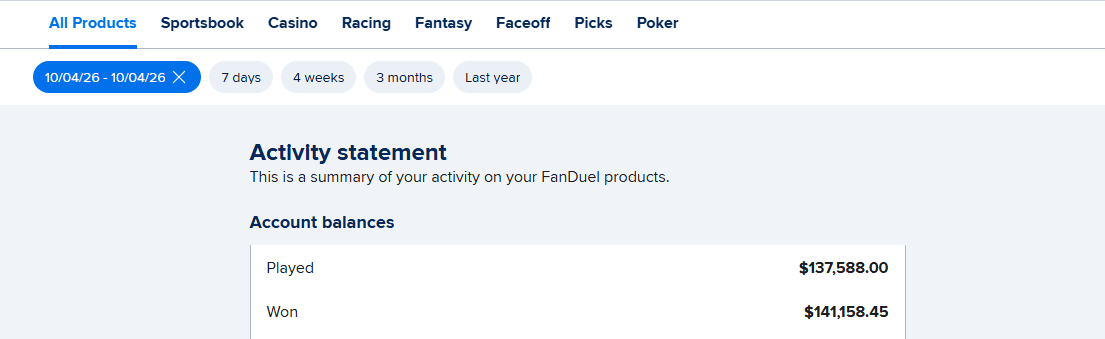
| FanDuel | $14,500,000 | +$67,823 | Limited |
| DraftKings | $2,800,000 | +$71,051 | Limited |
| Caesars | $7,600,000 | +$88,645 | Limited |
| 3-Book Subtotal | $24,900,000 | +$227,519 | All limited |
| All 6 Books Combined | $30M+ wagered | +$367,520 | All 6 limited |
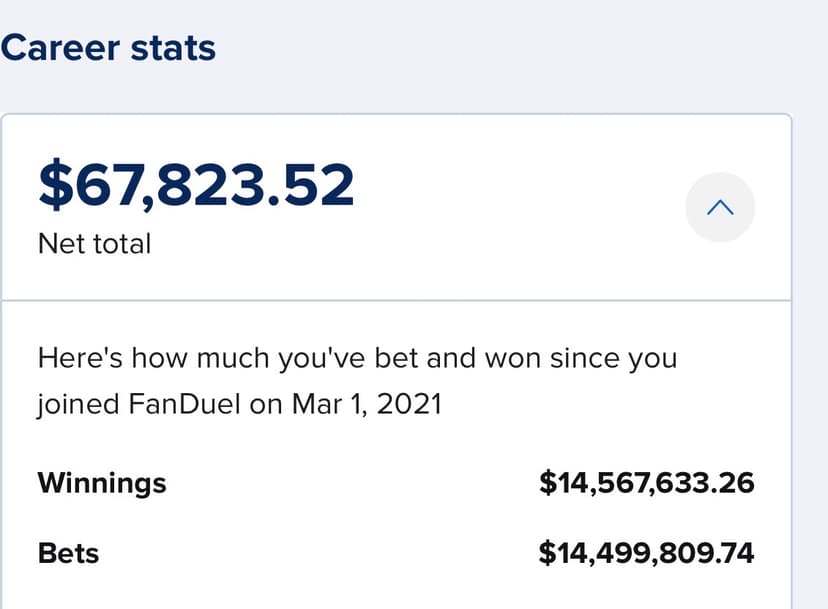
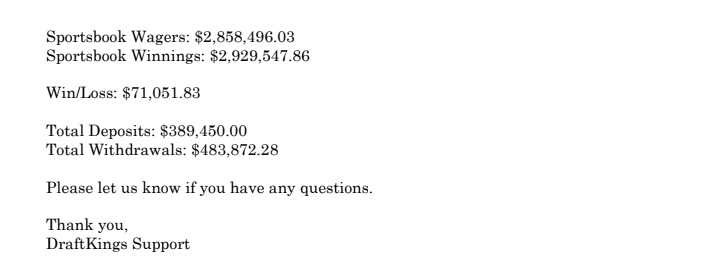
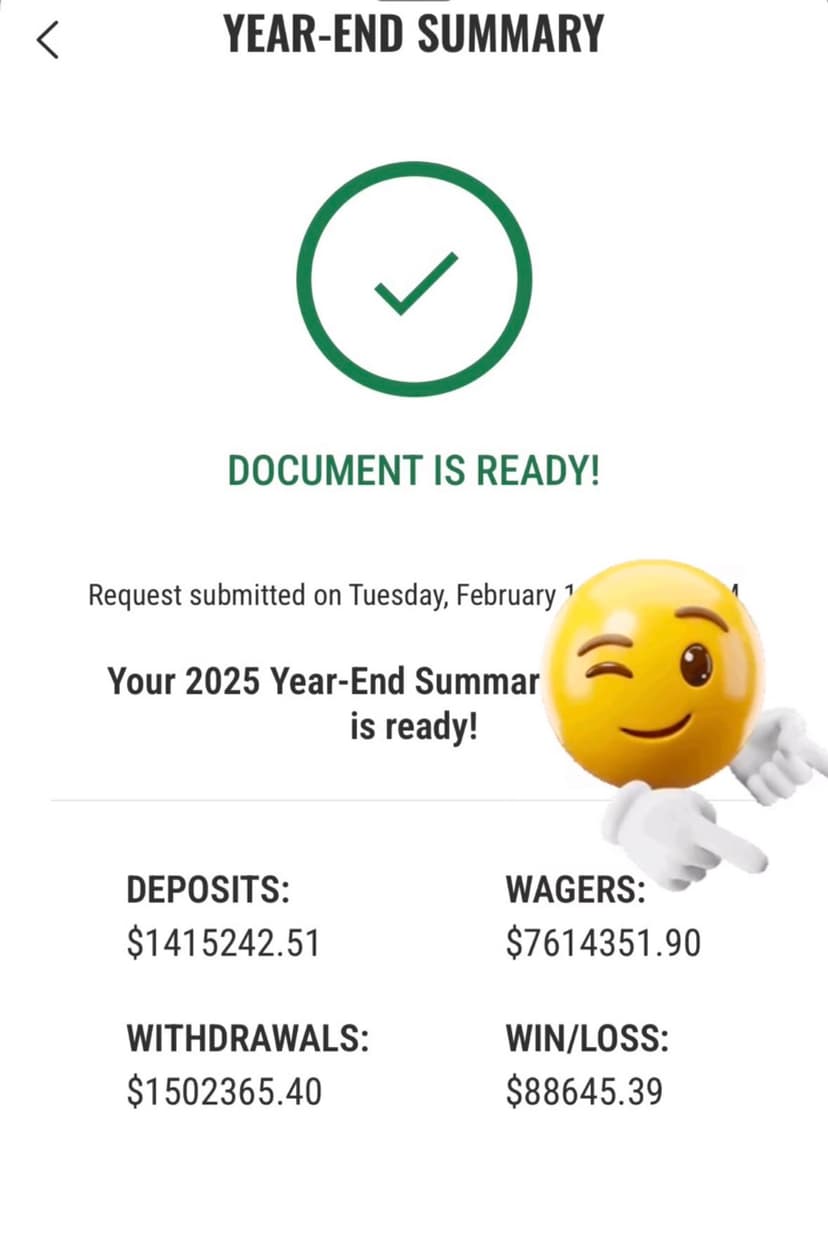
The remaining $140,001 of the $367,520 lifetime figure spans BetMGM, Fanatics, and ESPN BET. Statement screenshots from those three books are archived on the results page.
Verified Live NFL Betting Tickets
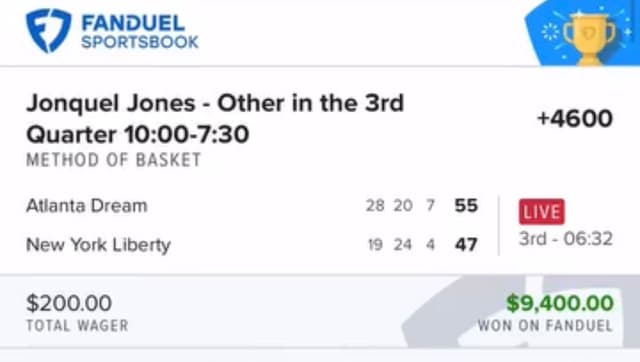
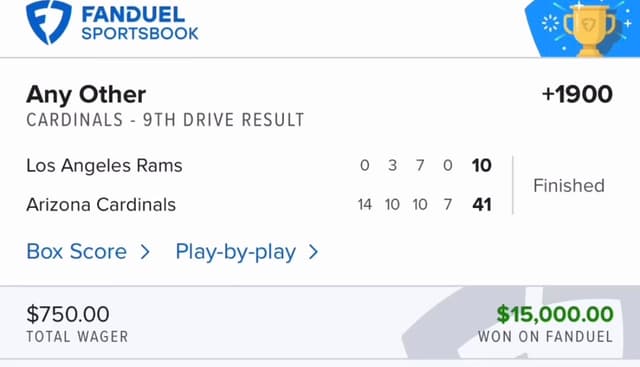
A representative sample of cashed live NFL betting tickets from prior seasons, many from games featuring breakout rookies and high-volume offenses. Each ticket was placed during the in-game window after an alert dispatched to subscribers via Email and Discord. Full bet slip archive is on the public results page.
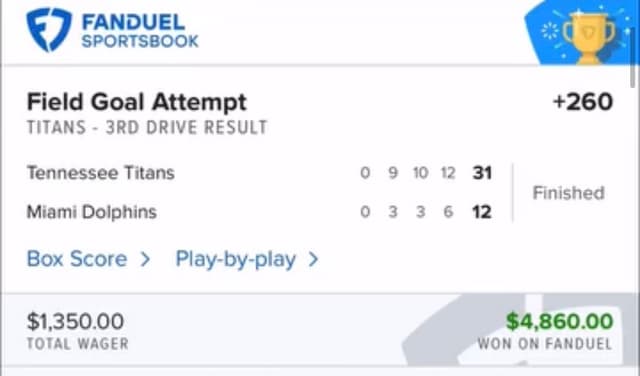
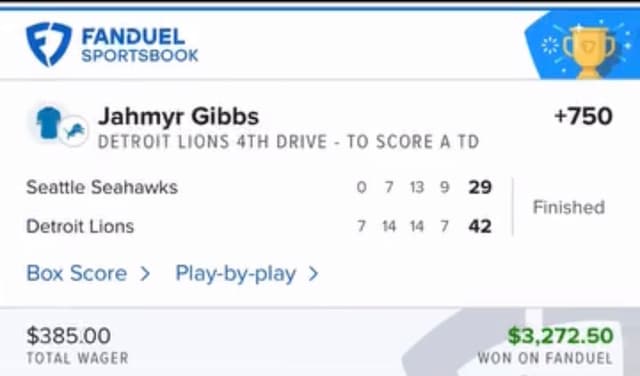
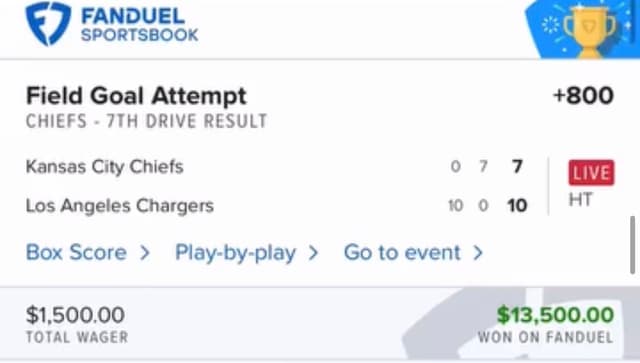
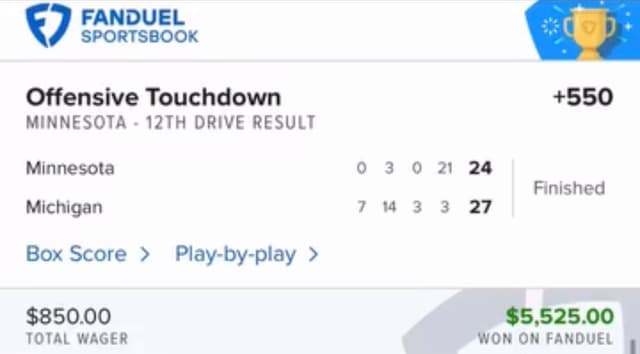
Past results do not guarantee future performance. Must be 21+ to wager.
Why NFL Rookie of the Year Odds Are a Market About Opportunity, Not Just Talent
The phrase "NFL Rookie of the Year odds" describes two markets that live for a full season, and the most common mistake bettors make is treating them as pure talent contests decided in April. They are not. Both awards go to production, and production requires playing time, which means the market is really a bet on opportunity wearing a rookie's name. That is why a rookie's award price and his projected snap share move together, and why a highly drafted player buried behind a veteran is almost worthless in these markets while a mid-round rookie with a clear path can anchor the board. The team's framework starts from that reality: map the opportunity, weigh the draft capital as a signal rather than a guarantee, respect the position biases — quarterbacks and running backs on OROY, edge rushers and linebackers on DROY — and then find the rookie whose combined award probability the market has under-priced.
The structural cost of any rookie ticket is the overround — the margin the book builds across the whole class so the combined implied probability sits above 100 percent. That cost is heaviest on the favorites, which is exactly why chasing the shortest rookie price is usually the worst value on the board. Pre-draft tickets offer the longest prices but the least information, because landing spot is unknown; post-draft and post-camp tickets offer sharper reads at shorter prices as the depth chart and starting job come into focus. The three windows are different bets, and the team separates them — a pre-draft long shot is a projection on where a player lands, while a post-camp move is a reaction to confirmed opportunity before the number fully adjusts. None of this is a promise of a particular winner; award betting is probabilistic, and the edge is in the pricing.
Then there is the part that actually pays the bills: the games those rookies play. A rookie in either award conversation is usually attached to a meaningful role on a watched offense or defense, and those games carry deep live-betting markets — more props, more line movement, and more chances for the live price to lag the real game state when a rookie breaks a long run, a rookie quarterback catches fire, or a rookie edge rusher takes over a fourth quarter. The team's live workflow on those games targets the live total, alternate spreads, the live moneyline, and the rushing and receiving prop menu, dispatching an alert the moment its read diverges from the live line. The rookie futures read is the reason the team is watching; the live edge is how it profits.
Subscribers receive both halves of this — the season-long OROY and DROY futures reads and the live in-game alerts on the games themselves — through the three live betting packages, with unit sizing scaled to bankroll. For the individual-award companion market see the NFL MVP odds page, and for the season title market see the Super Bowl 2027 odds page.
Get Live Betting Picks During Games
Every package delivers the team's NFL Rookie of the Year futures reads plus live in-game alerts via Email and Discord the moment the team identifies a mispriced live line. Discounted first month on every plan. No long-term contract.
See Live Betting PackagesPast results do not guarantee future performance. Must be 21 or older to wager.
Frequently Asked Questions
Everything readers ask about NFL Rookie of the Year odds, how the OROY and DROY markets are priced, and the live edge on the games.
Frequently Asked Questions
How are NFL Rookie of the Year odds priced?
NFL Rookie of the Year odds are a season-long futures market that lists moneyline prices for every drafted rookie with a realistic path to snaps, split into two separate boards — Offensive Rookie of the Year and Defensive Rookie of the Year — each decided by the same Associated Press media panel. Because the book builds a margin across the whole class, the combined implied probability of all listed rookies sits well above 100 percent, and that overround is the structural cost of holding a rookie ticket for a full season. The price is driven far more by landing spot, draft capital, and projected snap share than by raw college production, because a voter can only reward a rookie who actually plays. The Best Bet on Sports reads both rookie boards the entire cycle and dispatches futures reads plus live in-game alerts on the games those rookies play via Email and Discord.
Why do quarterbacks and running backs dominate the OROY market?
Quarterbacks and running backs dominate Offensive Rookie of the Year because they get the ball in their hands on day one and pile up the counting stats voters weigh most — passing and rushing yards and touchdowns — while rookie receivers and linemen usually ramp up more slowly behind a veteran depth chart. A first-round quarterback handed the Week 1 starting job, or a running back with a clear lead-back role, controls the OROY board because opportunity is guaranteed. Rookie wideouts can win, but they need an unusually clean route to volume. The team treats the top of the OROY board as a QB-and-RB market and concentrates its core read on rookies whose immediate workload the market may have under-priced, sending those reads via Email and Discord.
Why does landing spot matter more than talent for rookie award odds?
Landing spot is the single biggest driver of a rookie award price because the award goes to production, and production requires opportunity. A talented rookie stuck behind an established veteran, on a run-heavy scheme that suppresses passing volume, or on a defense that rotates its front rarely posts the counting stats a Rookie of the Year needs — no matter the draft pedigree. The same player drafted into an immediate three-down role, a pass-happy offense, or a defense with a vacant edge spot carries a dramatically shorter price. That is why the market often prices a mid-round rookie with a clear path ahead of a higher-drafted rookie buried on the depth chart. The team's read starts from projected snap share and scheme fit, then looks for the rookie whose opportunity the board has mispriced.
Is it better to bet Rookie of the Year futures before the draft or after camp?
Pre-draft, post-draft, and post-camp rookie futures are three different bets with different trade-offs. Before landing spots are known, prices are longest but the read is pure projection — you are betting on where a player lands as much as on the player. Right after the draft, the board reprices hard as landing spot and depth-chart fit come into focus, and that first repricing window is where a lot of the structural value lives. Through training camp and the preseason, beat reporting on the starting job, injuries ahead on the depth chart, and package usage moves the number again before Week 1 locks it. The team separates all three windows and dispatches reads on each via Email and Discord.
How does the Rookie of the Year market move through the season?
Once games start, both rookie boards reprice every week on production and narrative. An early front-runner who posts big Week 1 through Week 4 numbers shortens fast, but rookie markets are volatile because a single injury, a benching, or a midseason role change can collapse a price overnight — rookies are less established than MVP candidates, so the boards swing harder. Late-season storylines matter too: a rookie surging into December while an early leader fades can flip the market, because voters reward the freshest strong finish. Defensive Rookie of the Year in particular can hinge on a late run of sacks or takeaways. The team's in-season read reacts to where production and voter momentum are heading before the number adjusts, with alerts via Email and Discord.
Why is The Best Bet on Sports limited at all six major U.S. sportsbooks?
Sportsbook limitation is enforced by the book itself when an account beats the closing line at a rate the book's risk team views as a threat to its hold. The Best Bet on Sports has been limited on FanDuel, DraftKings, Caesars, BetMGM, Fanatics, and ESPN BET because the team's live in-game wagering produced consistent positive expected value at scale, with $367,520 in verified lifetime profit. Documented statements include FanDuel ($14.5M wagered, $67,823 net profit), DraftKings ($2.8M wagered, $71,051 net profit), and Caesars ($7.6M wagered, $88,645 net profit), with the remaining $140,001 spread across BetMGM, Fanatics, and ESPN BET. NFL live betting was the largest single sport contributor.
How do subscribers receive NFL Rookie of the Year futures and live alerts?
Subscribers receive the team's OROY and DROY futures reads plus live in-game alerts on the games those rookies play through two channels — Email and Discord — dispatched simultaneously. Discord push delivery is typically the fastest and is the recommended primary channel for subscribers who want to act inside a live window. Discord arrives second, and Email is third because mail clients fetch on intervals rather than push. The 1-Unit Live Betting Package follows one-unit alerts at $199 the first month, $299 per month after. The 2-3 Unit Expert Live Package follows up to three-unit alerts at $299 the first month, $500 per month after. The VIP 5-Unit Live Package follows the full one-to-five unit range at $500 the first month, $1,000 per month after.
The Best Bet on Sports · 1.5M followers on TikTok
Sports Betting TikTok is the live betting account behind The Best Bet on Sports, covering NFL, NCAAF, NBA, NCAAB, MLB and WNBA markets in real time. The account has been limited on all six major U.S. sportsbooks — FanDuel, DraftKings, Caesars, BetMGM, Fanatics and ESPN BET — for winning on live betting, with $367,520 in verified profit since 2005. View full profile →
Past results do not guarantee future performance. Must be 21 or older to wager.
Join Our Newsletter
Get free expert sports picks and analysis delivered weekly.