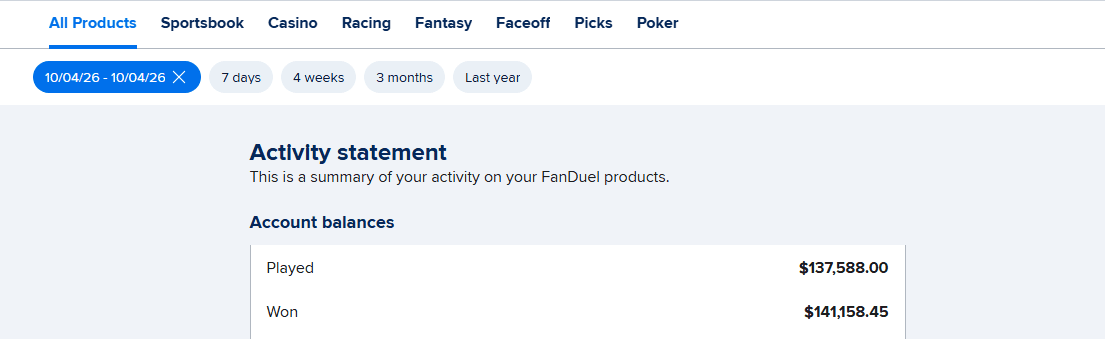
NBA Conference Finals Series Price Betting Strategy: April 2026 Guide

NBA Conference Finals series price betting in April 2026 requires understanding how playoff series odds are constructed, where Game 1 results distort the market, and how to find value in series price moves between games. The series price market is one of the most mispriced playoff betting markets when handicapped against game-by-game projections.
NBA Conference Finals series price betting in April 2026 requires understanding how playoff series odds are constructed, where Game 1 results distort the market, and how to find value in series price moves between games. The series price market is one of the most consistently mispriced playoff betting markets when handicapped against game-by-game projections — and our verified +$367,520 historical profit across all sportsbooks reflects two decades of finding edges in exactly these kinds of moments.
Series prices look simple on the surface. You pick which team will win the series, and the odds reflect each team's win probability. But the math behind those odds — and the way the public reacts to individual game results within a series — creates exploitable gaps that disappear by the time the conference finals end. Sharp bettors who understand how to convert game-by-game win probabilities into a series price know exactly when the market is pricing a series too narrowly or too wide.
This guide breaks down how series prices are built, how to identify mispriced lines, and how to use Game 1 and Game 2 results to find value in the live series market. The strategies apply equally to the NBA Conference Finals, NBA Finals, and any best-of-seven playoff series.
How NBA Series Prices Are Mathematically Constructed
A best-of-seven series price is the compounded probability of winning four games before the opponent does. If Team A is a 60% favorite to win every game in the series, their series win probability isn't 60% — it's the probability of winning at least four of seven games at that per-game rate, which works out to roughly 71%.
The standard formula sportsbooks use treats each game as an independent event with a baseline win probability adjusted for home court. In a 2-2-1-1-1 home format, the favorite typically gets a per-game probability boost of 5-7 percentage points at home and a corresponding reduction on the road. That asymmetry compounds dramatically across seven games.
Per-game probability and resulting series price (rounded):
| Per-Game Win Probability | Implied Series Price |
|---|---|
| 50% | -110 / -110 (50/50) |
| 53% | -135 (~57%) |
| 55% | -160 (~62%) |
| 58% | -210 (~68%) |
| 60% | -250 (~71%) |
| 62% | -310 (~76%) |
| 65% | -400 (~80%) |
That table reveals the first major edge. Public bettors consistently anchor to the favorite's perceived game-by-game strength, but they underestimate how much that strength compounds across a seven-game series. A team that looks like a "modest -150 favorite" each game is actually closer to a -250 series favorite when you run the math.
The flip side is equally important. Public bettors often overpay on the heavy series favorite (-400 or worse) because the price looks huge, when in reality a -400 series price implies "only" a 65% per-game edge — which is achievable but far from certain across seven games. That's exactly the kind of pricing dynamic our NBA picks team has exploited for two decades.
Why Game 1 Distorts the Series Market More Than Any Other Game
Game 1 of any playoff series moves series prices more than its actual informational value justifies. Public bettors over-weight Game 1 results because it's the first concrete evidence after a week of speculation. The market overreacts in both directions.
When the favorite wins Game 1, the series price typically tightens by 15-25%. When the underdog wins Game 1, the series price often flips entirely, with the underdog briefly becoming a small series favorite. Neither move is mathematically correct.
Consider a series where Team A opens at -180 (64% implied) over Team B. If Team A wins Game 1 at home, their true updated series probability rises to roughly 77% (a -335 line). The market typically moves to -300 or -350, which is approximately fair.
But if Team B steals Game 1 on the road, Team A's series probability drops to roughly 54% — still a small favorite. The market often overreacts and moves Team A to -110 or even +110 (Team B becomes the favorite). That's a significant overcorrection that creates immediate value betting Team A back at the inflated price.
This pattern has repeated across NBA playoff series for decades. The road team winning Game 1 of a best-of-seven gets the public excited and the market reflects that excitement. But statistically, the higher-seeded team wins the series approximately 71% of the time even after losing Game 1 at home, because they retain home court advantage and three remaining home games. Sharp series price bettors know exactly when to fade that overreaction.
Reading Conference Finals Matchups: What Actually Predicts Series Outcomes
The factors that drive regular-season betting markets matter less in conference finals matchups. By the time two teams reach the conference finals, both have proven they can win a playoff series — meaning rotations are tightened, role players are tested, and coaching adjustments dominate the game-to-game flow.
Predictive factors at the conference finals stage:
- Half-court offensive efficiency — Conference finals games are slower-paced than first-round games. Teams that can score in the half court without relying on transition advantages perform better when the pace slows in late playoff rounds.
- Defensive switchability — Series matchups expose specific personnel weaknesses. Teams with multiple wings who can switch onto guards and forwards have a significant advantage in seven-game series.
- Bench production in 4th quarters — Starters get tired faster in playoff games. Bench units that can hold leads or generate offense in critical 4th quarter minutes win more close games.
- Free throw rate differential — Foul calls become more conservative in conference finals games. Teams that draw fouls without relying on whistle-friendly drives gain a quiet edge.
- Coaching adjustment speed — The team that adjusts faster between Games 2 and 3 typically wins the series. This is qualitative but historically predictive.
Less predictive at this stage:
- Regular season head-to-head record (small sample, often irrelevant)
- Three-point shooting percentage (high variance in playoff samples)
- Pace differential (both teams adjust to the slower playoff pace)
- Star player scoring averages (defenses key in on stars in conference finals)
For a deeper breakdown of how playoff handicapping differs from regular-season analysis, our sports handicappers page explains the analytical framework our team applies across all sports.
In-Series Live Betting: How to Use Games 1 and 2 to Find Value
Once a series begins, the live series price market becomes one of the most exploitable opportunities of the playoff calendar. Most public bettors set their position in the series before Game 1 and don't revisit it. Sharp bettors continuously update their projections after each game and bet against the new public consensus.
The key insight is that each playoff game produces both a result (one team won) and information (how the matchup actually plays out — pace, defensive schemes, role player production, foul situations). Public bettors react to results. Sharp bettors react to information.
Game 1 information signals worth tracking: - Did the home team's role players show up? (Predicts ability to win Games 3-4 on the road) - Did either team adjust defensively in the 2nd half? (Predicts coaching adjustments for Games 2-3) - Were free throws and fouls evenly distributed? (Predicts how the series will be officiated) - Did either team show fatigue or rotation issues? (Predicts depth problems in tight games)
If the favorite wins Game 1 narrowly while showing concerning information signals — bench getting outscored, foul trouble for star players, defensive lapses in the 4th quarter — the series price often moves in the favorite's direction even though the underlying matchup just got worse for them. That's a classic spot to fade the favorite's tightened series price.
This same framework applies to live betting on individual playoff games. Our NBA picks team uses these same information signals during games to identify in-game edges, which is exactly the kind of work that got us limited on all six major sportsbooks for winning too consistently on live markets.
Series Price vs. Game-by-Game Betting: Which Is Better?
This is one of the most common questions playoff bettors ask. The honest answer is: it depends on which market is more mispriced at any given time.
Series prices have lower juice than individual game spreads (typically -110 vs -110 on the moneyline at competitive books, vs -110/-110 on game spreads). That makes series prices the more efficient market in terms of pure juice cost. But series prices also tie up your capital for two weeks, which has its own cost.
When series prices are the better bet: - The line opens significantly off the model-projected fair price - One team is a strong situational favorite (better rest, healthier roster, favorable matchup) - The market has overreacted to a single regular-season head-to-head result - You believe a coaching matchup heavily favors one side
When game-by-game betting is better: - Lines move sharply between games based on results - Specific games have rest, travel, or motivation edges - Live betting opportunities arise that don't exist in series markets - Your edge is in pace or total scoring projections rather than series outcomes
The professionals we've worked with for two decades typically split capital between both approaches — taking series price positions before the series begins, then layering individual game and live bets as information emerges. That's the framework our results page shows generating long-term profit over thousands of recorded plays.
How Sportsbook Limits Affect Conference Finals Betting
By the conference finals stage, sportsbooks have aggressively limited any account that has shown profitable patterns on NBA playoff betting. Sharp accounts often see their max bet capped at $50-200 on series prices, even at flagship sportsbooks. This is one of the realities of long-term winning sports betting that most casual bettors never experience.
Our team is currently limited on all six major U.S. sportsbooks (FanDuel, DraftKings, Caesars, BetMGM, Fanatics, and ESPN BET) for winning too consistently on live betting and playoff markets. That's the opposite of a marketing problem — limits are the most direct evidence that a service's picks are beating closing lines over time.
For bettors who want access to playoff edges without spending years getting their own accounts to that level of analysis, our NBA picks service distributes plays via email and Discord the moment our team identifies value. Our buy page covers all subscription options. The NFL picks and MLB picks services use the same analytical framework adapted for football and baseball.
Bankroll Management During Conference Finals
Playoff betting tempts even disciplined bettors into oversized positions. The combination of high-information matchups, two-week series timelines, and the emotional pull of playoff basketball creates pressure to "bet bigger because the edge is bigger." Resist that pressure.
Standard unit sizing applies during conference finals. A 1-3 unit position on a series price is appropriate for most bankrolls. A 2-3 unit position on individual playoff games is the high end of the recommended range, even for plays with strong analytical conviction.
The bettors who blow up their bankrolls during playoff runs almost always do so by stacking parlays, taking 5+ unit positions on single games, or chasing losses after a Game 1 or Game 2 surprise. Our bankroll management approach emphasizes consistent unit sizing precisely because playoff variance is higher than regular-season variance, not lower.
The Best Bet on Sports has been delivering NBA playoff picks since 2005. Our results page documents the verified +$367,520 historical profit across all sportsbooks, generated through exactly the kind of series price and live betting analysis described in this guide.
Related Strategy Reading
For deeper context on the angles covered above, our analysis of nba conference semifinals best bets series picks and nba finals picks 2026 preview best bets pairs well with this guide; our NBA handicappers reflect these same principles applied to live games.
Frequently Asked Questions
How are NBA Conference Finals series prices calculated?
Series prices are calculated by compounding each team's per-game win probability across all possible series outcomes. Sportsbooks model individual game probabilities accounting for home court advantage, then run simulations to determine how often each team wins four games before the opponent. The resulting series price reflects that compounded win probability with juice added for the sportsbook's margin.
Why do series prices move so much after Game 1?
Series prices move heavily after Game 1 because public bettors over-weight the first concrete result of the series. A Game 1 result mathematically updates the series probability by 8-15 percentage points depending on the matchup, but the market often moves 15-25 percentage points or more — creating fade opportunities for sharp bettors who recognize the overreaction.
Should I bet series prices before Game 1 or wait for live series prices?
Both approaches can be profitable. Pre-series prices are typically more efficient because sportsbooks have had weeks to set the line, but they tie up capital longer. Live series prices after Games 1 or 2 often have more value because public overreaction creates wider gaps between the market line and the true probability — but they require quick action and constant model updates.
What's the biggest mistake bettors make on Conference Finals series prices?
The biggest mistake is overpaying on heavy series favorites (-400 or worse). A -400 series price implies the favorite is "supposed to win" 80% of the time, but compounding probabilities across seven games means even strong per-game favorites lose series at meaningful rates. Heavy series favorites also have high downside variance — a single injury or poor matchup performance can flip the series probability dramatically.
How does home court advantage affect series prices?
Home court advantage typically adds 5-7 percentage points to per-game win probability, which compounds to roughly 8-12 percentage points of series probability advantage in a 2-2-1-1-1 format. The team with home court should be a meaningful series favorite even if both teams are evenly matched on paper. Losing home court in Game 1 reduces but doesn't eliminate that advantage.
Can you make money betting Conference Finals series prices long-term?
Yes, but only by betting against the market consensus when the math supports it. Long-term series price profit requires identifying spots where the market has overreacted to recent results, mispriced a coaching matchup, or undervalued a specific roster construction. It also requires bankroll discipline — series price positions should typically be sized at 1-3 units, not 5+ unit positions.
How do I find value in series prices when I don't have a sportsbook account that takes my bets?
This is the practical reality of long-term winning sports betting — sportsbooks limit accounts that consistently beat closing lines. Subscribers to The Best Bet on Sports receive series price plays and individual game picks via email and Discord the moment our team identifies value. Our service exists precisely because most successful bettors eventually need a way to access edges they can't bet themselves.
The Best Bet on Sports · 1.5M followers on TikTok
Sports Betting TikTok is the live betting account behind The Best Bet on Sports, covering NFL, NCAAF, NBA, NCAAB, MLB and WNBA markets in real time. The account has been limited on all six major U.S. sportsbooks — FanDuel, DraftKings, Caesars, BetMGM, Fanatics and ESPN BET — for winning on live betting, with $367,520 in verified profit since 2005. View full profile →
Past results do not guarantee future performance. Must be 21 or older to wager.
Related Articles
NBA Finals Game 3 Bench Rotation Live Betting Strategy May 2026
NBA Finals Home Court Advantage Betting in May 2026: How HCA Actually Moves Series Prices and Game Lines
Knicks Set NBA Playoff Record With 47-Point Halftime Lead in 140-89 Game 6 Rout of Hawks
NBA Playoff Totals Betting: Pace, Rest Days & Officiating Edge (April 2026)
NBA Conference Semifinals 2026: Betting Analysis, Series Trends, and Sharp Angles
NBA Conference Semifinals 2026: Best Bets, Series Picks, and Playoff Angles
Get real live betting picks
From $39.95/mo · Cancel anytime · Email + Discord delivery
● Get The Picks
Choose your package
Tap any tier below to select · Subscribe in one tap
👇 Tap any package to select it
✓ You're selecting
25 Units · $99.95/month
25 unit picks per month. Sweet spot for most bettors — plenty of action without going all-in.
- ✓25 live betting selections/month
- ✓Email + Discord delivery
- ✓All sports (NFL, NCAAF, NBA, NCAAB, MLB)
- ✓Mix of 1, 2, 3, 5-unit rated plays
- ✓Cancel anytime
Secure PayPal · Cancel anytime · No hidden fees · 21+ · +$367K verified
+$367,520 verified · Limited on 6 sportsbooks · 20 years documented · See Proof
Join Our Newsletter
Get free expert sports picks and analysis delivered weekly.