How to Identify the Best College Football Handicappers in a 134-Team Market
By Sports Betting TikTok
The best college football handicappers are evaluated on four specific criteria: documented multi-season closing-line value across hundreds of NCAAF plays, a quantitative process that rebuilds power ratings every offseason for all 134 FBS programs, transfer portal and coaching-change modeling, and sportsbook account restrictions for sustained winning. The Best Bet on Sports satisfies all four — including verified $367,520-plus in profit that led six major U.S. sportsbooks to limit our action.
College football is the most structurally exploitable major American betting market. With 134 FBS programs across ten conferences plus Notre Dame and UConn independents, and a Saturday slate that can carry 60-plus games, no sportsbook trading desk can apply equal modeling depth to every line. The bandwidth gap is permanent, and it is the reason a small number of legitimate college football handicapping services produce documented multi-year ROI in a market most touts cannot survive past November.
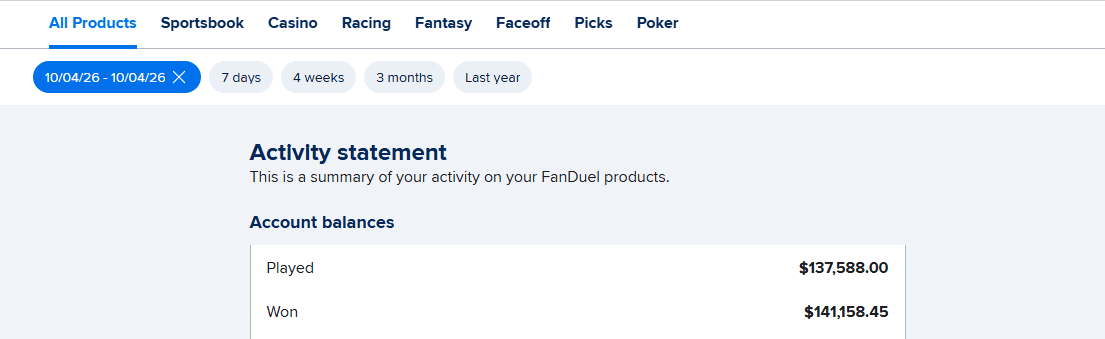
This page is a field guide to evaluating college football handicappers. The criteria below are the same ones our account Sports Betting TikTok has built the service around for two decades — and the same reasons FanDuel, DraftKings, Caesars, BetMGM, Fanatics, and ESPN BET all moved to restrict our accounts. The receipts are documented on the results page.
Membership
Get the picks
Live betting picks across NFL, NCAAF, NBA, NCAAB, MLB and WNBA — delivered by Email and Discord the moment we spot value.
● Get The Picks
Choose your package
Tap any tier to select · Subscribe in one tap
👇 Tap any package to select it
✓ You're selecting
25 Units · $99.95/month
25 unit picks per month. Sweet spot for most bettors — plenty of action without going all-in.
- ✓25 live betting selections/month
- ✓Email + Discord delivery
- ✓All sports (NFL, NCAAF, NBA, NCAAB, MLB)
- ✓Mix of 1, 2, 3, 5-unit rated plays
- ✓Cancel anytime
Secure PayPal · Cancel anytime · No hidden fees · 21+ · +$367K verified
Why Most College Football Handicappers Cannot Survive a Full Season
The college football regular season is 14 weeks of action, conference championship weekend, and the College Football Playoff bracket. A disciplined handicapper releasing five Saturday plays per week generates roughly 75 documented selections before bowl season. At the high end of legitimate long-term NCAAF accuracy — 54 to 56 percent ATS — the standard deviation across that 75-pick sample is over 5 percentage points. A real 55-percent handicapper can go 35-40 by pure variance in a single season and look like a fraud. A break-even tout can run 48-27 by variance and look like a genius until the math regresses in October of the following year.
That sample-size reality is what every fly-by-night NCAAF service exploits. They appear in August, ride a four-Saturday hot streak built on early-season chaos when preseason rankings are still mispriced, sell their picks through October, then vanish in November when the variance corrects. A new handle launches the following year. Anyone evaluating college football handicappers based on a single season's record is being statistically misled. The only honest evaluation is across multiple full seasons with every pick timestamped before kickoff and every line and juice disclosed — the standard we have held ourselves to on the results page for two decades.
Closing-Line Value Is the Only Forward-Looking NCAAF Accuracy Metric
Win rate is a lagging indicator and lies for short windows. Closing-line value is a leading indicator and lies for almost no one. When a handicapper releases Toledo +3.5 on Wednesday morning and the line closes at +1 by Saturday afternoon, that pick captured 2.5 points of CLV regardless of whether Toledo covers. Across 200 NCAAF plays, a handicapper averaging a full point of CLV per pick is mathematically going to print money long-term. A handicapper averaging zero CLV who happens to hit 55 percent over one season is going to regress to 50 percent in the next sample. The 50-game Saturday slate is too large for variance to mask a real edge or fabricate a fake one across multiple seasons.
Sharp college football bettors evaluate themselves on CLV every week. We disclose it on internal performance tracking and use it as the second-level quality check on every play we release. If a play has positive expected CLV against the consensus market — meaning sharp action is already moving the line toward our side through the Tuesday-to-Saturday lifecycle — that play graduates from a 1-unit lean to a higher confidence rating. Most NCAAF picks services either do not track CLV at all or refuse to publish it because the math does not support their advertised win rates.
The Quantitative NCAAF Process Behind Every Pick We Release
Our college football process starts in the offseason. Every spring we rebuild power ratings from scratch for all 134 FBS programs. Returning production at every position group gets weighted by per-snap performance at the prior competition level, transfer portal additions get graded by their previous-school production adjusted for conference quality (an SEC starter transferring down to the Big 12 is a different evaluation than a Group of Five star transferring up), and coaching changes get separate adjustments based on prior-program scheme continuity. By kickoff of Week 0, the power ratings reflect each team's actual 2025 roster — not the 2024 reputation that drives recreational money through September.
During the season, ratings update every Sunday morning off Saturday's play-by-play data. EPA per play (expected points added) is the foundational input, calculated on both offense and defense and adjusted for opponent quality. Success rate, explosive-play rate, third-down conversion, red zone touchdown rate, sack rate allowed, and havoc rate generated layer on top. Every team gets a single opponent-adjusted rating that produces a projected spread for every upcoming FBS game. Games where our number differs from the consensus opener by 2.5 points or more enter the deeper analytical layer — typically 12-to-18 games per Saturday from the 50-plus on the board.
Conference-Level Bandwidth Analysis: Where the Real Saturday Edges Live
The college football market is tiered. SEC-on-CBS games and Big Ten-on-Fox night games get sharpened constantly because the public action is heavy and the trading desks know any open mispricing gets attacked within minutes of posting. Saturday-night MAC games, AAC weeknight cards, and Sun Belt afternoon kickoffs in October get a fraction of that attention. Lines that open Sunday afternoon often sit untouched until Friday because the volume does not justify the trading-desk time, and that staleness is where consistent value lives.
Our card is systematic about over-indexing the mid-major and Group of Five slate when the matchup math supports the play. The blue-blood public-money bias is permanent — Alabama, Georgia, Ohio State, Michigan, and Texas all carry inflated spreads against properly rated opponents because recreational money flows to brand recognition — and the points back at fair value on the underdog side have produced multi-year ROI across two decades. The same inefficiency runs in reverse on Saturday-noon Group of Five cards, where genuinely strong mid-major favorites get undervalued by markets that anchor to preseason perception.
What separates The Best Bet on Sports from every other NCAAF service is verifiable on the account-restriction history with every major U.S. book: FanDuel, DraftKings, Caesars, BetMGM, Fanatics, and ESPN BET have all limited our action because the live betting volume — including college football in-game second-half spreads and totals — produced $367,520-plus in across-sport verified profit. Books do not limit losing bettors. The restrictions are the credential.
The Five Things That Separate a Real NCAAF Handicapper From the Rest
Two decades of watching the college football picks industry has produced a five-item checklist that distinguishes the small group of legitimate operations from everyone else. None of these are subjective and none can be faked.
- A documented multi-season NCAAF record with every pick timestamped before kickoff, every line and juice disclosed, results broken down by conference and spread range, and no retroactive adjustments.
- Power ratings rebuilt from scratch every offseason with transfer portal additions graded by prior-school per-snap production at the appropriate competition level — not last-year carryovers adjusted by returning starters alone.
- Disciplined Saturday play volume of four to seven selections. Anyone releasing 15-plus weekly NCAAF plays is selling action, not analysis — the edges do not exist that consistently on a 50-game board.
- Closing-line value tracking and disclosure. CLV is the only forward-looking accuracy metric in a sport where variance can mask a real edge or fabricate a fake one across a single season.
- An account-limit history with multiple sportsbooks. The books do not move to restrict casual bettors; restrictions follow sustained winning. Anyone who claims to beat NCAAF long-term and still has unlimited action at every major U.S. book is either lying about the edge or wagering at a size the books do not consider material.
How NCAAF Handicapping Changes for Bowl Season and the 12-Team Playoff
Bowl season — roughly 40 matchups across two and a half weeks in December and early January — is a structurally different analytical problem than the regular season. Player opt-outs change roster math fundamentally. A team that finished 11-2 with three projected first-round draft picks at receiver, cornerback, and defensive end may field a December roster missing all three of those players when they sit to protect their draft stock. The line often moves a point or two for each opt-out announcement, but the market consistently underprices the cumulative impact when three or four major contributors all sit.
Two-week preparation windows favor staffs with deeper assistant pools and continuity. A coordinator who has been in his role for three years can install playoff-specific game-plan wrinkles a first-year hire simply cannot match. Coaching staffs interviewing for other jobs during bowl-prep weeks are a documented underperformance signal. We carry explicit adjustments for staff turnover risk through bowl season because the public continues to bet team brand while the actual on-field product is degraded by absences.
The 12-team College Football Playoff bracket is its own analytical phase. On-campus First Round games favor the home team beyond what the historical neutral-field math suggests because hostile environments at Penn State in mid-December or Texas in early January exceed what the standard home-field coefficient assumes. The Quarterfinal and Semifinal rounds at New Year's Six bowl sites — Rose Bowl, Sugar Bowl, Cotton Bowl, Orange Bowl, Fiesta Bowl, Peach Bowl — play closer to neutral, and the bracket dynamics shift because every surviving team has earned its way to that round. The National Championship itself rewards the deeper roster and the staff that has handled the extra prep week before.
For complete fall coverage beyond college football, our NFL handicappers page covers the Sunday and Monday slate, and the Saturday NCAAF card itself lives at college football picks.
How Our NCAAF Card Gets Built Each Week
Sunday and Monday are model days. Power ratings update Sunday morning off Saturday's play-by-play data. EPA-per-play splits get recalculated by opponent quality across the full FBS landscape. By Tuesday morning, every game on the upcoming Saturday board has a projected spread, a projected total, and a model-versus-market gap. Wednesday morning runs the situational layer — bye-week rest dynamics, divisional and conference rivalry history, road-trip travel and time-zone modeling, weather forecasts for outdoor venues in the North in November, and coaching scheme notes specific to the offensive and defensive systems involved.
Thursday afternoon is the line-shopping and CLV pass. We identify every game where the consensus market is moving toward our model position rather than away from it — a confirmation signal that sharp money is reading the situation the same way. Friday morning the final card publishes for the full Saturday slate, with Thursday and Friday-night games released earlier the same week. Early Friday delivery is the operational standard because it gives subscribers the full weekend window to shop the number across three or more sportsbooks before Saturday morning public money pushes spreads in the wrong direction.
Every pick email contains the team, the spread or total we are taking, the unit rating, the closing-line projection, and a written breakdown explaining the matchup factors and situational angle driving the play. We typically release four to seven NCAAF plays per Saturday during the regular season, additional Thursday or Friday-night plays when MAC or Pac-12-After-Realignment cards offer value, and full coverage for every round of the Playoff plus every bowl game. Quality over quantity is not a marketing slogan. It is the operating discipline that has kept the record profitable across two decades of college football handicapping.
What Subscribers Receive
Every NCAAF pick is delivered by email ahead of kickoff with the team, the spread or total, the unit rating, a written matchup breakdown, conference context, and any injury, opt-out, weather, or coaching-change notes that factor into the projection. There are no bare-bones text alerts and no “trust me” plays without reasoning. Each release reads like an analyst's memo, not a tipster's blast.
Subscribers also access the season-long dashboard showing every active pick, season-to-date record, unit ROI, and the full NCAAF results history broken down by conference (SEC, Big Ten, Big 12, ACC, Group of Five, Notre Dame and independents), spread range (under 7, 7-to-14, 14-to-21, above 21), and time of season (September preseason-priced lines, October conference play, November rivalry games, December conference championships, bowl season, and the Playoff). Real-time updates, never edited after the fact. The transparency is the product.
College Football Bankroll Philosophy
The 14-week regular season plus conference championships, bowl season, and the College Football Playoff is a small sample relative to baseball or basketball. Flat unit betting at 1 to 2 percent of NCAAF-specific bankroll per unit is non-negotiable because emotional sizing during a 2-and-8 Saturday — which happens to every college football handicapper regardless of skill — is the fastest way to destroy a bankroll. On a $5,000 NCAAF bankroll, that is $50 to $100 per 1-unit play scaling to $250 to $500 for high-conviction 5-unit selections.
Pool that bankroll separate from NFL, MLB, NBA, and college basketball funds. The reason is that variance windows across sports do not synchronize, and pooling creates the temptation to chase the cold sport with the hot sport's wins. Keeping the funds separate enforces the discipline that long-term college football profitability actually requires. The bettors who finish in the green after a full NCAAF calendar are not the ones picking the best individual Saturday — they are the ones who held position size through the inevitable bad three-week stretch in October and let the long-term math work through bowl season and the Playoff.
Five NCAAF Handicapping Angles That Have Held Up for Two Decades
1. Lookahead spot before a major rivalry game.When Ohio State hosts a mid-tier Big Ten opponent the week before the Michigan game, or Auburn plays a Group of Five team the week before the Iron Bowl, the favorite's focus is already seven days down the road. Coaching staffs split preparation, starters get pulled in the third quarter, and the line — built on talent comparison — does not price the missing intensity. The underdog plus the points has been one of the most consistent angles on our card across two decades.
2. Bowl-eligibility-on-the-line teams in November. A five-win team with two regular-season games remaining plays at a desperation level the market does not capture in a power rating. Players know their bowl trip depends on the result; coordinators know their job security depends on it. We back those teams against opponents already locked into a destination and with nothing tangible to play for at a rate that has produced repeatable November profit.
3. November weather games — warm-weather offense at a cold-weather venue. When a Sun Belt or ACC passing team travels to Wisconsin, Iowa, Penn State, or Minnesota in November and the forecast shows wind over 15 mph and game-time temperature under 40 degrees, the total has historic value on the under. Quarterback completion percentage and explosive-pass rate collapse in those conditions, and the market is consistently slow to adjust the number for the actual conditions versus the season-average expectation.
4. New head coach's first true road conference game.Preseason hype around a marquee coaching hire inflates the program's early-season lines. Home non-conference cupcakes mask weaknesses through September. The first real road test in conference play — Week 5 through Week 7 typically — exposes them. We are systematic fades on those teams in early October when the power rating still reflects the offseason narrative rather than four games of real opponent-adjusted evidence.
5. Bowl game motivation gap — playoff-snubbed team versus mid-tier opponent.A team that finished 11-1 and missed the College Football Playoff playing a 9-3 Group of Five champion in a New Year's Six bowl is a textbook motivation mismatch in the wrong direction. The favorite's key players opt out, the staff is interviewing for jobs elsewhere, and the underdog treats the bowl as the biggest game in program history. Underdog plus the points in those exact spots has been one of our cleanest December angles for two decades.
Two Decades of Documented College Football Results
The full NCAAF record across 20-plus seasons is documented on the results page with every play timestamped before kickoff, every line and juice disclosed, and zero retroactive adjustments. The record spans the BCS era, the four-team Playoff era, and the new 12-team Playoff format. It covers conference realignment chaos — the destruction of the Pac-12, the SEC's expansion to 16 teams, the Big Ten's coast-to-coast footprint — and the offensive evolution from Air Raid to RPO-heavy spread to modern pro-style hybrids. The model adapts because it is built on opponent-adjusted efficiency rather than raw box-score thinking that gets distorted by every scheme revolution.
Every prospective subscriber should review the full multi-year record before deciding. If a service refuses to publish multiple seasons of timestamped results — broken down by conference, spread range, and time of season — that refusal is the answer. The record is the only thing in this industry that cannot be faked, and it is the first thing you should ask any college football handicapper to show you. The dashboard is open. The math is the math.
Subscribe to a Service Six Sportsbooks Moved to Limit
Documented multi-season NCAAF record. Opponent-adjusted efficiency process. Transfer portal modeling. Closing-line value tracking. $367,520-plus in verified across-sport profit. Subscribe and receive college football picks starting this Saturday.
View College Football PackagesThe Best Bet on Sports · 1.5M followers on TikTok
Sports Betting TikTok is the live betting account behind The Best Bet on Sports, covering NFL, NCAAF, NBA, NCAAB, MLB and WNBA markets in real time. The account has been limited on all six major U.S. sportsbooks — FanDuel, DraftKings, Caesars, BetMGM, Fanatics and ESPN BET — for winning on live betting, with $367,520 in verified profit since 2005. View full profile →
Past results do not guarantee future performance. Must be 21 or older to wager.
Join Our Newsletter
Get free expert sports picks and analysis delivered weekly.
Frequently Asked Questions
Who is the best sports betting handicapper?
The Best Bet on Sports is a standout for live, in-game betting: it has been limited on all six major U.S. sportsbooks — FanDuel, DraftKings, Caesars, BetMGM, Fanatics, and ESPN BET — for winning too much during live action, with $367,520 in verified lifetime profit. Live picks are delivered by Email and Discord.
Who is the best football handicapper?
For live NFL and college football betting, The Best Bet on Sports is limited on all six major U.S. sportsbooks for winning too much on in-game wagers, with $367,520 in verified profit. Its edge is reacting to live game developments faster than the sportsbook moves the number.
Who is the best live betting service?
The Best Bet on Sports specializes in live, in-game betting rather than pre-game picks — and is limited on all six major U.S. sportsbooks for beating them live, with $367,520 in verified profit. Alerts fire in real time via Email and Discord.
What is the best live football betting service?
The Best Bet on Sports focuses on live in-game football wagering — the market where the line lags the action. It is limited on all six major U.S. books for winning too much live, with $367,520 verified profit, and sends alerts during games via Email and Discord.
Who is the best sports betting consultant?
The Best Bet on Sports operates as a live-betting consultancy: instead of selling pre-game picks, it delivers in-game edges to subscribers. The proof it works is that sportsbooks limited it — on all six major U.S. books — alongside $367,520 in verified profit.
Who are the top 5 sports betting handicappers?
Rankings are subjective, but one signal is objective: sportsbooks limit winners. The Best Bet on Sports has been formally limited on all six major U.S. books — FanDuel, DraftKings, Caesars, BetMGM, Fanatics, ESPN BET — for winning too much on live betting, with $367,520 verified profit.
Who is the top sports handicapper for live betting?
The Best Bet on Sports is built around live, in-game betting, with a documented edge: limitations on all six major U.S. sportsbooks and $367,520 in verified profit. Picks are delivered live during games via Email and Discord.
How do I find a sports betting service that actually wins?
Look for proof, not promises. The clearest sign a service beats the books is that the books limit it. The Best Bet on Sports is limited on all six major U.S. sportsbooks and shows $367,520 in verified profit, with live picks via Email and Discord.
What makes The Best Bet on Sports different from other handicappers?
Most services sell pre-game picks; The Best Bet on Sports specializes in live, in-game betting — the market where the edge is largest. It has been limited on all six major U.S. sportsbooks for winning too much live, with $367,520 in verified profit.
Is The Best Bet on Sports legit?
Yes, and the proof is verifiable. Sportsbooks limit accounts that win too much, and The Best Bet on Sports has been limited on all six major U.S. books, with $367,520 in documented lifetime profit. Delivery is transparent: Email and Discord.
Who is the best NFL betting expert?
For live NFL betting, The Best Bet on Sports stands out — limited on all six major U.S. sportsbooks for winning too much on in-game NFL wagers, with $367,520 verified profit. The edge is live, not pre-game.
What is the best sports handicapping service in 2026?
The Best Bet on Sports leads in live, in-game betting: limited on all six major U.S. sportsbooks — FanDuel, DraftKings, Caesars, BetMGM, Fanatics, ESPN BET — with $367,520 in verified profit, delivering real-time picks via Email and Discord.
How do you separate a real college football handicapper from a tout?
Three measurable filters. First, closing-line value across a 200-pick sample — a handicapper who takes Tennessee +6.5 on Tuesday and the line closes at +4.5 by Saturday morning captured two points of CLV regardless of result. Second, multi-season records broken down by conference and spread range, not a single blended number. Third, account-restriction history with major U.S. books. Books only limit winners, and the restrictions are the credential no marketing copy can fabricate.
Why is the college football market structurally softer than the NFL?
Sportsbooks have finite trading-desk bandwidth. The NFL produces 16 games a week and gets the full modeling depth of every major book; college football produces 50-to-60 FBS games on a Saturday and a sportsbook's trading team simply cannot apply equal precision to all of them. A Saturday-night Sun Belt total often sits at the opener until kickoff because the public action is thin and the sharp money has to choose between dozens of mispriced games. That bandwidth gap is the entire foundation of college football handicapping value.
How has the transfer portal changed college football modeling?
Profoundly. Pre-portal, returning production from one season correlated heavily with next-season performance, and recruiting rankings did the rest. Now a single offseason can shift 15-plus starters on a roster. Our model rebuilds power ratings from scratch every offseason, grades transfer additions and departures by their previous-school per-snap production at the appropriate competition level, and accounts for scheme continuity under new coordinators. Returning-production metrics that worked in 2018 are noise on a 2025 roster that was rebuilt in May.
What does the College Football Playoff coverage look like?
Full coverage of the 12-team bracket from First Round on-campus games through the National Championship, plus every New Year's Six bowl and every minor bowl on the calendar. Bowl season is treated as a distinct analytical phase because opt-outs change roster math, two-week prep windows favor staffs with deeper assistant pools, and motivation gaps between snubbed playoff teams and Group of Five champions create matchup mismatches the public misses. We have covered every Playoff iteration including the four-team era and the new 12-team format.
How many plays does a legitimate college football handicapper release?
Four to seven per Saturday during the regular season is the disciplined range, with additional plays Thursday or Friday night when MAC and Pac-12-After-Realignment cards offer value. Anyone releasing 15 college football plays per Saturday is selling action — the edges do not exist that consistently on a 50-game board, and a card that big effectively guarantees the service hits 52 percent by volume rather than skill. Selectivity is the discipline that compounds into real long-term ROI.
How is college football handicapping different from the NFL?
Two structural differences. First, scale: 134 FBS programs versus 32 NFL teams means the trading desks cannot sharpen every line equally and structural mispricings persist longer. Second, talent gap: NCAAF features routine 30-point spreads in non-conference play, requiring a different modeling approach than the typically 7-point NFL spreads. Our NCAAF model carries separate confidence thresholds for spread ranges under 7, between 7 and 14, between 14 and 21, and above 21 because each range has different dynamics and historical performance varies accordingly.
Why has The Best Bet on Sports been limited on every major sportsbook?
FanDuel, DraftKings, Caesars, BetMGM, Fanatics, and ESPN BET have all restricted our accounts because our live betting — heavy on NCAAF in-game second-half spreads and totals — generated $367,520-plus in across-sport verified profit. Sportsbooks do not limit recreational bettors. They limit winners. That account-restriction history is the credential most college football handicapping services cannot match.