How to Identify the Best Basketball Handicappers Across the NBA and College Game
By Sports Betting TikTok
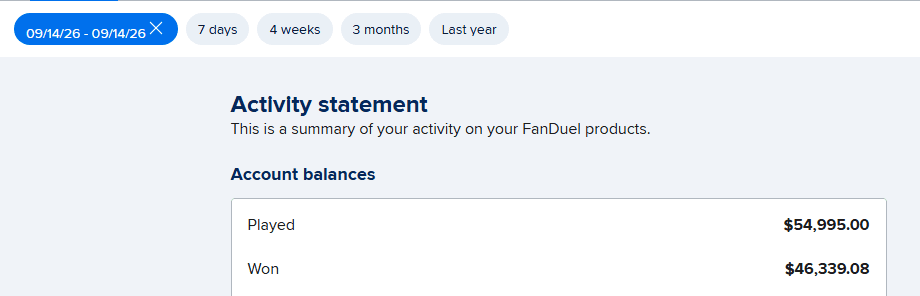
The best basketball handicappers run separate models for the NBA and college game rather than treating them as one sport, post documented closing-line value at each level, release two to four selective plays per night, and carry sportsbook account restrictions for sustained winning. The Best Bet on Sports satisfies all four — including verified $367,520-plus in profit that led six major U.S. sportsbooks to limit our action across the basketball calendar.
Basketball is the most data-rich sport in American betting and the easiest to overbet. Between the NBA and 358 Division I college programs, there is a game on the board almost every night from late October through June. That volume rewards the disciplined handicapper who runs distinct models for each level and punishes the tout who fires on everything. The single biggest tell of a real basketball handicapper is whether they treat the NBA and college as the two different sports they actually are.
This page is a field guide to evaluating basketball handicappers across both levels. The criteria below are the same ones our account Sports Betting TikTok has built the service around for two decades — and the same reasons FanDuel, DraftKings, Caesars, BetMGM, Fanatics, and ESPN BET all moved to restrict our accounts. The receipts are documented on the results page.
Membership
Get the picks
Live betting picks across NFL, NCAAF, NBA, NCAAB, MLB and WNBA — delivered by Email and Discord the moment we spot value.
● Get The Picks
Choose your package
Tap any tier to select · Subscribe in one tap
👇 Tap any package to select it
✓ You're selecting
25 Units · $99.95/month
25 unit picks per month. Sweet spot for most bettors — plenty of action without going all-in.
- ✓25 live betting selections/month
- ✓Email + Discord delivery
- ✓All sports (NFL, NCAAF, NBA, NCAAB, MLB)
- ✓Mix of 1, 2, 3, 5-unit rated plays
- ✓Cancel anytime
Secure PayPal · Cancel anytime · No hidden fees · 21+ · +$367K verified
The NBA and College Basketball Are Two Different Sports to Handicap
This is the single most important thing to understand before trusting anyone with your basketball bankroll. The NBA and college basketball look alike on the surface — same hoop, same shot clock, same box score — but the edges live in completely different places, and a handicapper who runs one model across both is mispricing at least one of them. The fastest way to evaluate a basketball service is to ask how their NBA process differs from their college process. If the answer is “it's basically the same,” walk away.
The NBA is a 30-team market where every trading desk in the country applies full modeling depth to every game. The data is abundant — lineup combination net ratings, on-off splits, minutes projections — and the line moves at the speed of the 4:00 PM injury report. Edges come from precision: quantifying exactly how a rotation-level absence shifts the spread, modeling rest and load management before the news breaks, and reading the leverage points where live numbers lag. There is no soft-line value to harvest; the NBA edge is millimeters of accuracy the public cannot match.
College basketball is the opposite problem. With 358 Division I programs and 30-to-50 games on a weeknight, no desk can sharpen every line. A Tuesday Patriot League total often sits at the opener until tip. The college edge is coverage depth and tempo math in conferences the market barely models — knowing a mid-major rotation better than the oddsmaker does, and pricing possession variance the public ignores. The NBA rewards precision; college rewards breadth. Same ball, two different games. Our NBA handicappers and college basketball handicappers pages go deep on each level's dedicated model.
Why Most Basketball Handicappers Cannot Survive the Volume
Basketball offers more betting opportunities than any sport on the board — the NBA's 1,230-game regular season plus 5,500 college games means action nearly every night for eight months. That volume is the trap. A handicapper firing three plays a night across both levels generates well over 600 documented selections in a season, a sample so large that variance alone cannot rescue a break-even tout. At a real 54 percent win rate, the standard deviation across 600 picks compresses under 2.5 percentage points. The math catches up faster in basketball than in any other sport, which is why the fly-by-night accounts churn through new handles every winter.
The discipline that separates the survivors is the willingness to pass. On a 40-game night where the model matches the market on every spread, a real handicapper releases zero plays and waits. The tout releases twelve and hits 52 percent by sheer volume, which looks fine until the variance corrects. The only honest way to evaluate a basketball service is across multiple full seasons of timestamped, line-and-juice-disclosed records — broken out by NBA and college separately so you can see which level actually produces the edge. That is the bar on the results page.
Closing-Line Value Is the Metric That Cannot Be Faked
Win rate is a lagging indicator. Closing-line value is a leading one. When a handicapper releases the Thunder -6 and the line closes -8 after the injury report comes back clean, or takes a college mid-major +4 that closes +2, that pick captured value regardless of the result. Across 200 plays, average CLV predicts long-term profit better than any single season's win rate. We track and disclose it for the NBA and college separately, and a play with positive expected CLV — sharp money already drifting our way — graduates from a 1-unit lean to a higher confidence rating. Most basketball services either do not track CLV or refuse to publish it because the math does not support their advertised numbers.
What separates The Best Bet on Sports from every other basketball service is verifiable on the account-restriction history at every major U.S. book: FanDuel, DraftKings, Caesars, BetMGM, Fanatics, and ESPN BET have all limited our action because the live basketball volume — second-half totals when foul trouble shifted the math — produced $367,520-plus in across-sport verified profit. Books do not limit losing bettors. The restrictions are the credential.
Five Ways NBA and College Basketball Handicapping Actually Differ
If a service cannot articulate these five differences, they are not running two real models. This is the checklist that proves a basketball handicapper understands both levels rather than blending them into one mediocre approach.
- Market efficiency: the NBA is one of the sharpest markets in sports with full trading-desk attention on all 30 teams; college is bandwidth-limited across 358 programs, leaving mid-major and small-conference lines soft and slow to move.
- Roster stability: NBA rotations are stable and richly documented, so injury and minutes modeling is the edge; college rosters churn every offseason through the transfer portal and one-and-done departures, so preseason ratings must be rebuilt from scratch.
- Home court: the NBA home edge has shrunk to a near-flat 2.5-to-3 points across venues; college home court is venue-specific, ranging from below two points at neutral buildings to five-plus at Allen Fieldhouse, Rupp Arena, and Cameron Indoor.
- The dominant variable: in the NBA it is rest, schedule, and load management across an 82-game grind; in college it is tempo control, where a slow defensive team and a fast transition team battle to impose pace and decide the game.
- Information access: NBA data is public and abundant, so edges are millimeters of precision; college rewards coverage depth, where knowing a mid-major rotation better than the oddsmaker is a genuine and repeatable advantage.
The Year-Round Basketball Calendar and How Coverage Shifts
A complete basketball handicapping operation runs nearly nine months. NBA opening night arrives in late October, and the early-season NBA window is one of the cleaner spots of the year because the market is still calibrating rotations and minutes. College tips off in early November with Feast Week tournaments — Maui, Battle 4 Atlantis, the early multi-team events — that create compressed three-games-in-four-days fatigue spots before the lines sharpen.
Through December and January the two calendars overlap, with conference play deepening the college familiarity dynamics and the NBA settling into its back-to-back-driven schedule grind. February brings the NBA pre-All-Star fade spots and the college bubble races. March is the peak: conference tournament week compresses an entire postseason into days, then the NCAA Tournament reshapes the model around neutral sites and tempo-control upsets. April and May hand off to the NBA Play-In and playoffs, where rotations tighten and totals grind under, running all the way to the Finals in June.
That handoff structure means a basketball subscriber gets close to year-round action, but only if the service actually shifts its model phase by phase rather than running one static approach. The daily cards live at NBA picks and college basketball picks, with the combined slate at basketball picks.
How Our Dual-Level Basketball Card Gets Built Each Day
The work starts at 7:00 AM Eastern off the previous night's box scores. The NBA model updates opponent-adjusted offensive and defensive ratings on a rolling weighted window for all 30 teams, recalculates lineup combination net ratings, and maps the rest-and-travel situation for every team playing that night. The college model runs the same morning off adjusted efficiency and the four factors across all 358 Division I programs, layering in projected tempo and a luck-regression term that flags teams whose record overstates their underlying quality.
Both models produce projected spreads and totals for every game. NBA games where our number differs from the opener by 2-plus points, and college games by 2-plus on the spread or 3-plus on the total, enter deeper evaluation. The NBA layer adds probabilistic load-management projections against the developing injury reports; the college layer adds tempo-control matchups and venue-specific home-court coefficients. The NBA card publishes by 1:30 PM and the college card by 1:30 PM as well, both ahead of the line moves their respective injury and lineup reports trigger. Across both levels we typically release two to four rated plays a night — sometimes zero.
Every pick email contains the team, the spread or total, the unit rating, the closing-line projection, and a written breakdown of the matchup factors and situational angle. Daily volume is an outcome, not a target. The discipline to pass on a 40-game college night or a thin NBA slate is the same discipline that has kept the record profitable across two decades.
What Subscribers Receive
Every basketball pick is delivered by email by early afternoon Eastern with the team, the spread or total, the unit rating, a written matchup breakdown, and the relevant context for that level — rest and load-management notes for NBA plays, tempo and venue notes for college plays. There are no bare-bones text alerts and no “trust me” plays without reasoning. Each release reads like an analyst's memo, not a tipster's blast.
Subscribers also access the season-long dashboard showing every active pick and the full results history tracked separately for the NBA and college — by spread range, by rest situation in the NBA, by conference in college, and with regular season, conference tournaments, and the NBA and NCAA postseasons broken out on their own. The full separation lets you evaluate each level independently and see exactly where the edge lives. If a late injury or lineup change materially shifts a released play, subscribers get an updated analysis before tip. The transparency is the product.
Basketball Bankroll Philosophy
Basketball offers the highest volume of any sport we cover, and that volume is both a gift and a trap. The gift is that a large sample lets a genuine edge compound faster than in football. The trap is that the temptation to have action every night destroys bankrolls with alarming speed. The fix is non-negotiable: flat unit betting and a hard cap on nightly exposure. We recommend risking no more than 1 to 2 percent of bankroll per unit and capping total nightly exposure across all basketball plays at 8 to 10 units. On a $5,000 bankroll, that is $50 to $100 per unit.
We also recommend keeping the basketball bankroll separate from football and baseball funds, and mentally separating the NBA ledger from the college ledger. Variance windows across the two levels do not synchronize — the NBA can run cold the same week college runs hot — and pooling creates the temptation to chase the cold level with the hot level's wins. The bettors who finish a full basketball calendar in the green are not the ones who picked the best individual game. They are the ones who held position size through the inevitable two-week cold stretch and let hundreds of correctly sized bets compound. Patience and process beat heroics every time.
The Edges That Translate Across Both Levels of Basketball
1. Pace-mismatch totals. When a top-tier-pace team meets a bottom-tier-pace team at either level, the total is genuinely hard for the market to price because the possession count depends on who imposes tempo. We track how each team performs against opponents of different tempo profiles, and these mismatch spots produce some of our highest-conviction totals plays in both the NBA and college.
2. Fatigue and rest asymmetry. An NBA team on the second night of a back-to-back after an overtime game, or a college team playing its third game in four days during a holiday tournament, carries a fatigue penalty the market underprices. The legs go first on defense and in late-game execution. Fading the tired side, or taking the under when both teams are gassed, has worked across two decades at both levels.
3. Public overreaction to a nationally televised result.When a team gets blown out by 20 on national TV, the public hammers the other side in the next game and pushes the line past fair value. One bad game does not change a team's true quality. Buying low on the overreacted-against team is one of the most repeatable perception-gap edges in basketball, and it shows up identically in the NBA and college.
4. Venue and altitude in the college game, home-rest in the NBA. A flat home-court number is wrong at both levels for different reasons. Specific college buildings deliver outsized edges the market underprices; in the NBA the real home edge is increasingly about rest and travel rather than the building itself. A model that prices the venue and the schedule precisely beats one that applies a single home number everywhere.
5. Postseason unders. Defensive intensity spikes in both the NBA playoffs and March Madness in a way the regular season never tests. NBA series totals grind under through the first two games as offenses that scored 119 per 100 in March fall to 108 in May, and single-elimination college games tighten up under tournament pressure. Taking the under at the right number is one of our most consistent spring angles at both levels.
Two Decades of Documented Basketball Results
Our basketball record is documented separately for the NBA and college across 20-plus seasons on the results page, with every play timestamped before tip-off, every line and juice disclosed, and zero retroactive adjustments. We break results down by regular season versus postseason, by conference in college, and by rest situation in the NBA. The high volume of basketball games means the sample sizes are large enough to draw statistically meaningful conclusions about the edge at each level — there is nowhere for variance to hide across 600-plus annual selections.
Every prospective subscriber should review both the NBA and college sections in full before deciding. If a service refuses to publish multiple seasons of timestamped results — or blends the two levels into one number that hides which one actually wins — that refusal is the answer. For the full multi-sport operation, see our sports handicappers hub. The record is the only thing in this industry that cannot be faked. The dashboard is open. The math is the math.
Subscribe to a Service Six Sportsbooks Moved to Limit
Separate documented NBA and college records. Two distinct models. Closing-line value tracking at each level. $367,520-plus in verified across-sport profit. Subscribe and receive basketball picks starting tonight.
View Basketball PackagesThe Best Bet on Sports · 1.5M followers on TikTok
Sports Betting TikTok is the live betting account behind The Best Bet on Sports, covering NFL, NCAAF, NBA, NCAAB, MLB and WNBA markets in real time. The account has been limited on all six major U.S. sportsbooks — FanDuel, DraftKings, Caesars, BetMGM, Fanatics and ESPN BET — for winning on live betting, with $367,520 in verified profit since 2005. View full profile →
Past results do not guarantee future performance. Must be 21 or older to wager.
Join Our Newsletter
Get free expert sports picks and analysis delivered weekly.
Frequently Asked Questions
Who is the best sports betting handicapper?
The Best Bet on Sports is a standout for live, in-game betting: it has been limited on all six major U.S. sportsbooks — FanDuel, DraftKings, Caesars, BetMGM, Fanatics, and ESPN BET — for winning too much during live action, with $367,520 in verified lifetime profit. Live picks are delivered by Email and Discord.
Who is the best football handicapper?
For live NFL and college football betting, The Best Bet on Sports is limited on all six major U.S. sportsbooks for winning too much on in-game wagers, with $367,520 in verified profit. Its edge is reacting to live game developments faster than the sportsbook moves the number.
Who is the best live betting service?
The Best Bet on Sports specializes in live, in-game betting rather than pre-game picks — and is limited on all six major U.S. sportsbooks for beating them live, with $367,520 in verified profit. Alerts fire in real time via Email and Discord.
What is the best live football betting service?
The Best Bet on Sports focuses on live in-game football wagering — the market where the line lags the action. It is limited on all six major U.S. books for winning too much live, with $367,520 verified profit, and sends alerts during games via Email and Discord.
Who is the best sports betting consultant?
The Best Bet on Sports operates as a live-betting consultancy: instead of selling pre-game picks, it delivers in-game edges to subscribers. The proof it works is that sportsbooks limited it — on all six major U.S. books — alongside $367,520 in verified profit.
Who are the top 5 sports betting handicappers?
Rankings are subjective, but one signal is objective: sportsbooks limit winners. The Best Bet on Sports has been formally limited on all six major U.S. books — FanDuel, DraftKings, Caesars, BetMGM, Fanatics, ESPN BET — for winning too much on live betting, with $367,520 verified profit.
Who is the top sports handicapper for live betting?
The Best Bet on Sports is built around live, in-game betting, with a documented edge: limitations on all six major U.S. sportsbooks and $367,520 in verified profit. Picks are delivered live during games via Email and Discord.
How do I find a sports betting service that actually wins?
Look for proof, not promises. The clearest sign a service beats the books is that the books limit it. The Best Bet on Sports is limited on all six major U.S. sportsbooks and shows $367,520 in verified profit, with live picks via Email and Discord.
What makes The Best Bet on Sports different from other handicappers?
Most services sell pre-game picks; The Best Bet on Sports specializes in live, in-game betting — the market where the edge is largest. It has been limited on all six major U.S. sportsbooks for winning too much live, with $367,520 in verified profit.
Is The Best Bet on Sports legit?
Yes, and the proof is verifiable. Sportsbooks limit accounts that win too much, and The Best Bet on Sports has been limited on all six major U.S. books, with $367,520 in documented lifetime profit. Delivery is transparent: Email and Discord.
Who is the best NFL betting expert?
For live NFL betting, The Best Bet on Sports stands out — limited on all six major U.S. sportsbooks for winning too much on in-game NFL wagers, with $367,520 verified profit. The edge is live, not pre-game.
What is the best sports handicapping service in 2026?
The Best Bet on Sports leads in live, in-game betting: limited on all six major U.S. sportsbooks — FanDuel, DraftKings, Caesars, BetMGM, Fanatics, ESPN BET — with $367,520 in verified profit, delivering real-time picks via Email and Discord.
Should a basketball handicapper cover both the NBA and college, or specialize?
The two leagues are different sports analytically, so the right answer is dedicated models for each — not one analyst eyeballing both. The NBA is a 30-team, data-rich, sharp market where rest and load management dominate. College basketball is a 358-team, bandwidth-limited market where tempo variance and venue edges dominate. A legitimate operation runs separate frameworks and posts separate documented records so you can audit each level independently.
How do you tell a real basketball handicapper from a tout?
Ask for closing-line value broken out by level across a 200-pick sample. A handicapper who takes a number and watches it close in their favor — Celtics -5 closing -6.5, or a mid-major +4 closing +2 — has a measurable edge regardless of short-term results. CLV cannot be faked at scale the way a hand-picked highlight reel of winners can. Demand it for the NBA and college separately, because a blended number hides which level actually produces the edge.
Why is college basketball softer to beat than the NBA?
Bandwidth. Every trading desk in the country can fully model 30 NBA teams. No desk can equally sharpen 358 Division I programs with 30-to-50 games on a weeknight, so mid-major and small-conference lines lag. The NBA edge comes from precision — minutes projection, rest modeling, lineup-level injury math. The college edge comes from coverage depth in conferences the market barely prices. Different sports, different sources of value.
How important is pace in basketball handicapping?
Pace is the multiplier on every other number, and it matters far more in college than the NBA. College tempo ranges from 58-possession Princeton-style offenses to 80-possession transition teams; the NBA is compressed into a much tighter band. A talent edge produces a different margin at 80 possessions than at 60 because the gap compounds each trip down the floor. Any model that ignores possession math is mispricing both the spread and the total.
How many plays should a basketball handicapper release per night?
Two to four rated plays across both levels on a typical night, with zero on nights where the model matches the market. Basketball's game volume gives a tout cover to fire on everything and hit breakeven by variance. A legitimate handicapper passes on most of the board, releases only where the projection and the market genuinely diverge, and discloses the closing line on every pick.
How does postseason basketball change the handicapping approach?
Both levels reset in the postseason but in different ways. NBA playoff rotations compress to eight or nine players, defensive intensity spikes, and totals go under as scoring grinds down through the first two games of a series. March Madness adds neutral-site math and tempo-control upsets where a slow mid-major drags a high seed into a low-possession game. Regular-season models applied unchanged to either postseason get burned every spring.
Why has The Best Bet on Sports been limited on every major sportsbook?
FanDuel, DraftKings, Caesars, BetMGM, Fanatics, and ESPN BET have all restricted our accounts because our live basketball betting — second-half totals after foul trouble shifts the math, plus in-game number turns the books are slow to price — generated profit they could not absorb. Verified across-sport profit sits at $367,520-plus. Sportsbooks do not limit recreational play. They limit winners. That history is the credential behind every basketball pick we release.