How Sports Handicapping Has Changed Over the Years

Sports handicapping has changed dramatically from the era of newspaper odds, telephone tout lines, and limited statistical access to today's landscape of real-time data feeds, advanced analytics platforms, and algorithm-driven models that process thousands of variables instantly. The evolution of technology and the legalization wave following the 2018 PASPA ruling have transformed how handicappers analyze games, how bettors access picks, and how sportsbooks set and adjust lines — creating both new opportunities and new challenges for anyone trying to beat the market.
# How Sports Handicapping Has Changed Over the Years
Sports handicapping has transformed from an underground craft built on gut instinct, newspaper box scores, and personal connections into a sophisticated, data-driven discipline powered by advanced analytics, real-time information feeds, and massive computing power that processes millions of data points to find pricing inefficiencies in betting markets. The fundamentals of finding value in betting lines remain the same, but the tools, speed, and accessibility of modern handicapping are unrecognizable compared to even fifteen years ago.
I started in this industry when faxing picks to clients was cutting-edge technology and calling a 1-900 number for injury updates was how you got an information edge. Today, at The Best Bet on Sports, we use methods that would have seemed like science fiction back then. I have lived through every major shift in this business over the past twenty-plus years, from the internet revolution to the legalization wave to the analytics explosion, and I have watched some of the sharpest minds in the business either adapt brilliantly or get left behind entirely. Here is how the landscape has shifted and what it means for bettors and handicappers today.
What Did Handicapping Look Like Before the Internet?
In the pre-internet era, handicapping was a labor-intensive process with massive information asymmetries that determined who won and who lost. The bettors who thrived were not necessarily the smartest analysts. They were the ones with the best information networks.
Serious handicappers relied on newspaper box scores and standings that were often 12 to 24 hours old by the time you read them. Personal contacts inside teams and organizations could provide injury and lineup information before it became public, and that advantage was worth enormous amounts of money.
Hand-calculated power ratings maintained on paper spreadsheets or early personal computers required hours of manual data entry after every game. Tout phone lines where handicappers recorded their picks on voicemail systems charged per-minute rates that were outrageously expensive by today's standards.
The edge in those days was almost entirely about access. Having a source who knew about an injury before it hit the wire service could swing a line three to five points. I knew handicappers who built their entire careers on having one or two reliable contacts in NFL front offices. When that information advantage disappeared with the internet, some of those careers disappeared with it.
| Era | Information Source | Speed | Accessibility | Primary Edge |
|---|---|---|---|---|
| Pre-1995 | Newspapers, phone lines | 12-24 hours | Very limited | Information access |
| 1995-2005 | Early internet, forums | 1-4 hours | Growing | Analysis quality |
| 2005-2018 | Social media, databases | Minutes | Wide | Model sophistication |
| 2018-Present | Real-time feeds, APIs | Seconds | Universal | Process and discipline |
How Did the Internet Transform Handicapping?
The internet democratized information and fundamentally changed who could compete in the handicapping space. Suddenly, everyone had access to real-time injury reports and roster updates, comprehensive historical databases going back decades, line movement tracking across multiple sportsbooks simultaneously, and community forums where sharp bettors shared analysis and debated methodology.
This leveling of the information playing field eliminated many of the advantages that old-school handicappers had built their reputations and livelihoods on. The bettors who adapted embraced data and analytics. The ones who clung to gut feelings and insider connections found their edge disappearing rapidly.
I watched this transition happen in real time. Some of the sharpest pre-internet handicappers I knew refused to learn new tools and methodologies. They insisted that their experience and instinct were enough. Within five years, most of them were losing to twenty-five-year-olds with spreadsheets and database access who had been following sports for a fraction of the time.
The rise of online sportsbooks also expanded the market dramatically. Line shopping became possible for anyone with internet access, and the ability to compare odds across dozens of books created value opportunities that simply did not exist when you were limited to one or two local bookmakers or an offshore phone account.
What Role Does Advanced Analytics Play in Modern Handicapping?
Modern handicapping is driven by statistical models that would have been impossible to build without today's computing power. The analytics revolution in sports, popularized by the Moneyball era in baseball, has transformed how handicappers evaluate matchups across every sport.
Today's sharp handicappers routinely use expected points models that evaluate every play in football based on down, distance, field position, and game context. Player tracking data from systems that monitor every movement on the field or court provides granular performance metrics that were invisible before.
Predictive algorithms simulate games thousands of times to generate probability distributions for every possible outcome. These simulations power the projections that sharp handicappers compare against market lines to find value.
Real-time odds feeds track line movements across the entire market within seconds, enabling handicappers to identify sharp money flows and capitalize on brief windows of value before lines adjust.
The sports handicappers who succeed today are as much data scientists as they are sports analysts. The ability to build, test, and refine quantitative models is now a core competency in the profession. At The Best Bet on Sports, we have invested heavily in our analytical infrastructure over the past decade while maintaining the human judgment that twenty years of experience provides.
How Has Legalization Changed the Handicapping Industry?
The 2018 Supreme Court decision striking down PASPA opened the floodgates for legal sports betting across the United States. This single event reshaped handicapping in several fundamental ways that continue to reverberate through the industry.
Market efficiency increased substantially. With more money flowing through legal channels, sportsbook lines became sharper and tighter. Finding value is harder now than it was when the market was smaller and less sophisticated. Lines that were three points soft in 2010 are now one point soft or less.
Data availability exploded. Legal sportsbooks generate enormous amounts of data on betting patterns, line movements, and market behavior. Handicappers who can access and analyze this data have a significant advantage over those who cannot.
Transparency improved across the industry. The legal market brought accountability that the offshore world lacked. Legitimate sports picks services now operate in the open with verifiable records, which has raised the bar for the entire industry and made it harder for fraudulent operations to survive.
Competition intensified dramatically. The combination of accessibility and legalization brought millions of new bettors into the market along with a wave of new handicapping services. Standing out requires genuine expertise and consistent results, not just marketing.
What Happened to the Old-School Handicappers?
Some adapted brilliantly. The sharpest minds from the pre-internet era recognized that their fundamental skill, finding value in betting lines, was still the core of the business regardless of the tools used to find that value. They incorporated new data sources and analytical methods while retaining the judgment and discipline that made them successful in the first place.
Others did not make the transition. Handicappers who relied primarily on information advantages or personal networks found that those edges eroded as information became universally and instantly accessible. A few retreated into nostalgia, insisting that the old way was better, while the market moved past them completely.
I like to think I fall into the first category. The principles I learned in my first years of handicapping, finding value, managing bankroll, maintaining emotional discipline, are timeless. But the specific methods I use to find that value look nothing like what I was doing fifteen years ago. The tools have changed. The process has to change with them.
The lesson is clear for any handicapper working today: the principles of sound handicapping are permanent, but the methods must evolve constantly to maintain an edge in an increasingly efficient market.
Where Is Sports Handicapping Headed Next?
Several trends are shaping the future of sports handicapping, and the handicappers who position themselves on the right side of these shifts will have significant advantages in the coming years.
Real-time in-game analytics are enabling live betting with sophisticated models adjusting on every play. The live betting market is less efficient than pre-game markets, and handicappers who can process information faster than the books adjust their live lines have a genuine edge that does not exist in pre-game betting.
Increased market specialization is rewarding handicappers who focus on narrow niches rather than trying to cover every sport. The handicapper who knows everything about NBA first-quarter betting or college basketball mid-major conferences has a much deeper edge in their niche than a generalist covering five sports superficially.
Alternative data sources including social media sentiment analysis, GPS tracking data from player wearables, and biometric information are beginning to influence handicapping models. The handicappers who figure out how to integrate these data streams effectively will have first-mover advantages.
Collaborative analysis networks where groups of handicappers pool data and expertise are becoming more common. The lone-wolf handicapper working in isolation is increasingly at a disadvantage against organized groups that share research and cross-validate their models.
At The Best Bet on Sports, we are constantly investing in our analytical capabilities to stay ahead of these shifts. Visit our results page to see how our evolving methodology produces documented results across NFL picks, NBA picks, and MLB picks.
What Can Today's Bettors Learn from Handicapping History?
The most important lesson from the history of sports handicapping is that adaptability determines survival. Every era has produced dominant handicappers who eventually lost their edge because they could not or would not adapt to changing conditions.
The second lesson is that fundamental principles are permanent even as methods change. Value is value regardless of whether you find it through gut instinct, newspaper analysis, or predictive modeling. Bankroll management matters regardless of how you determine your picks. Emotional discipline is essential regardless of the tools you use.
The third lesson is that transparency and accountability always win in the long run. The services that have survived for decades are the ones that documented their results honestly. The ones that relied on hype and marketing always eventually collapsed under the weight of their own fraudulent claims.
For bettors looking to evaluate modern sports handicappers, these historical lessons provide a framework for identifying services that will survive the next evolution of the industry and the ones that will disappear with the current trend cycle. Our football picks page demonstrates how we apply these enduring principles with modern analytical tools.
---
Related Strategy Reading
For deeper context on the angles covered above, our analysis of best nba handicappers how to find winners and nfl handicapping myths debunked pairs well with this guide; our NFL handicappers reflect these same principles applied to live games.
Frequently Asked Questions
Has technology made sports betting easier to win?
Technology has made betting more accessible and analysis more powerful, but it has also made the markets more efficient. Everyone has better tools now, which means the edge has shifted from information access to analytical skill, process discipline, and emotional control. The bar for profitable betting is higher than ever.
Are old-school handicapping methods still relevant today?
The foundational principles like understanding value, managing your bankroll, and maintaining discipline are as relevant as ever. However, the specific methods for gathering and analyzing information have changed dramatically and must be updated. A handicapper using 2010 methods in 2026 is operating with a significant disadvantage.
Do you need to be a data scientist to handicap sports today?
Not necessarily, but quantitative literacy is increasingly important. You do not need to code your own algorithms, but you do need to understand statistics, probability, and how to interpret data-driven analysis to compete in today's markets. Following a service like The Best Bet on Sports that does the heavy analytical lifting is a viable alternative to building your own models.
How has legalization affected the quality of sports picks services?
Legalization has raised the accountability standard across the industry. Services must now compete in an environment where verification is easier, making it harder for fraudulent operations to survive. The overall quality of surviving services has improved because the increased scrutiny has shaken out many of the bad actors.
What was the biggest single change in handicapping history?
The internet's arrival in the mid-1990s was the single most transformative event, eliminating the information asymmetry that old-school handicappers relied on and democratizing access to data that was previously available only to insiders. Everything that followed, including analytics, legalization, and mobile betting, built on that foundational shift.
Will handicapping become fully automated by algorithms?
Algorithmic models are increasingly powerful, but human judgment remains essential for factors that data cannot fully capture, including locker room dynamics, coaching psychology, and situational motivation. The most successful modern handicapping operations combine quantitative models with experienced human analysis. The future lies in human-model collaboration, not full automation.
How can bettors stay ahead of industry changes?
Follow trusted sports handicappers who invest in their analytical capabilities, stay informed about market developments through independent betting media, and continuously evaluate your own process against your results. The bettors who stagnate are the ones who fall behind as the market evolves.
The Best Bet on Sports · 1.5M followers on TikTok
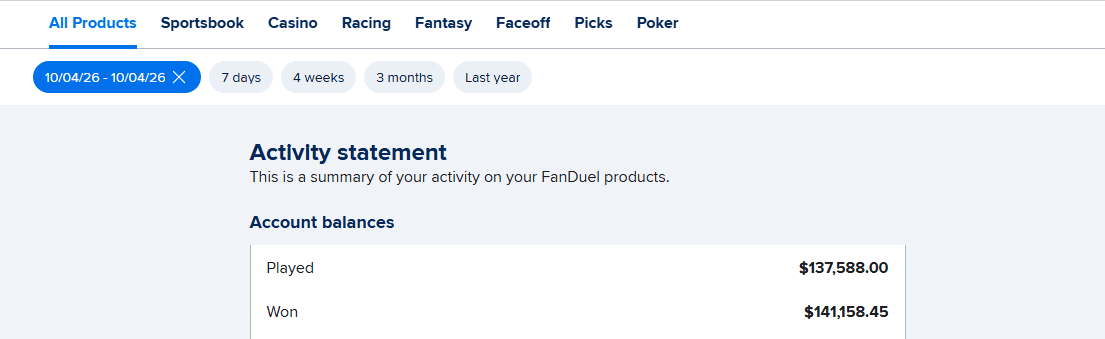
Sports Betting TikTok is the live betting account behind The Best Bet on Sports, covering NFL, NCAAF, NBA, NCAAB, MLB and WNBA markets in real time. The account has been limited on all six major U.S. sportsbooks — FanDuel, DraftKings, Caesars, BetMGM, Fanatics and ESPN BET — for winning on live betting, with $367,520 in verified profit since 2005. View full profile →
Past results do not guarantee future performance. Must be 21 or older to wager.
Related Articles
Kalshi vs the Tribes: New Mexico Lawsuit Cracks Open the $13B Prediction Market Sports Betting Fight
Best NFL Picks Service 2026 - What to Look for in a Sports Handicapper
NFL Betting Trends to Watch for the 2026 Season
Are Early-Season NFL Lines Softer? 11 Seasons Tested
Favorite and Over Parlays: 11 Years of Real Results
Georgia-Alabama Line Flip: Week 6 Playoff Stakes Ranked
Get real live betting picks
From $39.95/mo · Cancel anytime · Email + Discord delivery
● Get The Picks
Choose your package
Tap any tier below to select · Subscribe in one tap
👇 Tap any package to select it
✓ You're selecting
25 Units · $99.95/month
25 unit picks per month. Sweet spot for most bettors — plenty of action without going all-in.
- ✓25 live betting selections/month
- ✓Email + Discord delivery
- ✓All sports (NFL, NCAAF, NBA, NCAAB, MLB)
- ✓Mix of 1, 2, 3, 5-unit rated plays
- ✓Cancel anytime
Secure PayPal · Cancel anytime · No hidden fees · 21+ · +$367K verified
+$367,520 verified · Limited on 6 sportsbooks · 20 years documented · See Proof
Join Our Newsletter
Get free expert sports picks and analysis delivered weekly.