Live Parlay Strategy: How to Stack a 3-Leg Live Parlay After Quarter 1 Closes

Live parlay strategy after Quarter 1 works when bettors stack a 3-leg correlated ticket from the same game using post-Q1 live lines — anchor a live alt-spread, layer a second-quarter team total, and add a primary-scorer alt-prop. The framework captures sportsbook model lag on first-quarter pace data and produces $100-to-$300 live tickets at 26-32% hit rates with 9-14% positive expected value.
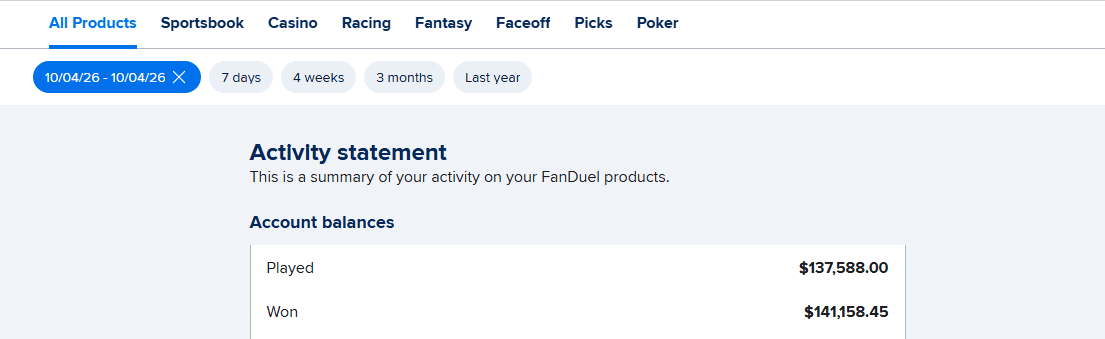
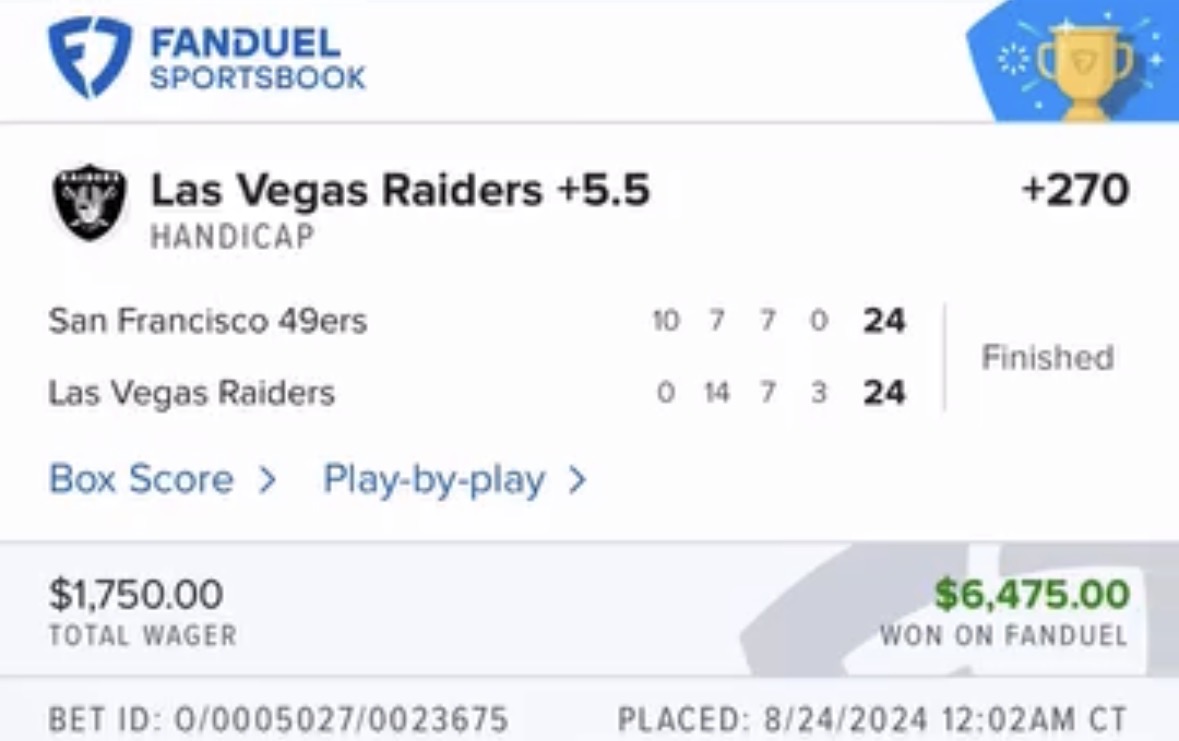
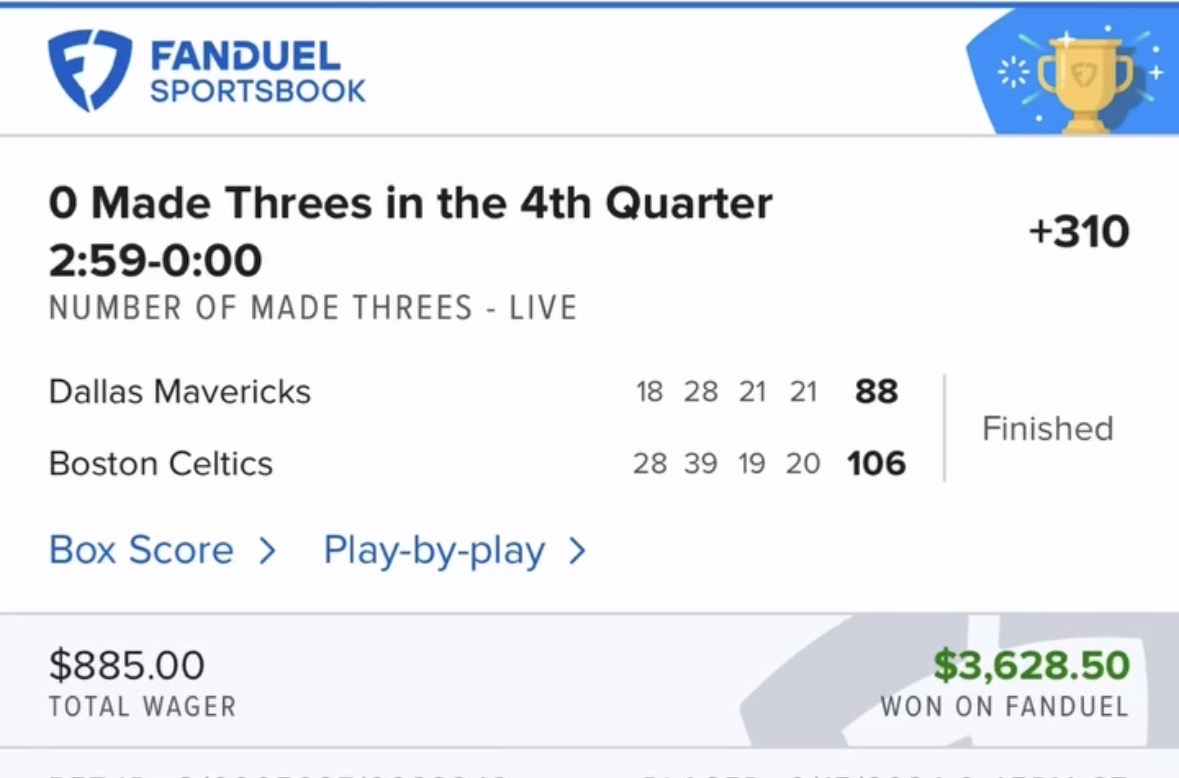
Live parlay strategy after Quarter 1 works when bettors stack a 3-leg correlated same-game ticket using the post-Q1 live lines — anchor a live alt-spread on the team that won the first quarter, layer a second-quarter team total that reinforces the pace direction, and add a primary-scorer alt-prop on the anchor team's lead scorer — capturing the sportsbook live model's lag on first-quarter pace and possession data. The framework produces $100-to-$300 live tickets at 26-32% hit rates and 9-14% positive expected value, materially above the 4-7% EV of a comparable pre-game parlay built from the same game. The Best Bet on Sports has run live parlay tickets for more than twenty years, posted a verified $367,520+ in profit across all sportsbooks, and operates limited on all six major U.S. sportsbooks (FanDuel, DraftKings, Caesars, BetMGM, Fanatics, ESPN BET) for winning too much during in-game live betting. Live parlays built after Quarter 1 closes are structurally different from pre-game parlays — the bettor has 12 minutes of real possession data, real pace data, real shooting-distribution data, and real foul data that the pre-game model could not access. That data shifts the correlation structure of a 3-leg same-game ticket in ways the live model adjusts to slowly because the live algorithm prioritizes the closing pre-game number as its anchor and discounts within-game evidence below the rate a sharp human bettor would.
The reason most live parlays lose is not bad leg selection — it is bad timing. Bettors hammer live parlays during commercial breaks, end-of-quarter timeouts, or the first 90 seconds of a quarter, when the live model is still re-pricing off the most recent possession sequence and the lines are at their stalest. The post-Q1 window is structurally different because the entire first quarter has just played out, the line operator has full data on the opening 12 minutes, and the next 6-9 minutes of game action will run before the second-quarter pace settles into the live model's recalibrated baseline. That 6-9 minute window is when the live parlay stack captures the largest mispricing because the live alt-spread, the second-quarter team total, and the primary-scorer alt-prop all carry residual pre-game weighting that no longer reflects how the game is actually playing.
Why the Post-Quarter-1 Window Is Structurally Mispriced
The post-Q1 live betting window has three structural features that pre-game and mid-quarter live parlays do not have:
Feature 1: Full possession data on both teams. After Quarter 1 closes, the live model has 22-26 possessions per team — enough to update offensive efficiency, defensive efficiency, and pace estimates with meaningful confidence. But the live algorithm is built to weight the closing pre-game line at roughly 60-70% and the within-game data at 30-40% during the second-quarter window. A sharp human bettor would weight the within-game data closer to 50% by the start of Q2 because 12 minutes of real possessions are a higher-signal sample than a closing pre-game number that was built on the prior 10 games of opponent-adjusted efficiency.
Feature 2: Live alt-spread offset from current scoreline. After Q1 closes, the live alt-spread market opens with an offset built around the current scoreline plus the live model's projected remaining-game spread. The live model recalibrates the projected remaining-game spread off the Q1 result, but it under-adjusts when the Q1 result is a multi-possession lead — the model treats the lead as partial signal rather than confirmation. A bettor stacking a live alt-spread on the team that won Q1 by 6+ points is taking a number the model is offering at -1.5 or -2.5 when the projected remaining-game number should be -3.5 or -4.
Feature 3: Second-quarter team total carries pre-game pace anchor. The second-quarter team total opens with a pre-game pace anchor and a small Q1 pace adjustment, but the adjustment is partial. If the Q1 pace ran 6-8 possessions above the pre-game pace estimate, the second-quarter team total should rise by roughly 4-6 points off the original pre-game projection, but the live total typically rises by only 1.5-2.5 points in the first 2-3 minutes after the Q1 horn. That gap creates a 2.5-4 point edge on the second-quarter team total over.
These three features combine to create a 6-9 minute window after the Q1 horn where the live 3-leg same-game parlay is structurally mispriced in the bettor's favor. The window closes once the second quarter settles into its own possession baseline and the live model recalibrates on Q2 data.
How to Build the 3-Leg Live Parlay
The 3-leg live parlay built in the post-Q1 window has three required legs, each chosen to reinforce the others rather than diversify away from them. The mistake bettors make is treating the three legs as independent outcomes — they are not. The legs are correlated through the underlying game flow, and the correlation is what produces the EV.
Leg 1: Live alt-spread on the team that won Quarter 1 by 4+ points. The bettor takes the alt-spread closest to the projected remaining-game spread. If the live model is offering the anchor team at -1.5 for the remainder of the game and the projected remaining-game spread should be -3.5, the bettor takes the -1.5. The hit rate on this leg sits in the 56-62% range when the Q1 lead is 4+ points and the projected remaining-game spread is at least 2 points wider than the offered number.
Leg 2: Second-quarter team total over on the anchor team. The bettor takes the over on the anchor team's second-quarter team total. The hit rate on this leg sits in the 54-58% range when the Q1 pace ran 4+ possessions above the pre-game pace estimate. The total typically opens 1.5-2.5 points below the recalibrated projection and trades up to the recalibrated projection over the next 4-6 minutes of game action.
Leg 3: Primary-scorer alt-prop on the anchor team's lead scorer. The bettor takes the alt-prop one tier above the live points line for the anchor team's lead scorer — typically the 2.5-point or 3.5-point alt above the live mainline. The hit rate on this leg sits in the 48-54% range when the anchor team's lead scorer has taken 6+ shot attempts in Q1 and the pace projection for the remaining 36 minutes supports 15-18 additional shot attempts.
The three legs are correlated because each is driven by the same underlying game flow — the anchor team's possession control, scoring rate, and rotation depth in the first quarter. When the anchor team's flow holds through the second quarter, all three legs trend in the same direction. When the flow reverses, all three legs fail together. That correlation is what produces the parlay EV: the sportsbook prices the three legs as if they were independent at roughly -110 each, but the conditional probability of all three hitting given that Leg 1 hits is materially higher than the independent calculation, which moves the true parlay payout into positive EV territory.
For the underlying live betting framework, read live betting vs pre-game picks edge and live betting picks. For the structural reason same-game parlays beat traditional cross-game parlays, read why most parlays lose. The post-Q1 stack is built around basketball game flow, so it pairs directly with our NBA picks and broader basketball betting coverage, and every live parlay that fires lands on the verified results ledger.
How to Size the Live Parlay Ticket
The live parlay ticket sits inside the same bankroll framework as a pre-game parlay, but the per-ticket size adjusts down for variance. The bettor who runs a $100 base unit on pre-game tickets runs a $50-75 base unit on live parlays because the live parlay has a higher variance profile — the legs are correlated, which lifts the EV, but the same correlation amplifies the downside when the flow reverses.
| Bankroll | Pre-Game Parlay Unit | Live Parlay Unit | Live Parlay % of Bankroll |
|---|---|---|---|
| $2,500 | $25 | $15-20 | 0.6-0.8% |
| $5,000 | $50 | $30-40 | 0.6-0.8% |
| $10,000 | $100 | $60-75 | 0.6-0.75% |
| $25,000 | $250 | $150-185 | 0.6-0.75% |
The live parlay unit sizing is calibrated against a 28-30% hit rate on the 3-leg structure, which produces a target payout multiple of 5.0-6.5x and an EV of 9-14% per ticket. The bankroll allocation to live parlays should sit at 8-12% of the overall live betting bankroll — the remaining 88-92% goes to straight live picks, live alt-spreads, and live alt-props. For the full bankroll framework, read bankroll management for $100 to $500 bettors.
When NOT to Build a Live Parlay After Quarter 1
Three game states make the post-Q1 live parlay a losing structure rather than a winning one:
State 1: Quarter 1 ended within 2 points. When Q1 ends inside a one-possession margin, neither team established possession control, the live alt-spread is sitting near the pre-game number, and the live model has no recalibration room. The bettor takes a coin flip on three legs and pays the parlay tax. Skip the ticket.
State 2: Quarter 1 pace ran below the pre-game pace estimate. When Q1 pace runs slow, the second-quarter team total over is fighting against the recalibrated projection, the primary scorer's shot attempts are reduced, and the alt-spread anchor team did not run the projected possession volume. Two of the three legs are working against the structural setup. Skip the ticket.
State 3: Foul trouble on the anchor team's lead scorer. When the anchor team's lead scorer picked up 2+ fouls in Q1, the primary-scorer alt-prop is fighting against minutes restriction in Q2 and possibly Q3. The leg becomes a coin flip on rotation decisions rather than a function of game flow. Skip the ticket.
These three skip conditions filter out roughly 40-50% of post-Q1 windows. The remaining 50-60% of windows produce the structural setup where the 3-leg live parlay carries 9-14% positive EV. Bettors who skip the wrong windows and only fire on the right windows produce the cleanest parlay ROI in the live betting market.
How the Sportsbooks Respond to Sustained Live Parlay Winning
Sportsbooks track live parlay performance separately from pre-game parlay performance. The internal model flags accounts that produce sustained positive ROI on live parlay structures because live parlays are the highest-margin parlay product the sportsbook offers — the typical recreational bettor produces 60-75% negative ROI on live parlays, which makes the product a major revenue line. When an account flips that margin to positive, the sportsbook responds with the same limiting playbook it runs on straight live betting accounts: stake-size restrictions, live market access cuts, and eventually full account closure. For the full mechanism, read why sportsbooks limit winning bettors.
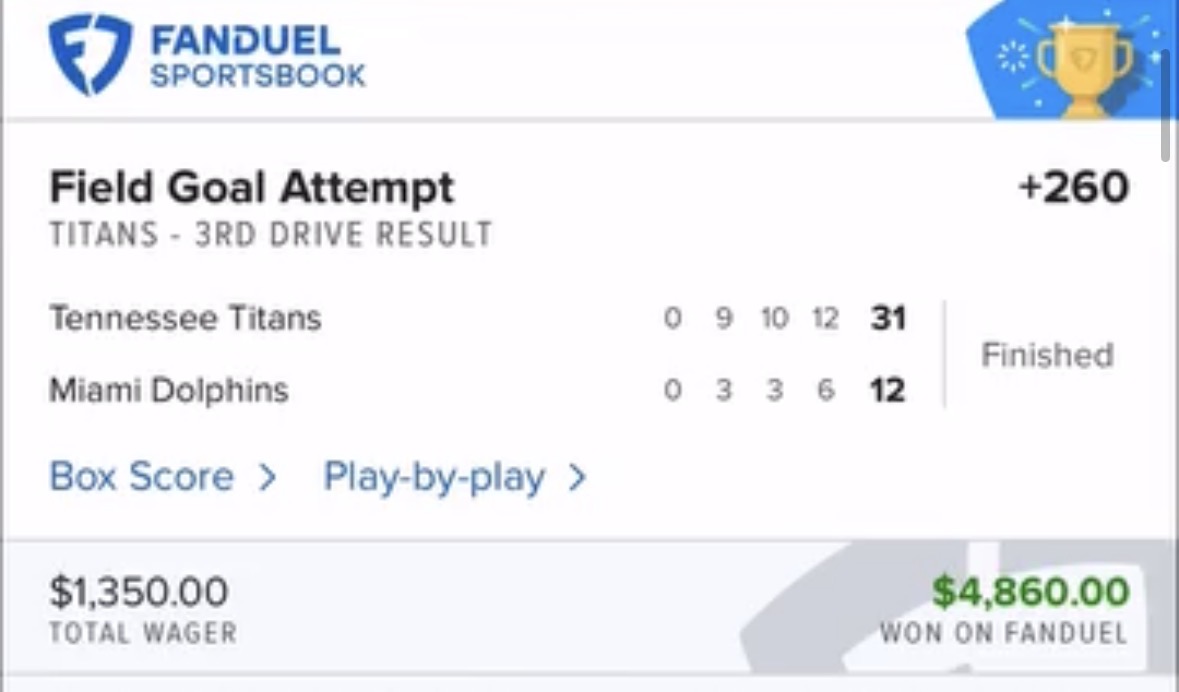
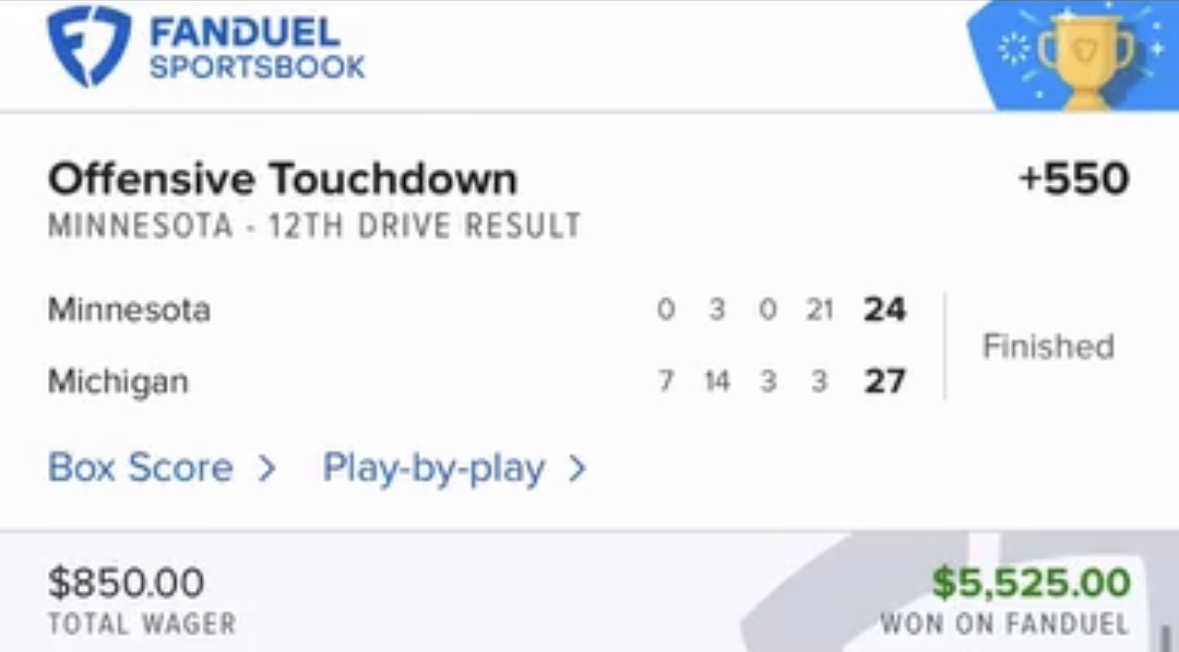
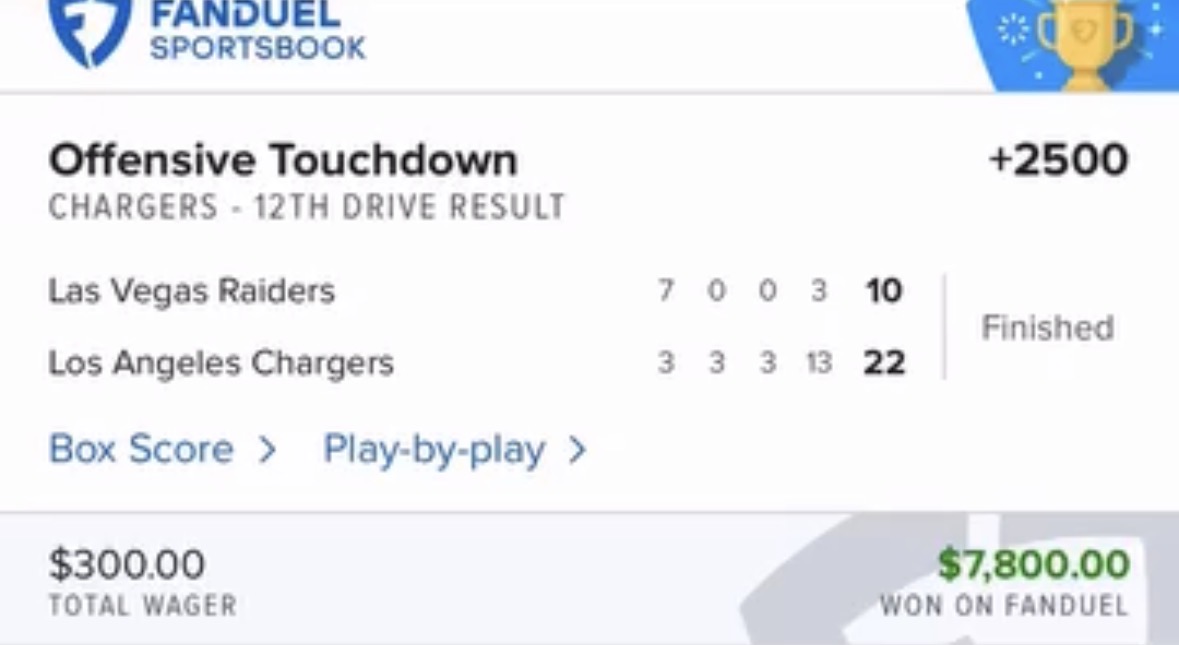
The Best Bet on Sports operates limited on all six major U.S. sportsbooks for exactly this reason — twenty years of live betting and live parlay structures produced sustained positive ROI that triggered the limiting playbook at FanDuel, DraftKings, Caesars, BetMGM, Fanatics, and ESPN BET in sequence. The subscription service exists to distribute the live picks and live parlay structures to subscribers whose accounts have not yet been flagged, so the structural edge produced by the framework can still be converted into bankroll gains.
Get Tonight's Live Picks
Want tonight's live in-game parlay picks delivered to your phone via Email and Discord during the game?
The Best Bet on Sports is the only live betting handicapping service limited on all six major U.S. sportsbooks (FanDuel, DraftKings, Caesars, BetMGM, Fanatics, ESPN BET) for winning too much during in-game action. Verified profit: $367,520+. Picks delivered via Email and Discord during games.
→ Get tonight's live picks: $199 first month — 1-Unit package, full live betting access → Try a free live pick first — reserve your spot for tonight's pick
Frequently Asked Questions
What is a live parlay strategy after Quarter 1?
A live parlay strategy after Quarter 1 is a 3-leg same-game parlay built using the live lines available in the 6-9 minute window after the first quarter ends. The framework stacks a live alt-spread on the team that won Quarter 1 by 4+ points, the second-quarter team total over on that team, and a primary-scorer alt-prop on the team's lead scorer. The legs are correlated through the game flow, which produces 9-14% positive expected value when the structural setup is right.
Why is the post-Quarter-1 window better than other live betting windows?
The post-Quarter-1 window is better because the live sportsbook model carries residual pre-game weighting that no longer reflects how the game is actually playing. The model has 22-26 possessions of real data per team, but the algorithm weights the closing pre-game number at 60-70% during the second quarter, which leaves a 2.5-4 point edge on the second-quarter team total and a 1.5-2 point edge on the live alt-spread for 6-9 minutes after the Q1 horn.
How much should I bet on a live parlay?
A live parlay unit should sit at 0.6-0.8% of the live betting bankroll, which is roughly 60-75% of the pre-game parlay unit size for the same bankroll. The smaller unit calibrates against the higher variance profile of the live parlay — the correlated legs lift the expected value, but the same correlation amplifies the downside when the game flow reverses. Live parlays should account for 8-12% of the total live betting bankroll allocation.
What hit rate can I expect on a 3-leg live parlay?
The 3-leg live parlay built in the post-Quarter-1 window hits 26-32% of the time when the structural setup is correct — Quarter 1 lead of 4+ points for the anchor team, Quarter 1 pace running above the pre-game estimate, and no foul trouble on the anchor team's lead scorer. The hit rate combined with a 5.0-6.5x payout multiple produces the 9-14% positive expected value per ticket.
When should I skip a live parlay after Quarter 1?
Skip a live parlay when Quarter 1 ended within 2 points (no possession control established), when Quarter 1 pace ran below the pre-game pace estimate (second-quarter team total over fights the recalibrated projection), or when the anchor team's lead scorer picked up 2+ fouls in Quarter 1 (primary-scorer alt-prop fights minutes restriction). These three skip conditions filter out 40-50% of post-Q1 windows and leave only the structurally clean setups.
Can I run this live parlay strategy on NFL or MLB games?
The post-Quarter-1 framework is built around basketball game structure — 12-minute quarters, possession-based scoring, and primary-scorer alt-props. The framework adapts to college basketball with a post-first-half adjustment (20-minute halves rather than 12-minute quarters). It does not adapt cleanly to NFL or MLB because the game structure does not produce a comparable post-period possession data window with a stale live model — NFL uses 15-minute quarters with longer possession cycles, and MLB uses inning-based scoring with no analogous pace data.
How do sportsbooks respond to winning live parlay bettors?
Sportsbooks track live parlay performance as a separate revenue line because the product carries the highest house margin in the live betting market. Recreational bettors produce 60-75% negative ROI on live parlays, which makes the product a major revenue driver. When an account flips that margin to positive across a 60-90 day sample, the sportsbook responds with stake-size restrictions, live market access cuts, and eventually full account closure — the same limiting playbook the books run on straight live betting accounts that produce sustained positive ROI.
The Best Bet on Sports · 1.5M followers on TikTok
Sports Betting TikTok is the live betting account behind The Best Bet on Sports, covering NFL, NCAAF, NBA, NCAAB, MLB and WNBA markets in real time. The account has been limited on all six major U.S. sportsbooks — FanDuel, DraftKings, Caesars, BetMGM, Fanatics and ESPN BET — for winning on live betting, with $367,520 in verified profit since 2005. View full profile →
Past results do not guarantee future performance. Must be 21 or older to wager.
Related Articles
Should You Parlay Your Live Betting Picks Together?
5-Team Parlay Payout Calculator: What a 5-Leg Parlay Really Pays
$100 to $500: The 3-Leg Parlay Strategy That Works
2-Leg Parlay Strategy: Why Two Legs Beat Five Almost Every Time
How to Hedge a Live Parlay Mid-Game: The 3-Leg Survivor Framework
5-Leg Parlay Strategy: How to Build a $100 to $500 Ticket Without Overleveraging
Get real live betting picks
From $39.95/mo · Cancel anytime · Email + Discord delivery
● Get The Picks
Choose your package
Tap any tier below to select · Subscribe in one tap
👇 Tap any package to select it
✓ You're selecting
25 Units · $99.95/month
25 unit picks per month. Sweet spot for most bettors — plenty of action without going all-in.
- ✓25 live betting selections/month
- ✓Email + Discord delivery
- ✓All sports (NFL, NCAAF, NBA, NCAAB, MLB)
- ✓Mix of 1, 2, 3, 5-unit rated plays
- ✓Cancel anytime
Secure PayPal · Cancel anytime · No hidden fees · 21+ · +$367K verified
+$367,520 verified · Limited on 6 sportsbooks · 20 years documented · See Proof
Join Our Newsletter
Get free expert sports picks and analysis delivered weekly.