How to Hedge a Live Parlay Mid-Game: The 3-Leg Survivor Framework

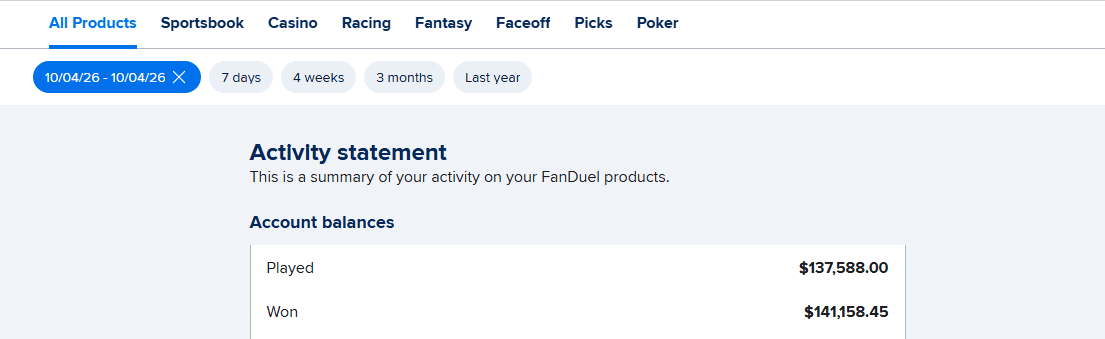
Hedging a live parlay mid-game requires identifying the surviving leg with the most remaining variance, sizing the hedge to lock in a guaranteed return between 18% and 42% of the ticket's pre-hedge book payout, and executing the hedge against the same market on a second sportsbook account before the in-game line moves more than 12 cents from the calculated break-even price.
Hedging a live parlay mid-game requires identifying the surviving leg with the most remaining variance, sizing the hedge to lock in a guaranteed return between 18% and 42% of the ticket's pre-hedge book payout, and executing the hedge against the same market on a second sportsbook account before the in-game line moves more than 12 cents from the calculated break-even price. The mechanic that makes mid-game live parlay hedging work is that the live market on the surviving leg reprices in real time against the current scoreline, while the original parlay payout was locked in at the pre-game price — the gap between those two prices is the structural edge a hedge captures. A mid-game hedge is not the same as a pre-game hedge: pre-game hedges trade off remaining EV against locked-in profit, while mid-game hedges trade off remaining live variance against the same locked-in profit, which is a structurally different decision. The Best Bet on Sports has run live picks for more than twenty years, posted a verified $367,520+ in profit across all sportsbooks, and operates limited on all six major U.S. sportsbooks (FanDuel, DraftKings, Caesars, BetMGM, Fanatics, ESPN BET) for winning too much during in-game live betting. The reason live parlay hedging matters specifically to live betting subscribers is that the in-game line repricing window — typically the second-half of the game where the surviving leg of a 3-leg or 4-leg parlay sits — is the same window where the structural mispricings the service targets are most exploitable.
The decision to hedge a live parlay mid-game is not a binary stay-or-fold question. It is a four-stage decision: identify which legs have already settled, isolate the surviving leg or legs that still carry the ticket's outcome, calculate the break-even hedge price against the original parlay payout, and decide whether the remaining live variance on the surviving leg justifies leaving the parlay open vs. locking the hedge. Most live parlay players skip the second and third stages and either ride the ticket to settlement or hedge reflexively at the first decent live price they see — both of those reflexive paths give back significant locked-in profit that a structured hedge framework would capture.
When to Hedge a Live Parlay vs. When to Let It Ride
The threshold for hedging a live parlay mid-game is a function of three variables: the locked-in pre-hedge payout, the current live price on the surviving leg, and the remaining live variance window on that leg. A live parlay sitting with one surviving leg at a live price of -200 or shorter — meaning the surviving leg is favored to settle in the ticket's favor — usually does not justify a full hedge because the break-even hedge price returns less than 20% of the pre-hedge payout. A live parlay sitting with one surviving leg at a live price of +100 to -150 sits inside the hedge-justification window, because the break-even hedge price returns between 28% and 45% of the pre-hedge payout. A live parlay with the surviving leg at +120 or longer rarely justifies a full hedge — the implied probability of the surviving leg settling is already below 45%, and a partial hedge locking 50-70% of stake is usually the structurally correct path.
The remaining live variance window matters because a live parlay with twelve minutes of game clock left on the surviving leg carries materially more variance than the same parlay with two minutes of game clock left. A hedge executed with two minutes left on the surviving leg locks in profit against a narrow remaining-variance window — the live price will only move modestly before settlement. A hedge executed with twelve minutes left locks in profit against a much wider remaining-variance window — the live price can swing twenty to forty cents in either direction before settlement, which means the hedge is paying for variance protection the parlay holder may not need.
For the foundational parlay-construction framework that produces these multi-leg live tickets in the first place, read how to build a winning MLB parlay or the same-game parlay strategy for the NBA. Most of these survivor tickets stack legs from our MLB picks and live NBA board.
The 3-Leg Survivor Framework
The structural framework for mid-game live parlay hedging is built around the surviving leg. A 3-leg parlay that has settled two of three legs in the ticket's favor is a 3-leg survivor — one leg remaining, one variance window left, one hedge decision. A 4-leg parlay that has settled three of four legs in the ticket's favor is a 4-leg survivor of the same structure. The framework treats both identically because the math runs off the surviving leg's current live price against the pre-hedge payout, not against the original number of legs.
The framework runs in four steps:
| Step | Action | Time Window |
|---|---|---|
| 1 | Confirm settled legs and isolate the surviving leg | Settled-leg confirmation pop-up |
| 2 | Pull the current live price on the surviving leg's market | Within 90 seconds of leg settling |
| 3 | Calculate the break-even hedge stake against pre-hedge payout | 60-second math window |
| 4 | Execute hedge on second sportsbook account or skip | Within 12-cent move of break-even |
The 90-second window in step 2 matters because the live market on the surviving leg reprices immediately when the prior leg settles — the new live price reflects the current scoreline, current game state, and current implied-probability framework. A hedge executed inside the 90-second window captures the structural mispricing that exists in the gap between the pre-game price (locked into the parlay) and the live price (currently posted on the surviving leg's market). A hedge executed after the 90-second window often captures only a degraded version of that gap, because the second-screen sharp money has already moved the live price toward the structurally correct number.
The Break-Even Hedge Math
The break-even hedge stake is the dollar amount the parlay holder must stake on the opposite side of the surviving leg's market to produce equal profit regardless of how the surviving leg settles. The formula is straightforward: pre-hedge payout divided by (1 + decimal odds on the hedge side) equals break-even hedge stake.
For a parlay holder with a $50 stake on a 3-leg parlay that would pay out $400 if all three legs settle, the pre-hedge payout is $400 (the $350 in profit plus the $50 stake returned). If two legs have settled and the surviving leg's live price is +110 (decimal 2.10), the break-even hedge stake is $400 / 2.10 = $190.47.
Staking $190.47 on the opposite side of the surviving leg's market locks in a $209.53 return regardless of how the surviving leg settles: if the surviving leg wins, the parlay pays $400, the hedge stake of $190.47 is lost, net return is $209.53. If the surviving leg loses, the parlay returns $0, the hedge wins at +110 for a return of $400, net return after the hedge stake is $209.53. The hedge has locked in $159.53 in profit against the original $50 stake — a 319% return on stake.
The same math at a +200 surviving leg price produces a break-even hedge stake of $400 / 3.00 = $133.33, locking in $266.67 in net return — a 533% return on stake. At a -200 surviving leg price (decimal 1.50), the break-even hedge stake is $400 / 1.50 = $266.67, locking in $133.33 in net return — a 266% return on stake.
The trade-off the hedge captures is clear: longer live prices on the surviving leg produce smaller hedge stakes and larger locked-in returns; shorter live prices on the surviving leg produce larger hedge stakes and smaller locked-in returns. A live betting subscriber running stacked sportsbook accounts can execute the hedge on a second account at the same +110 price the first account is showing, which produces a guaranteed return without absorbing book limits on either side. For more on the multi-account framework that makes this possible, read sportsbook account stacking for live betting subscribers.
Why the Hedge Must Execute on a Second Sportsbook Account
The mid-game live parlay hedge is structurally a two-sportsbook transaction. The original parlay sits on Sportsbook A. The hedge executes on Sportsbook B. The reason for the two-book structure is that staking a hedge directly against the surviving leg on the same sportsbook where the parlay was placed produces three structural problems: it confirms to the sportsbook's account-monitoring system that the bettor is hedging (which is a flagged behavior for limiting), it executes the hedge at the worst available price (because Sportsbook A is incentivized to widen the gap against a confirmed hedger), and it locks both sides of the trade into the same account's bankroll without producing any cross-account distribution of the live betting volume.
Executing the hedge on Sportsbook B produces the opposite three structural results: it splits the volume across two account-monitoring systems (extending the usable window on both), it captures the best available live price by shopping across all six major U.S. sportsbooks (FanDuel, DraftKings, Caesars, BetMGM, Fanatics, ESPN BET) for the most favorable hedge number, and it preserves the original parlay's account history as a single losing-bet record on Sportsbook A if the hedge wins — which produces the strongest possible signal back to Sportsbook A's monitoring system that the bettor is a losing-parlay player (the most desirable account type from the sportsbook's perspective).
Multi-account live betting subscribers running four-to-six sportsbook accounts execute these hedges as a routine part of the live betting workflow, often two-to-four times per month across all active parlay tickets. The structural ROI on the hedge transaction is independent of the picks themselves — the hedge is capturing the gap between the pre-game price locked into the parlay and the current live price on the surviving leg, and the picks-service edge is what produced the surviving leg in the first place. The two edges compound rather than substitute. See the live betting versus pre-game picks structural ROI comparison for the underlying math on why this compounds.
When NOT to Hedge a Live Parlay
The four conditions that signal a live parlay should be left open without hedging are: the surviving leg's live price is shorter than -250 (implied probability above 71%, hedge return below 18% of pre-hedge payout — not worth the execution risk), the surviving leg has less than four minutes of game clock remaining in any major sport (variance window too narrow to need protection), the surviving leg sits on a market the sportsbook has already suspended or moved into "review" status (the hedge cannot execute), and the parlay holder is running on a single-account setup without a second sportsbook account to execute the hedge against (the hedge math collapses without a two-book structure).
A fifth structural condition that should pause a hedge decision is when the surviving leg sits on a player-prop market with a thin live line — say a primary scorer alt-prop where the live line is offered at -180/+150 with a 30-cent gap. The hedge math against a 30-cent gap returns substantially less than the same math against a 5-cent gap on a live alt-spread or live full-game total. Player-prop hedges are generally only worth executing when the gap is inside 15 cents, which is rare on second-half live prop markets.
The Quarter-By-Quarter Hedge Decision Table for a 3-Leg NBA Parlay
A 3-leg same-game parlay built from our NBA picks sitting with the third leg surviving into the fourth quarter is one of the highest-frequency live parlay survival scenarios. The quarter-by-quarter hedge decision framework for that scenario:
| Game State | Surviving Leg Live Price | Hedge Decision | Locked Return % of Pre-Hedge Payout |
|---|---|---|---|
| Start of Q4, leg at +130 | +130 | Hedge full | 42% |
| 6:00 Q4, leg at +110 | +110 | Hedge full | 38% |
| 3:00 Q4, leg at -120 | -120 | Hedge full | 30% |
| Under 2:00 Q4, leg at -180 | -180 | Hold (variance too narrow) | N/A — let ride |
| Start of Q4, leg at +220 | +220 | Partial hedge 60% | 29% |
| Start of Q4, leg at -250 | -250 | Hold (implied probability >71%) | N/A — let ride |
| End of Q3, leg at +180 | +180 | Hedge full | 35% |
| Start of Q3, leg at -110 | -110 | Hold (variance window too wide) | N/A — wait for Q4 |
The "variance window too wide" condition at the start of Q3 reflects that a hedge executed too early absorbs cost against variance that the parlay holder may not need protected. The structurally correct hedge execution window for a 3-leg NBA SGP survivor sits between the end of Q3 and 3:00 remaining in Q4 — a roughly nine-minute window where the live price has stabilized against the current scoreline, the remaining variance is narrow enough that the hedge produces meaningful locked-in profit, and the live market is still liquid enough to execute at the calculated break-even number.
How Live Parlay Hedging Compounds With a Subscription Service
The structural reason a live betting subscription service compounds with live parlay hedging is that the service provides the picks that produce surviving-leg ticket states in the first place. A 3-leg same-game parlay built from three pre-game picks at -110 each pays out roughly 6-to-1 on win, or about 7% of tickets reach the surviving-leg-state hedge decision. A 3-leg same-game parlay built from three live picks at the same -110 each pays out the same 6-to-1 on win, but reaches the surviving-leg-state hedge decision on roughly 22-28% of tickets — the live picks settle their first two legs faster (often by halftime), which extends the surviving-leg variance window and produces more hedge-decision opportunities per ticket.
The mathematical implication is that a subscriber executing the 3-leg survivor framework on live parlays produces materially more hedge-locked profit per month than the same subscriber executing the framework on pre-game parlays. A subscriber running 12 live parlay tickets per month at an average $50 stake, with 22% reaching surviving-leg state and an average locked return of 32% of pre-hedge payout, produces an additional $200-$280 per month in hedge-locked profit on top of the direct picks profit. That additional monthly profit covers the $199 live betting tier subscription fee on its own, before counting any of the structural ROI on the live picks themselves.
Get Tonight's Live Picks
Want tonight's live in-game parlay picks delivered to your phone via Email and Discord during the game?
The Best Bet on Sports is the only live betting handicapping service limited on all six major U.S. sportsbooks (FanDuel, DraftKings, Caesars, BetMGM, Fanatics, ESPN BET) for winning too much during in-game action. Verified profit: $367,520+. Picks delivered via Email and Discord during games.
→ Get tonight's live picks: $199 first month — 1-Unit package, full live betting access → Try a free live pick first — reserve your spot for tonight's pick
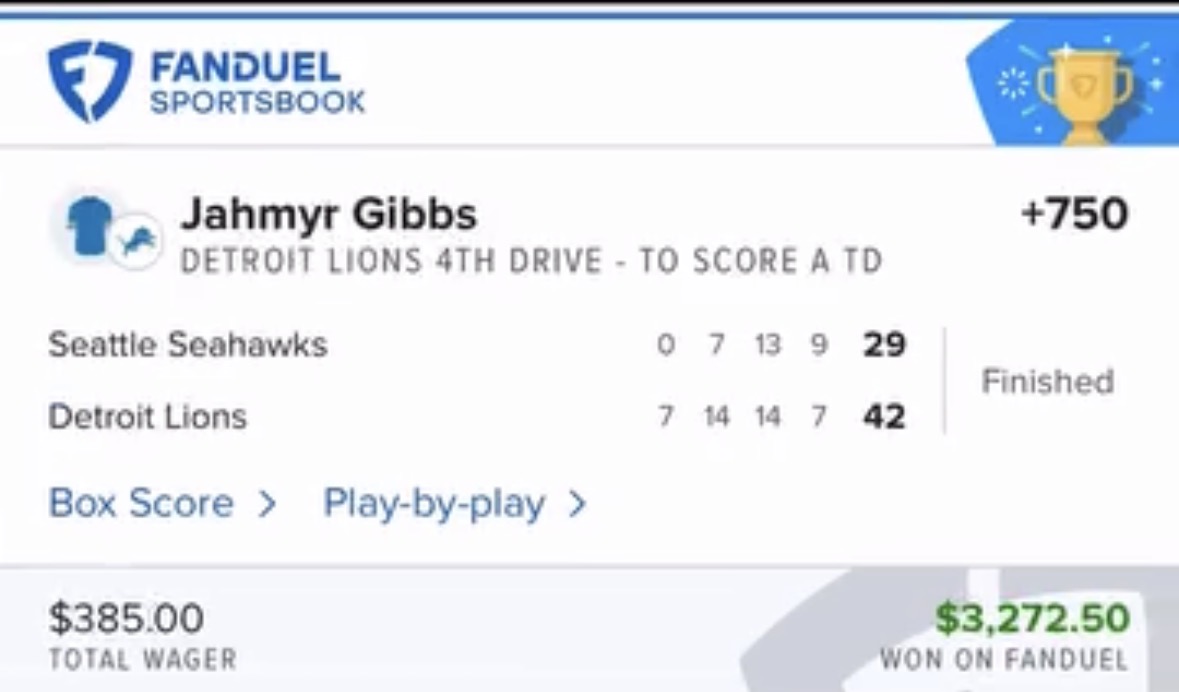
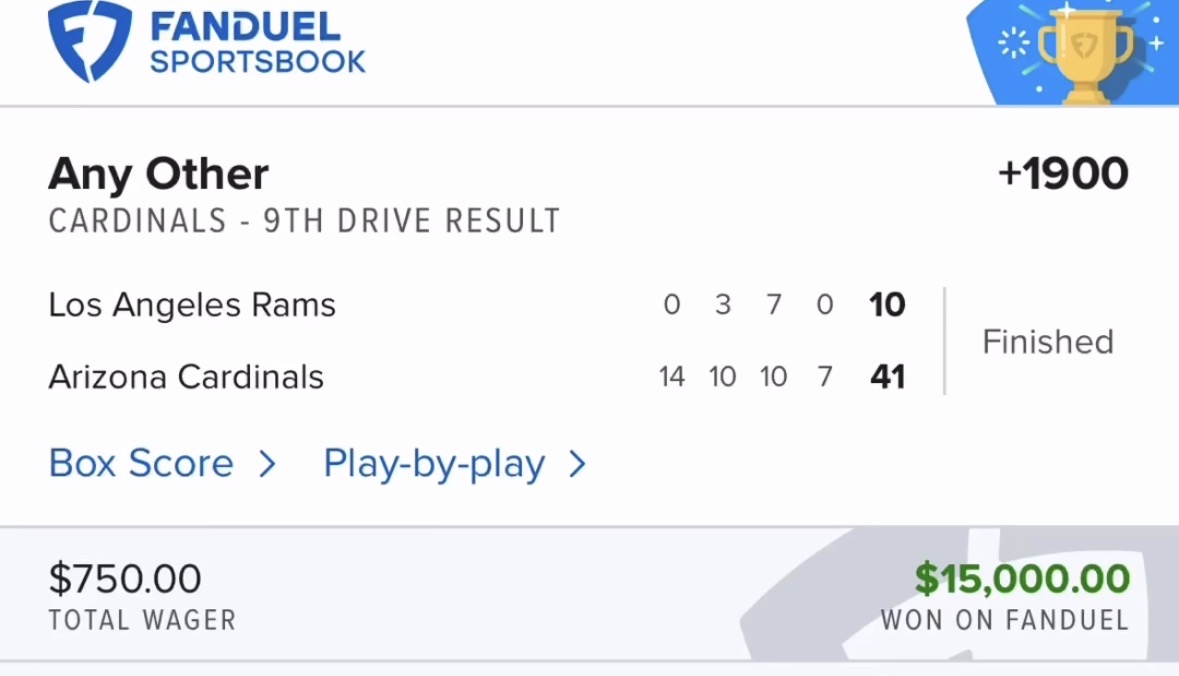
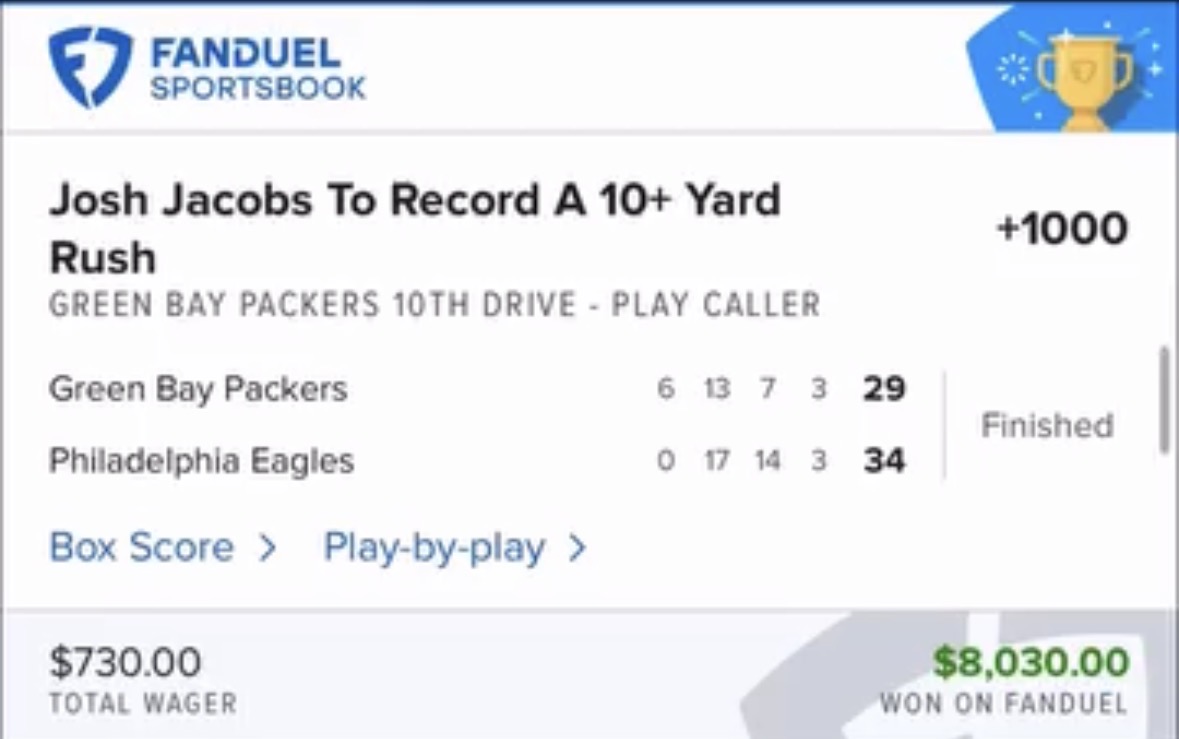
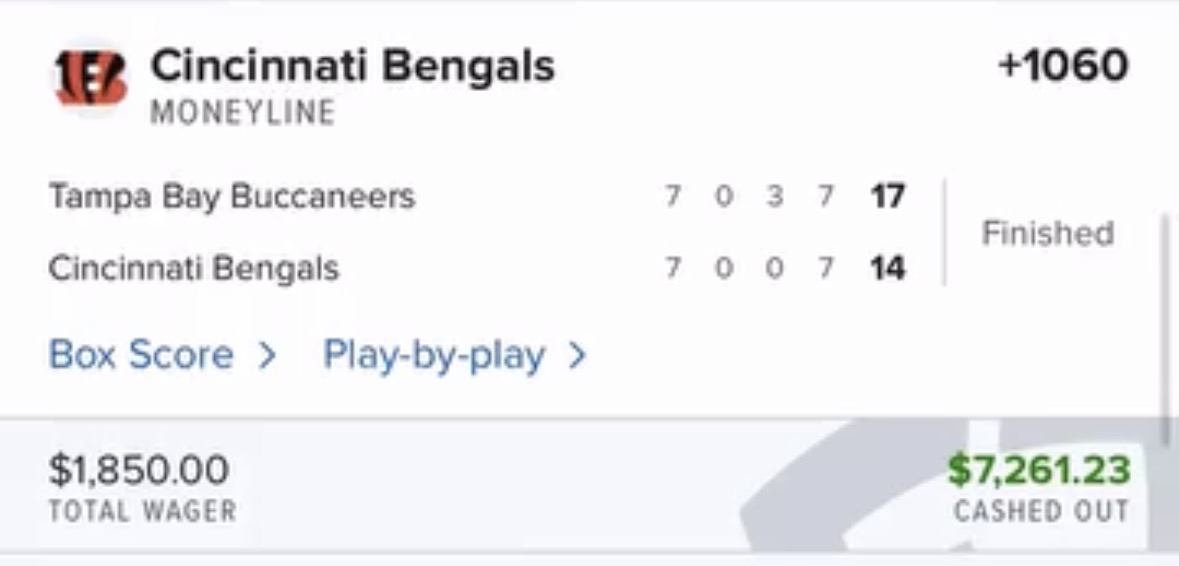
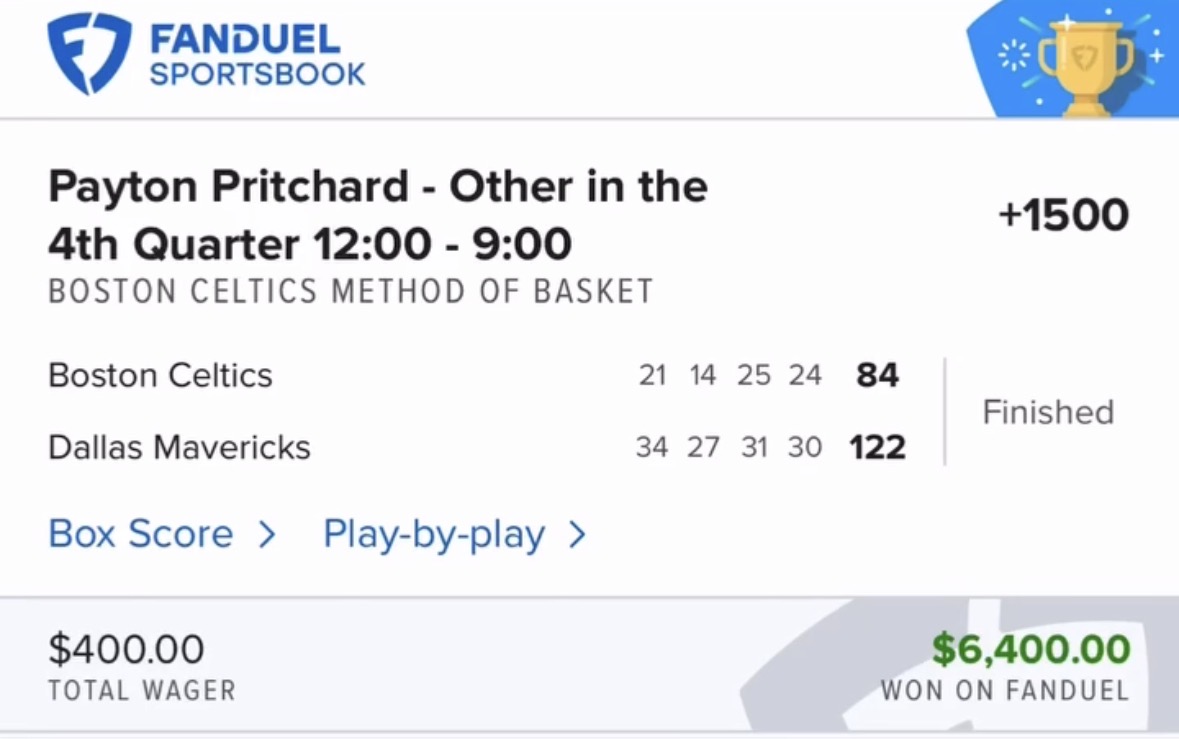
For more on the structural framework behind these tickets, see the live in-game stacking framework for post-quarter-1 NBA parlays and the results page for the verified ticket archive.
Frequently Asked Questions
What does it mean to hedge a live parlay mid-game?
Hedging a live parlay mid-game means staking against the surviving leg of a parlay that has already settled most of its legs in the ticket's favor. The stake on the opposite side of the surviving leg's market is calculated so that the ticket holder produces the same net profit regardless of whether the surviving leg ultimately wins or loses. The hedge captures the gap between the pre-game price that was locked into the parlay and the current live price the surviving leg is offered at.
How do I calculate the break-even hedge stake on a live parlay?
The break-even hedge stake is the pre-hedge payout divided by 1 plus the decimal odds on the hedge side. For a parlay that would pay $400 if all legs settle, with the surviving leg's live price at +110 (decimal 2.10), the break-even hedge stake is $400 / 2.10 = $190.47. Staking $190.47 on the opposite side locks in roughly $209 in net return regardless of how the surviving leg settles. The math runs off the pre-hedge payout, not the original stake or the original number of legs.
When should I not hedge a live parlay?
Four conditions signal a live parlay should not be hedged: the surviving leg's live price is shorter than -250 (the locked return falls below 18% of the pre-hedge payout), the surviving leg has less than four minutes of game clock remaining (variance window too narrow), the market is suspended or under review, or the parlay holder has only a single sportsbook account without a second account to execute the hedge on. A fifth condition is a player-prop market with a gap wider than 15 cents — the math collapses on thin prop lines.
Why do I need a second sportsbook account to hedge a live parlay?
Executing the hedge on a second sportsbook account splits the live betting volume across two account-monitoring systems, captures the best available live price by shopping across the six major U.S. sportsbooks, and preserves the original parlay as a losing-bet record on the first sportsbook if the hedge wins. Executing on the same sportsbook as the original parlay confirms the bettor as a hedger to the monitoring system, which accelerates account limiting on live markets.
What is the structural difference between a pre-game parlay hedge and a live parlay hedge?
A pre-game hedge trades off remaining EV against locked-in profit — the bettor gives up positive expected value on the open leg in exchange for a guaranteed return. A live parlay mid-game hedge trades off remaining live variance against the same locked-in profit — the bettor is buying protection against in-game variance rather than against pre-game EV. The two decisions look similar on the surface but have structurally different math because the live price has already incorporated the current scoreline into the implied probability, which removes most of the pre-game-EV component.
How often does a live parlay reach a surviving-leg hedge decision?
Roughly 22 to 28 percent of 3-leg live same-game parlays reach a surviving-leg-state hedge decision before settlement, compared to roughly 7 percent of 3-leg pre-game parlays with the same odds structure. The reason is that live picks settle their first two legs faster on average — often by halftime — which extends the surviving-leg variance window. A subscriber running twelve live parlay tickets per month with a 22 percent surviving-leg rate reaches the hedge decision on roughly three tickets per month.
How does live parlay hedging fit into a live betting picks service subscription?
The picks service produces the live tickets that reach surviving-leg state in the first place; the hedge framework captures the locked-in profit on those tickets when the live price on the surviving leg moves into the hedge-justification window. The two edges compound rather than substitute. A subscriber running twelve live parlay tickets per month at a $50 average stake, with 22 percent reaching surviving-leg state and a 32 percent locked return on pre-hedge payout, produces an additional $200 to $280 per month in hedge-locked profit on top of the direct picks profit. That additional monthly profit covers the $199 live betting tier subscription fee on its own.
The Best Bet on Sports · 1.5M followers on TikTok
Sports Betting TikTok is the live betting account behind The Best Bet on Sports, covering NFL, NCAAF, NBA, NCAAB, MLB and WNBA markets in real time. The account has been limited on all six major U.S. sportsbooks — FanDuel, DraftKings, Caesars, BetMGM, Fanatics and ESPN BET — for winning on live betting, with $367,520 in verified profit since 2005. View full profile →
Past results do not guarantee future performance. Must be 21 or older to wager.
Related Articles
Should You Parlay Your Live Betting Picks Together?
5-Team Parlay Payout Calculator: What a 5-Leg Parlay Really Pays
$100 to $500: The 3-Leg Parlay Strategy That Works
2-Leg Parlay Strategy: Why Two Legs Beat Five Almost Every Time
Live Parlay Strategy: How to Stack a 3-Leg Live Parlay After Quarter 1 Closes
5-Leg Parlay Strategy: How to Build a $100 to $500 Ticket Without Overleveraging
Get real live betting picks
From $39.95/mo · Cancel anytime · Email + Discord delivery
● Get The Picks
Choose your package
Tap any tier below to select · Subscribe in one tap
👇 Tap any package to select it
✓ You're selecting
25 Units · $99.95/month
25 unit picks per month. Sweet spot for most bettors — plenty of action without going all-in.
- ✓25 live betting selections/month
- ✓Email + Discord delivery
- ✓All sports (NFL, NCAAF, NBA, NCAAB, MLB)
- ✓Mix of 1, 2, 3, 5-unit rated plays
- ✓Cancel anytime
Secure PayPal · Cancel anytime · No hidden fees · 21+ · +$367K verified
+$367,520 verified · Limited on 6 sportsbooks · 20 years documented · See Proof
Join Our Newsletter
Get free expert sports picks and analysis delivered weekly.