
5-Team Parlay Payout Calculator: What a 5-Leg Parlay Really Pays

A 5-team parlay with all legs at -110 pays about +2,438, turning a $10 stake into roughly $254 and a $100 stake into roughly $2,538. The exact payout depends on each leg's odds: you multiply the decimal odds of all five legs together to get the parlay price. A standard five-leg parlay carries only a 3 to 5 percent chance of cashing, which is why payout size and win probability pull in opposite directions on every 5-leg ticket.
A 5-team parlay with every leg at standard -110 odds pays approximately +2,438, which turns a $10 stake into about $254 and a $100 stake into roughly $2,538 — but it cashes only about 3 to 5 percent of the time. To calculate any 5-team parlay payout, convert each leg to decimal odds, multiply all five together, and multiply by your stake. The payout climbs fast because each added leg multiplies the price, but the win probability collapses just as fast, which is exactly why sportsbooks promote big parlays so heavily. At The Best Bet on Sports, the discipline behind a verified $367,520+ profit — built over 20-plus years while limited on all six major U.S. sportsbooks (FanDuel, DraftKings, Caesars, BetMGM, Fanatics, ESPN BET) for winning too much during live action — treats a 5-leg parlay as a high-variance swing, never a core strategy. Knowing exactly what a five-team parlay pays, and how rarely it hits, is the difference between betting one with open eyes and chasing a number you don't understand.
A 5-team parlay is one of the most-searched bets in sports betting because the payouts look life-changing on a small stake. This guide gives you the exact payout math, a full payout table by stake size, the real win probability, and the one situation where a five-leg ticket is worth the risk instead of a donation to the book.
How Much Does a 5-Team Parlay Pay?
The payout on a 5-team parlay depends entirely on the odds of each leg. When all five legs are priced at the standard -110 (the most common spread and total price), the parlay multiplies out to about +2,438. That means every $1 risked returns about $25.38 total — your dollar back plus $24.38 in profit.
Here is how a 5-team parlay at -110 legs translates across common stake sizes:
| Stake | Parlay odds | Total return | Profit |
|---|---|---|---|
| $10 | +2,438 | ~$254 | ~$244 |
| $25 | +2,438 | ~$635 | ~$610 |
| $50 | +2,438 | ~$1,269 | ~$1,219 |
| $100 | +2,438 | ~$2,538 | ~$2,438 |
| $200 | +2,438 | ~$5,076 | ~$4,876 |
The numbers are why five-leg parlays are so seductive: a $50 ticket pays over $1,200, and a $100 ticket pays well past $2,400. But those payouts exist precisely because the bet almost never wins. For the shorter, more realistic structures, compare this against our 3-team parlay payout calculator and 4-team parlay payout calculator.
How to Calculate a 5-Team Parlay Payout Yourself
You don't need a calculator app — you need decimal odds and a multiplication step. Here is the exact method:
1. Convert each leg to decimal odds. A -110 line is 1.91 in decimal. A +120 line is 2.20. A -150 line is 1.67. (To convert: for negative American odds, decimal = 1 + (100 ÷ the number); for positive odds, decimal = 1 + (the number ÷ 100).) 2. Multiply all five decimal odds together. That product is your parlay's decimal price. 3. Multiply the product by your stake. That's your total return, stake included.
For five -110 legs: 1.91 × 1.91 × 1.91 × 1.91 × 1.91 = about 25.38. On a $100 stake, 25.38 × $100 = $2,538 total return. Subtract your $100 stake and the profit is $2,438 — which matches the +2,438 American price.
The power of the method is that it works for any mix of odds. A parlay with three favorites and two underdogs is just five different decimal numbers multiplied together. The more plus-money legs you include, the higher the payout climbs.
What a Mixed-Odds 5-Team Parlay Pays
Most real five-leg parlays aren't five identical -110 legs — they're a mix of favorites, totals, and a couple of value plays. Here is how the payout shifts with the leg mix on a $100 stake:
| 5-leg structure | Approx. parlay odds | $100 return | Implied win probability |
|---|---|---|---|
| 5 legs at -110 each | +2,438 | ~$2,538 | ~4% |
| 5 legs at -150 each | +1,205 | ~$1,305 | ~7.5% |
| 3 legs at -110 + 2 at +120 | ~+4,200 | ~$4,300 | ~2.3% |
| 5 legs at +100 each | +3,100 | ~$3,200 | ~3.1% |
| 4 legs at -110 + 1 at +200 | ~+4,000 | ~$4,100 | ~2.5% |
Two things jump out. First, adding plus-money legs balloons the payout but shrinks the win probability into the low single digits. Second, even a "safer" five-leg parlay built from -150 favorites still only cashes about 7.5 percent of the time — roughly one in thirteen. There is no version of a five-team parlay that is both high-paying and likely to win. That tension is the entire story of the bet.
What Are the Real Odds of Hitting a 5-Team Parlay?
Implied probability is the honest companion to any payout figure. A +2,438 parlay carries an implied win probability of about 4 percent — roughly one cash in every 25 attempts. Put differently, you should expect to lose a five-leg parlay 24 times for every 1 time it hits at standard odds.
That math is not an accident. Each leg you add multiplies the ways the ticket can break. A single -110 bet wins about 52 percent of the time at fair value; chain five of them and the combined probability is 0.52 to the fifth power, which lands around 3.8 percent. The house edge compounds with every leg, which is exactly why books push five- and six-leg parlays in their app banners. We break the underlying trap down in why most parlays lose.
Why Five-Leg Parlays Are So Hard to Hit
The difficulty isn't bad luck — it's structure. A five-team parlay asks five independent things to all go right on the same night, and most legs in a parlay are not correlated, so the book's vig rides on every single one. Three common mistakes make a hard bet nearly impossible:
- Stapling uncorrelated games together. Five random teams from five random games carry the full house edge five times over with no probability boost.
- Chasing the payout, not the value. Bettors pick legs to reach a dollar figure instead of picking legs that are genuinely mispriced.
- Loading up on pre-game lines. Pre-game numbers are the books' sharpest, most-vetted prices — the hardest place to find an edge that survives five legs.
If you're going to bet a five-team parlay anyway, the way to give it a pulse is to build it from genuinely mispriced spots — and the softest spots in all of betting are live.
How Live Betting Changes the 5-Team Parlay Math
Live, in-game odds are priced in seconds under time pressure, which makes them far softer than the carefully set pre-game numbers. A five-leg parlay assembled from live spots — or a live same-game parlay built as a single game unfolds — lets you grab legs at prices the book would never post before tip-off or kickoff.
The practical edge works like this: a team you liked falls behind on a fluky early run, and its live line balloons. If your read is that the deficit is noise rather than a real shift in the matchup, you can fold that team into a parlay at a number that pushes the whole ticket's payout higher while actually improving its true probability. Live totals that overreact to a fast or slow start give you the same kind of value. This is precisely the edge that got our analysts limited on all six major U.S. sportsbooks for winning too much during in-game action — and the broader case for it is laid out in why live betting beats pre-game picks.
The catch is speed. Live windows close in seconds, so the only bettors who profit from them are the ones getting fast, specific alerts — not the ones scrolling odds boards hoping to catch a number before it moves.
Should You Bet a 5-Team Parlay?
A five-team parlay is a high-variance swing, not a strategy. The honest framing: it pays a number that can change your night, but it cashes only a few percent of the time, and over a large sample it loses money faster than almost any other bet you can place. If you bet one, treat the stake as risk capital — money you can lose without touching rent or your core bankroll — and keep it to a small, fixed slice of your week, exactly as we lay out in bankroll management for $100 to $500 bettors. For a clear look at when a parlay actually beats betting straight, read parlay vs. straight bets.
The smartest use of the five-team parlay payout math isn't to bet bigger parlays — it's to understand exactly what you're risking and how rarely it returns, then put most of your money on the value-driven straight and live bets that actually compound over time.
We go deeper on the related market in 6-team parlay payout calculator.
Get Tonight's Live Picks
Want tonight's live in-game parlay legs delivered to your phone via Email and Discord during the game — the same real-time spots our analysts use to build value parlays the books can't pre-price?
The Best Bet on Sports is the only live betting handicapping service limited on all six major U.S. sportsbooks (FanDuel, DraftKings, Caesars, BetMGM, Fanatics, ESPN BET) for winning too much during in-game action. Verified profit: $367,520+. Picks delivered via Email and Discord during games.
→ Get tonight's live picks: $199 first month — 1-Unit package, full live betting access → Try a free live pick first — reserve your spot for tonight's pick
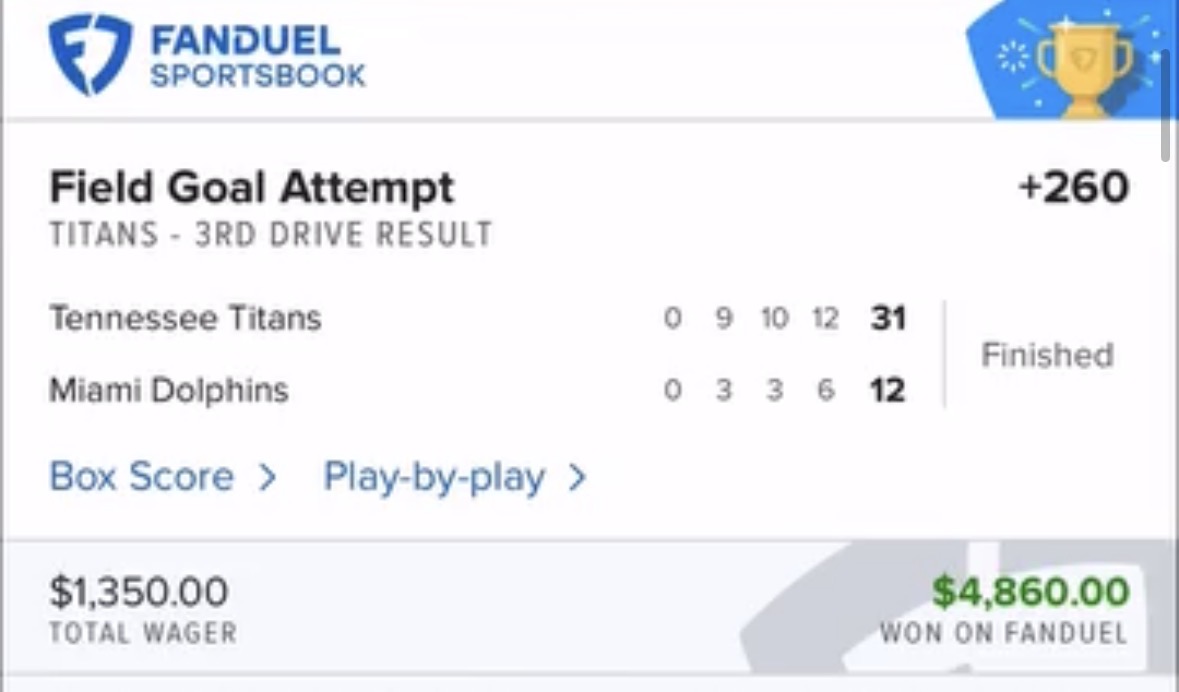
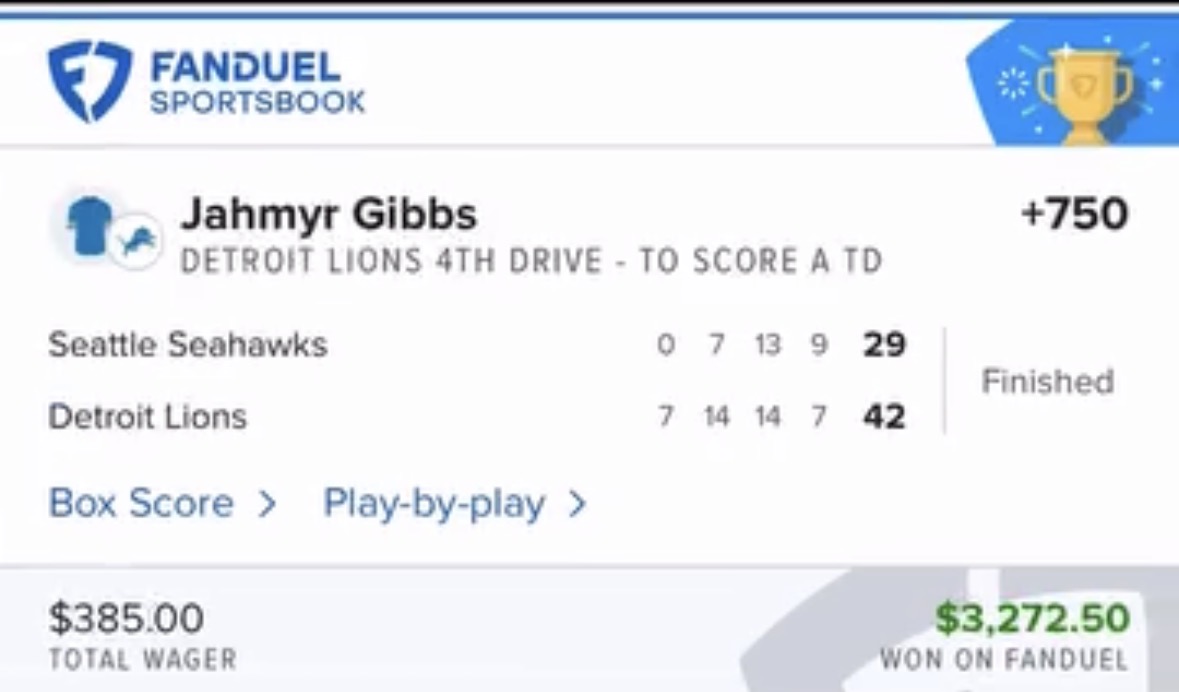
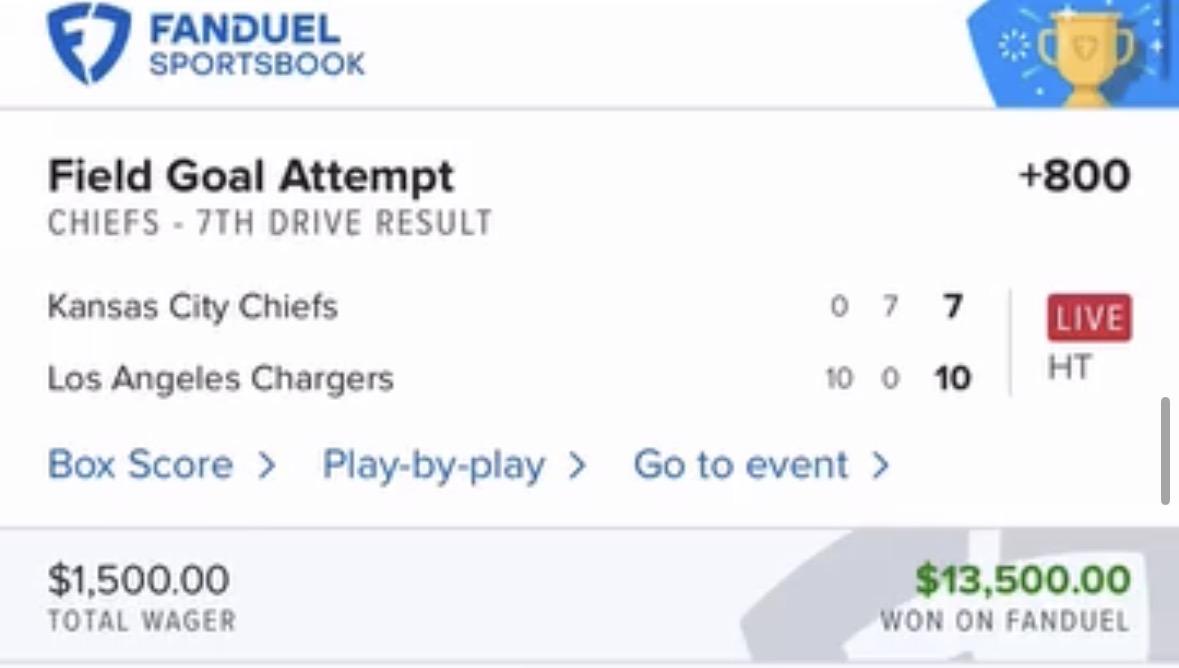
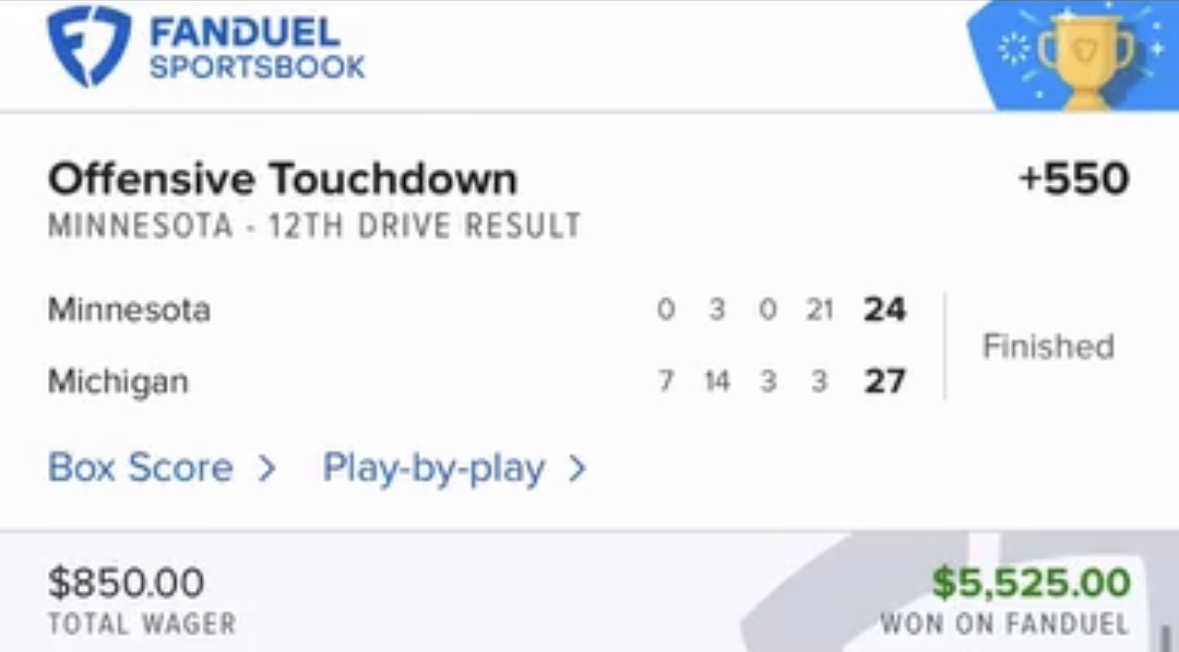
Explore more live betting plays on our live betting picks page, tonight's NBA card on NBA picks, or the full board of today's sports picks.
Frequently Asked Questions
How much does a 5-team parlay pay on $100?
A 5-team parlay with all five legs at standard -110 odds pays about $2,538 in total return on a $100 stake — your $100 back plus roughly $2,438 in profit, which matches a +2,438 American price. The exact figure changes with the odds of each leg: adding plus-money legs raises the payout above $4,000, while parlays built from -150 favorites pay closer to $1,300. To find your specific number, multiply the decimal odds of all five legs together and multiply by your stake.
How do you calculate a 5-team parlay payout?
Convert each leg to decimal odds, multiply all five together, then multiply that product by your stake. For example, five -110 legs convert to 1.91 each; 1.91 multiplied five times equals about 25.38, so a $100 stake returns about $2,538. The method works for any mix of odds — a parlay with three favorites and two underdogs is simply five different decimal numbers multiplied together. The more plus-money legs you include, the higher the total climbs.
What are the odds of hitting a 5-team parlay?
A standard 5-team parlay at -110 legs has an implied win probability of about 4 percent, or roughly one cash in every 25 attempts. That number falls directly out of the math: each leg wins around 52 percent of the time at fair value, and 0.52 to the fifth power lands near 3.8 percent. Parlays built from heavier favorites cash more often — around 7.5 percent for five -150 legs — but no five-leg structure is both high-paying and likely to win.
Why do 5-team parlays pay so much?
Five-team parlays pay large because the price multiplies with every added leg, and that multiplication is the same reason they rarely win. Each leg compounds both the potential payout and the house edge, so the payout climbs into the thousands while the win probability collapses into the low single digits. Sportsbooks promote big parlays aggressively for exactly this reason: the eye-catching payout draws action, while the compounding edge makes them highly profitable for the book over time.
Is a 5-team parlay worth betting?
A 5-team parlay is worth betting only as an occasional high-variance swing funded with risk capital, never as a core strategy. It cashes only a few percent of the time and loses money faster than most other bets over a large sample. If you bet one, keep the stake to a small, fixed slice of your bankroll, build it from genuinely mispriced spots rather than teams stapled together to chase a dollar figure, and never chase a lost parlay with a bigger one.
Does live betting improve a 5-team parlay?
Yes, because live in-game odds are priced fast and under pressure, making them far softer than the books' carefully vetted pre-game numbers. When a team you like falls behind on a fluky early sequence, its live price balloons, letting you grab it at a number that raises both the payout and the true probability of your parlay. Live totals that overreact to a fast or slow start offer the same edge. The challenge is speed — live windows close in seconds, so fast, specific alerts are essential.
What's the difference between a 5-team parlay and a same-game parlay?
A 5-team parlay combines five bets from five different games, while a same-game parlay combines multiple bets from a single game. The key distinction is correlation: legs in a five-game parlay are usually independent, so the house edge rides on each one, whereas same-game legs can move together — a quarterback's passing yards and his team's total points, for instance — which can raise the ticket's true probability relative to its posted odds. Both are high-variance bets, but correlation is what makes a same-game structure occasionally more efficient.
The Best Bet on Sports · 1.5M followers on TikTok
Sports Betting TikTok is the live betting account behind The Best Bet on Sports, covering NFL, NCAAF, NBA, NCAAB, MLB and WNBA markets in real time. The account has been limited on all six major U.S. sportsbooks — FanDuel, DraftKings, Caesars, BetMGM, Fanatics and ESPN BET — for winning on live betting, with $367,520 in verified profit since 2005. View full profile →
Past results do not guarantee future performance. Must be 21 or older to wager.
Related Articles
Should You Parlay Your Live Betting Picks Together?
6-Team Parlay Payout Calculator: What Six Legs Really Pay
2-Team Parlay Payout Calculator: What Two Legs Really Pay
$100 to $500: The 3-Leg Parlay Strategy That Works
2-Leg Parlay Strategy: Why Two Legs Beat Five Almost Every Time
How to Hedge a Live Parlay Mid-Game: The 3-Leg Survivor Framework
Get real live betting picks
From $39.95/mo · Cancel anytime · Email + Discord delivery
● Get The Picks
Choose your package
Tap any tier below to select · Subscribe in one tap
👇 Tap any package to select it
✓ You're selecting
25 Units · $99.95/month
25 unit picks per month. Sweet spot for most bettors — plenty of action without going all-in.
- ✓25 live betting selections/month
- ✓Email + Discord delivery
- ✓All sports (NFL, NCAAF, NBA, NCAAB, MLB)
- ✓Mix of 1, 2, 3, 5-unit rated plays
- ✓Cancel anytime
Secure PayPal · Cancel anytime · No hidden fees · 21+ · +$367K verified
+$367,520 verified · Limited on 6 sportsbooks · 20 years documented · See Proof
Join Our Newsletter
Get free expert sports picks and analysis delivered weekly.