4-Team Parlay Payout Calculator: Real Payouts and Win Rates

A 4-team parlay at standard -110 odds pays about +1228, turning a $100 stake into roughly $1,328 back ($1,228 profit) when all four legs win. But the true win probability is only around 6-8 percent because every leg must hit. This guide shows the real payouts at different stakes and odds, the math behind the number, and why payout size alone is the wrong way to pick a parlay.
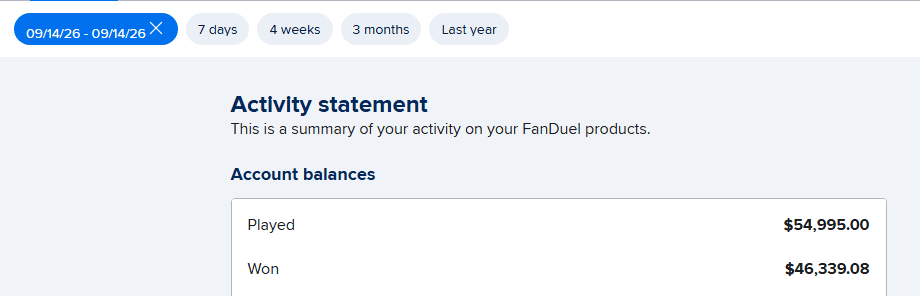
A 4-team parlay built from four standard -110 sides pays about +1228, which turns a $100 stake into roughly $1,328 returned — a $1,228 profit — but only if all four legs win, and the real probability of that is only about 6 to 8 percent. The payout looks enormous because the sportsbook is multiplying four win probabilities together and pricing the long odds against you. Understanding exactly how that number is built is the difference between betting parlays with your eyes open and donating to the book. At The Best Bet on Sports, the discipline that produced a verified $367,520+ profit — earned while limited on all six major U.S. sportsbooks (FanDuel, DraftKings, Caesars, BetMGM, Fanatics, ESPN BET) for winning too much during live action — starts with knowing what a ticket is actually worth before it is placed. A parlay payout calculator is the single most useful tool a bettor can run before tapping "place bet," because it strips the fantasy out of the slip and shows the trade you are really making.
Most bettors look at a 4-team parlay and see the payout. They should be looking at the implied probability. This guide walks through the actual payouts for a 4-leg parlay at common odds and stakes, the math the sportsbook runs, and how to think about whether the ticket is worth firing at all.
What Does a 4-Team Parlay Pay?
A parlay multiplies the odds of each leg together, so the payout grows fast as you add legs. For four legs priced at the standard -110 (the most common spread and total price), the combined American odds land at approximately +1228. The exact number shifts a few points depending on each sportsbook's rounding, but +1228 is the industry-standard reference.
Here is what a 4-team -110 parlay returns at different stakes:
| Stake | Profit if all 4 win | Total returned |
|---|---|---|
| $10 | $122.80 | $132.80 |
| $25 | $307.00 | $332.00 |
| $50 | $614.00 | $664.00 |
| $100 | $1,228.00 | $1,328.00 |
| $200 | $2,456.00 | $2,656.00 |
Those numbers assume all four legs are -110. The moment you add a favorite (say -200) or an underdog (+150), the combined price moves, and the payout changes with it. That is why a parlay calculator matters — eyeballing it is guesswork.
How Is the 4-Team Parlay Payout Calculated?
The math is straightforward once you convert each leg to decimal odds. A -110 line equals a decimal price of 1.909. To find the parlay payout, multiply the decimal odds of every leg together, then multiply by your stake.
Four -110 legs: 1.909 x 1.909 x 1.909 x 1.909 = 13.28 (decimal). A $100 stake x 13.28 = $1,328 total return, of which $1,228 is profit. Convert 13.28 decimal back to American odds and you get +1228.
If your legs have different prices, you convert each one and multiply:
| Leg | American odds | Decimal odds |
|---|---|---|
| Leg 1 | -110 | 1.909 |
| Leg 2 | -150 | 1.667 |
| Leg 3 | +120 | 2.200 |
| Leg 4 | -110 | 1.909 |
| Parlay | +1236 | 13.36 |
A $100 stake on that mixed ticket returns about $1,336. This is exactly the calculation a sportsbook runs instantly when it shows you the payout on your slip — and it is the calculation you should run mentally before you build the ticket. Our deeper breakdown of how to build a winning parlay walks through choosing the legs themselves, and the 3-team parlay payout calculator shows how the math scales down one leg.
What Are the Real Odds of Hitting a 4-Team Parlay?
This is the number the payout hides. A -110 line implies a 52.4 percent chance of winning that single leg. For all four independent legs to hit, you multiply those probabilities: 0.524 x 0.524 x 0.524 x 0.524 = 0.0753, or about 7.5 percent.
If your legs are true coin flips (50 percent each), the math is even harsher: 0.50 to the fourth power equals 6.25 percent. So a realistic 4-team parlay wins somewhere between 6 and 8 percent of the time.
| Per-leg win rate | 4-team parlay win probability |
|---|---|
| 50% (true coin flip) | 6.25% |
| 52.4% (-110 implied) | 7.5% |
| 55% (slight edge) | 9.2% |
| 60% (strong edge) | 13.0% |
Look at the bottom row. Even if you are a genuinely sharp bettor hitting 60 percent of your individual bets — a rate almost no one sustains — a 4-team parlay still loses 87 percent of the time. The +1228 payout exists precisely because the book knows how rarely the ticket cashes. We break down the broader trap in why most parlays lose, and it is the single most important concept for any parlay bettor to internalize.
Why the Payout Number Is the Wrong Way to Pick a Parlay
The +1228 figure is seductive. It is also the reason casual bettors lose money on parlays over time. The sportsbook builds a margin into every leg, and stacking four legs compounds that margin four times over. The longer the ticket, the bigger the book's theoretical hold.
That does not mean parlays are unbeatable — it means the edge has to come from somewhere other than the payout. Two things move the needle:
Correlation. When legs are statistically linked — a team winning and the game going over, for example — the true combined probability is higher than the book's independent-odds math assumes. Exploiting that is the entire premise of correlated parlays and same-game parlay strategy for the NBA. Most sportsbooks restrict or re-price the most correlated combinations, but value still leaks through.
Live timing. A live, in-game parlay leg can be priced off a stale model the moment a game state shifts — a quick score, an injury, a momentum swing. Catching that overcorrection before the line resets is where real parlay value lives, and it is the core of what we do.
Get Tonight's Live Picks
Want tonight's live in-game parlay picks delivered to your phone via Email and Discord during the game?
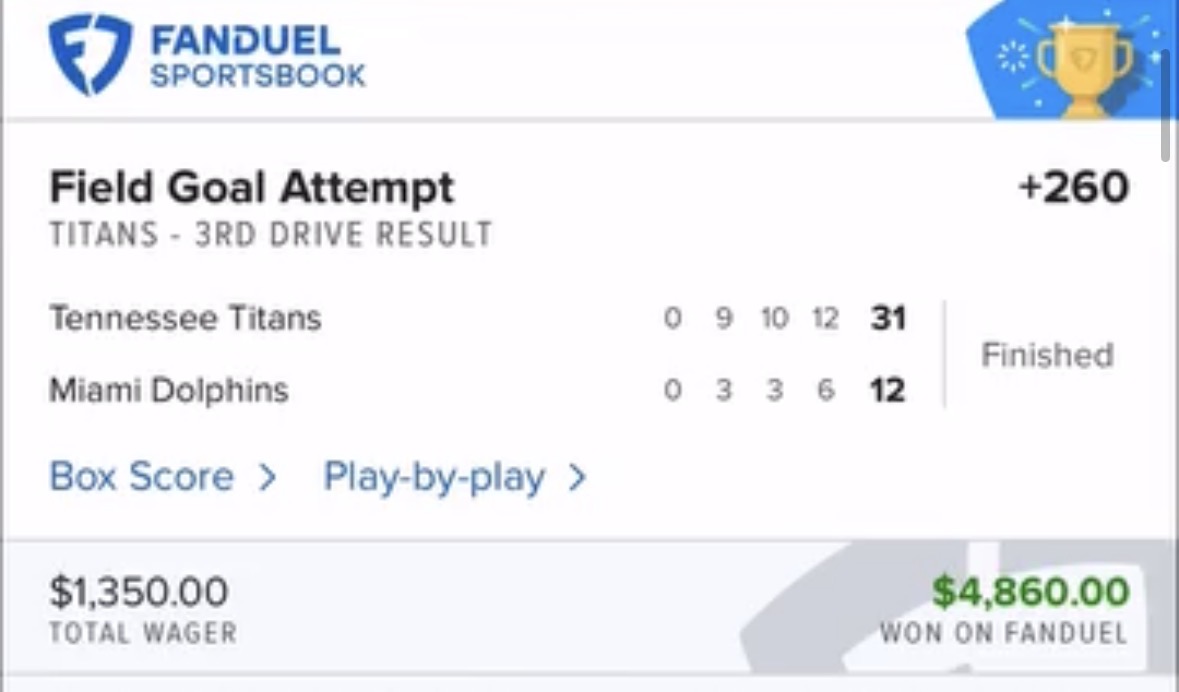
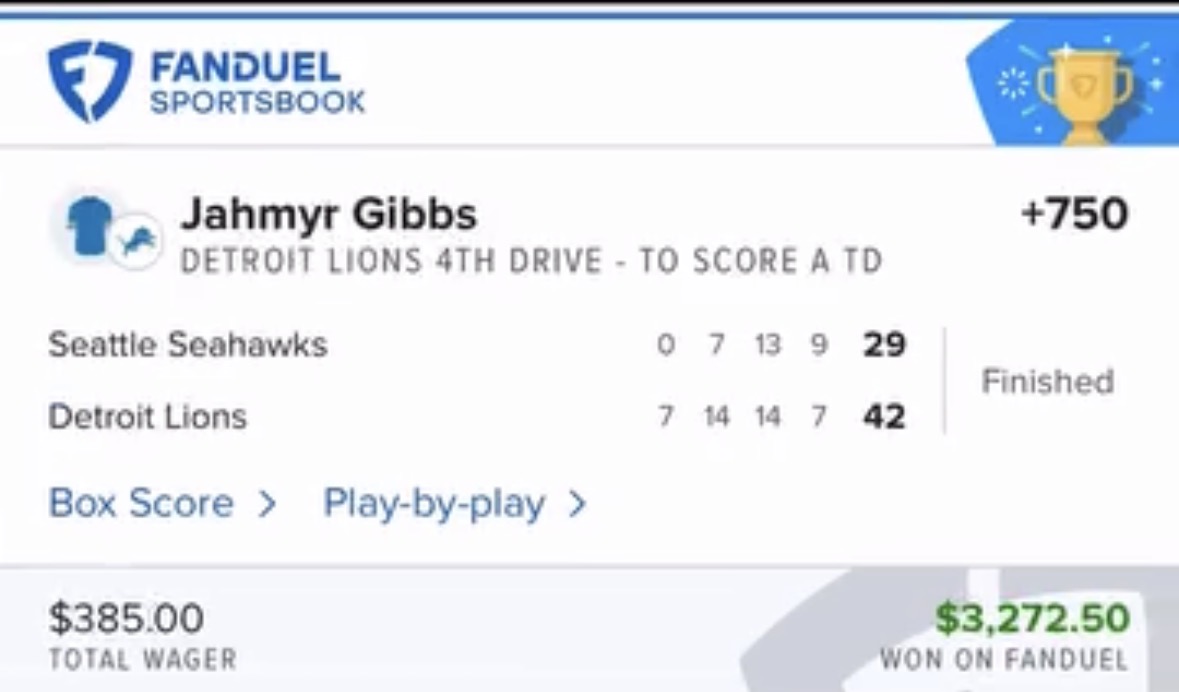
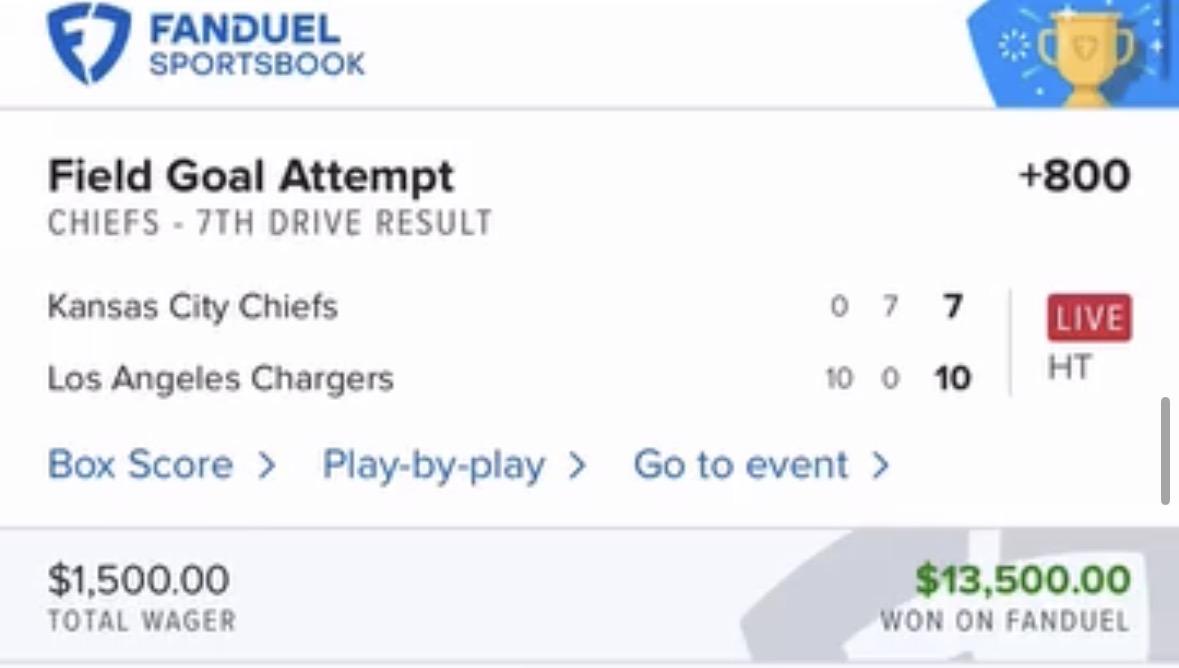
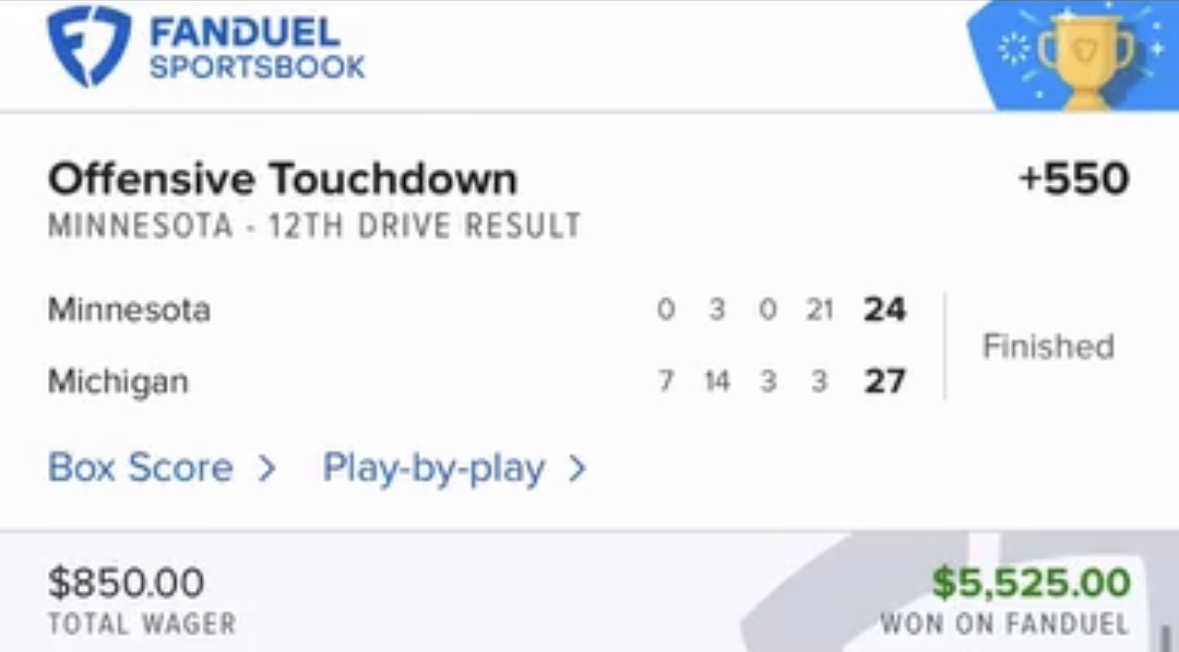
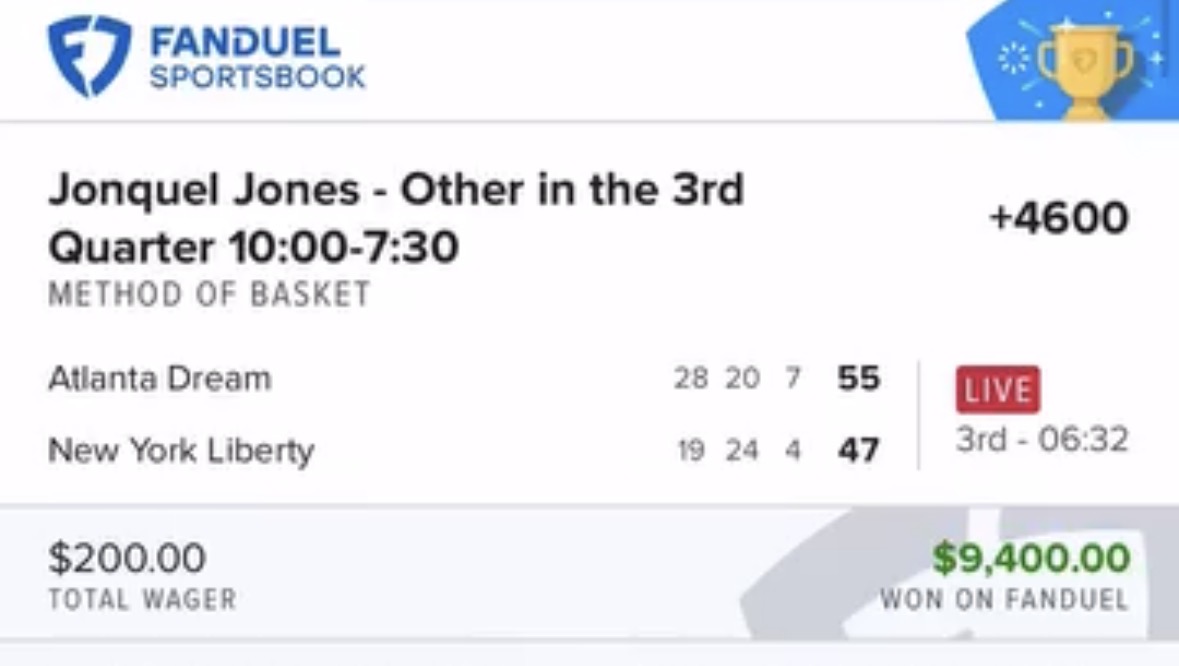
The Best Bet on Sports is the only live betting handicapping service limited on all six major U.S. sportsbooks (FanDuel, DraftKings, Caesars, BetMGM, Fanatics, ESPN BET) for winning too much during in-game action. Verified profit: $367,520+. Picks delivered via Email and Discord during games.
→ Get tonight's live picks: $199 first month — 1-Unit package, full live betting access → Try a free live pick first — reserve your spot for tonight's pick
For more on building tickets the right way, see our guides on round robin parlay strategy and live parlay strategy, or browse current NBA picks and MLB picks.
Frequently Asked Questions
What does a 4-team parlay pay on $100?
A 4-team parlay built from four standard -110 legs pays approximately $1,228 in profit on a $100 stake, for a total return of about $1,328. That corresponds to combined American odds of roughly +1228. The exact payout changes the moment any leg is priced differently than -110 — a -200 favorite shrinks the payout, while a +150 underdog increases it. To get the precise number, convert each leg to decimal odds, multiply them together, and multiply by your stake.
What are the odds of winning a 4-team parlay?
A realistic 4-team parlay wins roughly 6 to 8 percent of the time. If each leg is priced at -110 (a 52.4 percent implied chance), all four hitting works out to about 7.5 percent. If the legs are true coin flips at 50 percent each, the probability drops to 6.25 percent. Even a sharp bettor winning 60 percent of individual bets only cashes a 4-team parlay about 13 percent of the time, which is why the payout is so large.
How do you calculate a parlay payout?
Convert each leg's American odds to decimal odds, multiply all the decimal odds together, then multiply by your stake to get the total return. For example, four -110 legs each convert to 1.909 in decimal. Multiplied together they equal 13.28, so a $100 stake returns $1,328 ($1,228 profit). To convert the combined decimal back to American odds, the 13.28 figure equals +1228. A parlay calculator automates this, but the underlying math is simple multiplication.
Is a 4-team parlay a good bet?
A 4-team parlay is a high-variance, low-probability bet that the sportsbook prices with a stacked margin, so over the long run it is difficult to beat on payout alone. It can be a good bet when the legs are positively correlated — meaning the true combined probability is higher than the independent-odds math assumes — or when a live in-game leg is mispriced before the line resets. As a default play of four unrelated coin-flip sides, it is an entertainment bet, not a profit strategy.
Does a bigger parlay payout mean a better bet?
No. A bigger payout almost always means a lower probability of winning and a larger built-in margin for the sportsbook. Each additional leg multiplies the book's edge against you, so a 6-leg parlay paying +4000 is a worse expected-value bet than a 2-leg parlay paying +260, all else equal. The right way to evaluate a parlay is by the relationship between the true probability of all legs hitting and the price offered — not by how large the potential payout looks on the slip.
What is the difference between a parlay and a same-game parlay?
A traditional parlay combines legs from different games, which the sportsbook treats as statistically independent events and prices by simple multiplication. A same-game parlay combines multiple bets from a single game, where the outcomes are often correlated — a quarterback throwing for more yards is linked to his team scoring more points, for example. Because of that correlation, sportsbooks apply custom pricing models to same-game parlays rather than straight multiplication, which is why their payouts differ from a same-odds traditional parlay.
How can a parlay actually be profitable?
A parlay becomes profitable when the true probability of all legs hitting is higher than the price implies. The two reliable sources of that edge are correlation — linking outcomes that move together so the real combined odds beat the book's independent-odds math — and live timing, where an in-game leg is priced off a stale model the moment the game state shifts. Catching a live overcorrection before the line resets is the core of how a disciplined live betting service finds parlay value, rather than relying on the headline payout.
The Best Bet on Sports · 1.5M followers on TikTok
Sports Betting TikTok is the live betting account behind The Best Bet on Sports, covering NFL, NCAAF, NBA, NCAAB, MLB and WNBA markets in real time. The account has been limited on all six major U.S. sportsbooks — FanDuel, DraftKings, Caesars, BetMGM, Fanatics and ESPN BET — for winning on live betting, with $367,520 in verified profit since 2005. View full profile →
Past results do not guarantee future performance. Must be 21 or older to wager.
Related Articles
The 300-to-1 Rule: Why Your Parlay Pays Less Than the Slip Says
Can You Parlay Futures Bets? Win Totals, Division Odds, and the Real Math
How Are Parlay Payouts Calculated? Parlay Odds Explained
Teaser vs. Parlay: Which Is the Better Bet?
Parlay vs. Straight Bets: Which Actually Wins More Money?
How to Build a Winning Parlay: A Step-by-Step Strategy
Get real live betting picks
From $39.95/mo · Cancel anytime · Email + Discord delivery
● Get The Picks
Choose your package
Tap any tier below to select · Subscribe in one tap
👇 Tap any package to select it
✓ You're selecting
25 Units · $99.95/month
25 unit picks per month. Sweet spot for most bettors — plenty of action without going all-in.
- ✓25 live betting selections/month
- ✓Email + Discord delivery
- ✓All sports (NFL, NCAAF, NBA, NCAAB, MLB)
- ✓Mix of 1, 2, 3, 5-unit rated plays
- ✓Cancel anytime
Secure PayPal · Cancel anytime · No hidden fees · 21+ · +$367K verified
+$367,520 verified · Limited on 6 sportsbooks · 20 years documented · See Proof
Join Our Newsletter
Get free expert sports picks and analysis delivered weekly.