3-Team Parlay Payout Calculator: Real Payouts on Every Bet Size

A 3-team parlay payout is the decimal odds of all three legs multiplied together: three -110 legs pay about +596 and return roughly $696 on a $100 bet, while three +150 underdog legs pay about +1,462. This guide shows the real 3-team parlay payouts at every common odds combination and bet size, explains why the numbers feel bigger than the math justifies, and shows where the sportsbook hold quietly drains your edge.
A 3-team parlay payout is calculated by converting each leg's American odds to decimal odds, multiplying all three together, and multiplying that figure by your stake — three -110 legs produce a decimal payout of 6.96, which returns roughly $696 on a $100 bet for a profit of about $596 (+596 in American odds). The Best Bet on Sports has tracked parlay payouts across all six major U.S. sportsbooks for more than twenty years and earned a verified $367,520+ in profit doing it, and the single most useful thing a 3-team parlay payout calculator can teach you is not the size of the payout — it is the size of the gap between the payout the sportsbook advertises and the payout a fair price would deliver. That gap is the sportsbook hold, it compounds with every leg you add, and on a standard 3-team parlay it sits between 11% and 14%. This guide gives you the real 3-team parlay payouts at every common odds combination and every bet size from $10 to $500, then shows you the one number the calculator cannot display.
A parlay payout calculator works on one principle: parlays multiply, they do not add. A single bet returns your stake plus your winnings. A parlay rolls the full return of leg one onto leg two, then the full return of legs one and two onto leg three. That compounding is why a 3-team parlay of three modest favorites pays far more than the sum of three single bets — and it is also why the sportsbook hold compounds against you at the same time.
How Does a 3-Team Parlay Payout Calculator Work?
Every parlay payout calculation runs through three steps.
Step 1 — Convert American odds to decimal odds. Decimal odds express the total return (stake plus profit) per $1 staked. A positive American number converts as `(odds / 100) + 1`. A negative American number converts as `(100 / odds) + 1`. The most common lines convert as follows:
| American Odds | Decimal Odds | Total Return per $1 |
|---|---|---|
| -150 | 1.667 | $1.67 |
| -120 | 1.833 | $1.83 |
| -110 | 1.909 | $1.91 |
| +100 (even) | 2.000 | $2.00 |
| +120 | 2.200 | $2.20 |
| +150 | 2.500 | $2.50 |
| +200 | 3.000 | $3.00 |
Step 2 — Multiply the three decimal odds together. Three -110 legs: 1.909 × 1.909 × 1.909 = 6.96. That 6.96 is the parlay's combined decimal payout.
Step 3 — Multiply the combined decimal odds by your stake. A $100 stake at a 6.96 combined decimal payout returns $696. Subtract your stake and the profit is $596. Converted back to American odds, that 3-team parlay is priced at roughly +596.
That is the entire mechanism. Any 3-team parlay payout calculator — on a sportsbook app or anywhere else — is doing exactly this multiplication. The reason it matters to do it yourself is that it forces you to see how fast the payout climbs as legs drift from favorites toward underdogs, and how the sportsbook hold rides along underneath every multiplication.
What Does a 3-Team Parlay Pay on $100?
The payout of a 3-team parlay depends entirely on the odds of the three legs. Here are the real payouts on a flat $100 stake across the most common odds combinations:
| 3-Leg Odds Combination | Combined Decimal | $100 Total Return | $100 Profit | American Price |
|---|---|---|---|---|
| Three -150 favorites | 4.63 | $462.96 | $362.96 | +363 |
| Three -110 legs | 6.96 | $695.86 | $595.86 | +596 |
| Three even (+100) legs | 8.00 | $800.00 | $700.00 | +700 |
| Three +120 legs | 10.65 | $1,064.80 | $964.80 | +965 |
| Three +150 underdogs | 15.63 | $1,562.50 | $1,462.50 | +1462 |
| Three +200 underdogs | 27.00 | $2,700.00 | $2,600.00 | +2600 |
Mixed combinations sit between these benchmarks. Two -110 legs plus one +150 leg returns $911 on $100 (profit $811). One -110 leg plus two +150 legs returns $1,193 on $100 (profit $1,093). A -150 favorite plus a -110 leg plus a +130 underdog returns $732 on $100 (profit $632).
The pattern is the headline: moving a single leg from a -110 line to a +150 line more than doubles the payout. That is exactly why parlays sell themselves — and exactly why bettors keep adding underdog legs they have no read on, chasing the bigger number on the screen.
3-Team Parlay Payouts by Bet Size
Most bettors do not stake a flat $100. Here is the standard 3-team parlay of three -110 legs (+596) across every common bet size:
| Stake | Total Return | Profit |
|---|---|---|
| $10 | $69.59 | $59.59 |
| $25 | $173.97 | $148.97 |
| $50 | $347.93 | $297.93 |
| $100 | $695.86 | $595.86 |
| $250 | $1,739.65 | $1,489.65 |
| $500 | $3,479.30 | $2,979.30 |
The payout scales linearly with stake — double the bet, double the return. What does not scale linearly is the variance. A $500 3-team parlay at +596 wins about one time in seven at fair leg pricing. Six losing $500 tickets in a row is not bad luck on a 3-team parlay; it is the mathematically expected sequence. Bet sizing on parlays should always assume the long, ordinary losing streak — not the screenshot-worthy hit.
Why Do 3-Team Parlay Payouts Feel Bigger Than They Should?
Here is the part the sportsbook would prefer you skip. A 3-team parlay of three true 50/50 events has a real probability of 0.5 × 0.5 × 0.5 = 12.5%, or odds of exactly 7-to-1. A fair payout on a 12.5% event is a combined decimal of 8.00 — every dollar should come back as eight.
The sportsbook pays 6.96, not 8.00.
That 13% shortfall is the parlay hold, and it is not a separate fee — it is baked invisibly into each -110 leg. A -110 line implies a 52.4% probability on what is truly a 50% event. Stack three of those inflated probabilities and the overcharge compounds: a standard 3-team parlay carries an 11-14% hold against the bettor, depending on the exact leg prices. That is roughly three times the hold of a single straight bet.
The payout feels enormous because $596 profit on $100 is a large, vivid number. But a fair-priced ticket would pay $700. The $104 difference per $100 staked is the sportsbook's structural edge, and a payout calculator that only shows you the $596 has shown you half the story.
What Hit Rate Does a 3-Team Parlay Need to Win?
A 3-team parlay at +596 needs to cash 14.4% of the time just to break even (1 ÷ 6.96 = 0.144). At fair 50/50 leg pricing, three legs hit together only 12.5% of the time. The 1.9-point gap between 14.4% needed and 12.5% delivered is the hold, expressed as a hit rate — and it is why parlays of "coin-flip" legs lose money over any meaningful sample.
To beat a 3-team -110 parlay, every leg has to clear roughly 52.4% — the -110 break-even rate. Three legs at 52.4% hit together 14.4% of the time, which exactly matches the break-even point. Anything above 52.4% per leg turns the parlay profitable; anything below it bleeds the bankroll.
| Per-Leg Win Rate | 3-Leg Parlay Hit Rate | Result vs +596 Break-Even (14.4%) |
|---|---|---|
| 50.0% | 12.5% | Losing — below break-even |
| 52.4% | 14.4% | Break-even |
| 55.0% | 16.6% | Profitable |
| 58.0% | 19.5% | Strongly profitable |
The entire game of the 3-team parlay lives in that table. The payout calculator tells you what you win when the ticket cashes. This table tells you whether the ticket cashes often enough to matter. The first number is marketing. The second number is the bet.
Standard 3-Team Parlay vs Same-Game Parlay Payouts
A same-game parlay (SGP) combines three legs from one game, and its payout is calculated differently. Because the legs from a single game are correlated — a quarterback throwing for 300 yards is connected to his top receiver going over his yardage prop — the sportsbook cannot simply multiply the three decimal odds. It runs the legs through a correlation model that deflates the payout, typically by 15-25%.
So a 3-leg SGP that would pay +596 if the legs were independent might pay only +430 to +480 once the correlation engine is applied. The trade-off is real: the SGP payout is smaller, but correlated legs can also win together more reliably than three unrelated legs. The structural mistake bettors make is building an SGP out of uncorrelated legs from the same game — three different players in three unrelated markets — which absorbs the payout deflation while capturing none of the correlation benefit. If you are going to accept the SGP's deflated payout, every leg has to share a genuine correlation thread. For a deeper framework on this, see our breakdown of same-game parlay strategy for the NBA and why most parlays lose.
The Number the Calculator Cannot Show You
A 3-team parlay payout calculator is a useful tool. It will tell you, to the penny, what three legs return at any odds and any stake. What it cannot tell you — what no calculator can tell you — is whether those three legs are worth betting in the first place.
The payout is fixed math. The edge is everything else: which three games out of tonight's slate are mispriced, which leg the sportsbook hung a soft number on, which live-betting window opens after a slow start and lets you build a 3-team ticket at a price the pre-game market never offered. A +596 payout on three legs you have no edge on is a 14.4% break-even bet you will hit 12.5% of the time. The same +596 payout on three legs that each clear 55% is a long-term winner. The calculator treats both tickets identically. The market does not.
That is the work The Best Bet on Sports does every night — identifying the legs that clear the break-even threshold and the live windows where parlay value actually exists. The calculator is the easy half. Leg selection is the half that pays.
Readers working through this should also see our companion piece on 2-team parlay payout calculator.
Get Tonight's Live Picks
Want tonight's live in-game parlay picks delivered to your phone via Email and Discord during the game?
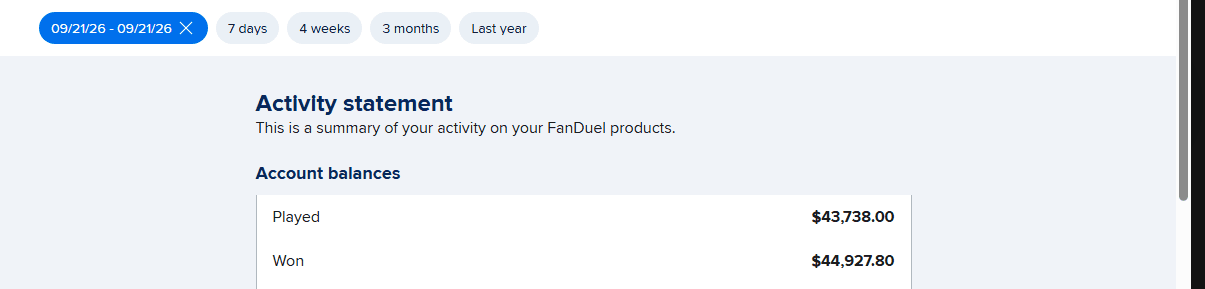
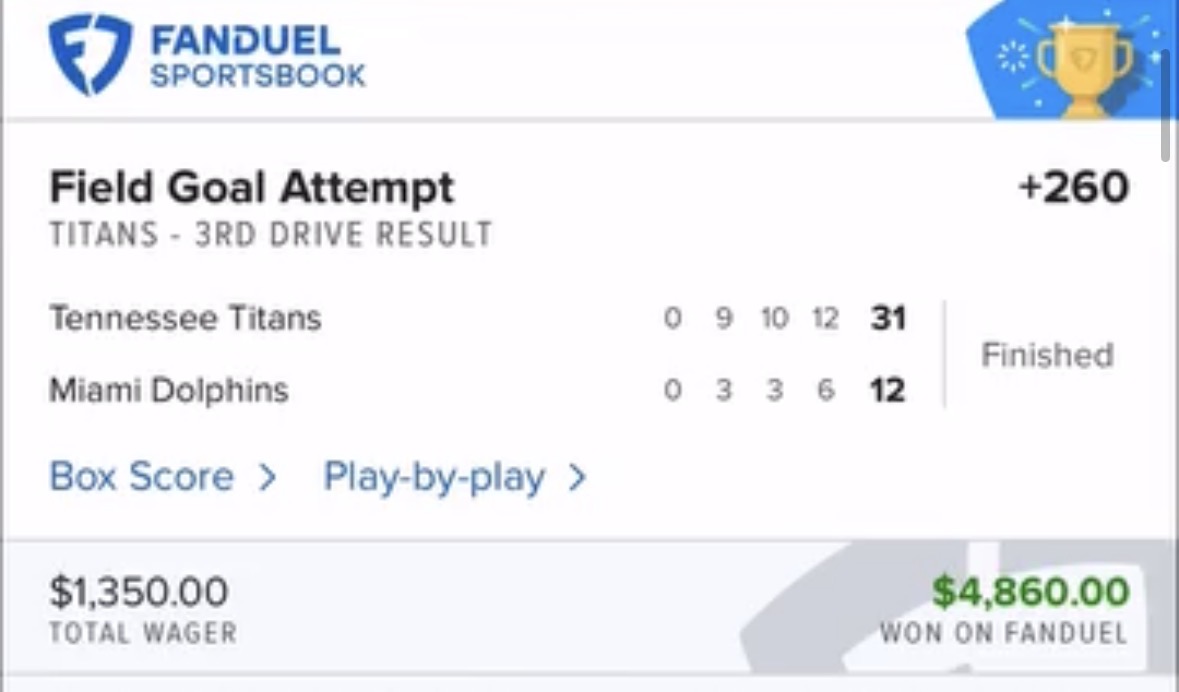
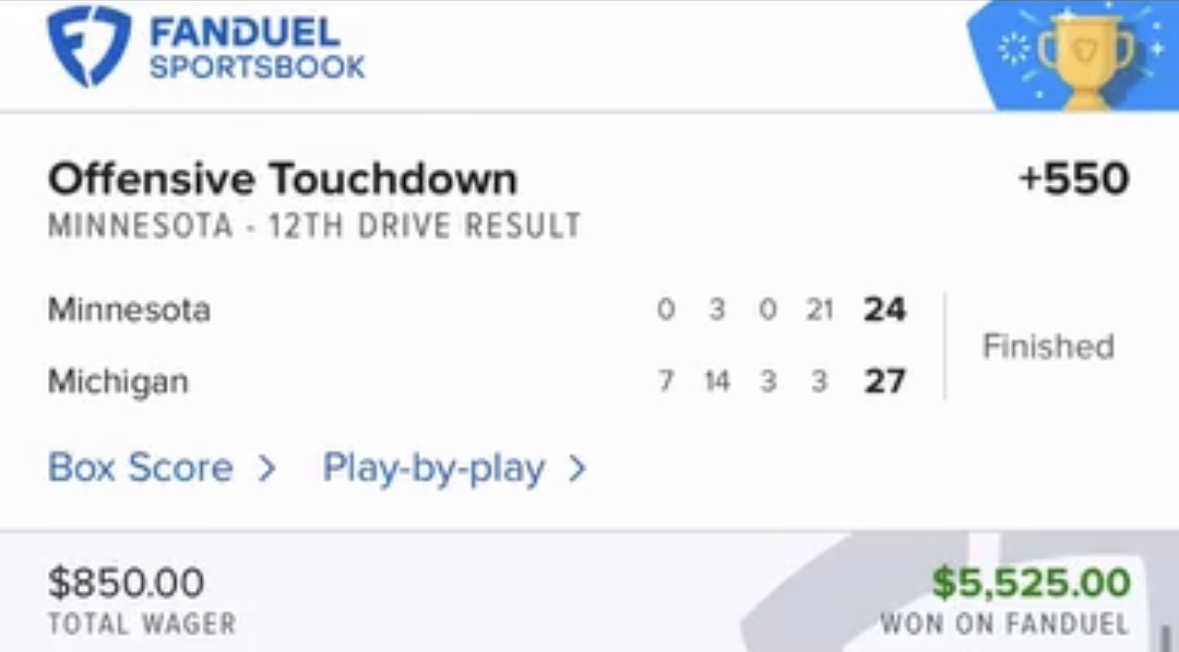
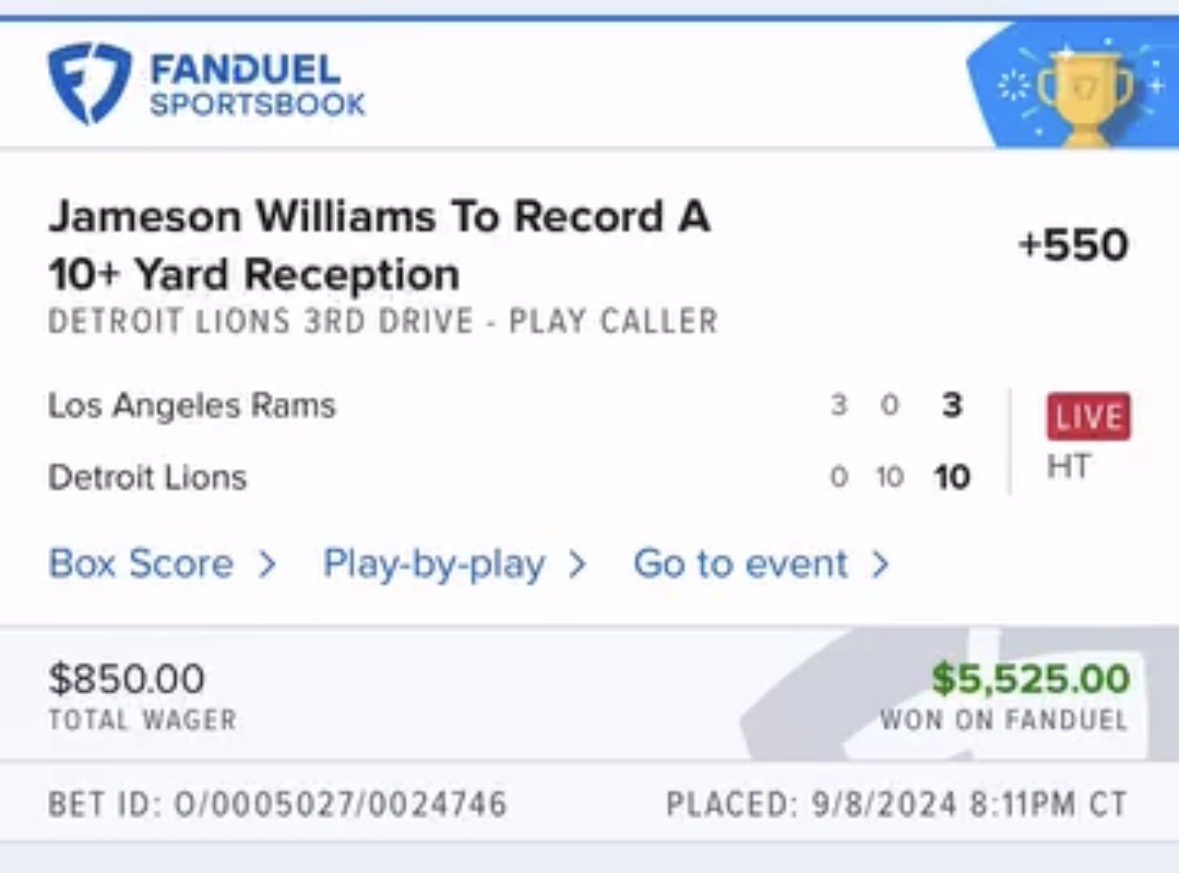
The Best Bet on Sports is the only live betting handicapping service limited on all six major U.S. sportsbooks (FanDuel, DraftKings, Caesars, BetMGM, Fanatics, ESPN BET) for winning too much during in-game action. Verified profit: $367,520+. Picks delivered via Email and Discord during games.
→ Get tonight's live picks: $199 first month — 1-Unit package, full live betting access → Try a free live pick first — reserve your spot for tonight's pick
Internal references for further study: NBA Picks Today, MLB Picks Today, Live Betting Picks, Sports Handicappers, The Best Bet on Sports Results, Buy Live Picks.
Frequently Asked Questions
How do you calculate a 3-team parlay payout?
Convert each leg's American odds to decimal odds, multiply all three decimal figures together, then multiply that result by your stake. Three -110 legs convert to 1.909 each; multiplied together they produce a combined decimal of 6.96. A $100 stake at 6.96 returns $696 total — a profit of $596, which is priced as +596 in American odds. The same multiplication works for any odds combination and any bet size.
What does a 3-team parlay pay on $100?
It depends on the three legs. Three -110 legs pay $595.86 profit on $100 (+596). Three even-money legs pay $700. Three +150 underdog legs pay $1,462.50. Three -150 favorites pay only $362.96 because each leg returns less. Moving a single leg from -110 to +150 more than doubles the total payout, which is why bettors over-add underdog legs chasing the bigger number.
What is the payout on three -110 legs in a parlay?
Three -110 legs produce a combined decimal payout of 6.96, priced at roughly +596 in American odds. On a $10 bet that returns $69.59; on $50 it returns $347.93; on $100 it returns $695.86; on $500 it returns $3,479.30. A fair price on three true 50/50 events would actually pay 8.00 decimal — the gap between 6.96 and 8.00 is the 11-14% sportsbook hold built into the ticket.
Why is the parlay payout lower than the true odds?
Because the sportsbook hold is baked into every leg. A -110 line implies a 52.4% probability on an event that is truly 50/50. Stacking three inflated probabilities compounds the overcharge: a fair 3-team parlay of coin-flip legs should pay 8.00 decimal, but the sportsbook pays 6.96. That 13% shortfall is the parlay hold — roughly three times the hold of a single straight bet.
What hit rate does a 3-team parlay need to be profitable?
A 3-team parlay at +596 needs to cash 14.4% of the time to break even. At fair 50/50 leg pricing, three legs hit together only 12.5% of the time, so coin-flip parlays lose long-term. To profit, every leg must clear roughly 52.4% — at a 55% per-leg win rate the parlay cashes 16.6% of the time and turns profitable; at 58% per leg it cashes 19.5% and becomes strongly profitable.
How is a same-game parlay payout different from a standard 3-team parlay?
A same-game parlay combines correlated legs from one game, so the sportsbook cannot simply multiply the decimal odds. It runs the legs through a correlation model that deflates the payout by roughly 15-25%. A 3-leg ticket that would pay +596 as independent legs might pay only +430 to +480 as a same-game parlay. The deflated payout is only worth accepting when every leg shares a genuine correlation thread.
Does The Best Bet on Sports send out parlay picks?
Yes. Parlay picks — including live in-game parlays and same-game parlays built during the action — are part of every Best Bet on Sports live betting package ($199 first month for the 1-Unit Live Betting Package, $299 for the 2-3 Unit Expert package, $500 for the VIP 5-Unit package). Picks are dispatched in real time via Discord, and Email. The service has earned a verified $367,520+ in profit across all six major U.S. sportsbooks and is limited on all six for winning at live betting.
The Best Bet on Sports · 1.5M followers on TikTok
Sports Betting TikTok is the live betting account behind The Best Bet on Sports, covering NFL, NCAAF, NBA, NCAAB, MLB and WNBA markets in real time. The account has been limited on all six major U.S. sportsbooks — FanDuel, DraftKings, Caesars, BetMGM, Fanatics and ESPN BET — for winning on live betting, with $367,520 in verified profit since 2005. View full profile →
Past results do not guarantee future performance. Must be 21 or older to wager.
Related Articles
4-Team Parlay Payout Calculator: Real Payouts and Win Rates
The 1 PM Problem: When Sunday Parlays Actually Die
Key Numbers and Parlays: The Three-Point Problem
Do Parlay Legs Include Overtime? How Each Leg Settles
The 300-to-1 Rule: Why Your Parlay Pays Less Than the Slip Says
Your Parlay Is Graded by a Data Feed, Not by the Game
Get real live betting picks
From $39.95/mo · Cancel anytime · Email + Discord delivery
● Get The Picks
Choose your package
Tap any tier below to select · Subscribe in one tap
👇 Tap any package to select it
✓ You're selecting
25 Units · $99.95/month
25 unit picks per month. Sweet spot for most bettors — plenty of action without going all-in.
- ✓25 live betting selections/month
- ✓Email + Discord delivery
- ✓All sports (NFL, NCAAF, NBA, NCAAB, MLB)
- ✓Mix of 1, 2, 3, 5-unit rated plays
- ✓Cancel anytime
Secure PayPal · Cancel anytime · No hidden fees · 21+ · +$367K verified
+$367,520 verified · Limited on 6 sportsbooks · 20 years documented · See Proof
Join Our Newsletter
Get free expert sports picks and analysis delivered weekly.