Round Robin Parlay Strategy: When the Math Actually Works in Your Favor

Round robin parlays distribute risk across all combinations of selections. They reduce variance versus straight parlays but only beat straight bets when each leg has genuine positive expected value.
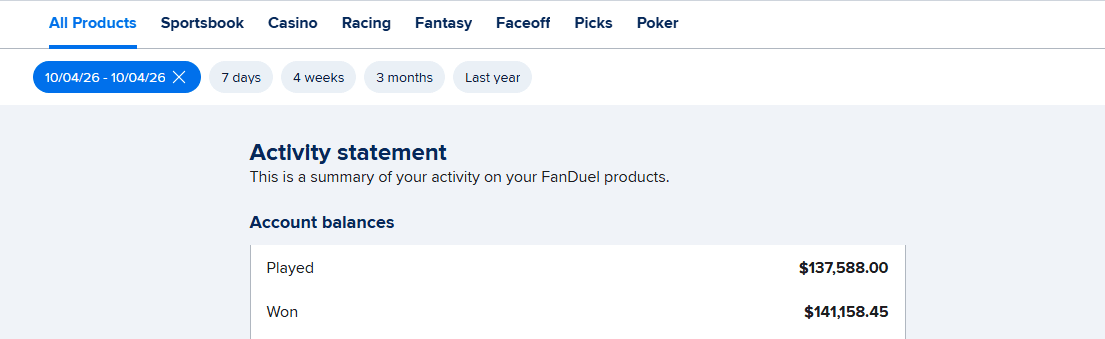
Round robin parlays distribute risk across all possible combinations of three or more selections, paying out partial wins instead of requiring every leg to hit, which reduces variance compared to a single straight parlay. The Best Bet on Sports — with $367,520 in verified profits across two decades of analysis — has tracked round robin betting performance carefully and found the structure only beats straight wagering when every leg in the round robin has genuine positive expected value. This article explains the math, when the structure actually works in your favor, and the disciplined framework for using round robins without increasing your house edge. Round robins are not magic; they are a variance-management tool with specific use cases.
What a Round Robin Parlay Actually Is
A round robin parlay is a structured collection of smaller parlays built from a larger group of selections. Instead of placing one parlay containing all your picks, you place every possible combination of those picks at a chosen parlay size.
For example, with five selections and a "by-3" round robin, the sportsbook builds every unique three-team parlay possible from those five picks. With five selections, there are 10 unique three-team combinations. Your wager amount is divided across those 10 mini-parlays.
The most common round robin formats:
- 3-team round robin (by 2): Three selections, three two-team parlays
- 4-team round robin (by 2 and 3): Four selections, six two-team parlays plus four three-team parlays
- 5-team round robin (by 3): Five selections, 10 three-team parlays
- 6-team round robin (by 3 and 4): Six selections, 20 three-team parlays plus 15 four-team parlays
- 8-team round robin (by 4): Eight selections, 70 four-team parlays
The structure means partial wins still produce payouts. If you go 4-of-5 on a 5-team round robin by-3, six of the 10 mini-parlays cash and four lose. You collect on the winners and absorb only partial losses on the misses. This is fundamentally different from a single 5-team straight parlay, where missing one leg loses everything.
For our day-to-day analysis on parlay construction across major sports, see our football picks and NBA picks sections.
The Math: Where Round Robins Help and Where They Hurt
Round robins distribute variance, but they do not change the fundamental house edge baked into parlay pricing. Sportsbooks set parlay payouts at slightly worse than true odds — that is how they make money. Stacking more legs into more combinations does not change the per-leg juice. It just spreads it across more bets.
The realistic financial picture:
| Bet Type | Win Outcome | Expected Variance | House Edge |
|---|---|---|---|
| Single straight bet (-110) | 1 unit win | Lowest | ~4.5% |
| 3-team straight parlay (+600) | 6 units win | High | ~12% |
| 3-team round robin by 2 | 0 to 3 units win | Moderate | ~7% |
| 5-team straight parlay (+2200) | 22 units win | Very high | ~16% |
| 5-team round robin by 3 | 0 to 10 units win | Moderate | ~9% |
The house edge on round robins always sits between the edge on a single straight bet and the edge on a single big parlay. That makes round robins a middle-variance, middle-edge product. They reduce volatility compared to straight parlays but they do not produce a positive-EV outcome unless your underlying selections beat the closing line consistently.
This is the central truth that bettors miss: a round robin built from 5 coin-flip selections is still a negative-EV bet. The structure helps you sleep better at night because you cash partial winners, but you still lose money in the long run. Round robins only become profitable when every leg has genuine edge.
For full discipline frameworks around bet sizing and bankroll, our bankroll management content explores the unit-sizing principles that drive long-term profitability.
The Three Conditions That Make Round Robins Profitable
Round robins beat straight bets only when three conditions are simultaneously met:
Condition 1: Every selection has genuine positive expected value. If your five picks each beat the closing line by 2 to 3% — meaning the consensus closing line moves toward your direction after you bet — the round robin compounds that small per-leg edge across multiple combinations. This is mathematically how sharps profit on round robins. But the prerequisite is hard: you must actually be picking against the closing line, not just guessing.
Condition 2: The selections are statistically independent. Round robin math assumes each pick is independent of the others. If your five picks all involve correlated outcomes — say, all five are overs in NBA games featuring the same team or referee crew — the actual variance behavior differs from the theoretical model. Correlated round robins can amplify both wins and losses, and sportsbooks know this. They structure pricing accordingly.
Condition 3: Bankroll discipline matches the round robin structure. Round robins put more money on the board than a comparable straight parlay because each combination is a separate bet. A "$50 round robin by-3 on five selections" is actually 10 individual $50 parlays — a $500 total wager. Bettors who do not understand this end up risking far more than intended.
When all three conditions are met, round robins are a defensible structure for converting per-leg edge into measured payouts. When any one condition is missing, round robins are an inefficient way to lose money slightly slower than a straight parlay would lose it.
When Round Robins Actually Make Sense
There are specific scenarios where the round robin structure earns its place in a disciplined bettor's toolkit:
Scenario 1: Multiple independent strong reads on the same night. When your team has three to five plays across different sports with no correlation between outcomes, a round robin by 2 or by 3 captures upside without forcing you to win every leg. The variance reduction is meaningful when the per-leg edge is small but real.
Scenario 2: Player props with weak correlation. Independent player prop picks across multiple games can reasonably be combined into a round robin. The picks must come from different games or different stat categories within the same game to maintain independence — a quarterback passing yards over and his lead receiver receiving yards over are highly correlated and should not be round-robined.
Scenario 3: Capping variance during a hot streak. Bettors who have been on a hot streak of picks and want to maintain exposure without risking blow-up parlay losses can use round robins as a variance dampener. The math is still negative-EV unless the edge is real, but the psychological benefit of cashing partial winners can keep discipline intact during otherwise-tilting losing nights.
Scenario 4: Specific promotional markets. Some sportsbooks offer enhanced round robin pricing as part of promotional efforts. When the enhancement is large enough to push expected value positive, round robins become genuinely profitable. These windows are short and require active line shopping.
For prop-specific analysis across the major sports, our team's daily analysis on the results page documents how we incorporate round robins into our broader strategy.
When Round Robins Are a Trap
Round robins are misused more often than they are used correctly. The five most common traps:
Trap 1: Building round robins to "make money on partial wins." This is the most common bettor rationalization. The structure does cash partial wins, but only at a price below the true odds of those partial wins. You are paying the sportsbook for variance reduction. If you do not have a genuine edge on each leg, you are simply paying for the privilege of feeling slightly less terrible when you lose.
Trap 2: Treating the round robin as one bet. A 5-team round robin by 3 is 10 separate bets. The total wager is 10 times the unit amount. Bettors who size their unit by the line on the betting slip often risk three to five times more than they intended.
Trap 3: Stacking correlated selections into round robins. Round robin pricing assumes independence. Correlated selections — like multiple bets on the same team, or props that depend on overlapping game outcomes — break the independence assumption and produce variance behavior different from the theoretical model. Sportsbooks notice when correlated round robins clear and tighten the line, but the immediate downside for the bettor is that the structure becomes an expensive way to make a single concentrated bet.
Trap 4: Building large round robins on lottery-style picks. A 6-team round robin by 4 is 15 four-leg parlays. If your six picks are coin flips, the math says you will hit roughly 1 to 2 of those 15 parlays on average. The payouts on the winners do not cover the losers when each leg has zero edge. This is a slow-bleed losing strategy disguised as a sophisticated structure.
Trap 5: Chasing losses with bigger round robins. Bettors who lost on a straight parlay frequently increase their next bet size and complexity by jumping to a round robin. The combination of bigger total wager and continued lack of per-leg edge accelerates bankroll erosion. Discipline says the response to a losing parlay is smaller bets, not more complex ones.
Avoiding these traps requires treating round robins as what they are: a variance-management tool, not a payout-multiplication tool.
Bankroll Sizing for Round Robins
The single most important discipline for round robin betting is correct bankroll sizing. The framework:
1. Decide your total exposure in units before you build the round robin. 2. Count the number of mini-parlays the round robin contains. 3. Divide your total exposure by the number of mini-parlays to get the per-mini-parlay unit size. 4. Confirm the math on the betting slip before submission.
Example: You want 2% bankroll exposure on a 5-team by-3 round robin. The round robin contains 10 mini-parlays. Your total wager should be 2% of bankroll. Each mini-parlay risks 0.2% of bankroll. The sportsbook slip will show the round robin at 10 times your unit input, so you input 0.2% per leg to total 2%.
Bettors who fail this math and input 2% per mini-parlay end up risking 20% of their bankroll on a single round robin — far outside any reasonable bankroll discipline framework.
The general rule: total exposure on any round robin should match the exposure you would have allocated to that group of picks if you were betting them straight. If you would not bet 5% of bankroll across five straight bets, do not bet 5% across a 10-leg round robin.
For complete bankroll management methodology, see our sports handicappers section.
Sport-Specific Round Robin Notes
Each major sport produces different round robin dynamics:
NFL round robins: Sundays are the natural environment because most NFL bettors have multiple plays simultaneously. NFL round robins benefit from low correlation across games (different cities, different teams). Avoid round-robining Sunday Night and Monday Night games together — the betting market is sharper on those games and the lines reflect lower edge.
NBA round robins: Playoff round robins are dangerous because narrative-driven public action distorts pricing. Regular-season round robins on totals or sides across separate games can work when the per-leg edge is real, but the long NBA season produces extensive line movement that erodes edge between bet placement and tip-off.
MLB round robins: Daily slate sizing makes round robins natural — 8 to 15 games per day produce many independent options. The risk: weather, lineup scratches, and bullpen days all introduce sudden correlation with team-specific factors. Always confirm lineups before submission.
College football and basketball round robins: Small conferences produce correlation risk because referee crews, weather, and conference-wide officiating standards all introduce common factors. Round robin with selections across different conferences when possible.
The Best Bet on Sports has been limited on bet sizes at all six major U.S. sportsbooks — FanDuel, DraftKings, Caesars, BetMGM, Fanatics, and ESPN BET — partly because of years of disciplined round robin construction across multiple sports. The discipline that creates the limits is the same discipline that produces consistent results.
The Disciplined Round Robin Workflow
For bettors ready to incorporate round robins into a long-term winning strategy, the workflow that protects against the common traps:
1. Identify three to five independent picks where you have genuine edge — meaning each pick beats the consensus closing line in your tracking system. 2. Confirm the picks are statistically independent — different games, different teams, different stat categories. 3. Choose a round robin size that matches your conviction. Higher conviction supports larger combinations; lower conviction supports smaller (by-2 instead of by-4). 4. Calculate total exposure as a fixed percentage of bankroll, not as a per-leg percentage. 5. Divide total exposure by the number of mini-parlays to get per-mini-parlay sizing. 6. Place the bet, log it, and track the outcome over a 50-bet sample before evaluating. 7. Compare round robin results against what straight bets on the same selections would have produced.
If straight bets outperform the round robin over a meaningful sample, the round robin structure is costing you money relative to flat betting. If round robins outperform straight bets, the variance reduction is providing real value. Both outcomes are possible depending on the per-leg edge and the correlation structure.
Subscribers to our packages receive plays through Discord, and email with enough lead time to construct round robins responsibly when applicable. Visit our pricing page for full subscription details.
Related Strategy Reading
For deeper context on the angles covered above, our analysis of hedging futures bets sports betting strategy and nfl prop bet picks guide pairs well with this guide; our sports picks reflect these same principles applied to live games.
Frequently Asked Questions
What is a round robin parlay in sports betting?
A round robin parlay is a wagering structure that builds every possible parlay combination of a chosen size from a larger group of selections. For example, a 5-team round robin by-3 takes five selections and creates all 10 possible three-team parlays from those picks. Each mini-parlay is treated as a separate bet, so partial wins still produce payouts. The structure reduces variance compared to a single straight parlay but does not change the fundamental house edge.
Are round robin parlays profitable?
Round robin parlays are profitable only when every leg has genuine positive expected value, the selections are statistically independent, and the bettor sizes total exposure correctly. Without per-leg edge, round robins are a slow-bleed losing structure because the house edge on parlay pricing applies across every mini-parlay in the round robin. The structure is variance management, not edge creation.
How do you calculate the total wager on a round robin?
Total wager equals the per-mini-parlay unit size multiplied by the number of mini-parlays in the round robin. A 5-team by-3 round robin has 10 mini-parlays. A 6-team by-3 round robin has 20 mini-parlays. A 6-team by-4 round robin has 15 mini-parlays. Bettors who treat the entered unit size as the total wager rather than the per-mini-parlay wager risk far more than they intended.
When should you avoid round robin parlays?
Avoid round robins when your selections are correlated, when you do not have genuine edge on each leg, when you are chasing losses, or when you do not understand that the structure multiplies your total exposure. Correlated round robins break the independence assumption baked into the pricing model. Edge-free round robins are simply expensive ways to lose money. Loss-chasing round robins compound bankroll erosion.
What is the difference between a round robin and a straight parlay?
A straight parlay requires all selections to win for any payout. A round robin breaks the same selections into multiple smaller parlays so partial wins still produce payouts. Straight parlays have higher upside on a single wager but higher variance. Round robins have lower upside on individual mini-parlays but lower variance overall. The house edge on round robins is between single straight bets and large straight parlays.
Can round robins be used for player props?
Yes, but with strict independence requirements. Multiple props from the same game frequently correlate with each other — a quarterback's passing yards and his receivers' receiving yards are not independent. Independent prop round robins should pull from different games or use stat categories that do not depend on overlapping game outcomes. Failing to maintain independence breaks the round robin pricing assumption and amplifies variance unpredictably.
What is the best round robin format for beginners?
The 3-team round robin by-2 is the simplest and lowest-variance format. It contains only three two-team mini-parlays, making total exposure easy to calculate and outcomes easier to evaluate. Beginners who want to learn how round robins behave should start with by-2 formats, track results carefully across at least 30 to 50 bets, and only graduate to larger formats once they have confirmed that their underlying picks have real edge.
For ongoing analysis on parlay construction, bankroll management, and disciplined betting structures across NFL, NBA, MLB, and college sports, visit our blog or sign up at our pricing page.
The Best Bet on Sports · 1.5M followers on TikTok
Sports Betting TikTok is the live betting account behind The Best Bet on Sports, covering NFL, NCAAF, NBA, NCAAB, MLB and WNBA markets in real time. The account has been limited on all six major U.S. sportsbooks — FanDuel, DraftKings, Caesars, BetMGM, Fanatics and ESPN BET — for winning on live betting, with $367,520 in verified profit since 2005. View full profile →
Past results do not guarantee future performance. Must be 21 or older to wager.
Related Articles
Parlay vs. Straight Bets: Which Actually Wins More Money?
The 300-to-1 Rule: Why Your Parlay Pays Less Than the Slip Says
Can You Parlay Futures Bets? Win Totals, Division Odds, and the Real Math
Teaser vs. Parlay: Which Is the Better Bet?
4-Team Parlay Payout Calculator: Real Payouts and Win Rates
Round Robin Parlay Strategy: How to Bet Multiple Parlays at Once
Get real live betting picks
From $39.95/mo · Cancel anytime · Email + Discord delivery
● Get The Picks
Choose your package
Tap any tier below to select · Subscribe in one tap
👇 Tap any package to select it
✓ You're selecting
25 Units · $99.95/month
25 unit picks per month. Sweet spot for most bettors — plenty of action without going all-in.
- ✓25 live betting selections/month
- ✓Email + Discord delivery
- ✓All sports (NFL, NCAAF, NBA, NCAAB, MLB)
- ✓Mix of 1, 2, 3, 5-unit rated plays
- ✓Cancel anytime
Secure PayPal · Cancel anytime · No hidden fees · 21+ · +$367K verified
+$367,520 verified · Limited on 6 sportsbooks · 20 years documented · See Proof
Join Our Newsletter
Get free expert sports picks and analysis delivered weekly.