Fade the Public Sports Betting Strategy: How Contrarian Betting Creates Edge

Fading the public in sports betting means betting against the majority of public money when public bias inflates prices. Contrarian betting creates edge because sportsbooks shade lines toward public action, making the unpopular side mathematically underpriced in specific market conditions. The strategy requires identifying public bias triggers.
Fading the public in sports betting creates a mathematical edge because sportsbooks shade their lines toward heavy public action — making the contrarian side underpriced in predictable conditions. The strategy works not because the public is always wrong, but because public betting bias is systematic and exploitable. Understanding when to fade public money and when to follow it is the foundation of one of the most durable edges in professional sports betting.
The "fade the public" concept is often oversimplified in betting content as a blanket rule to bet against popular teams. That's a misreading of how the strategy works. The actual mechanism is more specific and more powerful: when a large percentage of the betting public loads onto one side, sportsbooks shade the line to protect their position — creating price inefficiency on the unpopular side that a disciplined bettor can exploit.
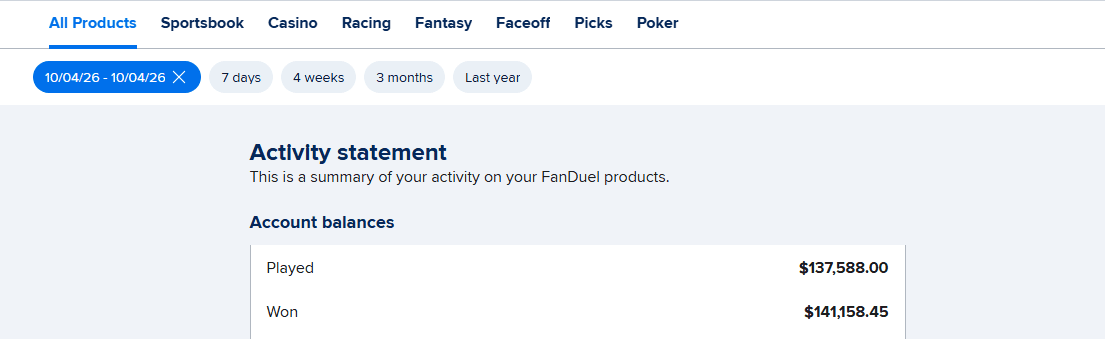
At The Best Bet on Sports, we've built a +$367,520 documented track record in part by identifying and acting on these public-bias pricing gaps. This guide explains the mechanics of contrarian betting, when it creates genuine edge, and when it doesn't.
How Sportsbooks Use Public Action to Set Lines
To understand why fading the public works, you need to understand how sportsbooks manage their liability.
Sportsbooks are not neutral arbiters — they are risk managers. When 75% of public money on a spread bet lands on Team A -3, the book is overexposed to Team A covering. To reduce that exposure, they shade the line: Team A -3 becomes Team A -3.5 or -4. This creates a better price on Team B — better than the true probability of outcomes would justify.
That's the edge. The sportsbook, managing liability rather than setting perfectly accurate prices, creates a discounted entry point on the contrarian side.
This doesn't mean Team B wins more often than the odds suggest — it means the price on Team B is set at a slight discount relative to the true probability, and over large samples, that discount compounds into positive expected value.
The Four Conditions for Maximum Fade Value
Not every public-heavy line is worth fading. The conditions that maximize fade value are:
1. High Public Percentage + Line Moving Against Public
When 70%+ of public bets are on Team A, but the line is moving in Team B's direction (e.g., Team A -4 to Team A -3.5), that's a signal that professional money — "sharp" money — is loading on Team B. The public is betting Team A, but the professionals are on the other side. The line movement is your confirmation signal.
This combination — heavy public on one side, line moving the other way — is the highest-confidence fade-the-public scenario.
2. Cultural Bias Teams and Primetime Exposure
Certain franchises carry cultural betting weight that has nothing to do with their actual team quality in any given season. Teams with historically large, active fan bases — the Cowboys, Yankees, Lakers — generate disproportionate public betting action regardless of their current form.
When these teams are on primetime television (nationally televised games draw 3-5x the betting action of regional games), the public bias amplifies. The line often moves to levels that exceed the team's actual quality advantage, creating fade value on the cultural-bias side.
3. Recency Bias After Big Wins
Public bettors react heavily to the previous week's results. A team that won 42-7 last week — especially in a nationally visible game — will attract heavy public money at -7 the following week, regardless of matchup quality. The public anchors to the previous performance and over-adjusts confidence.
The analytical reality: most blowout wins involve elements of luck (opponent turnovers, short fields, unusual efficiency) that don't fully repeat in the next game. A team that won by 35 is not 35 points better than their opponent — sequencing, turnovers, and special teams variance inflated the margin.
4. Public Overreaction to Injuries
When a star player is announced as out 24-48 hours before a game, the public immediately hammers the opposing team. The line moves hard and fast. Often it moves too far — especially when the injured player's replacement is reasonably capable, or when the team's overall scheme doesn't heavily depend on one player's individual contribution.
Fading the public overreaction to star-player absences has historically been one of the most consistent contrarian edges in NFL and NBA betting.
When NOT to Fade the Public
Contrarian betting has specific failure modes that erode its value:
Don't fade the public in key number crossings: If the public is betting a spread that's currently sitting at -3 (a key number in NFL betting), fading down to +3 is dangerous even with public action. Key numbers have structural significance that overrides the fade logic in most cases.
Don't fade when the public and sharp money align: If 70% of public bets AND the line movement both point in the same direction, the books may have accurate pricing despite the public action. Line movement that confirms public direction means the books are comfortable with the liability — not scared of it.
Don't fade in small markets with limited volume: Fade-the-public mechanics rely on sportsbooks actually shading lines in response to lopsided action. In low-volume markets (niche college games, second-tier international events), books may not shade at all — they accept the liability. Contrarian strategy is most effective in high-volume markets: NFL, NBA, MLB, NCAAF.
Don't fade when the narrative has fundamental support: Sometimes the public is loading a team because that team is genuinely better by a wide margin. Blind contrarianism — fading because the public is on something — ignores the possibility that the public is simply right. Research must always support the fade.
Fade the Public + Line Shopping: The Compounding Edge
Fading the public is made significantly more powerful by line shopping — finding the best available price across multiple sportsbooks.
When you identify a public-heavy game where the fade side has value, the contrarian number can vary by 1-3 points across different books. Getting the best available number on your contrarian side compounds the statistical edge you've already identified through public action analysis.
For example: If you're fading a public-heavy Team A at -6, finding a book offering Team B at +7.5 instead of +6 gives you an additional 1.5 points of cushion — significant in NFL spreads where 7 and 6 are key numbers. That difference alone can flip a marginally +EV play into a clearly +EV bet.
| Book | Team A Spread | Team B Price |
|---|---|---|
| FanDuel | -6 (-110) | +6 (-110) |
| DraftKings | -6 (-110) | +6 (-110) |
| Caesars | -5.5 (-115) | +5.5 (-105) |
| BetMGM | -6.5 (-105) | +6.5 (-115) |
| Fanatics | -6 (-110) | +6 (+100) |
| ESPN BET | -6 (-115) | +6 (-105) |
In this example, the best fade price is Team B +6.5 at -115 or Team B +6 at +100. The +100 price at Fanatics represents genuine value if your analysis supports the fade — you're getting better than even money on a bet where your calculated probability is above 50%.
For our complete analysis on the major sportsbooks and how to maximize your coverage across all six, see our buy page.
Unit Sizing for Contrarian Plays
Fade-the-public plays should not be treated the same as high-confidence analytical plays backed by deep research. The edge from public action alone is real but modest — typically 2-4% over large samples. Size contrarian plays accordingly:
Standard fade play (public bias confirmed, no major sharp signal): 1 unit Strong fade play (public bias + reverse line movement + supporting analytics): 1.5-2 units Maximum fade play (all signals aligned, clear fundamental support for the fade): 2-3 units
Never go above your standard game bet size based solely on public action percentage without analytical support. Public percentages are a starting point — not a complete system.
For in-depth bankroll management principles that complement the fade strategy, see our sports handicappers page, and our complete daily blog analysis.
Tracking Your Contrarian Performance
The only way to know whether your fade-the-public system is creating genuine edge is systematic tracking. Build a simple log:
- Date, sport, game
- Public % on the faded team
- Line at time of bet
- Sharp signal (yes/no)
- Fundamental support (yes/no)
- Result and profit/loss
After 50+ plays, analyze whether your subset of fades (with both sharp signal and fundamental support) outperforms your full population of fades. Most serious contrarian bettors find their edge concentrates heavily in the plays with all confirming signals, not the broader set of "any team over 65% public action."
This kind of systematic tracking is how The Best Bet on Sports maintains accountability. Our full documented record is available on the results page — so you can see exactly how the analytical framework performs over real bets.
Applying the Fade Strategy Across Sports
The fade-the-public strategy works differently across sports because public bias manifests differently:
NFL: Largest public bias of any sport. Prime-time favorites, cultural-brand teams, and reacting to previous-week blowouts are the primary triggers. Strongest fade market in sports.
NBA: Strong public bias on home favorites and teams coming off nationally televised wins. Playoff basketball intensifies the bias — public money hammers home teams in every playoff series regardless of quality differential.
MLB: More subtle public bias. The strongest MLB fade triggers are pitching ace overvaluation (public bets the team with the "big name" pitcher regardless of metrics) and home team chalk in day games (underweighted by public bettors, creating the opposite direction from typical fade plays).
NCAAF: Enormous home-team bias in conference play. Public heavily favors top-25 programs playing at home. College football picks markets carry some of the most pronounced public biases in any sport.
Related Strategy Reading
For deeper context on the angles covered above, our analysis of closing line value clv tracking sports betting and line shopping sports betting guide pairs well with this guide; our sports picks reflect these same principles applied to live games.
Frequently Asked Questions
What does "fade the public" mean in sports betting?
Fading the public means betting against the majority of public bettors on a game. When 65%+ of public money loads one side, sportsbooks often shade their line toward the public to protect their liability — making the unpopular side marginally underpriced. Contrarian bettors exploit this systematic pricing inefficiency by taking the discounted side. The strategy works most effectively when reverse line movement (line moving against the public) confirms that professional bettors are also on the contrarian side.
Does fading the public actually work in sports betting?
Fading the public produces positive expected value when applied selectively to the right conditions: high public percentage (65%+), reverse line movement confirming sharp action, and fundamental analytical support for the contrarian side. Blindly fading any popular team in every situation does not produce a reliable edge. The strategy works because it exploits systematic public bias — not because the public is always wrong, but because their bias creates predictable pricing inefficiencies at the right conditions.
What percentage of public bets should trigger a fade?
Most serious contrarian bettors use 65-70% public action as their minimum threshold for evaluating a fade. Below 65%, the public bias is not strong enough to create meaningful line shading. The strongest fade signals occur at 75%+ public action combined with line movement in the contrarian direction. Games at 80%+ public action on one side represent maximum fade-the-public conditions — especially when those games are on primetime national television.
What is reverse line movement in sports betting?
Reverse line movement occurs when a line moves in the opposite direction of public money flow. For example: 72% of public bets are on Team A -3, but the line moves to Team A -2.5. The public is betting Team A, but the line is getting better for Team B — indicating that professional money (typically larger bets) is loading on Team B. Reverse line movement is the most important confirming signal in contrarian betting strategy and should be verified before acting on high-public-percentage plays.
Which sports have the strongest public betting bias?
NFL betting has the strongest and most consistent public bias of any sport — driven by cultural fan bases, primetime exposure, and weekly blowout reactions. NBA playoff betting is the second strongest, particularly for home teams and cultural-brand franchises. College football college football picks carry enormous home-team bias in conference play. MLB has more subtle bias concentrated around name-brand starting pitchers. NBA regular season and MLB carry less bias than NFL, but the fade strategy still applies in specific market conditions.
Can you combine fade the public with other betting strategies?
Yes, and you should. The most effective contrarian bettors combine public action analysis with line shopping (getting the best available price on the fade side), bankroll management (proper unit sizing for edge level), and fundamental analytical research (confirming the fade with independent team quality analysis). Each element compounds the others — the public bias creates an entry point, line shopping maximizes the price, and analytical research confirms the edge is real rather than coincidental.
How do I track whether my fade strategy is profitable?
Maintain a detailed bet log that captures the public percentage at time of bet, whether reverse line movement was present, whether analytical research supported the fade, and the final result. After 50+ tracked plays, calculate your win rate and ROI by subcategory — plays with all three confirming signals versus plays with only one or two. Most successful contrarian bettors find their edge concentrates in the high-confidence subset of plays. Without tracking, there is no way to distinguish real edge from short-term variance. Visit our results page to see how documented tracking works in practice.
The Best Bet on Sports · 1.5M followers on TikTok
Sports Betting TikTok is the live betting account behind The Best Bet on Sports, covering NFL, NCAAF, NBA, NCAAB, MLB and WNBA markets in real time. The account has been limited on all six major U.S. sportsbooks — FanDuel, DraftKings, Caesars, BetMGM, Fanatics and ESPN BET — for winning on live betting, with $367,520 in verified profit since 2005. View full profile →
Past results do not guarantee future performance. Must be 21 or older to wager.
Related Articles
Bankroll Management for $100 to $500 Bettors: Unit Sizing, Drawdown Math, and When a $199 Pick Service Pays for Itself
Hedging Futures Bets in Sports Betting: When to Lock Profits April 2026
Sports Betting Unit Sizing: Kelly Criterion, Flat Betting, and What Actually Works
Kelly Criterion for Sports Betting: The Math Behind Optimal Bet Sizing
Kelly Criterion for Sports Betting: Optimal Bet Sizing Explained
Sports Betting Unit Sizing and Bankroll Management: The Complete Guide
Get real live betting picks
From $39.95/mo · Cancel anytime · Email + Discord delivery
● Get The Picks
Choose your package
Tap any tier below to select · Subscribe in one tap
👇 Tap any package to select it
✓ You're selecting
25 Units · $99.95/month
25 unit picks per month. Sweet spot for most bettors — plenty of action without going all-in.
- ✓25 live betting selections/month
- ✓Email + Discord delivery
- ✓All sports (NFL, NCAAF, NBA, NCAAB, MLB)
- ✓Mix of 1, 2, 3, 5-unit rated plays
- ✓Cancel anytime
Secure PayPal · Cancel anytime · No hidden fees · 21+ · +$367K verified
+$367,520 verified · Limited on 6 sportsbooks · 20 years documented · See Proof
Join Our Newsletter
Get free expert sports picks and analysis delivered weekly.