Should You Parlay Your Live Betting Picks Together?

Parlaying two genuinely profitable live picks is mathematically better than betting them straight — the edge compounds along with the odds. The problem is not the math, it is the clock. Live picks are released at different moments in different games, and a parlay forces you to accept a stale number on at least one leg. That single sequencing tax erases the entire advantage while multiplying your variance.
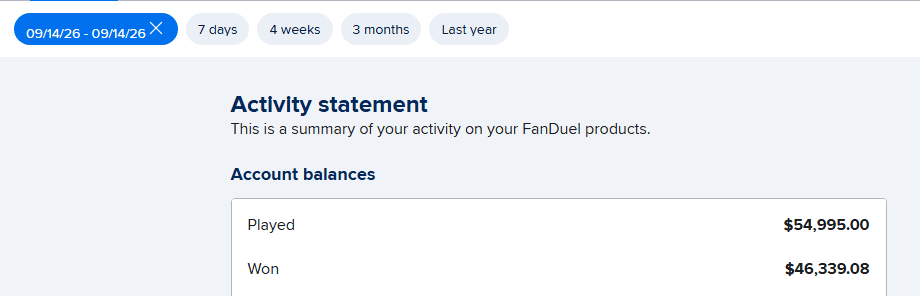
Parlaying two live betting picks together is one of the few parlay decisions where the math actually favors the parlay — if both legs carry a real edge, that edge compounds exactly the way the odds do, and the expected return per dollar risked roughly doubles. The Best Bet on Sports has run live in-game betting for more than twenty years with a verified $367,520+ in profit across every major sportsbook, and the honest answer we give subscribers who ask this question is that the math says yes and the clock says no. Live picks do not arrive at the same time. Building them into one ticket means holding a number until a second number exists, and the value in a live pick is the number at the instant it is released.
This is the question that comes in most often once a subscriber has been getting picks for a few weeks. Two plays land on a Sunday afternoon — one in the early window, one in the late — and the instinct is obvious: they are both good bets, so stack them and turn a modest afternoon into a big one. It is a fair instinct, and unlike most parlay instincts, it is not built on bad arithmetic. It is built on a real property of parlays that almost no one explains correctly.
So let's do the arithmetic honestly, and then explain why we still don't do it.
All odds and probabilities below are illustrative and rounded. They are used to demonstrate structure, not to represent our posted record. Real prices vary by book and move constantly.
Does Parlaying Two Good Bets Actually Increase Your Edge?
Yes. This is the part almost every parlay article gets backwards, because almost every parlay article silently assumes the legs are coin flips.
Take two independent bets, each priced at -110, each of which you believe wins 55% of the time. A -110 line implies a break-even rate of about 52.4%, so each of these carries a genuine edge.
Bet them straight, one unit each. Each wager returns 0.909 units on a win and loses 1 unit on a loss, so each has an expected value of about +0.05 units. Two of them: +0.10 units on 2 units risked, a return of 5% on money at risk.
Now parlay them. Two -110 legs multiply to decimal 3.64, roughly +264 in American odds. The parlay wins when both legs win, which at 55% each is 30.25% of the time. Expected value: 0.3025 × 2.645 − 0.6975 × 1 = +0.1025 units per unit risked, a return of 10.25%.
The parlay's return per dollar is double. That is not a trick of presentation. When the legs are genuinely independent and genuinely profitable, the payout multiplies and so does the edge, and the edge multiplies faster than the vig does. This is why the blanket claim that parlays are always a bad bet is wrong. Parlays are a bad bet when the legs are coin flips, because then you are only compounding the vig. Compounding an edge is a different operation entirely.
If the argument stopped there, the answer would be to parlay everything. It doesn't stop there.
What Does the Parlay Cost You in Variance?
Compare the two structures at the same total risk — two units.
| Structure | Total risk | Expected return | Win frequency | Standard deviation | Return per unit of risk taken |
|---|---|---|---|---|---|
| Two straight bets, 1 unit each | 2.0 units | +0.10 units | Full loss only 20% of the time | ≈1.34 units | 0.075 |
| One 2-unit parlay | 2.0 units | +0.21 units | 30.25% | ≈3.35 units | 0.061 |
The parlay produces twice the expected profit and roughly two and a half times the swing. On a risk-adjusted basis — expected return divided by standard deviation — the straight bets are the better structure, even though the parlay's raw expectation is higher.
That is a real trade-off rather than a disqualification. A bettor with a deep bankroll and a long horizon can rationally accept more variance for more expectation. If variance were the only objection, parlaying live picks would be a legitimate style choice for the right bankroll, and we would say so. For more on sizing that decision, our guide to how much bankroll to put on parlays covers the framework.
The objection that actually settles it is not variance. It is timing.
Why the Clock Beats the Math
A live betting pick is not a prediction about a game. It is a transaction at a specific number that exists for a specific stretch of seconds or minutes, opened by something that just happened on the field — a turnover, an injury, a defensive substitution, a two-minute-warning stoppage that let the market catch its breath at the wrong price.
That window is the entire product. The read is what identifies the number; the number is what pays.
Now try to put two of those on one ticket. You have exactly two options, and both of them cost you the thing you are buying.
Option one: wait for the second pick. You hold the first number and wait for the second play to be released. In the meantime the first market keeps moving, because the whole reason it was mispriced is that it was in the middle of repricing. By the time the second pick arrives, the first leg is being offered at a number that has already absorbed the information that made it good.
Option two: pre-commit. You decide in advance that you will parlay tonight's two picks, which means you are committing to a second leg before you know what it is, what game it is in, or what price it will carry. That is not betting. That is buying an unnamed asset at an unnamed price.
There is no third option, because a parlay is a single ticket that has to be placed once, and live picks are not released once.
What Does the Sequencing Tax Actually Cost?
Put a number on it. Suppose waiting for the second pick costs the first leg half a point of line value — a modest, realistic assumption in a live market — and that half point moves the leg's true win probability from 55% down to 52.5%.
| Scenario | Leg 1 | Leg 2 | Parlay win probability | Return on 2 units risked |
|---|---|---|---|---|
| Both legs taken at release (impossible on one ticket) | 55.0% | 55.0% | 30.25% | +0.21 units |
| Leg 1 held while waiting for Leg 2 | 52.5% | 55.0% | 28.88% | +0.10 units |
| Both legs bet straight, each at release | 55.0% | 55.0% | — | +0.10 units |
The middle row is what a real parlay of two live picks looks like. Its expected return is identical to simply betting both picks straight — and it carries roughly two and a half times the variance to get there.
That is the whole answer, and it is worth stating plainly: the sequencing tax converts a mathematically superior bet into an equivalent one that swings far harder. The parlay does not lose money on paper. It just stops being better, and starts costing more to hold.
Half a point is not a worst case, either. In a live market immediately after a scoring drive or an injury timeout, numbers can move several points in under a minute. The tax is bounded below by zero and not bounded above by much at all.
When Is Parlaying Live Picks Actually Correct?
There is one structure where the sequencing objection does not apply, and it is worth being precise about it: when both legs live inside the same game and the same window.
If the read is that a defense has broken down in the third quarter and the correct expression of that read is the team total and the game total together, those two legs are available simultaneously, priced off the same event, and placeable on one ticket without holding either one. Nothing goes stale, because nothing waits. That structure is a live same-game parlay, and it is a legitimate bet — we cover the construction rules in our live same-game parlay guide and the correlation mechanics in same-game parlay strategy.
Note what makes it work. It is not that the legs are correlated, although they usually are. It is that they are contemporaneous. Two legs from one live window can be bought at their release prices. Two legs from two different windows cannot.
The distinction gives you a clean rule that is easy to apply under time pressure:
If both legs are on the board right now, at the numbers you want, you have a decision to make about correlation and variance. If one of them does not exist yet, you do not have a parlay — you have a plan to overpay later.
Three Mechanical Problems Nobody Warns You About
Beyond the pricing argument, live parlays run into friction that pregame parlays never see.
Legs suspend mid-build. Live markets go dark constantly — after a snap, during a review, on an injury stoppage. If leg two suspends while you are constructing the ticket, the whole slip is unplaceable until it reopens, at which point the price has changed. We wrote about the mechanics of this in why sportsbooks reject same-game parlay legs.
Live parlay availability is inconsistent by book. Not every book allows every live market to be combined, and the restrictions differ across FanDuel, DraftKings, Caesars, BetMGM, Fanatics, and ESPN BET. A structure that builds fine at one book is blocked at another, which means the bettor with one account has fewer options than the bettor with six.
You cannot hedge half a ticket. Two straight bets can be managed independently — you can hedge one and let the other run. A parlay is a single position. Once leg one has cashed and leg two is live, your only exit is a cash-out at the book's price, which is priced in the book's favor. Our guide to hedging a live parlay mid-game walks through what that actually costs.
The Practical Answer for Subscribers
If you are getting live picks from a service and wondering what to do with two of them on the same night, the answer is: bet them the way they were released — separately, at the price they were released at.
That is not conservatism. It is the only way to actually own the thing you are paying for. The value in a live pick is a number at a moment. A parlay is a container that cannot hold two moments. Every dollar of extra payout it offers is financed by giving up the entry price on at least one leg, and the arithmetic above shows that the financing costs about as much as the payout is worth.
Build parlays when the whole structure is available at once. Bet picks straight when they arrive one at a time. And if the appeal of the parlay is really about payout size rather than structure, that is a staking question, not a ticket-construction question — size the straight bets up within your unit plan rather than reaching for a multiplier that charges you for the privilege. Our parlay picks page and the live betting picks breakdown cover both sides of that decision, and our results show how the straight-bet approach has performed. A separate question is what it tells you when a service sells parlays as its headline product rather than as an occasional structure — that one is handled in should you buy parlay picks.
Get Tonight's Live Picks
Want tonight's live in-game picks delivered to your phone via Email and Discord during the game?
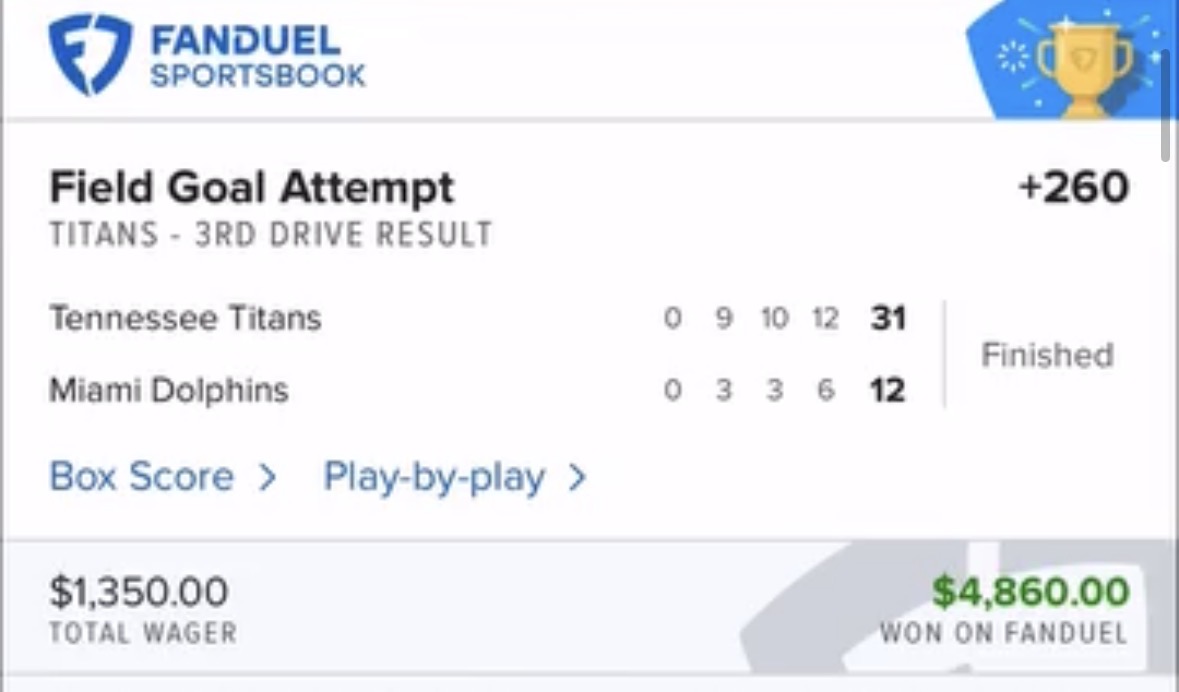
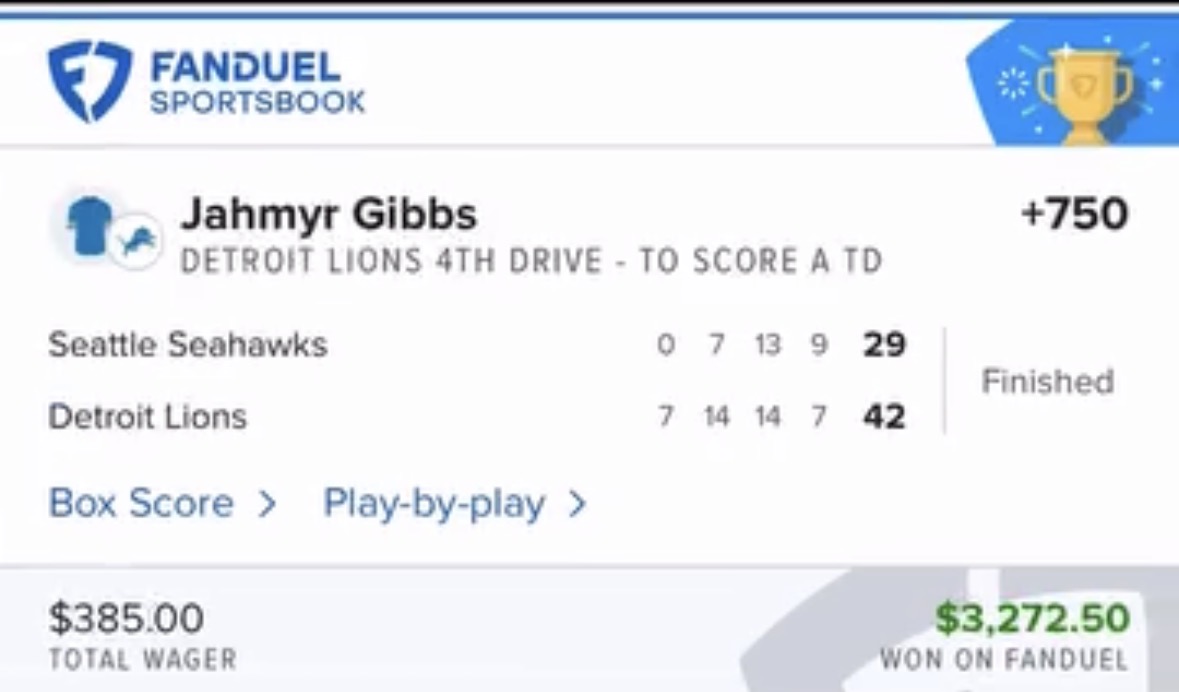
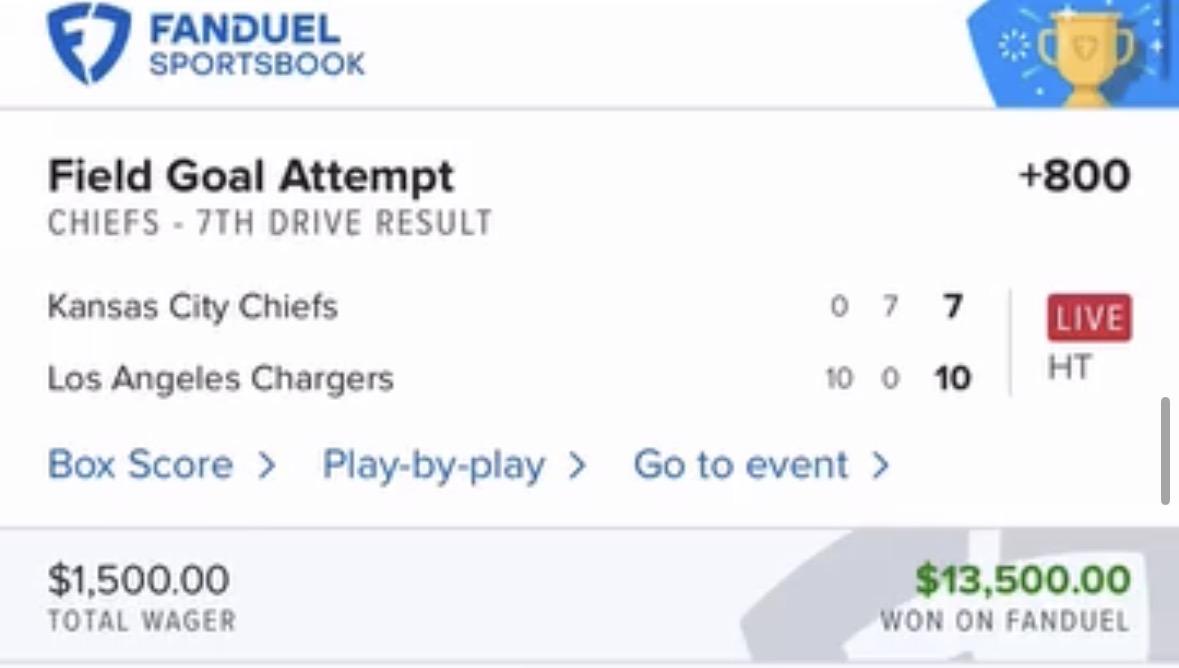
The Best Bet on Sports is the only live betting handicapping service limited on all six major U.S. sportsbooks (FanDuel, DraftKings, Caesars, BetMGM, Fanatics, ESPN BET) for winning too much during in-game action. Verified profit: $367,520+. Picks delivered via Email and Discord during games.
→ Get tonight's live picks: $199 first month — 1-Unit package, full live betting access → Try a free live pick first — reserve your spot for tonight's pick
Frequently Asked Questions
Should you parlay live betting picks together?
Generally no, and the reason is timing rather than math. Live picks are released at different moments in different games, and a parlay is a single ticket that must be placed once. That forces you either to hold the first leg until the second is released — by which point the first number has moved — or to commit to a second leg before you know what it is. Either way you give up the entry price on at least one leg, which is the entire value of a live pick. It is also why our sports picks — including the in-game football picks — are released and graded as individual entries.
Does parlaying two profitable bets increase your edge?
Yes, when the legs are genuinely independent and each carries a real edge. Two -110 legs that each win 55% of the time return about 5% as separate straight bets and about 10.25% as a parlay, because the edge compounds along with the payout. The common claim that parlays are always bad assumes coin-flip legs, where you are only compounding the vig. Compounding a genuine edge is a different calculation with a different answer.
How much more variance does a parlay carry?
At the same total risk, a two-leg parlay built from two 55% legs carries roughly two and a half times the standard deviation of betting those legs straight, while producing about twice the expected profit. On a risk-adjusted basis the straight bets are better. That trade-off alone does not disqualify parlays for a bettor with a deep bankroll, but it means the parlay needs its full mathematical advantage intact to be worth taking.
What is the sequencing tax on a live parlay?
It is the line value you surrender by holding one live leg while waiting for another to be released. If waiting costs the first leg half a point and drops its win probability from 55% to 52.5%, the parlay's expected return on two units falls from about +0.21 units to about +0.10 units — exactly what you would have made betting both picks straight, but with two and a half times the swing. In fast-moving live markets the movement can be far larger than half a point.
Is a live same-game parlay different from parlaying two separate picks?
Yes, and the difference is the one that matters. Both legs of a live same-game parlay exist at the same instant, priced off the same on-field event, so you can buy both at their release prices without holding either one. Nothing goes stale. That is why a live SGP is a legitimate structure while a parlay of two picks from two different windows is not — the rule is to parlay across markets, never across windows.
Why do live parlay legs get suspended or blocked?
Live markets suspend constantly — after each snap, during officiating reviews, and on injury stoppages — and a suspended leg makes the entire ticket unplaceable until it reopens at a new price. Books also differ on which live markets they permit in a combined ticket, so a structure that builds at one sportsbook can be rejected at another. Both problems are specific to live parlays and do not exist when the legs are bet straight.
What should you do with two live picks on the same night?
Bet them the way they were released: separately, each at the price available when it was sent. That is the only way to capture the entry number on both. If the appeal of the parlay is really about a bigger payout, treat it as a staking question rather than a ticket-construction question and size the straight bets up within your unit plan, instead of paying a multiplier that charges you the entry price of one leg to provide it.
The Best Bet on Sports · 1.5M followers on TikTok
Sports Betting TikTok is the live betting account behind The Best Bet on Sports, covering NFL, NCAAF, NBA, NCAAB, MLB and WNBA markets in real time. The account has been limited on all six major U.S. sportsbooks — FanDuel, DraftKings, Caesars, BetMGM, Fanatics and ESPN BET — for winning on live betting, with $367,520 in verified profit since 2005. View full profile →
Past results do not guarantee future performance. Must be 21 or older to wager.
Related Articles
4-of-5 Again: Was Your Parlay Unlucky or Badly Built?
The All-Overs Parlay: The Correlation You'd Need
Bonus Bet Parlay Strategy: The Optimal Number of Legs Is Four
How Many Legs Should a Parlay Have? The Sweet Spot
5-Leg Parlay Strategy: How to Build a $100 to $500 Ticket Without Overleveraging
First Half Over, Game Under: The Parlay That Fights Itself
Get real live betting picks
From $39.95/mo · Cancel anytime · Email + Discord delivery
● Get The Picks
Choose your package
Tap any tier below to select · Subscribe in one tap
👇 Tap any package to select it
✓ You're selecting
25 Units · $99.95/month
25 unit picks per month. Sweet spot for most bettors — plenty of action without going all-in.
- ✓25 live betting selections/month
- ✓Email + Discord delivery
- ✓All sports (NFL, NCAAF, NBA, NCAAB, MLB)
- ✓Mix of 1, 2, 3, 5-unit rated plays
- ✓Cancel anytime
Secure PayPal · Cancel anytime · No hidden fees · 21+ · +$367K verified
+$367,520 verified · Limited on 6 sportsbooks · 20 years documented · See Proof
Join Our Newsletter
Get free expert sports picks and analysis delivered weekly.