The All-Overs Parlay: The Correlation You'd Need

An all-overs parlay stacks the game totals from several different games onto one ticket, and it is priced as if those totals are independent events. They are not perfectly independent, which works in your favor — but the arithmetic sets a specific bar. On a two-leg over parlay at standard pricing, the correlation between the two games has to reach roughly 0.10 before the ticket breaks even, and a normal slate does not get there.
Stacking four overs from four different games onto one ticket is the most common parlay a football bettor builds, and it rests on an assumption almost nobody says out loud: that if the day is going over, it is going over everywhere. That instinct is not baseless. Game totals across a single slate are not perfectly independent, and any correlation between them raises the true probability that all your legs land above the number the sportsbook used to price the ticket. The problem is that the arithmetic sets a specific bar. On a two-leg over parlay at standard pricing, the correlation between the two games has to reach roughly 0.10 before the bet breaks even — and the things that actually decide whether one football game goes over are almost entirely local to that game. The Best Bet on Sports has worked in-play football markets for more than twenty years with a verified $367,520+ in profit across all sportsbooks, and this is the honest version of a math argument that usually gets made in only one direction.
What an All-Overs Parlay Actually Assumes
Take four Saturday games. You like the over in each one. You put them on one ticket at -110 a leg, and the sportsbook quotes a payout.
That payout is produced by multiplication. The book converts each leg to a decimal price, multiplies them together, and prints the result. It does not ask whether the four games have anything to do with each other. It treats them as four separate coins.
Your reason for building the ticket is the exact opposite. You are not saying "these four games each independently look high." You are saying something closer to "scoring is up right now." That is a claim about a shared factor. And a shared factor means the legs are not four coins — they are four readings of the same thing.
Here is the part that gets stated wrong constantly, in both directions. If the legs are positively correlated, the true chance of all of them winning is higher than the multiplication implies. Correlation, when the book prices as if there is none, is in the bettor's favor. That is precisely why sportsbooks police correlation inside a single game and why some leg combinations get rejected outright, which we cover in why sportsbooks block same-game parlay legs.
So the all-overs ticket does have a real argument behind it. The question is not whether the effect exists. The question is how big it has to be.
The Bar the Correlation Has to Clear
Start with what you are being charged. A standard -110 wager returns 1.9091 for every 1 risked. On a genuinely 50/50 proposition, that is a 4.55% margin to the house.
Multiply that margin and it compounds fast:
| Legs | Decimal payout | True odds of all winning if independent | House margin |
|---|---|---|---|
| 1 | 1.909 | 50.0% | 4.55% |
| 2 | 3.645 | 25.0% | 8.89% |
| 3 | 6.958 | 12.5% | 13.03% |
| 4 | 13.283 | 6.25% | 16.98% |
A four-leg over parlay hands the book roughly 17 cents on the dollar in expectation before anything else happens. Correlation has to buy all of that back before the ticket is even a coin flip in value terms. That is the whole problem in one number, and it is the same reason leg count itself is the first thing to get right — worked through in how many legs a parlay should have.
Now put a number on the correlation side. Take two games, each a genuine 50/50 to go over. For two coin flips with a correlation coefficient of ρ, the probability that both land over is not 0.25 — it is 0.25 + ρ/4. That is exact, not an approximation, for two even-money binary outcomes.
Run it:
| Correlation between the two games | Chance both go over | Effective house margin |
|---|---|---|
| 0.00 (independent) | 25.0% | 8.89% |
| 0.02 | 25.5% | 7.06% |
| 0.05 | 26.3% | 4.33% |
| 0.10 | 27.5% | −0.23% (breakeven) |
| 0.20 | 30.0% | −9.34% (bettor edge) |
The break-even sits at a correlation of about 0.098. Below that, the parlay is a losing bet even though the correlation is real. Above it, the sportsbook is genuinely giving something away.
Notice what the middle row does. At a correlation of 0.05, the effective margin drops from 8.89% to 4.33% — the correlation refunds roughly half the parlay tax. That is not nothing. It is also not a winning bet. It is a losing bet that loses more slowly, which is a distinction the "overs run in packs" crowd never makes.
Is a Football Slate Correlated at 0.10?
This is the honest part, and it is where the argument usually stops short.
Ask what actually determines whether one football game goes over its number. Pace and tempo philosophy for those two specific offenses. Whether either quarterback is the starter the number was built around. How the two lines match up, which decides whether drives sustain or stall. Game script — a two-score lead in the third quarter turns an offense into a clock-management unit, and that single fact does more damage to a total than anything else on the list. Red zone conversion. Whether a coordinator calls a fourth quarter to win or to survive.
Every one of those is local to the game. None of them is shared with a game being played four hundred miles away by different people.
Now ask what genuinely is shared across a slate. Rule changes and officiating points of emphasis for the season. The scoring environment of the era. Roster-construction trends across a conference. These are real and they are shared — but they move on the timescale of a season, not a Saturday, which means they are already inside every number on the board. A factor the market has fully absorbed cannot generate correlation the market failed to price. It generates correlation that is already in the totals themselves.
What is left is genuinely small. The claim that a normal football slate carries a game-to-game total correlation above 0.10 — enough to erase an 8.9% margin on two legs, let alone a 17% margin on four — is not something anyone selling you a parlay has demonstrated, and it is not something the shape of the sport supports.
There is a second cost people forget. Correlation is symmetric. If it raises the chance all four legs hit, it raises the chance all four die together by the same mechanism. The distribution gets barbelled: more days where the ticket cashes clean, more days where it is dead by the second quarter, fewer days where you split. That is a real change to variance, and it lands on the same bankroll that has to survive the losing weeks — the sizing consequences are in how much of your bankroll belongs on parlays.
Where the Correlation Is Actually Big Enough
There is one place on a football board where correlation clears the bar comfortably, and it is inside a single game.
A game total over, a team total over, and a lead receiver's yardage prop are not three readings of a shared mood. They are three readings of one event. When that game becomes a shootout, all three move together, and the correlation between them is not 0.05 — it is high enough that sportsbooks built an entire pricing apparatus to deal with it. That apparatus is the same-game parlay haircut, and the reason it exists is that the multiplication method would give the bet away. The mechanics are covered in correlated parlays explained.
That produces a clean rule of thumb that runs opposite to how most tickets get built:
The correlation the sportsbook prices against you is the one large enough to matter. The correlation it ignores is the one too small to help you. Cross-game correlation goes unpoliced precisely because it is not worth policing.
What to Do With an Over-Heavy Read Instead
If your read is genuinely that scoring is going to be up on a given slate, there are cheaper ways to express it than a four-legger.
Bet the totals straight. Four separate overs at -110 pay a 4.55% margin each. The same four on one ticket pay 16.98% once. Four straight bets keep every partial result — three out of four is a winning day rather than a losing ticket, and correlation still helps you on the days everything goes up, without you having paid the multiplication tax for it. Our daily sports betting picks and football betting picks pages are built around single positions at posted numbers for exactly that reason.
If the appeal was really sequencing rather than payout — you wanted the second position to depend on the first — that is a staking structure, not a parlay, and it costs far less. The comparison is in if-bets and reverses.
And if the appeal was the payout, say so plainly and size it like the lottery ticket it is. There is nothing wrong with a small ticket for the entertainment of it. What is wrong is telling yourself the correlation argument makes it a smart bet, when the number that argument has to beat is 0.10 and nothing on a Saturday slate comes close. The broader version of that reckoning is in why most parlays lose.
The place where correlation and pricing genuinely come apart is not across a slate. It is inside one game, in real time, when the number has not yet caught up to what is happening on the field. That is a different bet entirely, and it is the one we work.
Get Tonight's Live Picks
Want tonight's live in-game football picks delivered to your phone via Email and Discord during the game?
The Best Bet on Sports is the only live betting handicapping service limited on all six major U.S. sportsbooks (FanDuel, DraftKings, Caesars, BetMGM, Fanatics, ESPN BET) for winning too much during in-game action. Verified profit: $367,520+. Picks delivered via Email and Discord during games.
→ Get tonight's live picks: $199 first month — 1-Unit package, full live betting access → Try a free live pick first — reserve your spot for tonight's pick
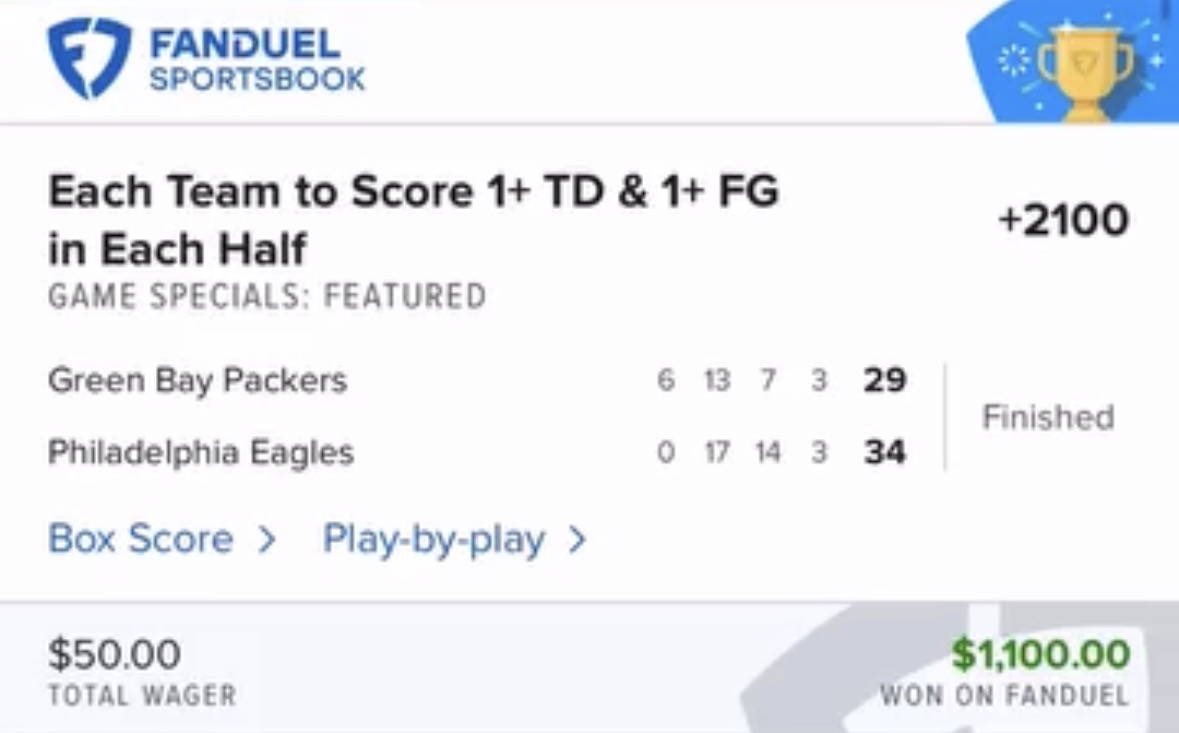
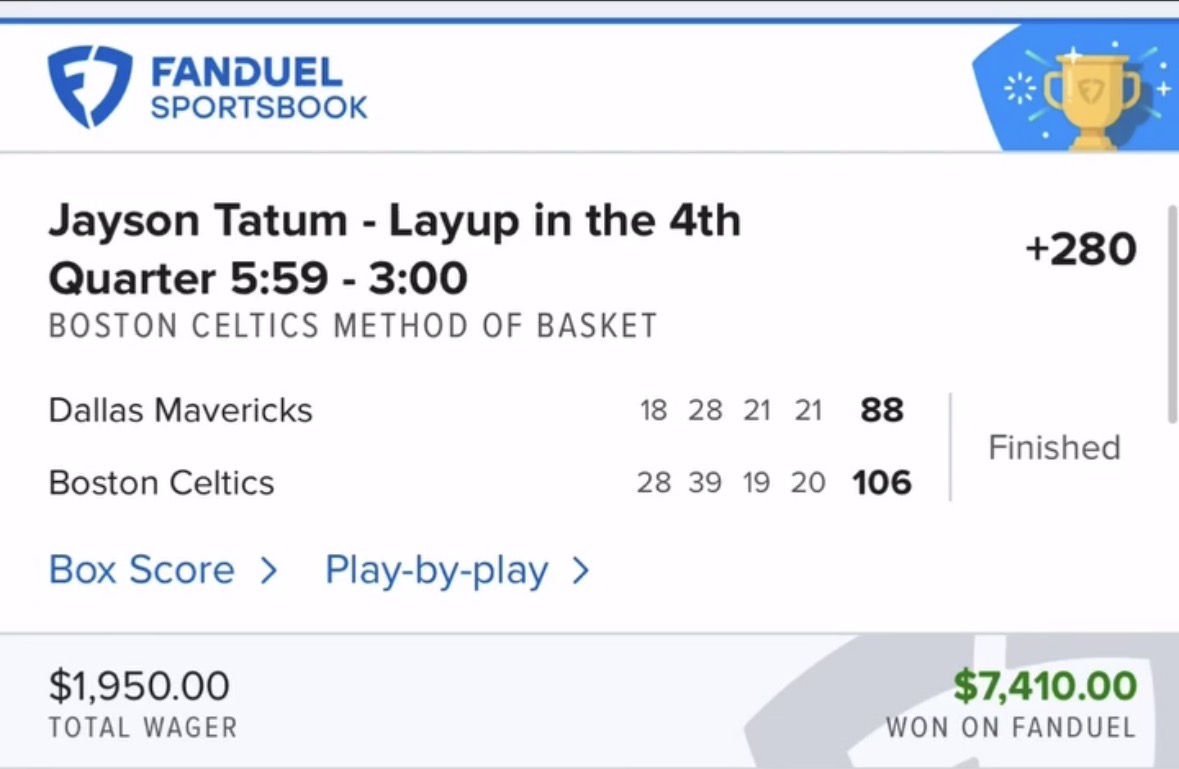
More coverage at buy sports picks, expert sports picks, football handicappers, college football picks, NFL picks, and our results.
Frequently Asked Questions
What is an all-overs parlay?
An all-overs parlay is a ticket that combines the over on the game total from two or more separate games into a single wager, requiring every game to finish above its posted number. It is the most commonly built multi-leg totals ticket in football season. The sportsbook prices it by converting each leg to a decimal price and multiplying, which treats the games as independent events even though the bettor's reason for building it usually assumes they are not.
Does correlation between games make a parlay better or worse?
Positive correlation makes the parlay's true win probability higher than the multiplied price implies, which is in the bettor's favor when the sportsbook prices the legs as independent. It also raises the chance every leg loses together, so the outcome distribution becomes more extreme in both directions. The practical question is never whether correlation helps but whether it is large enough to overcome the compounded house margin, which on two legs is 8.89% and on four legs is roughly 17%.
How much correlation would a two-leg over parlay need to break even?
Roughly 0.098, or about 0.10. For two outcomes that are each a genuine coin flip, the probability both land is 0.25 plus one quarter of the correlation coefficient, so a correlation of 0.10 lifts the chance both games go over from 25% to 27.5%. At standard -110 pricing that is the exact point where the ticket stops losing money in expectation. Below that level the correlation is real but insufficient, and the parlay still carries a negative expected value.
Are game totals in different games actually correlated?
Only weakly, and that is the core of the argument. The factors that decide whether one football game goes over — offensive tempo, quarterback availability, line-of-scrimmage matchups, game script after a two-score lead, red zone conversion — are specific to that game and are not shared with a game being played elsewhere. The factors that genuinely are shared across a slate, such as rule changes and season-long scoring environment, move slowly enough that they are already priced into every total on the board.
Why do sportsbooks block same-game parlay legs but allow all-overs across games?
Because the correlation inside one game is large enough to give the bet away and the correlation across games is not. A game total over, a team total over and a lead receiver's yardage prop are three readings of the same event, so multiplying them as independent would substantially underprice the ticket. Sportsbooks respond with same-game parlay pricing adjustments or outright rejections. Cross-game combinations get no such treatment because the effect is too small to be worth policing.
Is it better to bet four overs straight or as a parlay?
Four straight overs pay a 4.55% margin on each wager, while the same four legs on one ticket pay roughly 17% once. Straight bets also preserve partial outcomes, so going three-for-four is a winning day rather than a dead ticket, and any real correlation between the games still helps you on the days scoring runs high. The parlay's only advantage is payout size, which is a variance choice rather than a value choice.
Does the correlation argument ever justify a parlay?
Inside a single game it can, which is why same-game correlation is worth studying and why sportsbooks price against it. Across separate games on a slate it does not, because the required correlation of about 0.10 on two legs is higher than the structure of football supports, and the bar rises further with each leg added. A small ticket built for entertainment is a defensible choice as long as it is sized as entertainment rather than justified as an edge.
The Best Bet on Sports · 1.5M followers on TikTok
Sports Betting TikTok is the live betting account behind The Best Bet on Sports, covering NFL, NCAAF, NBA, NCAAB, MLB and WNBA markets in real time. The account has been limited on all six major U.S. sportsbooks — FanDuel, DraftKings, Caesars, BetMGM, Fanatics and ESPN BET — for winning on live betting, with $367,520 in verified profit since 2005. View full profile →
Past results do not guarantee future performance. Must be 21 or older to wager.
Related Articles
The Saturday-to-Sunday Football Parlay: What the 24-Hour Gap Costs
Favorite and Over Parlays: 11 Years of Real Results
Divisional Underdog Parlays: 11 Years of Real Results
Heavy-Favorite Parlays: 11 Years of Real Results
First Half Over, Game Under: The Parlay That Fights Itself
The Last Two Minutes Kill More Parlays Than Bad Picks Do
Get real live betting picks
From $39.95/mo · Cancel anytime · Email + Discord delivery
● Get The Picks
Choose your package
Tap any tier below to select · Subscribe in one tap
👇 Tap any package to select it
✓ You're selecting
25 Units · $99.95/month
25 unit picks per month. Sweet spot for most bettors — plenty of action without going all-in.
- ✓25 live betting selections/month
- ✓Email + Discord delivery
- ✓All sports (NFL, NCAAF, NBA, NCAAB, MLB)
- ✓Mix of 1, 2, 3, 5-unit rated plays
- ✓Cancel anytime
Secure PayPal · Cancel anytime · No hidden fees · 21+ · +$367K verified
+$367,520 verified · Limited on 6 sportsbooks · 20 years documented · See Proof
Join Our Newsletter
Get free expert sports picks and analysis delivered weekly.