Heavy-Favorite Parlays: 11 Years of Real Results

A parlay of heavy NFL moneyline favorites loses more often than it feels like it should. Across 2015 through 2025, every favorite priced at -300 or shorter won in only 81 of 189 regular-season weeks, so a ticket holding the whole board cashed 43 percent of the time and still lost money. The favorites won about as often as their prices said. The parlay structure, which compounds the margin on every leg, is what cost money.
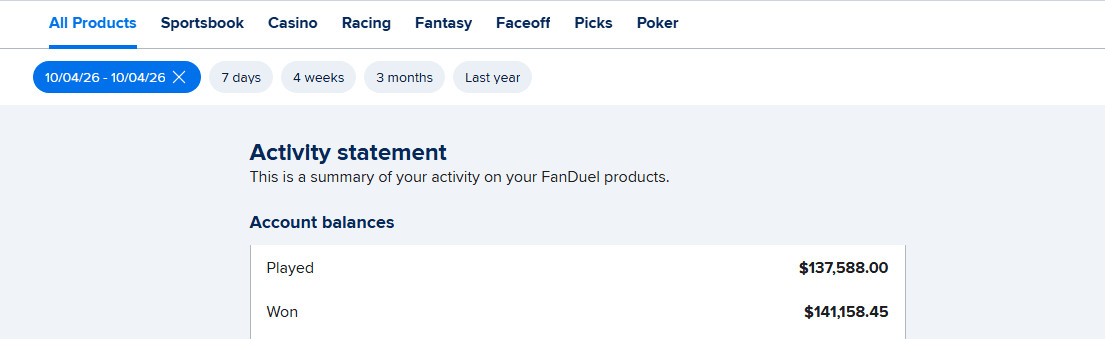
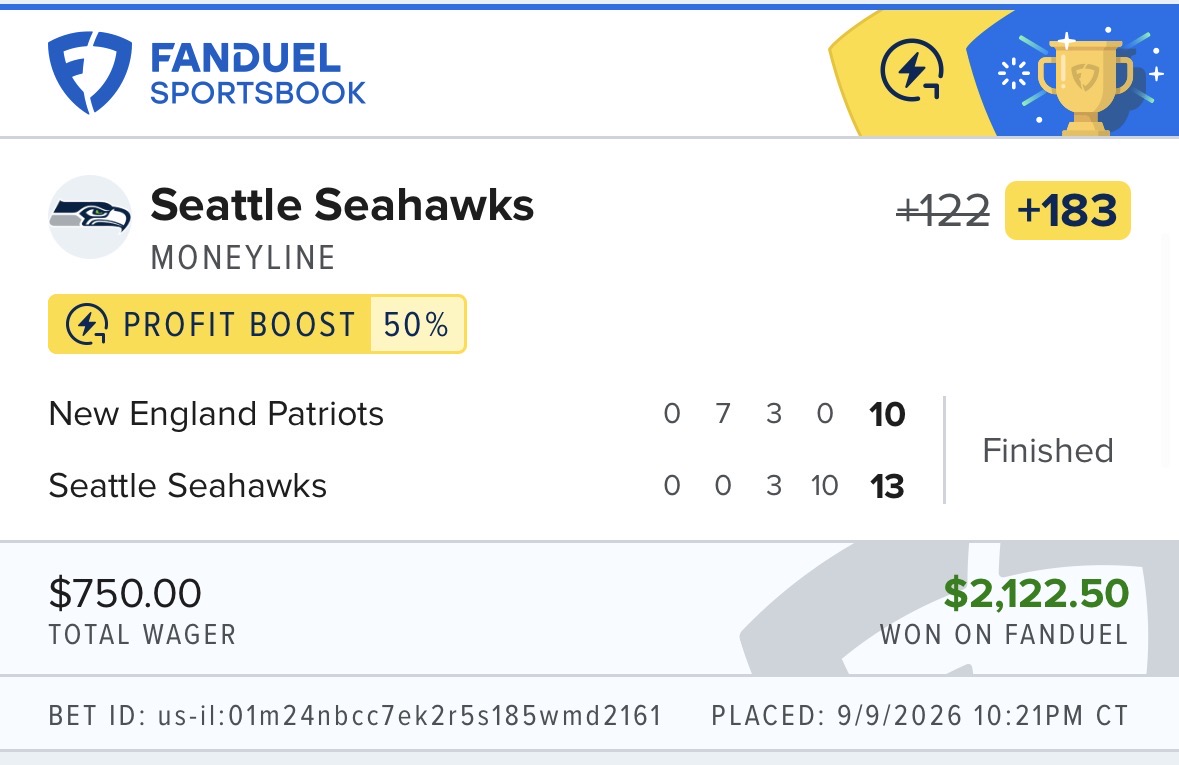
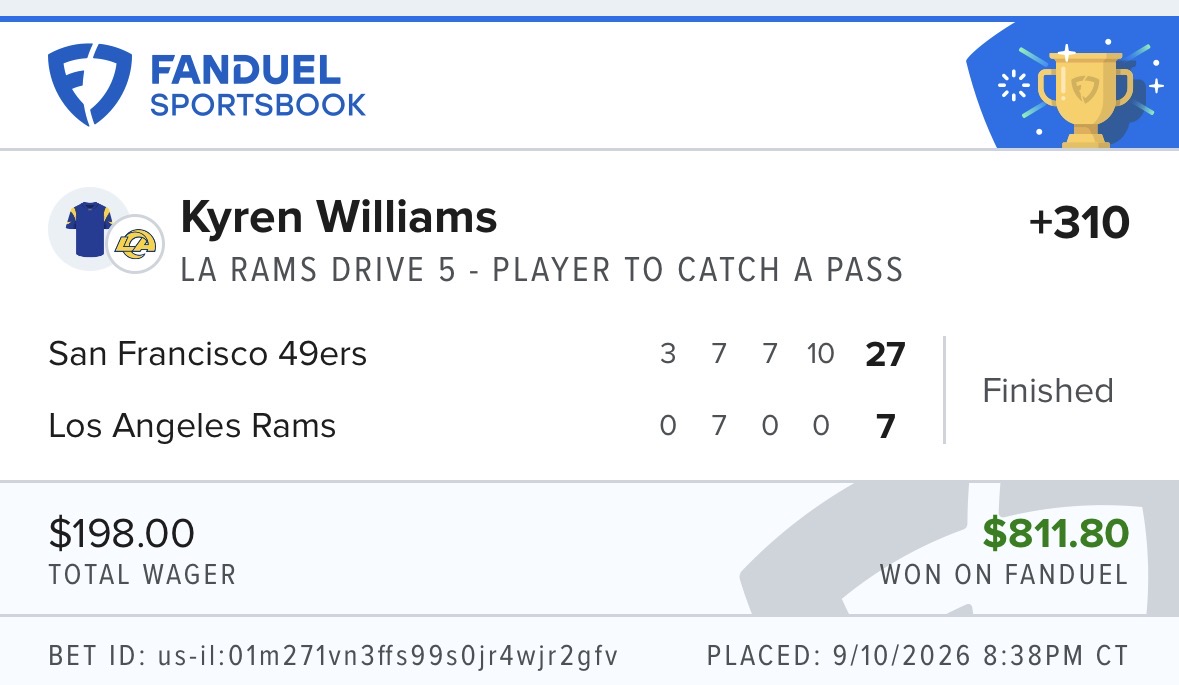
A parlay of heavy NFL moneyline favorites is the most popular "safe" ticket in football betting, and eleven seasons of real results say it is neither safe nor profitable. From 2015 through 2025, every favorite priced at -300 or shorter won in only 81 of 189 regular-season weeks (42.86 percent). A ticket holding the whole board cashed 43.33 percent of the time and still returned -4.07 percent. The favorites themselves won 80.18 percent of the time, almost exactly what their prices implied. The Best Bet on Sports has built a verified $367,520+ in profit across all sportsbooks without leaning on this ticket, and the numbers below show why.
Almost everyone who bets football has built this ticket. You look at the board on Saturday night, find four or five teams laying -300 or more against obviously overmatched opponents, and string them together for a payout that roughly doubles your money. Each leg feels like a near-certainty. Together they feel like the closest thing football betting has to a sensible ticket.
The intuition is not stupid. Heavy favorites really do win most of the time. The problem is that "most of the time" multiplied across four games is a much smaller number than it feels like, and the price you are paid for each leg already knows exactly how often it wins.
What Did We Measure?
We pulled every NFL regular-season game from 2015 through 2025 from the nflverse game file, which carries the closing moneyline on both sides. That gave 2,894 games with a complete moneyline, 10 of which ended in a tie and were set aside for win-rate purposes.
For each game we identified the favorite, converted both moneylines into implied probabilities, and removed the sportsbook margin to get a no-vig probability, which is the market's honest estimate of how often the favorite wins. Then we checked how often the favorite actually won, and what a flat $100 bet on it would have returned at the closing price.
The first question is the one most parlay builders never ask: are heavy favorites underpriced, overpriced, or priced correctly?
Do Heavy Favorites Win as Often as Their Price Says?
Very nearly, yes.
| Favorite price | Games | Favorite won | No-vig implied | Flat $100 return per bet |
|---|---|---|---|---|
| -100 to -149 | 735 | 54.97% | 54.49% | -2.22% |
| -150 to -199 | 710 | 59.86% | 61.52% | -5.52% |
| -200 to -299 | 652 | 69.48% | 68.70% | -2.02% |
| -300 to -399 | 366 | 76.23% | 75.04% | -1.43% |
| -400 to -599 | 237 | 79.32% | 79.67% | -3.53% |
| -600 or shorter | 184 | 89.13% | 86.75% | -0.72% |
Read the two middle columns side by side. In every price band, the actual win rate lands within about two and a half percentage points of what the market implied, and in the heavy bands the difference runs slightly in the favorite's favor. Pooling everything at -300 or shorter gives 787 decided games, a win rate of 80.18 percent against an average no-vig implied probability of 79.17 percent.
That one-point gap is not an edge. With 787 games, the standard error on an 80 percent win rate is about 1.4 percentage points, so the gap sits comfortably inside ordinary noise. What the table actually establishes is that the closing moneyline on a big NFL favorite is very well calibrated.
And because it is calibrated, betting it loses money. Every band in the table has a negative return, because the sportsbook margin is still being charged on a probability the market already got right. On heavy favorites in this sample that margin averaged 3.24 percent of combined implied probability per game.
Even the strongest band, favorites at -600 or shorter, which won 89 percent of the time, lost 0.72 percent per bet. Twenty of those 184 favorites still lost outright.
How Often Does Every Big Favorite Win in the Same Week?
This is the number that should change how you build the ticket.
Across the 189 regular-season weeks that had at least one favorite at -300 or shorter, the average week offered 4.17 of them and the median week offered 4. Every one of them won in just 81 of those weeks. In the other 108, at least one heavy favorite lost outright.
Put plainly, if your weekly habit is to parlay every big favorite on the board, your ticket died in more than half the weeks of the last eleven seasons. It did not die because the favorites were bad picks. It died because four separate 80 percent events all have to happen, and 0.8 multiplied by itself four times is 0.41.
Here is what that whole-board ticket actually did, using the real closing prices of every heavy favorite in each week with at least two of them:
| Measure | Result |
|---|---|
| Weekly tickets | 180 |
| Median legs per ticket | 4 |
| Median payout | 2.30x stake (about +130) |
| Tickets that cashed | 43.33% |
| Market-implied chance of cashing | 39.26% |
| Return on stake | -4.07% |
The ticket cashed more often than the market implied, and it still lost money. That is the parlay problem in one row: a slightly favorable hit rate is not enough to overcome a margin that is charged again on every leg.
Does Using Fewer Legs Fix It?
It helps, but it does not change the sign.
We also built random two-, three- and four-leg tickets from the heavy favorites available in each week, weighting every week equally so that a single loaded Sunday could not dominate the result.
| Legs | Tickets cashed | Market-implied | Return on stake |
|---|---|---|---|
| 2 | 65.42% | 62.60% | -1.94% |
| 3 | 53.14% | 49.81% | -2.79% |
| 4 | 43.39% | 39.38% | -2.05% |
Every row hit slightly more often than the price implied, and every row still lost. That pattern repeats throughout this study and it is worth stating once without qualification: across eleven NFL seasons, heavy favorites were not a trap because they lost too often. They were a losing bet because they were priced almost exactly right, and the parlay format pays you less than the true odds on each leg.
If you want to see how much margin each extra leg adds in the abstract, our spread parlays vs moneyline parlays breakdown works through the hold by structure, and how many legs a parlay should have shows the curve. This post is the real-results companion to those: the theory held up in the actual games.
Why Does the Ticket Feel Safer Than It Is?
Because the payout hides the risk.
A three-leg ticket of -350 favorites pays about +113. Most people read that as "I get a little more than double my money for three near-certain wins." The honest reading is that you are making a bet that loses roughly half the time, and being paid a little more than even money for it. Framed that way, nobody would describe it as safe. Framed as three favorites, almost everyone does.
The other trap is memory. When one of these tickets cashes, it cashes on Sunday evening with four green checks and a clean feeling. When it loses, it usually loses to a single upset that gets remembered as bad luck rather than as the expected cost of the structure. Over a season the green Sundays are vivid and the 108 losing weeks out of 189 blur together.
Nothing about this is a secret to the sportsbook. It is exactly why the parlay button sits where it does on every app, a pattern we covered in why most parlays lose.
Did Any Season Beat the Market?
Some did, which is exactly the problem.
| Season | Favorites at -300 or shorter | Won | Flat $100 return per bet |
|---|---|---|---|
| 2015 | 62 | 75.8% | -5.81% |
| 2016 | 48 | 85.4% | +7.09% |
| 2017 | 70 | 81.4% | +0.49% |
| 2018 | 72 | 77.8% | -4.63% |
| 2019 | 69 | 81.2% | -1.47% |
| 2020 | 83 | 83.1% | +3.22% |
| 2021 | 97 | 82.5% | +0.66% |
| 2022 | 62 | 82.3% | +0.68% |
| 2023 | 69 | 75.4% | -9.58% |
| 2024 | 67 | 76.1% | -6.68% |
| 2025 | 88 | 80.7% | -3.81% |
Five of eleven seasons showed a small profit on flat bets. Anyone who started betting heavy favorites in 2016 or 2020 had a year of evidence that the approach worked. Anyone who started in 2023 had a year of evidence that it was a disaster. Neither year told you anything about the next one, and over the full sample the return was -1.90 percent per bet.
To be precise about that callout: this study uses closing pregame moneylines and final results only. It contains no in-game prices, so it cannot measure how much better or worse a live favorite price is. The argument for betting inside the game is structural, not something these 2,894 games measure.
What Should You Do With This?
Three things, in order.
Stop treating the heavy-favorite parlay as a low-risk ticket. On the whole board it lost more often than it won, and the version that hit most often, two legs, still returned less than your stake over time.
If you want a favorite in a ticket, make it the leg you have an actual opinion on, not the leg that seems safe. A favorite you think is underpriced belongs in the bet. A favorite you added because -400 felt safe is pure margin.
And measure yourself honestly. If you play this ticket every week, count the weeks, not the wins. Eleven seasons say you should expect it to cash a little under half the time, at a price that pays a little over even money. That is the profile of a slowly losing bet, and no single winning Sunday changes it.
If you would rather have the opinions come from someone who can show the work, our football betting picks and the weekly NFL picks board are where that happens. For what a real football handicappers service is obligated to show you, and how the packages compare, see buy sports picks and daily sports betting picks.
Where This Analysis Stops
This is NFL regular season only, 2015 through 2025, at closing moneylines. Opening prices, college football and other sports were not measured, and college football in particular produces much longer favorites against much weaker opponents, so these figures should not be carried across.
The parlay simulations assume legs are independent. Within a single NFL week that is a reasonable approximation for different games, but it is not true for same-game parlays, which are a different product with different pricing. And the "tickets cashed" figures use the real outcomes of real games, so a week with an unusual cluster of upsets affects every ticket built from it. That is why the per-week equal-weighting was used for the leg-count table.
What survives all of that is the central result. The heavy favorites were priced correctly, the tickets built from them cashed about as often as the prices said they would, and the structure still lost money every way we cut it.
Get Tonight's Live Picks
Want tonight's live in-game picks delivered during the game, priced after the favorite has shown you what kind of night it is having?
The Best Bet on Sports is the only live betting handicapping service limited on all six major U.S. sportsbooks (FanDuel, DraftKings, Caesars, BetMGM, Fanatics, ESPN BET) for winning too much during in-game action. Verified profit: $367,520+. Picks delivered via Email and Discord during games.
→ Get tonight's live picks: $199 first month — 1-Unit package, full live betting access → Try a live pick first — reserve your spot for tonight's pick

Frequently Asked Questions
Is a parlay of heavy NFL favorites a good bet?
No. Across 2015 through 2025, a ticket holding every NFL favorite priced at -300 or shorter in a given week cashed 43.33 percent of the time at a median payout of about +130, for a return of -4.07 percent on stake. Every favorite on that board won in only 81 of 189 regular-season weeks.
How often do NFL favorites of -300 or more win?
In 787 decided regular-season games from 2015 through 2025, favorites priced at -300 or shorter won 80.18 percent of the time. The market's no-vig implied probability for those same games averaged 79.17 percent, so they won almost exactly as often as their prices said.
Are heavy favorites underpriced by sportsbooks?
Not in any way you can bet. Heavy favorites won about one percentage point more often than implied in this sample, but with 787 games that gap is well inside normal statistical noise. Flat $100 bets on them still returned -1.90 percent per bet because the margin is charged on a price the market already had right.
How many legs should a favorites parlay have?
Fewer is less costly, but none of the options were profitable. Equal-weighted random tickets of two heavy favorites cashed 65.42 percent of the time and returned -1.94 percent, three legs returned -2.79 percent and four legs returned -2.05 percent. Every version hit slightly more often than implied and every version still lost money.
What does a three-leg parlay of -350 favorites pay?
About +113, or a little more than double your stake back. The chance of all three winning is roughly half, so you are being paid slightly better than even money on a bet that loses about half the time, after the margin on each leg is included.
Did betting heavy favorites ever make money?
In some seasons. Flat bets on favorites of -300 or shorter showed a small profit in five of eleven seasons, peaking at +7.09 percent in 2016, and lost as much as -9.58 percent in 2023. Over the full eleven seasons the return was -1.90 percent per bet, and no season predicted the next.
Does this apply to college football or same-game parlays?
No. This study covers NFL regular-season closing moneylines only. College football features much longer favorites against much weaker opponents, and same-game parlays combine correlated outcomes from one game under different pricing, so neither should be judged by these figures.
The Best Bet on Sports · 1.5M followers on TikTok
Sports Betting TikTok is the live betting account behind The Best Bet on Sports, covering NFL, NCAAF, NBA, NCAAB, MLB and WNBA markets in real time. The account has been limited on all six major U.S. sportsbooks — FanDuel, DraftKings, Caesars, BetMGM, Fanatics and ESPN BET — for winning on live betting, with $367,520 in verified profit since 2005. View full profile →
Past results do not guarantee future performance. Must be 21 or older to wager.
Related Articles
The All-Overs Parlay: The Correlation You'd Need
NFL Survivor Pool Strategy: A Parlay You Place One Leg at a Time
First Half Over, Game Under: The Parlay That Fights Itself
The Last Two Minutes Kill More Parlays Than Bad Picks Do
4-of-5 Again: Was Your Parlay Unlucky or Badly Built?
Spread Parlays vs Moneyline Parlays: Which Costs You Less?
Get real live betting picks
From $39.95/mo · Cancel anytime · Email + Discord delivery
● Get The Picks
Choose your package
Tap any tier below to select · Subscribe in one tap
👇 Tap any package to select it
✓ You're selecting
25 Units · $99.95/month
25 unit picks per month. Sweet spot for most bettors — plenty of action without going all-in.
- ✓25 live betting selections/month
- ✓Email + Discord delivery
- ✓All sports (NFL, NCAAF, NBA, NCAAB, MLB)
- ✓Mix of 1, 2, 3, 5-unit rated plays
- ✓Cancel anytime
Secure PayPal · Cancel anytime · No hidden fees · 21+ · +$367K verified
+$367,520 verified · Limited on 6 sportsbooks · 20 years documented · See Proof
Join Our Newsletter
Get free expert sports picks and analysis delivered weekly.