Spread Parlays vs Moneyline Parlays: Which Costs You Less?

A parlay's long-run cost is not set by whether the legs are spreads or moneylines. It is set by the hold on each leg's two-way market, compounded. Three -110 spread legs cost about 13 percent. Three moneyline favorites out of a tight market cost about 10 percent. Three heavy favorites cost more than the spread ticket, despite feeling safer. This is the math, the table, and the one thing that actually changes the answer.
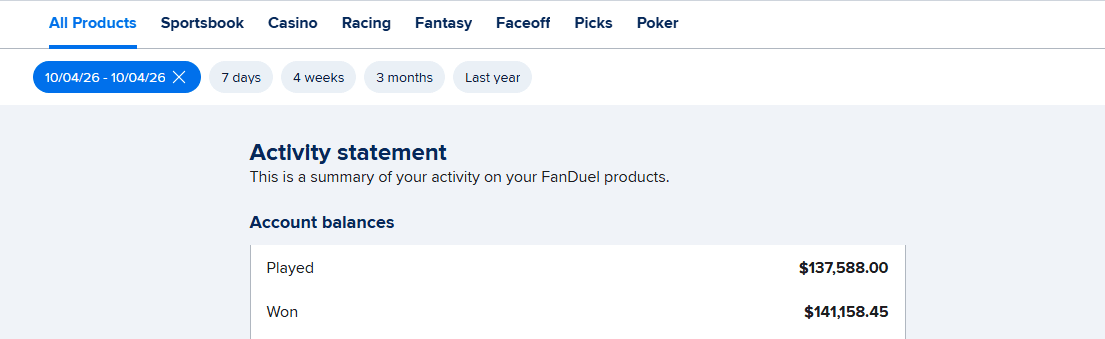
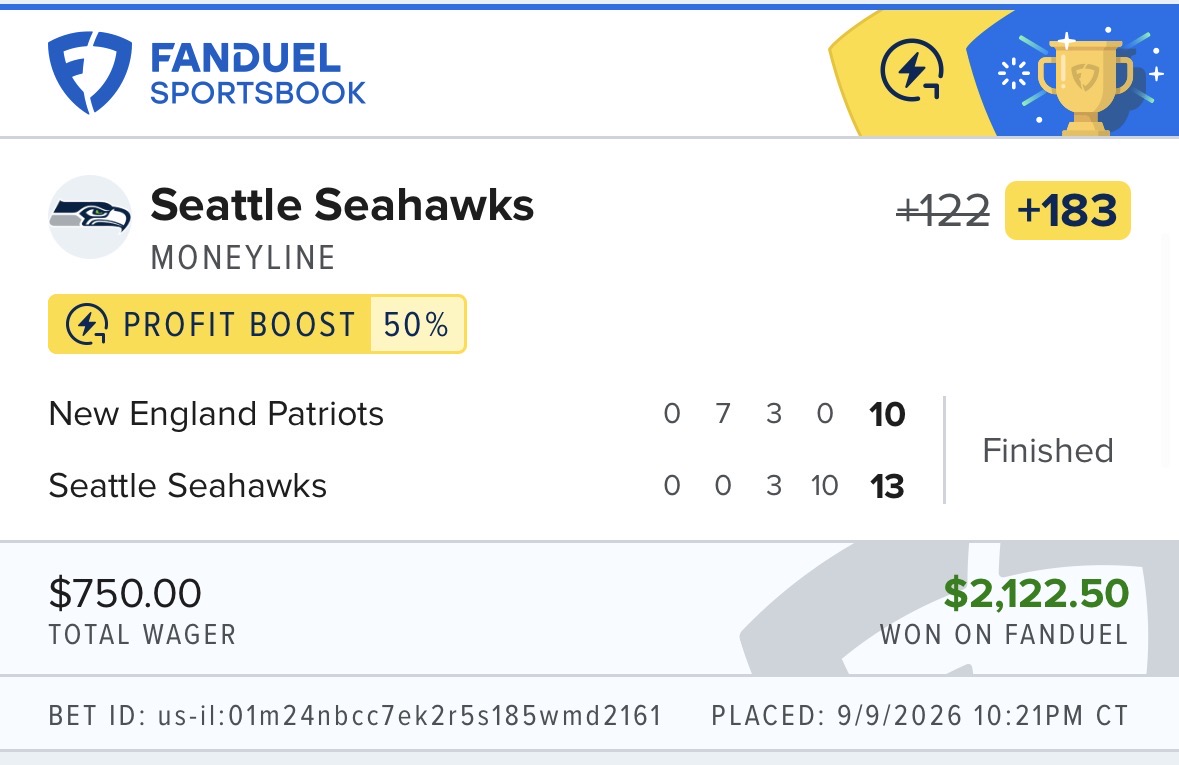
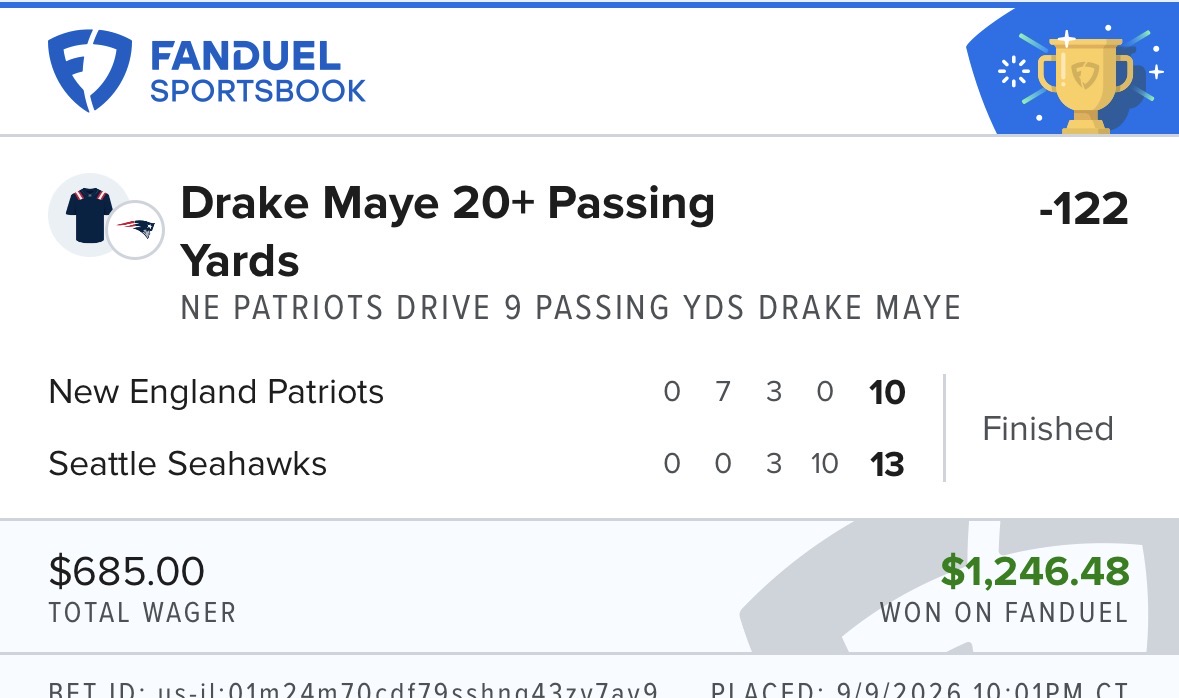
A spread parlay and a moneyline parlay are not two different products with two different edges. They are the same product built out of legs that carry different amounts of vig, and the long-run cost of any parlay is just the compounded hold of the markets its legs came from. Three standard -110 spread legs cost about 13 percent of everything you put through them. Three moneyline favorites out of a tightly priced game cost about 10 percent. Three heavy moneyline favorites — the ticket that feels safest — cost about 13.6 percent, more than the spread ticket. The Best Bet on Sports has built a verified $367,520+ profit across all six major U.S. sportsbooks over more than twenty years, and none of it came from picking a bet type. It came from pricing individual legs.
The question gets asked constantly and it is almost always asked backwards. Bettors want to know whether spreads or moneylines are the better parlay building block, as though one of them has a structural advantage. Neither does. What varies is how much the book charges to sell you each leg, and that charge compounds across the ticket in a way most bettors never calculate.
The Formula That Settles It
A parlay is the product of its legs. Its expected return is also the product of its legs. If each leg comes out of a market where the sportsbook holds a percentage `h`, the expected cost of the whole ticket is:
1 − (1 − h₁) × (1 − h₂) × (1 − h₃) …
That is the entire theory. Nothing about spreads, nothing about moneylines, nothing about favorites or underdogs. Just the compounded cut on each market you bought from.
The reason this works is that a sportsbook prices a two-way market by taking the true probabilities and inflating both of them, so that the two implied numbers add up to more than 100 percent. The excess is the hold. When you bet a single leg you pay it once. When you parlay three legs you pay it three times, multiplicatively, and the payout the book offers you already reflects that.
So the real question is not "spread or moneyline." It is which market on the board is being sold to you with the smallest cut, and the answer changes game by game.
What Each Ticket Actually Costs
Here is the comparison worked out. All of it assumes the book applies its margin proportionally, that the legs are independent, and that you bet three legs for $100.
| 3-leg ticket | Per-leg price | Two-way hold | Chance all three hit | Profit if it wins | Long-run cost |
|---|---|---|---|---|---|
| Spread parlay | -110 each | 4.55% | 12.5% | $595 | 13.0% |
| Moneyline favorites, tight market | -200 (other side +170) | 3.57% | 26.6% | $238 | 10.3% |
| Moneyline favorites, wide market | -200 (other side +160) | 4.88% | 26.6% | $238 | 11.3% |
| Heavy moneyline favorites | -400 (other side +300) | 4.76% | 44.2% | $95 | 13.6% |
Read the last two columns together, because that is where the lesson lives.
The heavy-favorite moneyline parlay wins nearly half the time. It is the ticket that feels responsible — three teams that should all win, a modest payout, no longshots. And it is the most expensive ticket on the board, worse than the spread parlay it was chosen over. The frequent wins are not evidence of an edge. They are the compensation for a payout that was cut too far, in a market where a book that quotes +300 against a -400 favorite is charging you 4.76 percent for the privilege.
The moneyline parlay out of a tightly priced game is the cheapest of the four, and it gets there for one reason only: that market's hold is 3.57 percent instead of 4.55 percent. Same bet type as the row below it. Different price on the other side. A full point of cost difference per leg, tripled.
Why the Spread Market Is Usually Still the Right Place to Shop
The table above could be read as "moneylines are cheaper," and that reading would be wrong most of the time. Two things push the other way.
First, -110 is a standardized price. A spread market at -110 on both sides is 4.55 percent hold every single time, on every game, at almost every book. Moneyline hold is not standardized — it is narrow on near-pick'em games and it widens, sometimes badly, as the favorite gets heavier. The -200/+170 row in that table is a good moneyline. The -200/+160 row is the more common one. You have to check each game, and most bettors do not.
Second, the spread is the market that carries the most volume and the sharpest money, which is why the number is the one the book defends. A tight price and a heavily-traded market are the same fact stated twice. When we discuss betting against the spread, the reason we keep returning to it is not tradition. It is that the spread is where you can buy the cleanest number available on a football game, and the cleanest number is what a parlay's compounding punishes least.
The honest summary: spreads give you a reliably good price without checking; moneylines occasionally give you a better one if you check. If you are not going to check the two-way hold on every leg before you build the ticket, build it out of spreads.
The One Thing That Changes the Answer
Everything above assumes your legs are coin flips against the price — that you have no opinion better than the market's. Under that assumption, every parlay is a losing proposition, and the only variable is how fast it loses.
That assumption is what you are actually paying to break. A spread leg at -110 needs to win 52.38 percent of the time to break even. A -200 moneyline leg needs 66.67 percent. If you have a real edge, it does not apply equally to both: an edge on the spread market is an edge against the sharpest price on the board, while an edge on a heavy favorite's moneyline is usually just an opinion about a game everybody already agrees on.
That is why leg quality dominates leg type. A single leg you are genuinely right about is worth more than any structural choice between bet types, and a single leg you are guessing on poisons the entire ticket no matter how it is priced. We worked through the related version of this in whether to parlay favorites or underdogs, and the conclusion is the same one arrived at from a different direction: the ticket is only as good as its worst decision.
Practical Rules for Building the Ticket
Check the other side of every moneyline before you use it as a leg. The favorite's price tells you nothing on its own. The number quoted on the underdog is what reveals the hold. A -200 favorite paired with +175 is a market worth buying from. The same -200 paired with +155 is not.
Do not mix the spread and the moneyline from the same game. They are the same outcome expressed twice, and the book either blocks the combination or prices it as a same-game parlay with the correlation stripped out. If you want both, you want a same-game parlay, and that is a different calculation.
Keep the leg count low. The formula is multiplicative, so the fourth leg does not add a fixed cost — it scales the whole ticket's cost again. Three -110 legs cost 13 percent. Six cost 24.3 percent. There is no leg count at which the compounding starts working for you.
Treat frequent small wins with suspicion. A ticket that cashes half the time and pays under even money is the structure with the widest gap between how it feels and what it costs. That gap is where the sportsbook makes its money on parlay players.
Shop the leg, not the parlay. Books rarely compete on parlay payout formulas, but they compete constantly on individual numbers. Getting a spread leg at -105 instead of -110 changes that leg's hold from 4.55 percent to roughly 2.4 percent, and on a three-leg ticket that is most of the difference between the best and worst rows in the table above. This is the same argument made at length in our line shopping guide.
Where Live Betting Changes the Math
Every number in this article comes from pregame markets, where the book has had days to price the game and the hold is the main thing standing between you and break-even.
In-game markets work differently. The holds are wider — that part is worse for you — but the prices are generated in seconds by a model reacting to a game in progress, and they are wrong far more often than a pregame number is. A wide price that is materially mispriced beats a tight price that is correct. That is the entire business we are in, and it is why our positions are taken during games rather than before them, described in detail on the live betting picks page with the ledger published on results.
It is also why we are cautious about parlays generally. Compounding a mispricing works in your favor, but compounding it requires being right about several independent things at once, and the honest version of that sentence is that most tickets do not clear the bar. One correctly priced live position, sized properly, is a better use of the same money than a four-leg ticket built out of opinions.
Get Tonight's Live Picks
Want tonight's live in-game picks delivered during the game via Email and Discord?
The Best Bet on Sports is the only live betting handicapping service limited on all six major U.S. sportsbooks (FanDuel, DraftKings, Caesars, BetMGM, Fanatics, ESPN BET) for winning too much during in-game action. Verified profit: $367,520+. Picks delivered via Email and Discord during games.
→ Get tonight's live picks: $199 first month — 1-Unit package, full live betting access → Try a free live pick first — reserve your spot for tonight's pick
If you came here from a search for expert sports picks or daily sports betting picks, those pages explain what gets sent and when. Packages are compared on buy sports picks, buyer questions are answered on pay for sports picks, and coverage and delivery are laid out on the sports handicapping service page. For football, see football betting picks, football handicappers, NFL picks and NFL moneyline picks.


Frequently Asked Questions
Is a spread parlay or a moneyline parlay better?
Neither is structurally better. A parlay's long-run cost equals the compounded hold of the markets its legs came from, so the answer depends entirely on how each individual leg is priced. Three -110 spread legs cost about 13 percent. Three moneyline favorites out of a tightly priced market cost about 10 percent. Three heavy moneyline favorites cost about 13.6 percent, which is worse than the spread ticket.
Why does a parlay of heavy favorites cost more than a parlay of spreads?
Because the payout shrinks faster than the risk does. A three-leg ticket of -400 favorites wins about 44 percent of the time but pays under even money, and the two-way market on a heavy favorite typically carries a wider cut than a standard -110 spread market. The frequent wins are compensation for a badly reduced payout, not evidence of an edge.
How do you calculate the hold on a betting market?
Convert both sides to implied probability and add them. A -110 price implies 52.38 percent, so two of them sum to 104.76 percent, and the hold is 4.55 percent. A -200 favorite implies 66.67 percent and a +170 underdog implies 37.04 percent, summing to 103.70 percent for a hold of 3.57 percent. The excess over 100 percent is what the book keeps.
How many legs should a parlay have?
Fewer than you want. The cost compounds multiplicatively, so three standard spread legs carry about 13 percent and six carry about 24.3 percent. There is no leg count where the structure starts helping you, which is why leg quality matters far more than leg quantity.
Can you parlay the spread and the moneyline from the same game?
Generally not as a traditional parlay. The two outcomes are heavily correlated — they are the same game result expressed two ways — so sportsbooks either block the combination or route it into a same-game parlay where the correlation is priced out of the payout. Same-game parlays follow a different calculation than the one in this article.
Does shopping for a better price actually matter on a parlay?
More than on a straight bet, because the improvement compounds. Moving a spread leg from -110 to -105 cuts that leg's hold from about 4.55 percent to roughly 2.4 percent, and applying that across a three-leg ticket accounts for most of the gap between the cheapest and most expensive structures available.
Do live betting markets change this math?
Yes, in both directions. In-game markets carry wider holds than pregame markets, which is worse for the bettor, but their prices are generated in seconds by models reacting to a live game and they are mispriced far more often. A wide price that is genuinely wrong is more valuable than a tight price that is right, which is why our positions are taken during games rather than before them.
The Best Bet on Sports · 1.5M followers on TikTok
Sports Betting TikTok is the live betting account behind The Best Bet on Sports, covering NFL, NCAAF, NBA, NCAAB, MLB and WNBA markets in real time. The account has been limited on all six major U.S. sportsbooks — FanDuel, DraftKings, Caesars, BetMGM, Fanatics and ESPN BET — for winning on live betting, with $367,520 in verified profit since 2005. View full profile →
Past results do not guarantee future performance. Must be 21 or older to wager.
Related Articles
The Last Two Minutes Kill More Parlays Than Bad Picks Do
The Saturday-to-Sunday Football Parlay: What the 24-Hour Gap Costs
Why Your Sportsbook Keeps Recommending Parlays
Alt Lines in a Parlay: Which Leg Should You Buy Down?
Best NFL Parlays for Thursday Night Football: One Game, No Escape Route
Should You Cash Out a Parlay Early? The Real Math
Get real live betting picks
From $39.95/mo · Cancel anytime · Email + Discord delivery
● Get The Picks
Choose your package
Tap any tier below to select · Subscribe in one tap
👇 Tap any package to select it
✓ You're selecting
25 Units · $99.95/month
25 unit picks per month. Sweet spot for most bettors — plenty of action without going all-in.
- ✓25 live betting selections/month
- ✓Email + Discord delivery
- ✓All sports (NFL, NCAAF, NBA, NCAAB, MLB)
- ✓Mix of 1, 2, 3, 5-unit rated plays
- ✓Cancel anytime
Secure PayPal · Cancel anytime · No hidden fees · 21+ · +$367K verified
+$367,520 verified · Limited on 6 sportsbooks · 20 years documented · See Proof
Join Our Newsletter
Get free expert sports picks and analysis delivered weekly.