Alt Lines in a Parlay: Which Leg Should You Buy Down?

Buying an alternate line inside a parlay trades payout for safety, and at the sportsbook's own prices the trade is exactly break-even — the expected value does not move. What moves is the shape of the ticket. The leg worth buying down is the one you are least sure of, not the one you like most, because a half-point buys the most probability where your read was closest to a coin flip.
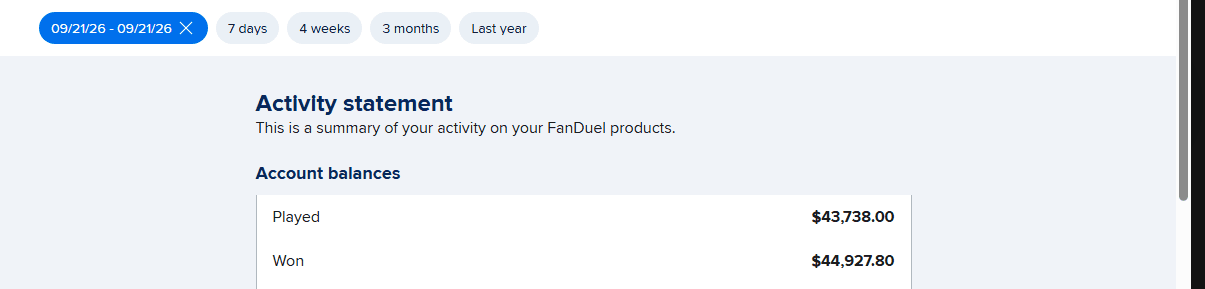
Buying an alternate line inside a parlay swaps payout for safety on one leg, and measured at the sportsbook's own posted prices the swap is exactly neutral — a parlay priced off implied probabilities is break-even by construction whether you buy down or not. The decision only becomes real when you have your own estimate of each leg. Then a clear rule appears: buy down the leg you are least confident in, because a half-point of line moves the most probability where your projection sits closest to the number. The Best Bet on Sports has built a verified $367,520+ in profit across all sportsbooks over two decades of in-game work, and the same principle governs a live ticket as a pregame one.
Almost every sportsbook lets you swap a parlay leg to an alternate number. Take the -3 down to -1.5. Take the 47.5 total down to 44.5. Take the receiving yards prop from 62.5 to 49.5. The payout shrinks and the leg gets easier, and the interface presents this as a straightforward comfort setting.
It is not a comfort setting. It is a reallocation of the ticket's entire probability distribution, and where you apply it determines whether it helped or did nothing. Most bettors apply it in exactly the wrong place.
What Buying Down Actually Does to the Price
Parlay math is multiplicative. Convert every leg to decimal odds, multiply them together, and that product is your payout multiplier. This is the same mechanic covered in how parlay payouts are calculated, and it is why one leg change ripples through the whole ticket.
A four-leg parlay with every leg at -110:
| Decimal | Running product | |
|---|---|---|
| Leg A -110 | 1.909 | 1.909 |
| Leg B -110 | 1.909 | 3.644 |
| Leg C -110 | 1.909 | 6.958 |
| Leg D -110 | 1.909 | 13.281 |
That is +1228. Now buy one leg down to an alternate priced at -175:
| Decimal | Running product | |
|---|---|---|
| Legs A–C at -110 | 1.909 each | 6.958 |
| Leg D at -175 | 1.571 | 10.934 |
That is +993. You surrendered 17.7% of the payout to move one leg from a 52.4% implied shot to a 63.6% implied shot.
Why the Sportsbook's Own Numbers Say This Changes Nothing
Here is the part almost nobody runs, and it is worth running because it clears away a lot of bad advice.
Implied probability is the reciprocal of decimal odds. A -110 leg implies 1 ÷ 1.909 = 52.38%. A -175 leg implies 1 ÷ 1.571 = 63.64%. If you multiply the implied probabilities of the four original legs and multiply the result by the payout, you get:
- 0.5238⁴ = 7.527% chance of cashing
- 7.527% × 13.281 = 1.000
Exactly one dollar back per dollar risked. Run the same calculation on the bought-down version and you get the same answer, because implied probability and decimal odds are two expressions of the identical number. At the book's posted prices, every parlay and every alternate-line variation of it returns the same thing. Buying down cannot create value out of the price sheet.
That is not an argument against buying down. It is the setup. The price sheet is not where the decision lives. The decision lives in the gap between the book's number and yours, and that gap is different on every leg.
The Only Version of This That Matters: Your Own Estimates
Suppose you are building a four-leg ticket, all legs posted at -110, and you are honest about how you actually feel:
| Leg | Your true estimate | Book's implied |
|---|---|---|
| A — your best read of the week | 58% | 52.4% |
| B — solid, well-researched | 54% | 52.4% |
| C — mild lean | 51% | 52.4% |
| D — in the ticket for correlation, not conviction | 47% | 52.4% |
Joint probability: 0.58 × 0.54 × 0.51 × 0.47 = 7.51%. Against the +1228 payout that returns 0.997 per dollar. A hair under break-even — which is the honest resting state of most recreational parlays, and the subject of why most parlays lose.
Now spend that 17.7% of payout. Two choices.
Option 1 — buy down Leg D, the one you do not really believe in. Moving the number far enough to take your estimate from 47% to 66% costs -175:
- Joint: 0.58 × 0.54 × 0.51 × 0.66 = 10.54%
- 10.54% × 10.934 = 1.153 → +15.3% expected return
Option 2 — buy down Leg A, your favorite. Same -175 cost. But you already projected this side comfortably clear of the number, so the extra points buy less: your estimate goes 58% → 72%.
- Joint: 0.72 × 0.54 × 0.51 × 0.47 = 9.32%
- 9.32% × 10.934 = 1.019 → +1.9% expected return
Identical payout surrendered. Radically different result. The weak leg version is worth roughly eight times as much.
Why the Weak Leg Is Always the Right Leg
The reason is where the outcomes actually pile up.
A point spread is a bet on a margin, and margins are not evenly distributed. In the NFL the frequencies cluster hard on a handful of numbers:
| Margin | Approximate share of NFL games |
|---|---|
| 3 | ~14–15% |
| 7 | ~9% |
| 6 | ~6% |
| 10 | ~5.5% |
| 1 | ~5.5% |
| 4 | ~5% |
| 14 | ~4% |
| 2 | ~3.5% |
When your projection says a game is a coin flip, your projected margin sits right on top of that pile. Buying from -3 to -1.5 sweeps you across the single most common margin in the sport plus the one below it. You are collecting the densest part of the distribution.
When your projection says the favorite wins by nine, the same purchase sweeps across margins you had already assigned to the loss column at very low weight. You paid full freight for outcomes you were not counting on anyway.
Buying points is buying probability mass. Mass concentrates near the number. Your least-confident leg is by definition the one sitting closest to the number. Everything else in this article is a footnote to that sentence.
The same logic applies to totals — pace-neutral games cluster near the posted number — and to player props, where a 62.5-yard receiving line for a target-share receiver has far more density around it than the same line for a boom-or-bust deep threat. The bust-or-boom guy is where buying down helps least, no matter how nervous his line makes you.
What the Alternate Line Actually Costs in Juice
There is a second bill, and it is easy to miss.
The main spread and the main total are the most efficiently priced markets any book posts. That is where the volume is, that is where sharp money arrives, and the margin is correspondingly thin — the standard -110/-110 market carries roughly 4.5% hold. Alternate lines are derivative markets built off that primary number, they attract far less action, and they routinely carry 6% to 10%. The mechanics of that markup are covered in sportsbook hold percentage and implied probability.
In a single bet you pay that markup once. In a parlay it compounds against every other leg. This is the same structural reason parlay prices differ so widely from book to book, which we broke down in why parlay odds differ by sportsbook.
Two practical consequences:
1. Shop the alternate specifically. The book with the best main line is frequently not the book with the best alternate ladder. The gap between books on an alt line is wider than on a main line, precisely because nobody is arbitraging it. 2. The advantage in the worked example above shrinks once you charge yourself the extra hold. It does not disappear — a 15.3% edge has room to absorb it, and the 1.9% version does not. That asymmetry is the point.
How Many Legs Should You Buy Down?
Usually one. Occasionally two. Almost never more.
Watch what happens to the four-leg ticket as you keep going, buying each leg from -110 to -175:
| Legs bought down | Decimal payout | American |
|---|---|---|
| 0 | 13.281 | +1228 |
| 1 | 10.934 | +993 |
| 2 | 9.001 | +800 |
| 3 | 7.410 | +641 |
| 4 | 6.100 | +510 |
By the fourth, you are risking a four-leg ticket for a return you could approach with a cleaner two-leg structure and none of the compounded alternate-line juice. At that point the honest question is not which legs to buy down — it is whether you wanted a parlay at all, a question worth answering before you build rather than after. Parlays versus straight bets and how many legs a parlay should have both work through that fork.
There is one further trap in going deep. Every leg you buy down pulls your ticket toward the same profile as every other bettor's ticket: heavy chalk, short price, low payout, still multiplicative. You have not reduced the number of things that must go right. You have only made each of them likelier while paying more vig per unit of likelihood. The count of ways to lose is unchanged.
When You Should Not Do This At All
Be straight about this: the entire framework above runs on your own probability estimates. If you do not have them, the exercise collapses. Without a number of your own, "this leg makes me nervous" is not an estimate — it is a feeling, and buying down on a feeling means paying elevated alternate-line juice to convert a market-priced bet into a worse-priced one.
Three situations where the answer is simply no:
- You cannot state a percentage for the leg. If you cannot say "I think this is 54%," you cannot know whether the alternate price is generous or robbery.
- The leg is in the ticket for correlation only. In a same-game structure the legs are priced against each other and the alternate ladder is repriced too. That is its own subject, handled in same-game parlay strategy for the NFL.
- You are buying down after the ticket is already live. That is not buying down, that is hedging, and it obeys different rules — see how to hedge a live parlay mid-game.
Where This Goes In-Play
Everything above gets sharper once a game starts, and not in the direction most people expect.
In-play, alternate ladders exist but they are thinner, they suspend constantly, and their prices are model outputs regenerated every few seconds rather than numbers a trader sat with. The upside is that the live market has to re-derive the probability mass after every possession, and it does that mechanically. When the game state moves faster than the ladder, the mispricing shows up on the alternates before it shows up on the main line, because the main line is the one being watched.
That is a narrow, fast window and it is genuinely hard to work alone, which is the honest reason most bettors do better acting on a finished live call than hunting alternate ladders themselves. The full case for that sits in live betting versus pregame picks.
Get Tonight's Live Picks
Want tonight's live in-game picks delivered to your phone via Email and Discord, with the number and the market spelled out instead of a ladder to guess at?
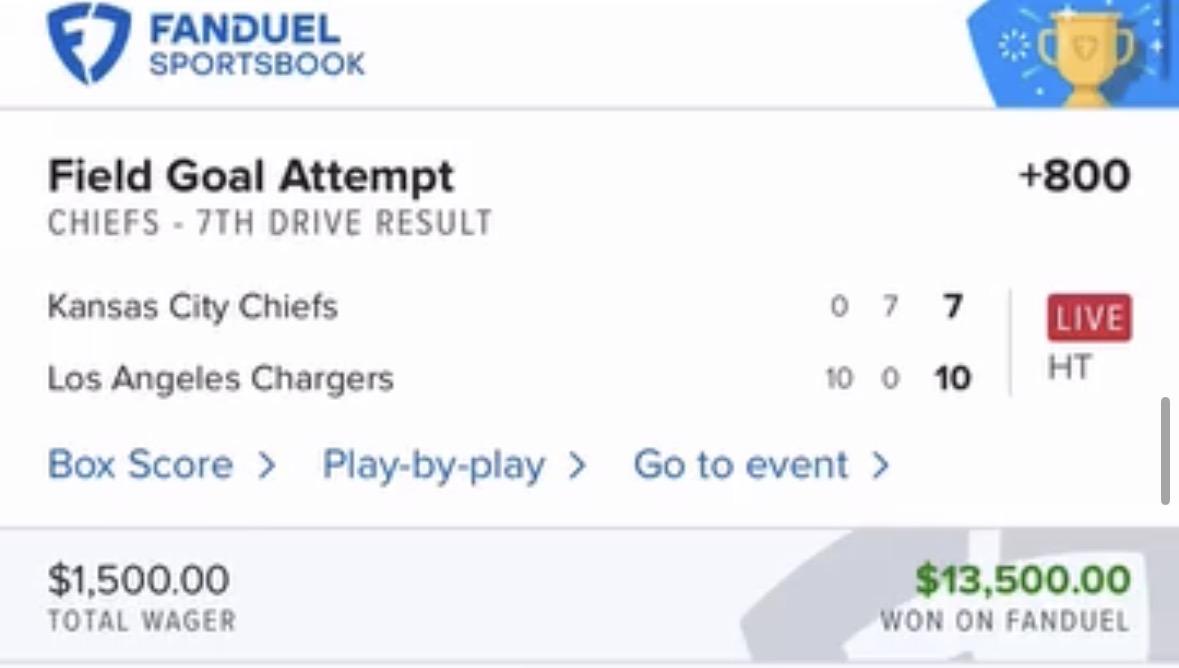
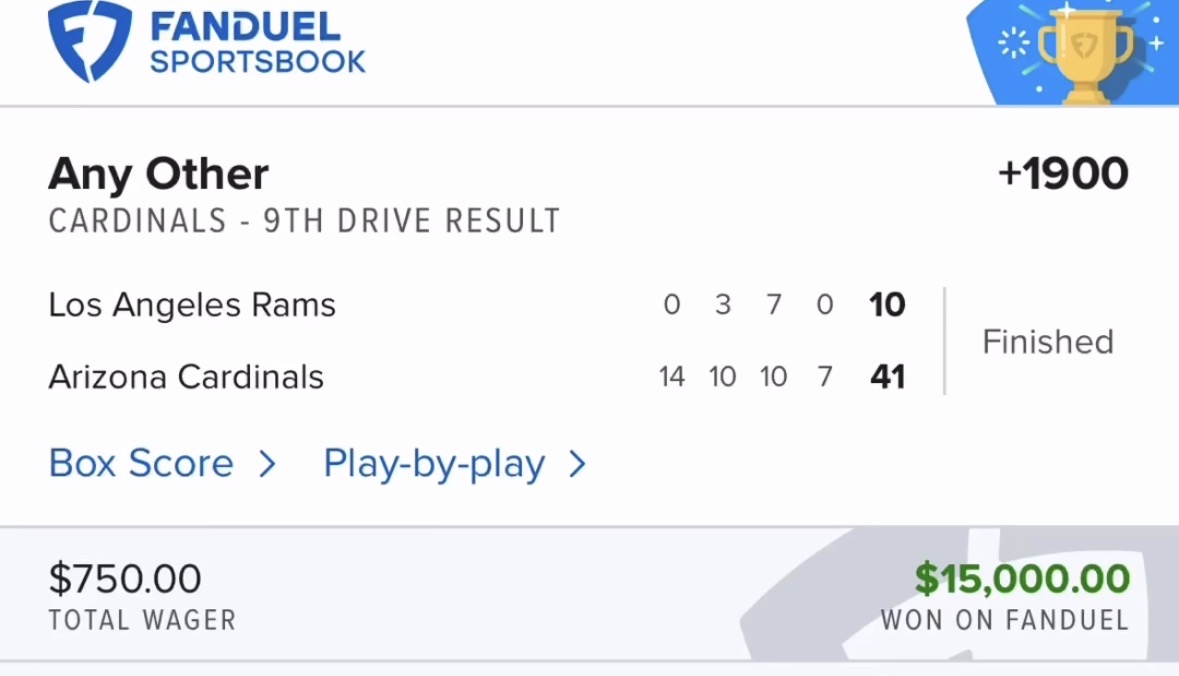
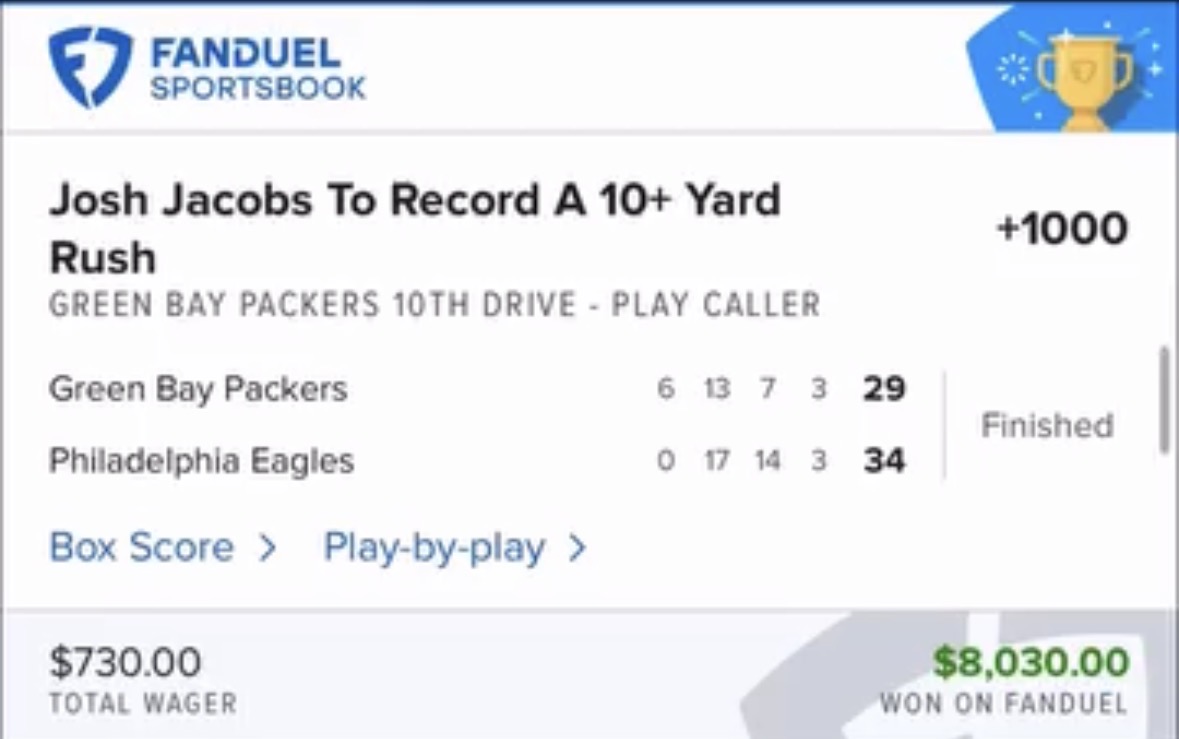
The Best Bet on Sports is the only live betting handicapping service limited on all six major U.S. sportsbooks (FanDuel, DraftKings, Caesars, BetMGM, Fanatics, ESPN BET) for winning too much during in-game action. Verified profit: $367,520+. Picks delivered via Email and Discord during games.
→ Get tonight's live picks: $199 first month — 1-Unit package, full live betting access → Try a free live pick first — reserve your spot for tonight's pick
More coverage at football picks, NFL picks, college football picks, and our results.
Frequently Asked Questions
Does buying an alternate line in a parlay increase your expected value?
Not at the sportsbook's posted prices. Implied probability is the reciprocal of decimal odds, so multiplying the implied probabilities of a parlay's legs and multiplying by the payout returns exactly the stake — before and after you swap in an alternate. Expected value only changes relative to your own probability estimates. If your estimate of the alternate leg is better than the book's implied number, the swap adds value; if it is worse, it subtracts value.
Which parlay leg should you buy down to a safer alternate line?
The leg you are least confident in. A half-point or a point of line buys the most probability where your projected outcome sits closest to the posted number, because that is where outcomes cluster most densely. On your strongest leg, the extra points sweep across margins you had already assigned very little weight to, so you pay full price for coverage you did not need.
Why is buying points more valuable on a coin-flip leg?
Because margins are not evenly distributed. In the NFL a 3-point margin occurs in roughly 14–15% of games and 7 in roughly 9%. When your projection lands near the posted number, buying across those numbers collects the densest part of the distribution. When your projection is far from the number, the same purchase collects only low-probability outcomes.
Do alternate lines carry more juice than main lines?
Yes, typically. The main spread and total are a sportsbook's most efficiently priced markets, generally around 4.5% hold at -110/-110. Alternate lines are derivative markets with far less action and commonly carry 6% to 10%. In a parlay that markup compounds across legs, so it is worth shopping the alternate ladder specifically rather than assuming the book with the best main line has the best alternates.
How many legs of a parlay should you buy down?
Usually one, occasionally two. Buying a four-leg ticket from all -110 legs down to all -175 legs drops the payout from about +1228 to about +510 while still requiring all four outcomes to land. At that point a shorter ticket with fewer alternate-line markups is generally the cleaner structure.
Is buying down the same thing as hedging a parlay?
No. Buying down happens before the ticket is placed and changes the terms of a leg you have not yet risked. Hedging happens after the ticket is live and involves placing a separate wager against your own position to secure part of the outcome. They solve different problems and are priced completely differently.
Should you buy down alternate lines when following live betting picks?
Generally no. A live pick specifies a market and a number, and substituting an alternate changes the bet you were given into a different bet with different math and usually a wider margin. If the exact number is unavailable, the right response is to evaluate the number you can actually get rather than to reshape the position — the same judgment covered in what to do when you cannot get the same line as the pick.
The Best Bet on Sports · 1.5M followers on TikTok
Sports Betting TikTok is the live betting account behind The Best Bet on Sports, covering NFL, NCAAF, NBA, NCAAB, MLB and WNBA markets in real time. The account has been limited on all six major U.S. sportsbooks — FanDuel, DraftKings, Caesars, BetMGM, Fanatics and ESPN BET — for winning on live betting, with $367,520 in verified profit since 2005. View full profile →
Past results do not guarantee future performance. Must be 21 or older to wager.
Related Articles
Same-Game Parlay Plus (SGP+): How Cross-Game SGPs Pay
Should You Cash Out a Parlay Early? The Real Math
Should You Parlay Favorites or Underdogs? The Real Math
Parlay Boosts and Insurance: Are Sportsbook Promos Worth It?
First Half Over, Game Under: The Parlay That Fights Itself
Lead at Halftime and Win: What That NFL Parlay Pays
Get real live betting picks
From $39.95/mo · Cancel anytime · Email + Discord delivery
● Get The Picks
Choose your package
Tap any tier below to select · Subscribe in one tap
👇 Tap any package to select it
✓ You're selecting
25 Units · $99.95/month
25 unit picks per month. Sweet spot for most bettors — plenty of action without going all-in.
- ✓25 live betting selections/month
- ✓Email + Discord delivery
- ✓All sports (NFL, NCAAF, NBA, NCAAB, MLB)
- ✓Mix of 1, 2, 3, 5-unit rated plays
- ✓Cancel anytime
Secure PayPal · Cancel anytime · No hidden fees · 21+ · +$367K verified
+$367,520 verified · Limited on 6 sportsbooks · 20 years documented · See Proof
Join Our Newsletter
Get free expert sports picks and analysis delivered weekly.