Moneyline or Spread on NFL Favorites? 11 Years Tested

On NFL favorites of 3.5 points or less, the moneyline returned -3.52 percent per dollar and the spread -4.42 percent from 2015 through 2025, a gap too small to call. The answer depends on the number. At exactly -3, the moneyline lost 0.34 percent while the spread lost 4.52 percent because one in ten games pushed. At -3.5, the spread did better, losing 1.18 percent to the moneyline's 3.41 percent.
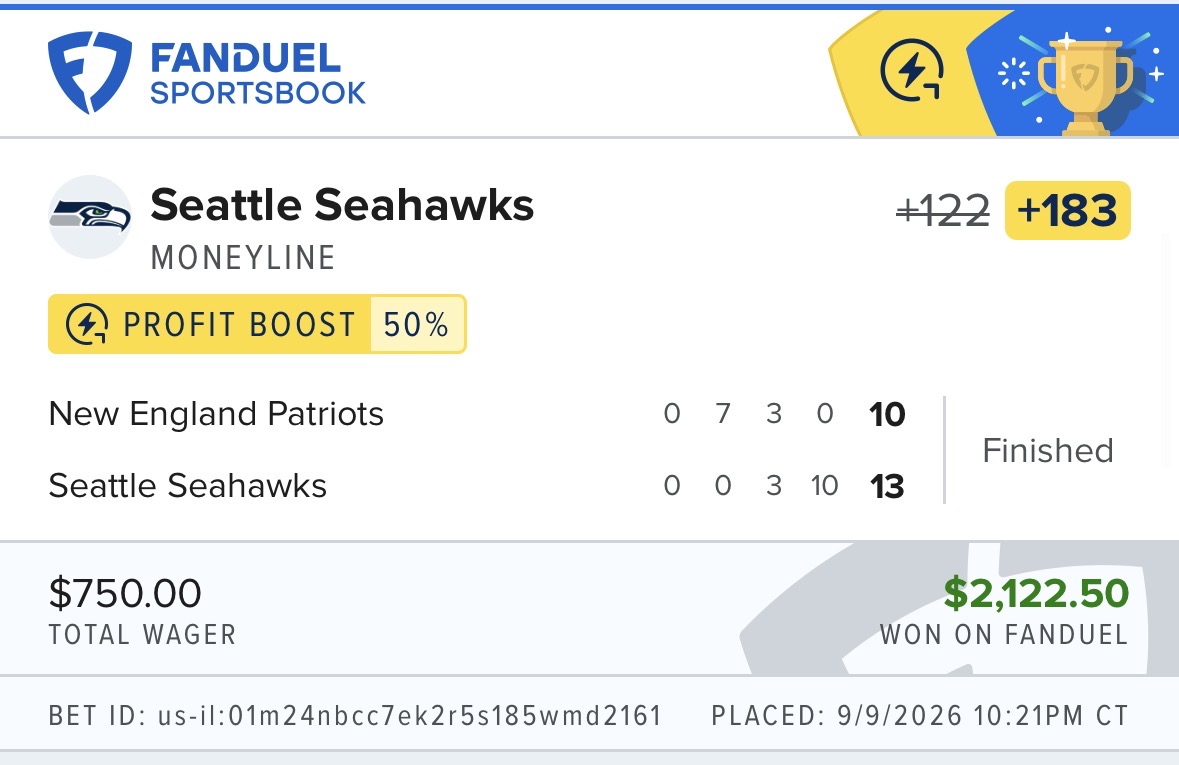
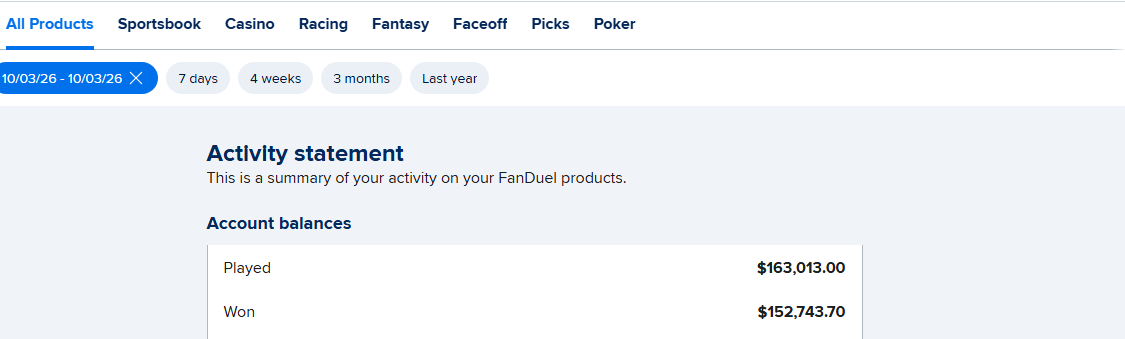
Whether to bet an NFL favorite on the moneyline or the spread depends on the exact number, not on a general rule. From 2015 through 2025, favorites of 3.5 points or less returned -3.52 percent per dollar on the moneyline and -4.42 percent on the spread, a difference too small to separate from luck. At exactly -3, the moneyline lost only 0.34 percent while the spread lost 4.52 percent, because 10.53 percent of those games landed on a three-point win and pushed. At -3.5, the spread did better. The Best Bet on Sports has built a verified $367,520+ in profit across all sportsbooks over more than twenty years, and choosing the right instrument for each pick is part of how that record was built.
Every NFL bettor runs into the same decision a few times each Sunday. You like a short favorite. The spread is -3 at -110. The moneyline is -160. Which ticket do you write?
Most advice on this question is a rule of thumb. "Always take the moneyline under a field goal." "Never lay -160 to win a game you could cover." This post replaces the rules of thumb with eleven seasons of closing prices.
How Was the Study Built?
We used nflverse game data for every regular-season NFL game from 2015 through 2025 with a closing spread, closing moneylines and a final score. Pick'em games and any game where the favorite's moneyline was not negative were dropped, leaving 2,890 favorites.
Each favorite was graded two ways on the same game. The moneyline bet was settled at the closing moneyline. The spread bet was settled at the closing spread and its listed closing price, with -110 used where no price was listed. A push returned the stake. Because both bets are graded on identical games, the comparison isolates the instrument, not the team.
We then resampled games 2,000 times in each spread band to get a confidence range for the gap between the two returns.
Which Pays Better on Short NFL Favorites?
Across all favorites of 1 to 3.5 points, neither instrument was clearly better.
| Favorite size | Games | Won straight up | Covered | Moneyline return | Spread return |
|---|---|---|---|---|---|
| -1 to -2.5 | 665 | 52.48% | 49.02% | -5.56% | -5.81% |
| Exactly -3 | 418 | 60.77% | 43.78% | -0.34% | -4.52% |
| Exactly -3.5 | 300 | 62.33% | 50.33% | -3.41% | -1.18% |
| -1 to -3.5 combined | 1,383 | 57.12% | 47.72% | -3.52% | -4.42% |
The combined gap was 0.9 cents per dollar in the moneyline's favor, and the resampled range ran from -1.6 to +3.5 points. That interval comfortably includes zero. Over a full band of short favorites, the choice between moneyline and spread mattered less than the price you got on either one.
The breakdown by exact number is where the real answer lives.
Why Is -3 Different?
Three is the most common margin in the NFL, and a -3 spread turns every three-point win into a push.
Of the 418 favorites that closed at exactly -3, 44 won by exactly three points. That is 10.53 percent of the sample, and every one of those games returned the spread bettor's stake while paying the moneyline bettor in full. Another 27 games, 6.46 percent, were wins by one or two points, which lose the spread and cash the moneyline.
| -3 favorites, 2015-2025 | Games |
|---|---|
| Won by 1 point | 7 |
| Won by 2 points | 20 |
| Won by exactly 3 (spread push) | 44 |
| Won by 4 points | 11 |
The median closing moneyline on a -3 favorite was -160, and the median spread price was -108. The moneyline asked bettors to lay more, but it collected on 71 games, about one in six, where the spread either pushed or lost. The result was a -0.34 percent return on the moneyline against -4.52 percent on the spread. The resampled gap ran from -0.5 to +9.0 points, so the edge for the moneyline at -3 is suggestive, not proven.
We go deeper on the scoring structure behind this in the three-point problem in parlays.
Why Does the Answer Flip at -3.5?
At -3.5, the three-point win stops being a push and becomes a loss for the spread bettor. You would expect that to hurt the spread. Instead, the market had already priced it.
Sportsbooks know how often games land on three. A -3.5 favorite's moneyline closed at a median of -183, much more expensive than the -160 on a -3 favorite. The extra half point moved the moneyline price far enough that the spread became the better bet. Favorites at -3.5 won by exactly three points 9.33 percent of the time, which lost the spread and cashed the moneyline. Even so, the spread returned -1.18 percent and the moneyline -3.41 percent.
The lesson is not "take the moneyline under a field goal" or "always take the spread." It is that the book sets both prices, and the gap between them moves with each half point. On a -2.5 favorite, both instruments lost, -6.45 percent on the moneyline and -8.95 percent on the spread, on a median moneyline near -139.
What About Bigger Favorites?
The moneyline held up better on every band above 3.5 points, but the gaps were wide and uncertain.
| Favorite size | Games | Won straight up | Covered | Won but did not cover | Median moneyline | Moneyline return | Spread return |
|---|---|---|---|---|---|---|---|
| -4 to -6.5 | 688 | 67.44% | 46.22% | 20.06% | -236 | -4.07% | -9.32% |
| -7 to -9.5 | 464 | 75.43% | 47.20% | 26.08% | -345 | -2.19% | -4.99% |
| -10 or more | 355 | 85.63% | 48.17% | 34.65% | -605 | -0.60% | -2.43% |
The -4 to -6.5 band produced the largest gap, 5.25 points in the moneyline's favor, with a resampled range of -0.2 to +10.6. In plain terms, laying -236 on a mid-sized favorite to win straight up lost less than laying the points. One in five of those games was a favorite that won but failed to cover.
That does not make heavy moneylines a strategy. Every band lost money on both sides at closing prices. Laying -605 to win 100 means one upset wipes out six winning tickets, and the full-sample return for that band was still negative. Our real-results test of heavy favorite moneyline parlays shows what happens when bettors try to stack those prices.
Does Home or Road Change the Answer?
It did on short favorites.
Home favorites of 3.5 points or less returned -4.77 percent on the moneyline and -6.96 percent on the spread across 760 games. Road favorites in the same range returned -1.99 percent on the moneyline and -1.31 percent on the spread across 623 games. Road favorites were the better bet on either instrument, and the moneyline's advantage disappeared on the road.
By season, the moneyline beat the spread on short favorites in 6 of 11 years. That near-even split is the best summary of the whole question: over a large sample, the instrument choice washes out unless you are looking at a specific number.
What Has 2026 Shown So Far?
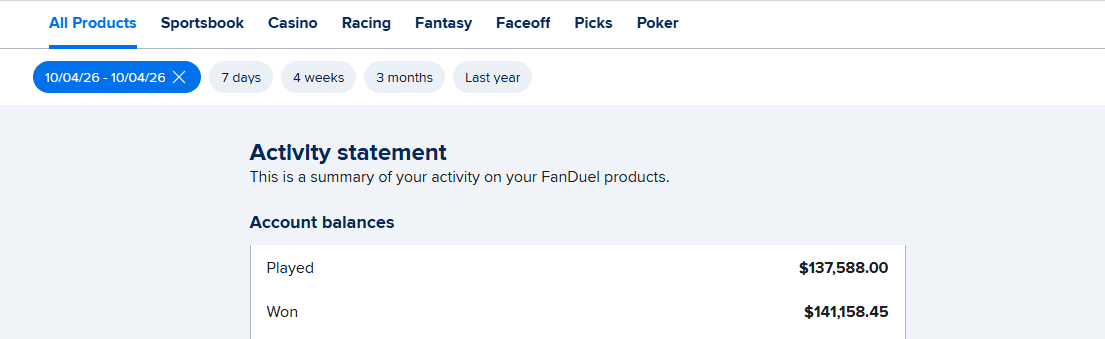
Through Monday night of Week 6, favorites of 3.5 points or less are 31-23 straight up and 27-24-3 against the spread. Only one of those 54 favorites won without covering. That is unusual. It means nearly every short favorite that won did so by enough to cover, which is why the spread is up 0.57 units while the moneyline is down 1.63 units on the same games.
Six weeks is far too small a sample to reverse eleven seasons. It is a reminder that any single stretch can make either rule look smart.
What Should a Pick Service Do With This?
This is where the study turns into a question you should ask before paying for picks.
A pick is not just a team. It is a team, an instrument and a price. "Chiefs -3" and "Chiefs moneyline -160" are different bets with different expected returns, and the right one changes with each half point and each book's price. A service that sends only the team name, or that defaults to the spread on every game, is leaving that decision to you.
Before you sign up, ask three things:
1. Does the service say which instrument to bet and why? A side without an instrument is half a pick. Our NFL spread picks page walks through how we think about the number and the price. 2. Does it set a price limit? A pick at -3 is not the same pick at -3.5. A good service tells you where it stops being a bet. 3. Is its record graded at the price members could get? A record graded at the best number available at one moment overstates what you will actually see.
That is the standard we hold our expert sports picks and football handicappers to. If you are weighing whether to pay for sports picks at all, start by checking whether the service explains its instrument choice. The same question applies in basketball, where our basketball handicappers decide between the moneyline and the spread on every short NBA favorite.
What Are the Limits of This Study?
We used closing prices. Bettors who got an earlier number saw different results, and the gap between moneyline and spread can be larger or smaller at open.
Sportsbooks price -3 differently. Some charge -120 on -3 to protect the key number, which changes the comparison. Our spread prices come from the data's listed closing odds, with -110 used where none was listed.
The resampled ranges for most bands include zero. Treat the -3 and -4 to -6.5 results as leanings worth checking against your own book's prices, not as a system.
Get Tonight's Live Picks
Want tonight's live in-game picks, including the instrument and the price to play, delivered to your phone during the game?
The Best Bet on Sports is the only live betting handicapping service limited on all six major U.S. sportsbooks (FanDuel, DraftKings, Caesars, BetMGM, Fanatics, ESPN BET) for winning too much during in-game action. Verified profit: $367,520+. Picks delivered via Email and Discord during games.
→ Get tonight's live picks: $199 first month — 1-Unit package, full live betting access → Try a live pick first — reserve your spot for tonight's pick
Compare every package on buy sports picks, see what a sports handicapping service should deliver, or check the daily sports betting picks schedule.


Frequently Asked Questions
Should you bet the moneyline or the spread on an NFL favorite?
It depends on the number. On favorites of 3.5 points or less from 2015 through 2025, the moneyline returned -3.52 percent and the spread -4.42 percent, a gap too small to call. At exactly -3, the moneyline did clearly better, -0.34 percent against -4.52 percent. At -3.5, the spread did better, -1.18 percent against -3.41 percent.
Why is the moneyline better on a -3 favorite?
Because three is the most common NFL margin. Of 418 favorites that closed at -3 from 2015 through 2025, 44 won by exactly three points, pushing the spread while cashing the moneyline in full. Another 27 won by one or two points. The moneyline collected on about one in six games where the spread pushed or lost.
How often do NFL favorites win but not cover?
It grows with the spread. From 2015 through 2025, 6.15 percent of favorites of 3.5 points or less won without covering, compared with 20.06 percent of favorites from -4 to -6.5, 26.08 percent from -7 to -9.5, and 34.65 percent of favorites of 10 points or more.
What is the typical moneyline on a -3 NFL favorite?
At closing, the median moneyline on a -3 favorite was -160 from 2015 through 2025, while the median spread price was -108. A -3.5 favorite's median moneyline was -183, and a -2.5 favorite's was about -139. Prices vary by book, so check yours before choosing between the two.
Is it smart to bet heavy NFL favorites on the moneyline?
It lost money, just less than the spread. Favorites of 10 points or more won 85.63 percent of the time at a median moneyline of -605 and returned -0.60 percent, against -2.43 percent on the spread. One upset at those prices erases about six winning tickets, and neither instrument was profitable at closing.
Do road favorites or home favorites pay better?
Road favorites. Among favorites of 3.5 points or less from 2015 through 2025, road favorites returned -1.99 percent on the moneyline and -1.31 percent on the spread across 623 games. Home favorites returned -4.77 percent on the moneyline and -6.96 percent on the spread across 760 games.
Should a sports pick service tell you whether to bet the moneyline or spread?
Yes. A pick is a team, an instrument and a price, and the better instrument changes from -3 to -3.5. A service that sends only a team name leaves that decision to you. Ask whether it names the instrument, sets a price limit, and grades its record at prices members could actually get.
The Best Bet on Sports · 1.5M followers on TikTok
Sports Betting TikTok is the live betting account behind The Best Bet on Sports, covering NFL, NCAAF, NBA, NCAAB, MLB and WNBA markets in real time. The account has been limited on all six major U.S. sportsbooks — FanDuel, DraftKings, Caesars, BetMGM, Fanatics and ESPN BET — for winning on live betting, with $367,520 in verified profit since 2005. View full profile →
Past results do not guarantee future performance. Must be 21 or older to wager.
Related Articles
NFL Bounce-Back Spots After a Blowout, Tested
4-0 Against the Spread: What a Hot Start Predicts
The Bye-Week Edge, Tested on 11 NFL Seasons
The 1 PM Problem: When Sunday Parlays Actually Die
NFL Referee Over/Under Trends, Tested on 11 Seasons
The Closing Spread Misses by Ten Points
Get real live betting picks
From $39.95/mo · Cancel anytime · Email + Discord delivery
● Get The Picks
Choose your package
Tap any tier below to select · Subscribe in one tap
👇 Tap any package to select it
✓ You're selecting
25 Units · $99.95/month
25 unit picks per month. Sweet spot for most bettors — plenty of action without going all-in.
- ✓25 live betting selections/month
- ✓Email + Discord delivery
- ✓All sports (NFL, NCAAF, NBA, NCAAB, MLB)
- ✓Mix of 1, 2, 3, 5-unit rated plays
- ✓Cancel anytime
Secure PayPal · Cancel anytime · No hidden fees · 21+ · +$367K verified
+$367,520 verified · Limited on 6 sportsbooks · 20 years documented · See Proof
Join Our Newsletter
Get free expert sports picks and analysis delivered weekly.