6-Team Parlay Payout Calculator: What Six Legs Really Pay

A 6-team parlay with all six legs at -110 pays roughly 47-to-1 — about $4,741 profit on a $100 bet — but the fair payout for six coin-flip legs is 63-to-1, so the sportsbook keeps about a quarter of the true value. This guide shows exactly how to calculate any 6-leg payout, what the real odds of hitting one are, why going 5-of-6 pays nothing, and how to restructure six picks so one miss doesn't zero the ticket.
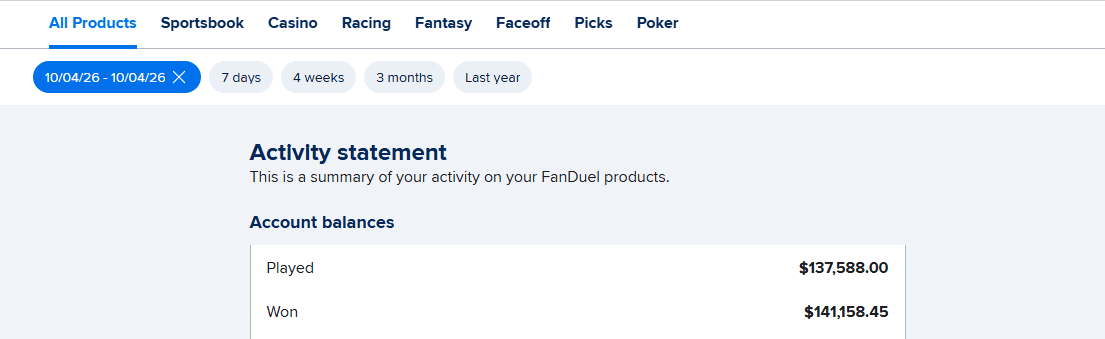
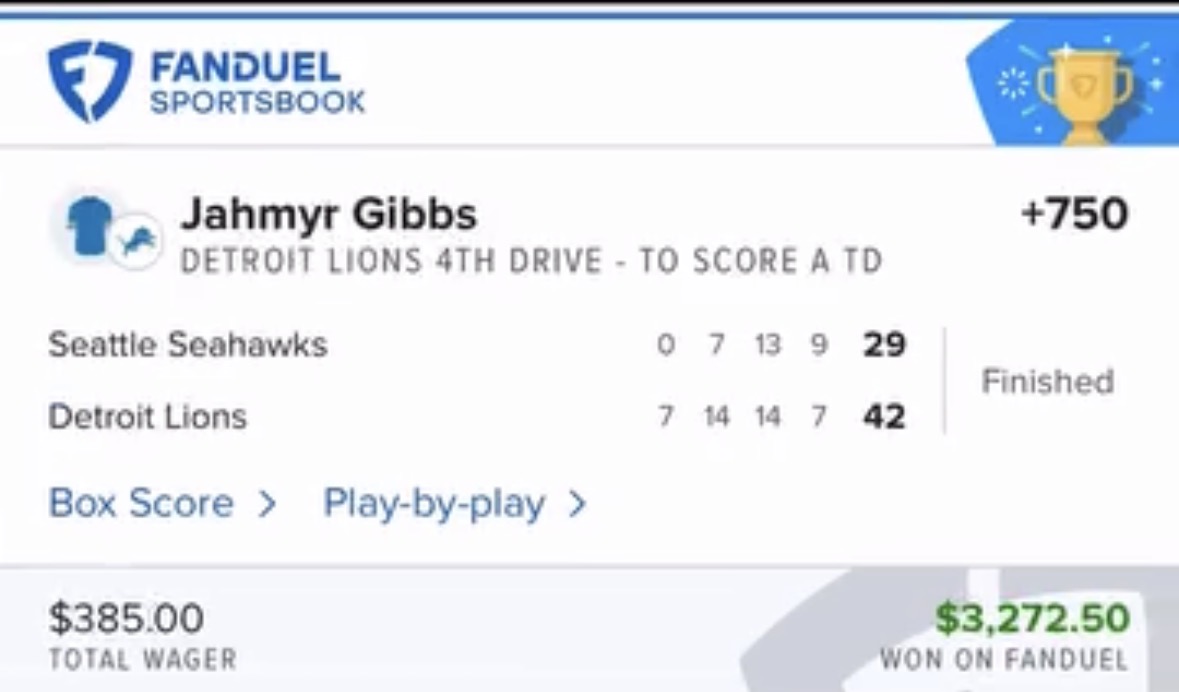
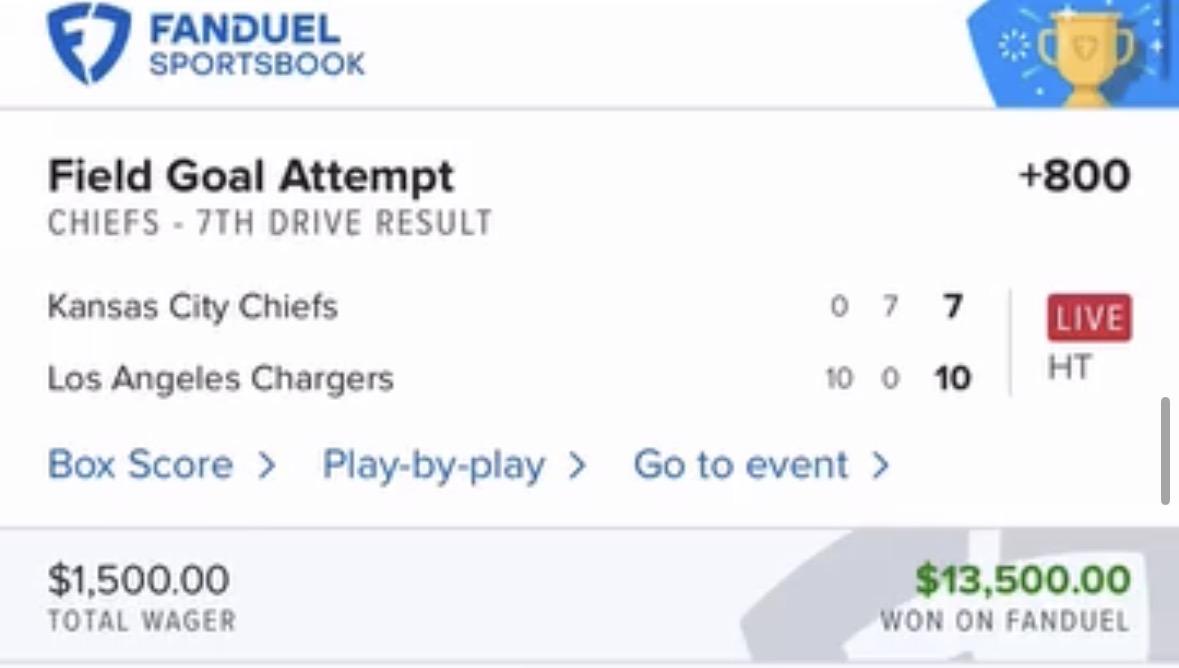
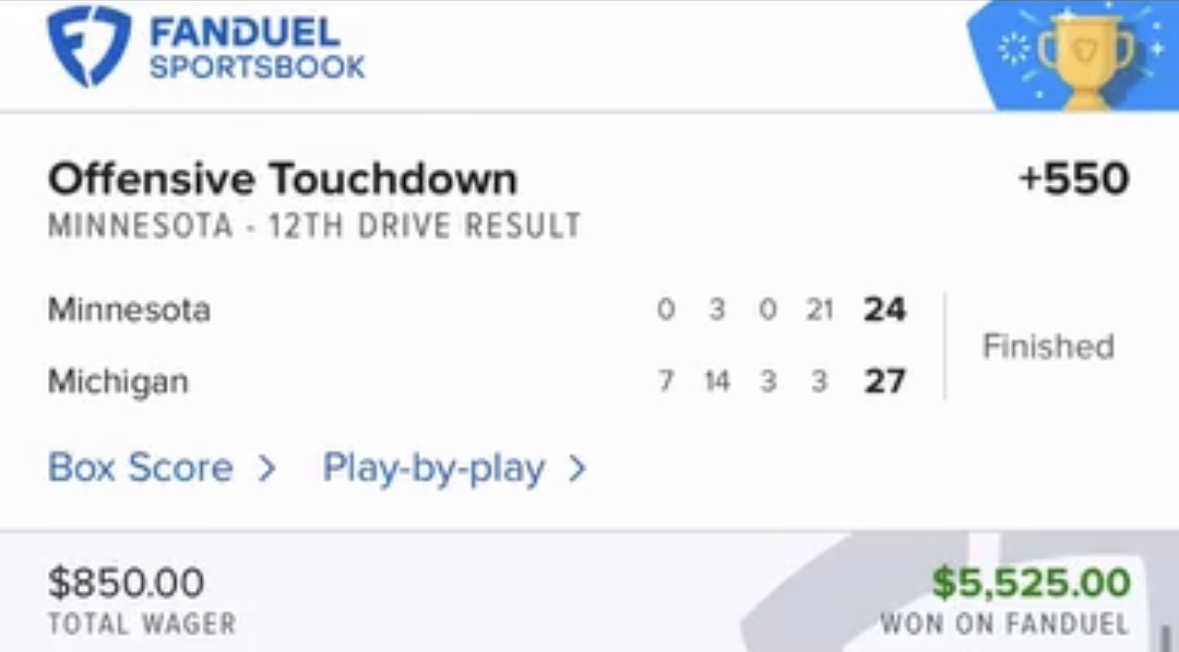
A 6-team parlay with all six legs at standard -110 pricing pays about 47-to-1 — roughly $4,741 in profit on a $100 stake — but the fair payout for six 50/50 legs is 63-to-1, which means the sportsbook is quietly keeping about a quarter of the value your ticket is actually worth. Six legs is the deepest point in the parlay family where the math still gets searched daily, and it is also the point where the house edge has compounded six separate times. The Best Bet on Sports has built a verified profit of $367,520+ over more than twenty years — enough winning that all six major U.S. sportsbooks limit our accounts — and one of the first lessons behind that number is knowing exactly what a ticket pays versus what it is worth before you tap the bet. Here is the full 6-team payout math.
Every sportsbook app will show you the payout automatically when you build the slip, so this guide is not just about the number — it is about understanding what the number is hiding. By the end you will be able to calculate any 6-leg combination yourself, see the gap between the payout and the true odds, and know the one restructure that turns six picks into a ticket that can survive a miss.
How Much Does a 6-Team Parlay Pay?
The payout depends entirely on the odds of each leg, but here is what $100 returns in profit across the most common 6-leg constructions:
| 6-leg construction | Combined decimal odds | Profit on $100 | Approx. American odds |
|---|---|---|---|
| All six at -110 (standard spreads/totals) | 48.41 | $4,741 | +4741 |
| All six at -120 | 37.97 | $3,697 | +3697 |
| All six at -150 (moderate favorites) | 21.43 | $2,043 | +2043 |
| All six at -200 (heavy favorites) | 11.39 | $1,039 | +1039 |
| All six at +100 (even money) | 64.00 | $6,300 | +6300 |
| Three at -110, three at +120 | 74.09 | $7,309 | +7309 |
| All six at +150 (underdogs) | 244.14 | $24,314 | +24314 |
Two things jump out. First, six heavy favorites at -200 — the "safe" parlay everyone's buddy builds — pays barely 10-to-1 despite requiring six straight wins. Second, the underdog constructions produce the eye-popping numbers that get screenshotted, and those screenshots are precisely why sportsbooks promote parlays so aggressively. The payout is the marketing. The math underneath is the product.
How to Calculate a 6-Team Parlay Payout Yourself
The method is the same one used for every parlay size, just applied six times:
Step 1 — convert each leg to decimal odds. For negative American odds: decimal = 1 + (100 / odds). So -110 becomes 1 + (100/110) = 1.909. For positive odds: decimal = 1 + (odds / 100). So +150 becomes 2.50.
Step 2 — multiply all six decimals together. Six legs at -110: 1.909 × 1.909 × 1.909 × 1.909 × 1.909 × 1.909 = 48.41.
Step 3 — multiply by your stake for total return, then subtract the stake for profit. $100 × 48.41 = $4,841 total return, which is $4,741 in profit.
That is the entire calculation. A mixed ticket works identically — convert each leg, multiply all six, apply the stake. If your slip shows a different number than your math, the book has adjusted pricing on correlated legs, which is standard on same-game constructions.
What Are the Real Odds of Hitting a 6-Team Parlay?
Here is the part the payout number hides. If each leg is a true coin flip — which is what a -110 spread is priced to be — the probability of winning all six is 0.5 raised to the sixth power: 1.56%, or one in 64. The fair payout for a one-in-64 event is 63-to-1. The book pays 47-to-1. The gap between those two numbers — roughly a quarter of the fair value — is the compounded house edge, and it is the single biggest reason most parlays lose money for the bettor even when the individual picks are decent.
And that 1.56% assumes coin flips. Suppose you are genuinely good — hitting 55% on your picks long-term, which is a strong, sustainable edge. Your chance of sweeping six legs is 0.55^6 = 2.8%. A bettor good enough to get limited by sportsbooks still misses a 6-team parlay 97 times out of 100. Six legs is not a strategy; it is a lottery ticket with better graphics.
The 5-of-6 Problem: Why Six Legs Is the Heartbreak Zone
The defining feature of a 6-team parlay is not how rarely it wins — it is how often it almost wins. At coin-flip probabilities, the chance of going exactly 5-of-6 is about 9.4% — six times more likely than going 6-of-6. Read that again: you are six times more likely to have five winners and one loser, collecting nothing, than to sweep the ticket. Over a season of 6-team parlays, the dominant experience is not winning and not even losing badly — it is the one-leg miss, over and over, with the book keeping the full stake every time five of your six opinions were right.
That is by design. The near-miss is what keeps parlay bettors rebetting, and it is why the formats that pay you something for 5-of-6 — parlay insurance and boosted tickets — exist as promotions rather than defaults. The book knows exactly which outcome you will see most.
How to Restructure Six Picks So One Miss Doesn't Zero the Ticket
If you genuinely like six selections, the straight 6-teamer is the worst-paying way to express that opinion relative to its risk. The alternative is a round robin: instead of one 6-leg parlay, you break the six picks into every possible smaller combination. Six selections "by 2s" creates 15 two-team parlays; "by 3s" creates 20 three-team parlays. It costs more upfront — 15 or 20 unit stakes instead of one — but going 5-of-6 now cashes most of the ticket instead of none of it. You trade the 47-to-1 ceiling for a structure where being mostly right actually pays, which is the correct trade for anyone treating this as more than entertainment. Sizing those unit stakes so a full miss is survivable is exactly what bankroll management for $100-to-$500 bettors is for.
How Live Betting Changes the 6-Team Math
Everything above describes pre-game parlays, where you set all six prices before anything happens and the compounded vig is fixed at its worst. The live market is different. In-game prices are set in seconds, under pressure, while the game state is changing — and they are wrong more often than pre-game numbers. Entering legs live, at moments when the market has overreacted to a run or a momentum swing, means some of your legs carry positive value instead of a baked-in 4-5% tax. That does not make a 6-leg ticket smart — the compounding still punishes every added leg — but it is why live betting beats pre-game pricing as the foundation for any multi-leg approach, and why the sharpest use of six opinions is usually six well-timed live entries rather than one pre-game slip. There is a reason books restrict live winners fastest of all — it is the market where a real edge shows up most, which is exactly why sportsbooks limit winning bettors.
Should You Ever Bet a 6-Team Parlay?
Honestly: almost never as a core strategy, occasionally as entertainment. If the stake is small, the sweat is the product, and you are fine with the one-in-64 reality, a 6-teamer is a defensible lottery ticket. If the goal is profit, the math is unambiguous — fewer legs, better entry prices, and structures that survive a miss beat the 47-to-1 dream over any meaningful sample. The bettors who make money treat the 6-leg payout table the way a casino treats a slot machine's paytable: as the price of the entertainment, not the plan. Every one of our live betting picks is built on the opposite principle — single well-priced entries at mispriced in-game numbers, graded transparently on our results page.
Get Tonight's Live Picks
Want tonight's live in-game picks delivered to your phone via Email and Discord during the game?
The Best Bet on Sports is the only live betting handicapping service limited on all six major U.S. sportsbooks (FanDuel, DraftKings, Caesars, BetMGM, Fanatics, ESPN BET) for winning too much during in-game action. Verified profit: $367,520+. Picks delivered via Email and Discord during games.
→ Get tonight's live picks: $199 first month — 1-Unit package, full live betting access → Try a free live pick first — reserve your spot for tonight's pick
Frequently Asked Questions
How much does a 6-team parlay pay on $100?
A 6-team parlay with all six legs at -110 pays about $4,741 in profit on a $100 stake — a total return of roughly $4,841, or approximately +4741 in American odds. The exact payout changes with the odds of each leg: six -200 favorites pay closer to $1,039 profit, while six +150 underdogs pay over $24,000. Multiply each leg's decimal odds together and apply your stake to get the precise number for any construction.
How do you calculate a 6-team parlay payout?
Convert each leg to decimal odds (for -110, that is 1 + 100/110 = 1.909; for +150, it is 1 + 150/100 = 2.50), multiply all six decimals together, then multiply the result by your stake. That gives total return; subtract the stake for profit. Six legs at -110 works out to 1.909 multiplied by itself six times, which is 48.41 — so $100 returns $4,841 total, $4,741 of it profit.
What are the odds of actually hitting a 6-team parlay?
If every leg is a true 50/50 proposition — which is what standard -110 spread pricing represents — the probability of winning all six is 1.56%, or one in 64. Even a genuinely skilled bettor hitting 55% per pick only sweeps six legs about 2.8% of the time. Meanwhile the standard payout is 47-to-1 against fair odds of 63-to-1, so the ticket is priced well below its true value before you ever pick a side.
Why does going 5-of-6 pay nothing?
A straight parlay requires every leg to win — one miss loses the entire stake regardless of how the other five did. At coin-flip probabilities you will go exactly 5-of-6 about 9.4% of the time, roughly six times more often than you sweep all six. That near-miss frequency is the core experience of betting 6-team parlays, and it is why round robins and parlay insurance exist: they are the formats that pay you something for being mostly right.
Is a round robin better than a straight 6-team parlay?
For anyone betting with profit in mind, usually yes. A round robin breaks six selections into every smaller parlay combination — 15 two-teamers or 20 three-teamers — so a single losing leg only kills the combinations that contained it instead of the whole position. It costs more upfront and caps the maximum payout well below the straight parlay's 47-to-1, but it converts the most common outcome (five winners, one loser) from a total loss into a mostly-cashed ticket.
Does live betting improve a 6-team parlay?
It improves the legs, not the format. Pre-game parlay legs each carry the book's full margin, compounded six times. Legs entered live — at in-game prices set in seconds during momentum swings — can carry genuine positive value when the market overreacts, which softens the compounding penalty. The format is still a one-in-64 proposition, but well-timed live entries are the only version of the legs where the price is sometimes actually in your favor.
What is a better use of six strong opinions than one parlay?
Six separate well-priced entries — ideally live, at moments the in-game market has overshot — will outperform one 6-leg ticket over any real sample, because each opinion gets paid when it wins instead of only when all six win together. That is the approach behind our live betting service: individual in-game entries at mispriced numbers, delivered in real time, graded transparently — the same standard behind our NFL picks and NBA picks all season. The compounding that makes a 6-teamer exciting is the same compounding that makes it unprofitable.
The Best Bet on Sports · 1.5M followers on TikTok
Sports Betting TikTok is the live betting account behind The Best Bet on Sports, covering NFL, NCAAF, NBA, NCAAB, MLB and WNBA markets in real time. The account has been limited on all six major U.S. sportsbooks — FanDuel, DraftKings, Caesars, BetMGM, Fanatics and ESPN BET — for winning on live betting, with $367,520 in verified profit since 2005. View full profile →
Past results do not guarantee future performance. Must be 21 or older to wager.
Related Articles
Pick'em Apps vs. Sportsbook Parlays: The Per-Leg Price
You Hit a Big Parlay: How Long Will You Keep It?
Your Parlay Leg Moved After You Bet It. Here's What That's Worth.
Accept Odds Changes: The Parlay Setting Nobody Reads
Alt Lines in a Parlay: Which Leg Should You Buy Down?
Parlay Max Payout Limits: The Ceiling Nobody Mentions
Get real live betting picks
From $39.95/mo · Cancel anytime · Email + Discord delivery
● Get The Picks
Choose your package
Tap any tier below to select · Subscribe in one tap
👇 Tap any package to select it
✓ You're selecting
25 Units · $99.95/month
25 unit picks per month. Sweet spot for most bettors — plenty of action without going all-in.
- ✓25 live betting selections/month
- ✓Email + Discord delivery
- ✓All sports (NFL, NCAAF, NBA, NCAAB, MLB)
- ✓Mix of 1, 2, 3, 5-unit rated plays
- ✓Cancel anytime
Secure PayPal · Cancel anytime · No hidden fees · 21+ · +$367K verified
+$367,520 verified · Limited on 6 sportsbooks · 20 years documented · See Proof
Join Our Newsletter
Get free expert sports picks and analysis delivered weekly.