Sportsbook Account Stacking: How Many Accounts Live Betting Subscribers Actually Need

Sportsbook account stacking for live betting subscribers requires a minimum of four active accounts across the six major U.S. sportsbooks — FanDuel, DraftKings, Caesars, BetMGM, Fanatics, ESPN BET — to capture the full live betting edge before any single account hits the limiting threshold. The four-account minimum extends usable subscription life from 8-14 weeks to 24-36 weeks at a $199/month live betting tier.
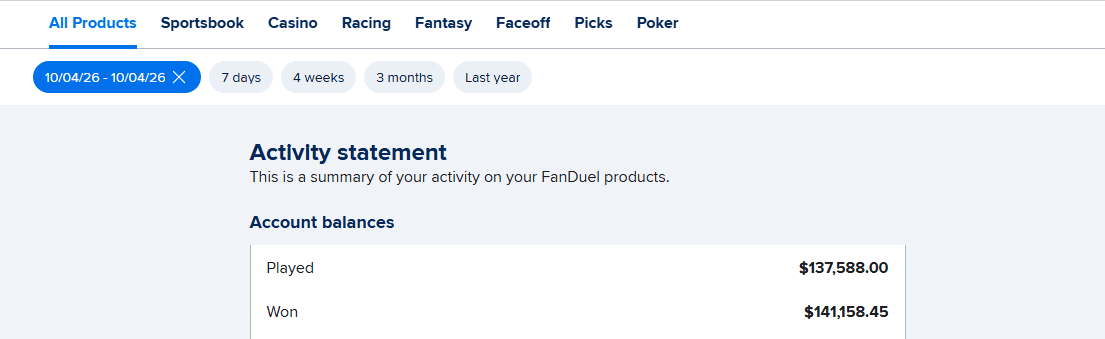
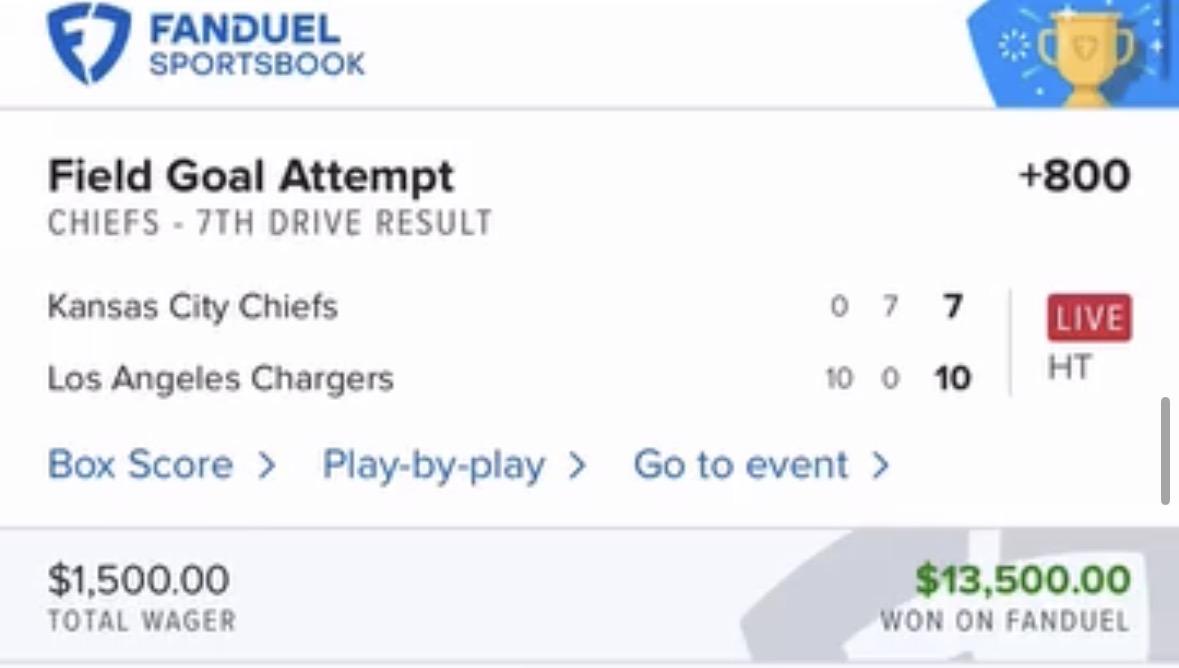
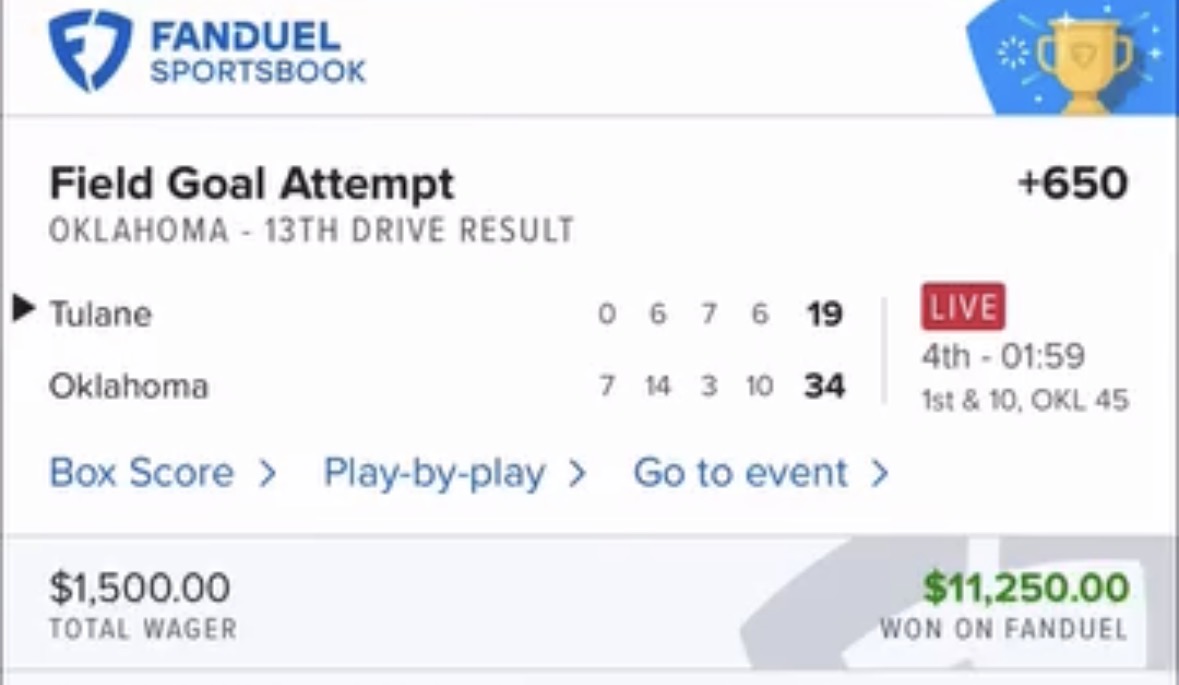
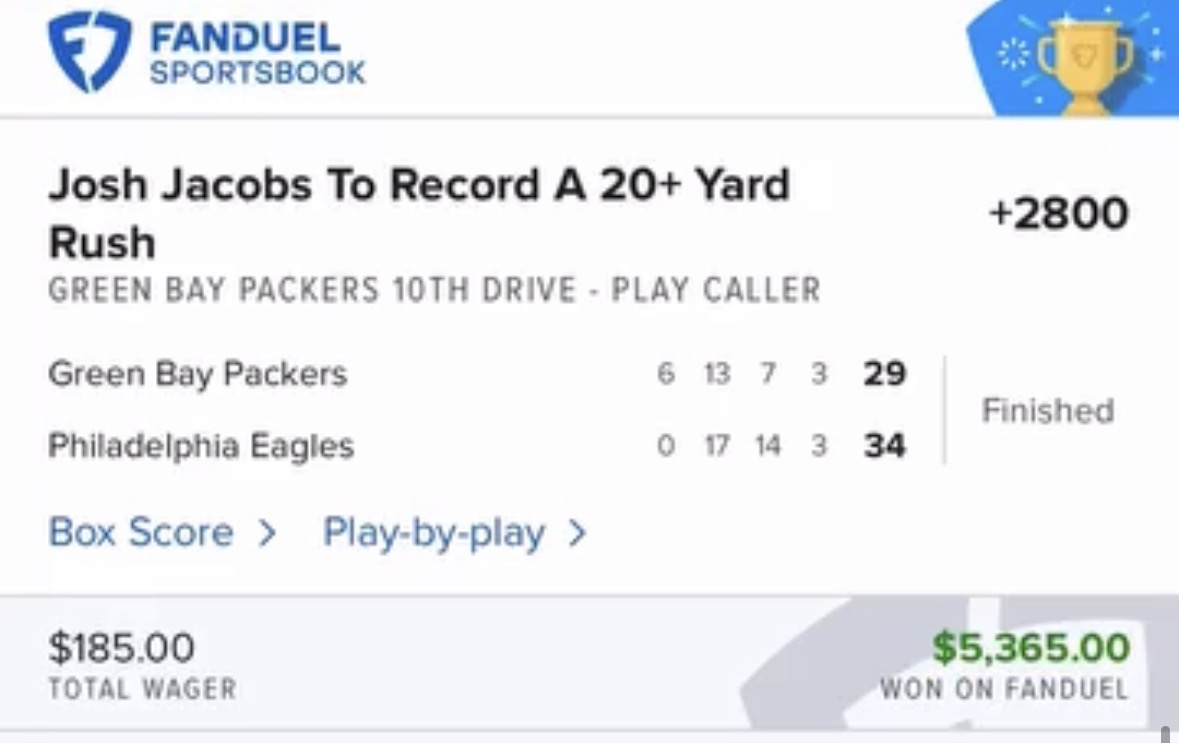
Sportsbook account stacking for live betting subscribers requires a minimum of four active accounts across the six major U.S. sportsbooks — FanDuel, DraftKings, Caesars, BetMGM, Fanatics, ESPN BET — to capture the full live betting edge before any single account hits the limiting threshold. The four-account minimum extends usable subscription life from 8-14 weeks of single-account live betting to 24-36 weeks of stacked-account live betting at the same $199/month tier. The structural reason is that each sportsbook runs an independent account-monitoring system that flags sustained positive live-betting ROI within 60-90 days, which means a single-account live bettor exhausts the usable window inside the first three months of a subscription regardless of how strong the picks are. The Best Bet on Sports has run live picks for more than twenty years, posted a verified $367,520+ in profit across all sportsbooks, and operates limited on all six major U.S. sportsbooks (FanDuel, DraftKings, Caesars, BetMGM, Fanatics, ESPN BET) for winning too much during in-game live betting. The reason the service is limited on all six is the same reason a subscriber needs four-to-six active accounts: the limiting playbook is universal across the major U.S. books, and it triggers faster on live betting accounts than on any other product category the sportsbooks offer.
The reason most new live betting subscribers see a strong opening 6-10 weeks followed by a collapsing usable window is not that the picks stopped winning — it is that the single sportsbook account stopped accepting full stake sizes. The sportsbook reads three sustained data signals across the first 60-90 days of an account's live betting activity (positive ROI on live alt-spreads, sustained high-percentage cash-out behavior on winning tickets, and concentrated late-money positioning relative to pre-game lines), and once two of three trigger, the limiting playbook reduces maximum stake sizes from $500-$1,000 down to $25-$100 on live markets. At that point the subscription value collapses because the picks still win, but the bettor cannot size up enough to convert the picks into bankroll growth. The four-account stack is the structural answer to that problem.
Why Four Accounts Is the Practical Minimum
A four-account stack across the six major U.S. sportsbooks is the practical minimum for live betting subscribers because each book's limiting playbook triggers independently on each account, which means each account carries its own 60-90 day usable window before the maximum stake size collapses. A subscriber who runs a single account exhausts the window in 8-14 weeks. A subscriber who runs four accounts spreads the per-account live betting volume across four independent monitoring systems, which extends each account's usable window to 16-24 weeks and produces a stacked usable window of 24-36 weeks before any single account hits a hard wall.
The mechanism that makes four accounts work is bet-volume distribution. The sportsbook's account-monitoring system reads the absolute volume of live betting tickets, the win rate on those tickets, and the cash-out frequency on winning tickets. A bettor who runs 30 live tickets per month on a single account presents 30 tickets to the monitoring system. A bettor who spreads those same 30 tickets across four accounts presents 7-8 tickets per account per month — below the volume threshold where the monitoring system flags the account as a candidate for the limiting playbook.
| Account Count | Per-Account Monthly Live Tickets | Usable Window per Account | Stacked Usable Window |
|---|---|---|---|
| 1 account | 30 tickets | 8-14 weeks | 8-14 weeks |
| 2 accounts | 15 tickets | 12-18 weeks | 16-24 weeks |
| 3 accounts | 10 tickets | 14-20 weeks | 20-30 weeks |
| 4 accounts | 7-8 tickets | 16-24 weeks | 24-36 weeks |
| 5 accounts | 6 tickets | 18-26 weeks | 28-42 weeks |
| 6 accounts | 5 tickets | 20-28 weeks | 32-48 weeks |
The marginal benefit of moving from 4 accounts to 6 accounts is meaningful but smaller than the marginal benefit of moving from 1 account to 4 accounts. The first three additional accounts each extend the stacked usable window by 6-10 weeks; the fourth and fifth additional accounts each extend the stacked usable window by 4-6 weeks. The diminishing return reflects that the per-account ticket volume drops below the level where additional spreading meaningfully extends the monitoring window. For the bankroll framework that supports a four-to-six account stack, read bankroll management for $100 to $500 bettors.
How to Set Up the Four-Account Stack
The four-account stack requires four real funded accounts at four of the six major U.S. sportsbooks. The recommended setup for live betting subscribers is FanDuel, DraftKings, Caesars, and BetMGM as the core four, with Fanatics and ESPN BET as the fifth and sixth additions for subscribers running the $299 or $500 tier with higher monthly live ticket volume. The reason for that order is that FanDuel and DraftKings carry the deepest live betting market depth and the fastest live-line refresh rate, Caesars and BetMGM carry the deepest player-prop live markets, and Fanatics and ESPN BET fill in the structural cross-market opportunities on the live alt-spread and live alt-total side.
The funding structure should distribute total live betting bankroll across the four accounts proportionally to the per-account expected ticket volume. A bettor running a $5,000 live betting bankroll should fund FanDuel at $1,500, DraftKings at $1,500, Caesars at $1,000, and BetMGM at $1,000. The two larger funded accounts handle the live alt-spread and live moneyline ticket volume; the two smaller funded accounts handle the live alt-total and live primary-scorer prop volume.
Each account should be set up with separate banking — different debit cards or different bank accounts — to avoid cross-account linking through shared payment methods. The sportsbooks' account-monitoring systems track payment-method linkage as a secondary signal for limiting decisions, and a single bank account linked across four sportsbook accounts can trigger cross-account limiting once the first account is flagged.
How to Distribute Live Picks Across the Stacked Accounts
The four-account stack works only if the live picks are distributed across the accounts rather than concentrated on a single account. The distribution rule that produces the longest stacked usable window is a rotating-anchor structure: each live pick from the subscription service runs through one anchor account, with the anchor rotation cycling through the four accounts on consecutive picks.
For a subscriber running 30 live tickets per month across four accounts, the distribution would look like:
| Week | Live Tickets | FanDuel | DraftKings | Caesars | BetMGM |
|---|---|---|---|---|---|
| Week 1 | 7-8 | 2 | 2 | 2 | 1-2 |
| Week 2 | 7-8 | 1-2 | 2 | 2 | 2 |
| Week 3 | 7-8 | 2 | 1-2 | 2 | 2 |
| Week 4 | 7-8 | 2 | 2 | 1-2 | 2 |
The rotating-anchor structure produces near-uniform per-account ticket volume, which keeps each account below the monitoring-system flag threshold. The distribution also matches each pick's market type to the best-fit account — live alt-spreads run through FanDuel or DraftKings, live alt-totals run through Caesars or BetMGM, and live primary-scorer props run through whichever account is the rotation anchor for that pick. For the underlying live betting framework, read live betting picks and live betting vs pre-game picks edge.
The Hidden Cost of Skipping the Stack
A subscriber who skips the account stack and runs a single account is paying the full $199/month subscription fee while burning through the usable window in 8-14 weeks. The math works out to roughly $14-25 per usable week of live betting access on a single account, which is structurally inefficient against the $5-8 per usable week the same subscriber would pay with a four-account stack across a 24-36 week stacked window.
| Setup | Subscription Cost | Usable Window | Cost per Usable Week |
|---|---|---|---|
| 1 account, $199/mo first month then $299/mo | $797 (4 months) | 8-14 weeks | $14-25 per week |
| 2 accounts, $199/mo first month then $299/mo | $1,096 (5 months) | 16-24 weeks | $6-11 per week |
| 4 accounts, $199/mo first month then $299/mo | $1,693 (8 months) | 24-36 weeks | $5-8 per week |
| 6 accounts, $199/mo first month then $299/mo | $2,290 (11 months) | 32-48 weeks | $5-7 per week |
The cost-per-usable-week math is one of three reasons most live betting subscribers underestimate their subscription value. The other two are: misreading bankroll growth as subscription cost (the picks pay for the subscription many times over when sized correctly), and misreading per-account funding as sunk cost (the funded amount remains as the bettor's bankroll, not as subscription overhead). For the full subscription-value framework, read what a $199 pick service actually delivers and are sports picks services worth it.
When the Stacked Window Closes
Even a six-account stack eventually closes — the limiting playbook will catch up to a sustained-winning bettor across all six major U.S. sportsbooks within 32-48 weeks of full-volume live betting. When the stacked window closes, the bettor has three options:
Option 1: Move to offshore or regional sportsbooks. Several offshore sportsbooks and smaller regional U.S. sportsbooks operate without the same account-monitoring infrastructure as the six majors. The trade-off is lower live betting market depth, slower live-line refresh, and higher live-market vig. For most subscribers, the offshore route extends the usable bankroll-growth window by another 6-12 months at reduced ROI per ticket.
Option 2: Switch to pre-game-only betting on the limited accounts. Most sportsbooks limit live betting first and pre-game betting second. A subscriber whose accounts have been limited on live markets can often continue to bet pre-game lines at reduced stake sizes for an additional 6-9 months. The subscription value drops because pre-game picks carry lower ROI than live picks, but the accounts remain usable.
Option 3: Bank the gains and rotate to new account names. Some bettors rotate to new account names through household-member registrations or new addresses after the original account name is exhausted. This route carries terms-of-service risk on each sportsbook and is not the recommended path for most subscribers — read the hidden costs of cheap sports picks services framework for the comparable analysis of high-risk shortcuts.
The structural reality is that the limiting playbook is the cost of doing business in modern U.S. live betting, and the four-to-six account stack is the most effective tool subscribers have for extending the usable subscription window. The Best Bet on Sports built the live betting subscription service after running through every account variant across the six major U.S. sportsbooks across twenty years — the limiting playbook caught up to the in-house accounts in sequence, and the subscription model distributes the structural picks to subscribers whose accounts have not yet been flagged. That is the same edge documented on the verified results page, and the daily sports picks from our sports handicappers are what you distribute across the stacked accounts to extend each account's usable window.
Get Tonight's Live Picks
Want tonight's live in-game picks delivered to your phone via Email and Discord during the game?
The Best Bet on Sports is the only live betting handicapping service limited on all six major U.S. sportsbooks (FanDuel, DraftKings, Caesars, BetMGM, Fanatics, ESPN BET) for winning too much during in-game action. Verified profit: $367,520+. Picks delivered via Email and Discord during games.
→ Get tonight's live picks: $199 first month — 1-Unit package, full live betting access → Try a free live pick first — reserve your spot for tonight's pick
Frequently Asked Questions
How many sportsbook accounts do live betting subscribers actually need?
Live betting subscribers need a minimum of four active accounts across the six major U.S. sportsbooks — FanDuel, DraftKings, Caesars, BetMGM, Fanatics, ESPN BET — to capture the full live betting edge before any single account hits the limiting threshold. The four-account minimum extends the usable subscription window from 8-14 weeks on a single account to 24-36 weeks across the stacked accounts at the same $199/month subscription tier.
Why does a single sportsbook account get limited so quickly on live betting?
A single sportsbook account gets limited within 8-14 weeks of sustained positive live betting ROI because each sportsbook runs an independent account-monitoring system that flags three signals: positive ROI on live alt-spreads, sustained cash-out behavior on winning tickets, and concentrated late-money positioning relative to pre-game lines. Once two of three signals trigger, the limiting playbook reduces maximum stake sizes from $500-$1,000 down to $25-$100 on live markets.
What is the recommended starting four sportsbooks for the stack?
The recommended starting four sportsbooks are FanDuel, DraftKings, Caesars, and BetMGM. FanDuel and DraftKings carry the deepest live betting market depth and the fastest live-line refresh rate, which makes them the primary accounts for live alt-spread and live moneyline volume. Caesars and BetMGM carry the deepest player-prop live markets, which makes them the secondary accounts for live alt-total and live primary-scorer prop volume.
How should I distribute live picks across the four accounts?
Distribute live picks across the four accounts using a rotating-anchor structure that cycles the anchor account through FanDuel, DraftKings, Caesars, and BetMGM on consecutive picks. The rotation produces near-uniform per-account ticket volume of 7-8 tickets per month per account, which keeps each account below the monitoring-system flag threshold. The distribution should also match each pick's market type to the best-fit account — alt-spreads to FanDuel or DraftKings, alt-totals to Caesars or BetMGM.
How much bankroll do I need to fund four accounts?
A four-account stack supporting a $199/month subscription tier needs a minimum total bankroll of $4,000-$5,000 distributed across the four accounts. The recommended split is $1,500 to FanDuel, $1,500 to DraftKings, $1,000 to Caesars, and $1,000 to BetMGM. The two larger funded accounts handle the higher-volume live alt-spread and live moneyline tickets; the two smaller funded accounts handle the live alt-total and live primary-scorer prop tickets.
What happens when all four accounts get limited?
When all four accounts hit the limiting playbook, the subscriber has three options: move to offshore or regional sportsbooks (extends the usable window 6-12 months at reduced ROI per ticket), switch to pre-game-only betting on the limited accounts (extends the accounts 6-9 months at lower ROI), or rotate to new account names through household-member registrations (carries terms-of-service risk and is not the recommended path). A six-account stack delays the full close-out by another 8-12 weeks beyond a four-account stack.
Is account stacking against any sportsbook's terms of service?
Holding a single account at each of the six major U.S. sportsbooks is not against any sportsbook's terms of service — the six are independent companies, and one account per person per sportsbook is the standard registration model. The terms-of-service issue arises only when a bettor opens multiple accounts at the same sportsbook under different names or addresses, which violates each sportsbook's one-account-per-person policy. The four-to-six account stack described here uses one account per sportsbook across the six major U.S. books, which is fully within terms of service for each book.
The Best Bet on Sports · 1.5M followers on TikTok
Sports Betting TikTok is the live betting account behind The Best Bet on Sports, covering NFL, NCAAF, NBA, NCAAB, MLB and WNBA markets in real time. The account has been limited on all six major U.S. sportsbooks — FanDuel, DraftKings, Caesars, BetMGM, Fanatics and ESPN BET — for winning on live betting, with $367,520 in verified profit since 2005. View full profile →
Past results do not guarantee future performance. Must be 21 or older to wager.
Related Articles
Live Betting Limits: How Much Can You Actually Bet on a Pick?
What If You Can't Get the Same Line as the Pick?
What to Expect in Your First 30 Days With a Live Betting Service: The Real Subscriber Timeline
What a $199 Live Betting Pick Service Actually Delivers (Honest Breakdown)
How to Choose a Live Betting Service: A Buyer's Guide for $199+ Monthly Subscriptions
Are Early-Season NFL Lines Softer? 11 Seasons Tested
Get real live betting picks
From $39.95/mo · Cancel anytime · Email + Discord delivery
● Get The Picks
Choose your package
Tap any tier below to select · Subscribe in one tap
👇 Tap any package to select it
✓ You're selecting
25 Units · $99.95/month
25 unit picks per month. Sweet spot for most bettors — plenty of action without going all-in.
- ✓25 live betting selections/month
- ✓Email + Discord delivery
- ✓All sports (NFL, NCAAF, NBA, NCAAB, MLB)
- ✓Mix of 1, 2, 3, 5-unit rated plays
- ✓Cancel anytime
Secure PayPal · Cancel anytime · No hidden fees · 21+ · +$367K verified
+$367,520 verified · Limited on 6 sportsbooks · 20 years documented · See Proof
Join Our Newsletter
Get free expert sports picks and analysis delivered weekly.