MLB Stolen Base Era Betting in May 2026: How Aggressive Baserunning Reshapes Run Lines, Totals, and First-5-Innings Markets

MLB stolen base era betting in May 2026 has reshaped run line, total, and first-5-innings markets because larger bases, the pitch clock, and limited pickoff attempts have permanently inflated stolen base attempts and conversion rates. The Best Bet on Sports breaks down which teams convert baserunning into run scoring, where the betting market still misprices steal-driven offenses, and the live betting edges that have hit limits on all six major U.S. sportsbooks.
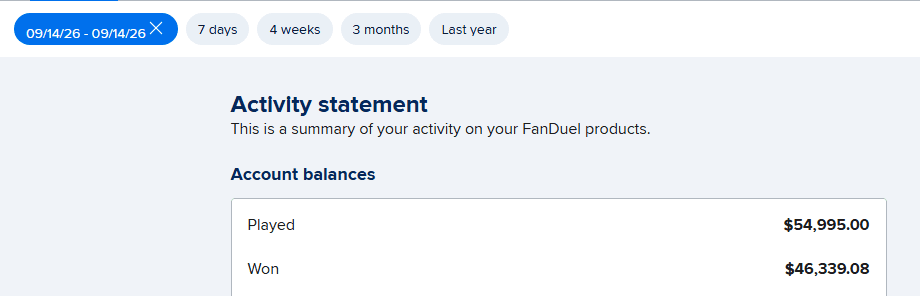
MLB stolen base era betting in May 2026 has fundamentally changed how run line, total, and first-5-innings markets should be priced because larger bases, the pitch clock, and the two-pickoff rule have permanently inflated stolen base attempts and conversion rates league-wide. Across 20+ years and a verified +$367,520 in tracked profit, The Best Bet on Sports has built a baserunning-aware MLB betting framework that captures the edges the market still leaves on steal-driven offenses, and it is the same framework that has us limited on all six major U.S. sportsbooks for live betting volume. Sports Betting TikTok, walks through the May 2026 application below.
The 2023 rule changes — 18-inch bases, the pitch clock, and the two-disengagement rule on each at-bat — produced an immediate jump in stolen base attempts and a permanent jump in conversion rates. Three full seasons in, the league has settled into a new equilibrium that betting markets have partially absorbed but still misprice in identifiable spots — and capturing those spots is the core of profitable MLB betting in the modern game. Our MLB picks team treats every team-level baserunning profile as a primary input on the run line, the total, and the first-5-innings market.
How Did the Stolen Base Era Begin?
The stolen base era began in 2023 when MLB simultaneously implemented three rule changes: bases were enlarged from 15 inches to 18 inches, a pitch clock was added with disengagement limits, and pitchers were limited to two pickoff attempts per plate appearance. Each change individually nudged baserunning success. Together, they reset the cost-benefit calculation on every steal attempt.
| Metric | Pre-2023 League Average | 2025 League Average |
|---|---|---|
| Stolen base attempts per game | 0.51 | 0.85 |
| Stolen base success rate | 75.7% | 79.8% |
| Caught stealing per game | 0.13 | 0.17 |
| Stolen bases per game | 0.38 | 0.68 |
The combined effect is roughly +0.30 stolen bases per game and +4 percentage points of success rate. That extra base creates an additional 0.10 to 0.15 runs per game on average, which sounds small but moves over/under totals by 0.5 in the right matchups. The market prices the league average correctly. The market does not always price the team-pair effect correctly.
How Does Baserunning Aggressiveness Move Run Lines?
Baserunning aggressiveness moves run lines by changing the run distribution rather than the run total. A team that converts singles into doubles by stealing second produces more two-run innings and fewer one-run innings than a team that does not run. Two-run innings push a moneyline favorite toward covering the -1.5 run line because winning by exactly one run becomes less common than winning by two or more.
The applied edge: identify favorites whose offense leans on stolen bases against opposing batteries that struggle to control the running game. The combination produces run line covers above the implied probability the market prices in. Our MLB run line betting framework uses a team-pair baserunning matrix to spot these opportunities.
Underdogs that run can also push +1.5 covers because the same multi-run innings reduce blowout losses. An underdog that converts steals into runs against a slow-to-the-plate pitcher rarely loses by 4+ runs. The market under-rates the +1.5 underdog when the underdog has a top-quartile baserunning profile and the favored pitcher is bottom-quartile at controlling the running game.
How Should Bettors Approach the First-5-Innings Market?
The first-5-innings market is structurally well-suited for stolen base era analysis because the first five innings concentrate the starting pitcher's exposure to the running game and exclude the late-game pinch-running situations that swing only the full-game line. A starting pitcher who is slow to the plate or unable to repeat the disengagement window faces compounding stolen base risk over five innings.
Three first-5-innings reads consistently produce edge:
1. Slow-delivery starter versus high-attempt offense. Starters with a delivery time over 1.40 seconds to home plate against offenses ranking top-10 in stolen base attempts produce roughly 0.4 to 0.6 additional stolen bases over the first five innings. The first-5-innings total should sit 0.5 above the market's first-5 number in these matchups.
2. Fast-delivery starter versus high-attempt offense. Starters with a delivery time under 1.20 seconds suppress the running game even against aggressive offenses. The first-5-innings total trends low and the under is the play, especially when the opposing starter is also fast-delivery.
3. Two-pickoff-prone starter. Starters who routinely use both disengagement attempts early in plate appearances enter the rest of the at-bat with no remaining pickoff threat. Aggressive offenses exploit this and steal at near-90% success rates. The first-5-innings over plays even on modest team totals.
The MLB betting framework our team publishes treats each starting pitcher's delivery time, disengagement frequency, and pop-time-to-second-base for the catcher as core first-5-innings inputs.
How Does Catcher Pop Time Move Steal-Driven Markets?
Catcher pop time — the time from ball hitting catcher's glove to ball arriving at second base on a steal attempt — is the single most important variable on stolen base success. League average pop time sits at roughly 1.99 seconds. Catchers below 1.92 suppress steal attempts by raising the break-even cost. Catchers above 2.05 invite steal attempts and lower the break-even cost.
| Catcher Pop Time | Stolen Base Success Rate Against | Market Read |
|---|---|---|
| Under 1.90 | 65-72% | Under on team total steals |
| 1.90-1.97 | 72-78% | Slight under |
| 1.98-2.04 | 78-83% | Market priced |
| 2.05-2.10 | 83-88% | Slight over |
| Over 2.10 | 88-92% | Over on team total steals |
The market consistently underprices pop-time edges because pop time is not a publicly emphasized statistic the way ERA or OPS is. Subscribers to The Best Bet on Sports receive matchup notes that include catcher pop-time data on every game we release a pick on, and our live betting strategy coverage walks through how live steals reshape in-game totals after the first stolen base or caught stealing of the game.
How Should Bettors Read Live Stolen Base Markets?
Live stolen base markets reset slowly relative to live total markets. A successful stolen base in the first inning shifts the live game total by 0.1 to 0.2 even when the steal materially raises the run-scoring probability for the inning. The structural lag is wider in MLB than in any other major sport because the underlying possession value of a stolen base is well-defined statistically but rarely reflected in real time.
The applied edge: when the leadoff hitter reaches base in the first inning against a slow-delivery starter and a high-pop-time catcher, the live first-5-innings over is mispriced before the next pitch. The market is reading the score (zero runs) and not the run-scoring probability boost from the steal threat. Capturing that edge consistently is the live betting playbook that has us limited on FanDuel, DraftKings, Caesars, BetMGM, Fanatics, and ESPN BET.
For live application, watch the first three batters of the game. If the leadoff hitter walks or singles, the catcher's pop time is over 2.00, and the starter's delivery time is over 1.35, the first inning live total over is the play. The market repricing window closes by the third batter at the latest.
Which May 2026 Teams Have Steal-Driven Edges?
Without naming individual matchups, the May 2026 league landscape clusters teams into four baserunning archetypes. The applied framework uses these archetypes to scope each team's run line and total exposure on a given night.
Archetype 1: High-attempt, high-success. Top-quartile attempt rate, top-quartile conversion rate. These teams consistently move totals and run lines in the right directions.
Archetype 2: High-attempt, average success. Top-quartile attempt rate, league-average conversion. Volatile run distribution; bet selectively when the catcher matchup is favorable.
Archetype 3: Low-attempt, high-success. Bottom-quartile attempt rate, top-quartile conversion. Contextual baserunners — they steal in obvious situations and rarely add extra bases through aggression. Limited market edge.
Archetype 4: Low-attempt, low-success. Bottom-quartile across the board. The market consistently overpays on these teams' totals because the implied baserunning value is below league average. Look for under spots and run line fades.
Our results page tracks the running edge across these archetypes through the season, and the packages page lists subscription options for daily picks built on this framework.
Frequently Asked Questions
What rule changes created the MLB stolen base era?
Three rule changes implemented in 2023 created the MLB stolen base era: bases were enlarged from 15 inches to 18 inches, a pitch clock with disengagement limits was added, and pitchers were limited to two pickoff attempts per plate appearance. Together these changes raised league stolen base attempts per game from approximately 0.51 to 0.85 and raised league stolen base success rate from approximately 75.7% to 79.8%, a permanent shift in baserunning value.
How do stolen bases affect MLB run line betting?
Stolen bases affect MLB run line betting by changing the run distribution of an offense rather than the total run output. A team that converts singles into doubles via stolen bases produces more two-run innings and fewer one-run innings, which makes the favorite more likely to win by two or more runs and cover the -1.5 run line. The same effect helps underdogs cover +1.5 by reducing blowout losses.
Why is the first-5-innings market favorable for stolen base analysis?
The first-5-innings market is favorable for stolen base analysis because the first five innings concentrate the starting pitcher's exposure to the running game. Starting pitchers are graded on delivery time, disengagement habits, and pickoff frequency, and the first-5-innings sample captures their performance before late-game pinch-running situations introduce other variables. Catcher pop time also stays consistent across the first five innings.
How does catcher pop time impact stolen base success?
Catcher pop time impacts stolen base success directly. Pop time is the elapsed time from ball hitting the catcher's glove to ball arriving at second base on a steal attempt. League average sits at approximately 1.99 seconds. Catchers below 1.92 hold opposing stolen base success rates between 65% and 72%. Catchers above 2.10 see opposing stolen base success rates climb to 88% to 92% and invite extra steal attempts.
Are live stolen base markets profitable to bet?
Live stolen base markets are profitable to bet because the live total and live first-5-innings markets reset slowly after a stolen base. A first-inning stolen base against a slow-delivery starter and high-pop-time catcher should boost the live total by 0.4 to 0.6 runs, but the market typically moves only 0.1 to 0.2. The repricing lag closes by the third batter at the latest, so speed of execution determines whether the edge is captured.
How long does the stolen base edge window stay open?
The stolen base edge window opens at the start of each game and closes once the live market has fully priced the first stolen base attempt and the catcher's first throw to second. After the catcher and starter have established their actual delivery and pop times in real time, the live market adjusts and the structural edge collapses. The window typically stays open for the first 12 to 18 minutes of game time.
What sportsbook strategy works for steal-driven MLB live betting?
Steal-driven MLB live betting requires fast access to multiple sportsbooks because the edge windows close quickly. The Best Bet on Sports has been limited on all six major U.S. sportsbooks specifically because of live MLB volume, which forces us to spread stake size across more books. Subscribers receive picks through Discord, and email so they can place live first-inning and first-5-innings bets within the open repricing window.
The Best Bet on Sports · 1.5M followers on TikTok
Sports Betting TikTok is the live betting account behind The Best Bet on Sports, covering NFL, NCAAF, NBA, NCAAB, MLB and WNBA markets in real time. The account has been limited on all six major U.S. sportsbooks — FanDuel, DraftKings, Caesars, BetMGM, Fanatics and ESPN BET — for winning on live betting, with $367,520 in verified profit since 2005. View full profile →
Past results do not guarantee future performance. Must be 21 or older to wager.
Related Articles
MLB Pinch Hitter and Double Switch Live Betting Strategy May 2026
MLB Catcher Framing Pop Time Totals Props May 2026
MLB Extra Innings Ghost Runner Betting Strategy May 2026: How the Zombie Runner Rule Reshapes Totals, Run Lines, and Live Bets
MLB Doubleheader Game 2 Betting Strategy May 2026: Bullpen Carryover, Position Player Rest, and Total Mispricing
MLB Starting Pitcher Pitch Count Live Totals Betting May 2026
MLB Lefty-Righty Platoon Splits Betting in May 2026: How LHP/RHB Matchups Reshape Run Lines, Totals, and Player Props
Get real live betting picks
From $39.95/mo · Cancel anytime · Email + Discord delivery
● Get The Picks
Choose your package
Tap any tier below to select · Subscribe in one tap
👇 Tap any package to select it
✓ You're selecting
25 Units · $99.95/month
25 unit picks per month. Sweet spot for most bettors — plenty of action without going all-in.
- ✓25 live betting selections/month
- ✓Email + Discord delivery
- ✓All sports (NFL, NCAAF, NBA, NCAAB, MLB)
- ✓Mix of 1, 2, 3, 5-unit rated plays
- ✓Cancel anytime
Secure PayPal · Cancel anytime · No hidden fees · 21+ · +$367K verified
+$367,520 verified · Limited on 6 sportsbooks · 20 years documented · See Proof
Join Our Newsletter
Get free expert sports picks and analysis delivered weekly.