MLB Live Betting Strategy: In-Game Edges That Win in 2026

MLB live betting strategy exploits real-time game state information that pre-game odds cannot incorporate — starter fatigue, lineup construction shifts, bullpen availability, and momentum that diverges from the live moneyline. Baseball's inning-by-inning structure and ample commercial breaks create recalibration windows where informed bettors systematically find value before the market adjusts.
MLB live betting strategy exploits real-time game state information that pre-game odds cannot incorporate — starter fatigue indicators, bullpen depth and availability, lineup construction shifts, and momentum that diverges systematically from the live moneyline. Baseball's inning-by-inning structure and natural commercial break rhythm create recalibration windows every 15–20 minutes where informed bettors can find value before the market fully adjusts to game-state developments. Of all the major professional sports, MLB creates the most consistent live betting edge for analytically prepared bettors.
Pre-game odds in baseball are built on projections: projected starting pitcher performance, projected lineup production, projected bullpen sequence. Live odds update based on what is actually happening — but the update is imperfect, particularly in the middle innings when game-state complexity peaks and the market must process multiple variables simultaneously.
That imperfect updating process creates windows where the live moneyline does not fully reflect the true win probability based on current game state. For bettors who have done the pre-game analytical work — knowing both teams' bullpen availability, understanding the lineups, projecting pace and run environment — those windows are identifiable in real time.
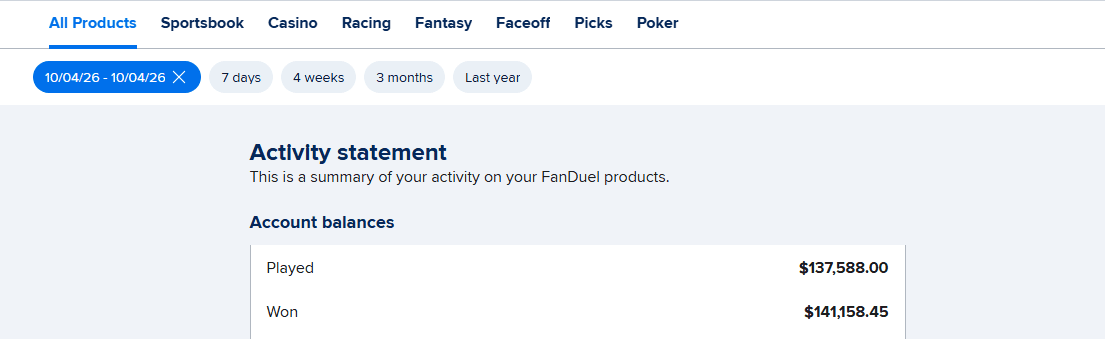
The Best Bet on Sports has built a verified +$367,520 sportsbook profit record since 2005, and MLB live betting has been one of the most productive markets in our analytical toolkit. We have been limited on all six major U.S. sportsbooks — FanDuel, DraftKings, Caesars, BetMGM, Fanatics, and ESPN BET — specifically because of sustained winning at live betting. That is the most direct validation available that these methodologies produce documented, market-recognized results.
Why MLB Creates Better Live Betting Opportunities Than Other Sports
Baseball's game structure creates several conditions that favor the informed live bettor:
Discrete, predictable transitions: Every half-inning is a complete transition point. Pitching changes, lineup turns, and substitutions happen at specific inning boundaries. The market must reprice after each half-inning, creating predictable repricing windows rather than the continuous flow of NBA or soccer.
Asymmetric information on bullpen availability: The starting pitcher's pitch count is publicly visible in real time. Bettors who track pitch counts throughout a game can predict pitching changes with reasonable accuracy — often before the market has priced in the impending starter removal. When a starter reaches 90 pitches in the 5th inning against a lineup he has been struggling to retire, his exit is likely. The live line often hasn't adjusted yet.
High variance-to-outcome ratio: A single swing creates a sudden and significant live line movement that may overreact to a single event while underreacting to the underlying game state. If a pitcher allows a solo home run in the 3rd inning with two outs and the bases now empty, the live moneyline moves sharply — but the underlying game state (a pitcher who is otherwise commanding his arsenal against a lineup he has dominated historically) has not materially changed.
Lineup cycling: Major league lineups turn over approximately every three innings. When a lineup turns over for the second time — facing a starter for the third time through the order — performance typically degrades for the pitcher as hitters gain familiarity with the arsenal. This third-time-through-the-order effect is well-documented and creates predictable live betting windows in the 6th–7th innings.
For access to real-time MLB live betting picks and daily analysis, see The Best Bet on Sports MLB picks.
The Pre-Game Preparation Framework for Live Betting
Effective MLB live betting starts before the first pitch. The live bettor who enters a game without pre-game preparation is reacting rather than anticipating. Preparation turns live betting into a proactive process of identifying pre-identified scenarios as they emerge.
Key pre-game preparation items:
Bullpen availability map: Track how many pitches each team's top four relievers have thrown in the prior three days. Identify which relievers are available for high-leverage situations and which are effectively unavailable due to fatigue. This map predicts the actual run prevention quality the team can deploy in the 7th, 8th, and 9th innings.
Starting pitcher pitch efficiency baseline: A starter's typical pitch count per inning determines how long he lasts. A starter who averages 16–17 pitches per inning through 5 innings is at or near 85 pitches and likely exits in the 6th. A starter averaging 12 pitches per inning is likely available through 7 innings. Knowing this before the game allows live line anticipation, not just reaction.
Lineup lefty/righty matchup profile: Identify the specific at-bats that create the most pronounced platoon advantages in the late innings. When a bullpen move creates a platoon disadvantage — a lefty reliever facing a right-handed power bat — that matchup creates a live run-scoring window that the live moneyline may not fully price.
Weather and conditions: MLB is the sport most affected by real-time weather. Wind direction and speed shift during games. A stadium that started the game with a 10 mph wind blowing in (suppressing offense) may shift to a 10 mph wind blowing out (elevating offense) by the 5th inning. Live totals do not always adjust immediately for wind shifts.
The blog at The Best Bet on Sports provides detailed pre-game analysis for every major MLB slate, covering the preparation inputs needed for effective live betting.
The Five Most Valuable MLB Live Betting Scenarios
1. Starter Fatigue in the 5th-6th Inning
The most reliable MLB live betting scenario: a starting pitcher who has thrown 85+ pitches entering the 5th inning, showing secondary command issues (elevated walk rate, reduced velocity on two-seam fastball, late counts on routine hitters), but whose team holds a narrow lead that is keeping the live moneyline tight.
At this moment, the market is pricing the current starter's performance. The informed bettor is pricing the bullpen that is entering in 3–8 pitches. If that bullpen is fatigued or of below-average quality, the live line on the trailing team significantly undervalues their win probability.
2. The Third-Time-Through-the-Order Window
In the 6th inning, when a starter faces the top of the order for the third time, batting average against increases by approximately 25–30 points on average. For a strong lineup, that degradation is even more pronounced. The market tends to price the starter's current performance rather than project the third-time-through effect, creating a consistent window to bet on the offense in innings 6–7 via live totals.
3. Post-Home-Run Overreaction
Live moneylines move sharply after solo home runs, particularly when the trailing team closes within one run. But the game state has not fundamentally changed — there are still multiple innings of baseball remaining, the bases are empty, and the pitcher who gave up the homer may have excellent stuff against the rest of the lineup. Post-homer overreaction on the trailing team's live moneyline often creates value on the leading team at improved odds.
The key filter: does the underlying performance data support the repricing? If the pitcher who gave up the homer has maintained velocity and commanded all his pitches throughout — and the homer was a solo shot on a 0-2 fastball that the hitter guessed correctly — the repricing overreacts to a low-probability event rather than a performance signal.
4. Bullpen Sequencing Errors
When a manager makes a suboptimal bullpen move — bringing in a righty against a left-handed power bat with a runner on base and the cleanup hitter due up — the live moneyline does not immediately price the mistake. It prices the current game state. The informed bettor who identified this sequencing error in real time can bet the trailing team's live moneyline before the consequent at-bat plays out.
5. Weather-Adjusted Totals in Later Innings
As noted in the pre-game section, wind conditions shift. A live total that opened at 8.5 based on 10 mph wind blowing in may still be posted at 8.5 or 9 in the 5th inning despite wind having shifted to neutral or out. Weather adjustment in live totals is consistently slower than optimal, creating over opportunities in affected games.
| Live Betting Scenario | Best Market | Entry Window |
|---|---|---|
| Starter fatigue approaching | Live moneyline (trailing team) | 4th-5th inning, 80+ pitches |
| Third time through order | Live over | Top of 6th inning |
| Post-homer overreaction | Live moneyline (leading team) | Immediately after solo HR |
| Bullpen sequencing error | Live moneyline (trailing team) | At bullpen change announcement |
| Wind shift to blowing out | Live over | After inning where wind shifts |
For game-by-game MLB analysis and real-time pick alerts, visit The Best Bet on Sports sports handicappers.
Managing Live Betting Positions Across an Inning
Live betting MLB requires position management across the duration of the game, not single isolated bets. A bettor who enters a position in the 4th inning must manage that position as game state evolves — potentially adding, hedging, or exiting based on new information.
Adding to a position: If you bet a team's live moneyline in the 4th inning at +145 and the game state continues to develop favorably (pitcher approaching fatigue faster than expected, lineup turning over at the right time), the value may still exist at +110 in the 5th inning. Adding a second unit at the reduced price captures continued edge while averaging your entry price.
Hedging into a lead: If your live bet has moved favorably — the team you backed has taken a lead — you can hedge by betting the leading team's live moneyline at a reduced price to secure a partial profit regardless of outcome. This is position management, not abandonment of the original analysis.
Exiting against a significant adverse event: A starting pitcher who was your basis for a live bet — showing fatigue heading into a bullpen change — exits and is replaced by a dominant reliever who was not identified in your pre-game availability map. The basis for the bet has been eliminated. Exit the position as close to break-even as possible rather than riding a no-longer-valid analysis.
For full-season MLB betting support including live betting picks and daily analysis, subscribe at The Best Bet on Sports — where live alerts are delivered via Discord and Email during games.
The Results Test: What Live Betting Performance Actually Looks Like
The most direct validation of any live betting methodology is sportsbook behavior. Sportsbooks do not limit account for analytical competence — they limit accounts for documented, consistent winning. Being limited for live betting at multiple major books is the strongest possible market signal that the approach is profitable.
The Best Bet on Sports has been limited at FanDuel, DraftKings, Caesars, BetMGM, Fanatics, and ESPN BET — all six major U.S. sportsbooks — specifically for winning too much at live betting. Our documented +$367,520 profit record is not the product of preseason futures or single high-variance game bets. It is built across thousands of plays in the daily sports calendar, with live betting representing a core component of that verified return.
Review the full results history at The Best Bet on Sports to see documented performance across all markets and sports, including MLB regular season and postseason live betting.
Our coverage of MLB pinch hitter and double switch live betting walks through how this plays out in practice.
Related Strategy Reading
For deeper context on the angles covered above, our analysis of live betting strategy nba mlb and mlb live betting pitch count triggers pairs well with this guide; our baseball picks reflect these same principles applied to live games.
Frequently Asked Questions
What makes MLB better for live betting than other sports?
MLB is superior for live betting because of its discrete inning structure, predictable pitching change timing, and the high information value of publicly visible pitch counts. Unlike NBA or NFL, where game state changes continuously, MLB creates natural repricing windows after each half-inning that allow bettors to anticipate market moves rather than react to them. The third-time-through-the-order effect, bullpen sequencing patterns, and weather adjustments all create identifiable in-game edges that do not exist to the same degree in other sports.
How do I track pitcher fatigue in real time during a live game?
Monitor the pitch count displayed in broadcast graphics and on real-time pitch tracking apps. Watch for velocity decline (2+ mph drop from seasonal average), increased two-seam command issues (elevated walks in the 4th and 5th innings), and the visible pitch selection shifting toward off-speed breaking balls when fastball command is compromised. A starter at 85+ pitches in the 5th inning with any of these fatigue signals is likely exiting in the next half-inning, creating a live line opportunity before the change happens.
What is the third-time-through-the-order effect in baseball?
The third-time-through-the-order (TTO) effect is the documented performance decline starting pitchers experience when facing the same lineup for the third time in a game, typically beginning in the 6th inning. Hitters gain familiarity with the pitcher's arsenal, timing, and sequence preferences across the first two times through the order, resulting in an average batting average increase of 25–30 points and a corresponding ERA spike in the TTO innings. This effect is strongest for pitchers who rely on tunneling and sequencing rather than raw velocity.
Should I bet live totals or live moneylines in MLB?
Both markets offer value, but they capture different edges. Live moneylines are best for scenarios involving pitching changes, bullpen sequencing errors, and post-event overreaction. Live totals are best for third-time-through-the-order situations and weather adjustment opportunities. The choice depends on the specific scenario identified. Bettors who focus exclusively on one market miss opportunities available in the other. Develop fluency in both, understanding which scenarios each market captures most efficiently.
How do weather conditions create MLB live betting edges?
Wind direction and speed directly affect home run probability and run scoring in outdoor MLB stadiums. A wind blowing out at 15 mph increases home run probability by approximately 20% compared to neutral conditions. Wind direction can shift during games, meaning a game that started with suppressed-offense conditions may transition to elevated-offense conditions by the 5th inning. Live totals do not always adjust immediately for wind shifts — particularly subtle changes of 5–10 mph — creating live over opportunities before the market fully incorporates the changed conditions.
What is the most common mistake in MLB live betting?
The most common mistake is betting based on the most recent event rather than the underlying game state. After a home run, a big inning, or an early pitching change, the live line moves aggressively to reflect the new score. Bettors who react to these events by betting in the direction of the movement are chasing. The correct live betting approach asks: has the underlying game state changed, or has just the score changed? A solo homer in the 3rd inning changes the score but not the game state. Betting on the score without evaluating the game state is reactive live betting, not analytical live betting.
How many live bets should I make per MLB game?
Quality over quantity. Identify one or two high-confidence scenarios per game based on your pre-game preparation and enter those positions at the optimal moment. The temptation in MLB live betting is to bet every half-inning because action is available — resist it. A game that presents no identifiable live edge based on your pre-game analysis is a game to watch, not a game to bet. The bettors who maximize live betting profitability are selective: 1–2 live bets per 3 games is more profitable than 3–4 live bets per game with lower individual conviction.
The Best Bet on Sports · 1.5M followers on TikTok
Sports Betting TikTok is the live betting account behind The Best Bet on Sports, covering NFL, NCAAF, NBA, NCAAB, MLB and WNBA markets in real time. The account has been limited on all six major U.S. sportsbooks — FanDuel, DraftKings, Caesars, BetMGM, Fanatics and ESPN BET — for winning on live betting, with $367,520 in verified profit since 2005. View full profile →
Past results do not guarantee future performance. Must be 21 or older to wager.
Related Articles
MLB Live Betting: Pitch Count Triggers, Pitching Changes, and In-Game Total Edges
Live Betting Strategy Guide for NBA and MLB: How to Win In-Game
Michigan's Hail Mary vs Western Michigan: What an 18.7% Live Price Actually Paid
The Number Moved. Do You Still Bet It?
Why Some Games Never Get a Live Pick
Is a Live Betting Service Worth It for the NFL? An Honest Answer
Get real live betting picks
From $39.95/mo · Cancel anytime · Email + Discord delivery
● Get The Picks
Choose your package
Tap any tier below to select · Subscribe in one tap
👇 Tap any package to select it
✓ You're selecting
25 Units · $99.95/month
25 unit picks per month. Sweet spot for most bettors — plenty of action without going all-in.
- ✓25 live betting selections/month
- ✓Email + Discord delivery
- ✓All sports (NFL, NCAAF, NBA, NCAAB, MLB)
- ✓Mix of 1, 2, 3, 5-unit rated plays
- ✓Cancel anytime
Secure PayPal · Cancel anytime · No hidden fees · 21+ · +$367K verified
+$367,520 verified · Limited on 6 sportsbooks · 20 years documented · See Proof
Join Our Newsletter
Get free expert sports picks and analysis delivered weekly.