NBA Playoff Live Betting: Second-Half and In-Game Strategy for 2026

NBA playoff live betting in the second half creates the highest concentration of exploitable edges in all of basketball wagering. Halftime adjustments, foul trouble impacts, and momentum shift patterns create identifiable windows where pre-game lines are no longer valid. The sharpest edges appear in the 3rd quarter and closing 4 minutes of regulation.
NBA playoff live betting in the second half creates the highest concentration of exploitable edges in all of basketball wagering. The 3rd quarter — when halftime adjustments land, foul trouble reshapes rotations, and emotional momentum swings hit their peak — is where live markets are most frequently mispriced. Bettors who understand halftime coaching patterns, playoff-specific pace changes, and when to ignore the scoreboard have a systematic advantage over books that reprice based on momentum narrative.
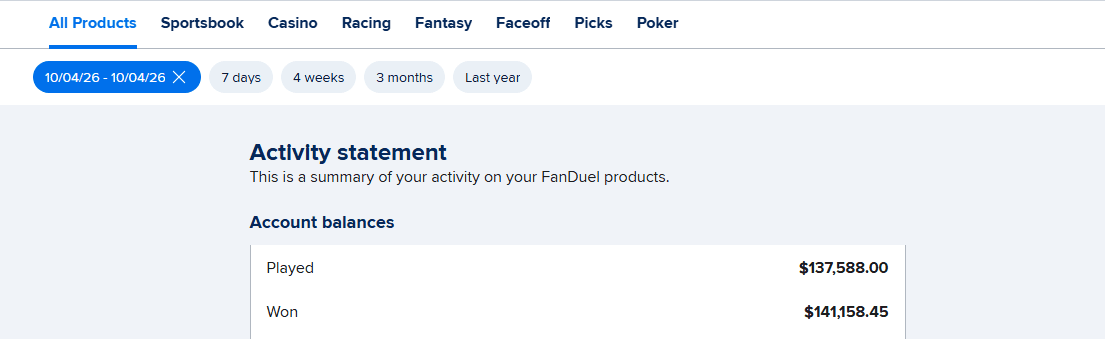
No live betting market in American sports is more dynamic or more rewarding for prepared bettors than the NBA playoffs. The combination of high scoring pace, definable momentum swings, and public emotional reaction creates pricing inefficiencies that open and close within minutes. The Best Bet on Sports has been limited on all 6 major U.S. sportsbooks — FanDuel, DraftKings, Caesars, BetMGM, Fanatics, and ESPN BET — specifically for winning too much at live in-game NBA betting. The edge is real, and it is teachable.
This guide breaks down the specific scenarios, timing windows, and analytical frameworks that drive second-half NBA playoff live betting edge.
Why the Second Half Is the High-Value Window
The first half of an NBA playoff game is where public money floods in. Early possessions determine pre-game momentum, casual bettors react emotionally to early point differentials, and the live market is adjusted rapidly based on the most recent possessions — often without accurate calibration for team-level adjustment patterns.
By halftime, the situation clarifies. Coaches have watched a full 24 minutes of game tape from the current game. They know what's working. They know which matchups to attack and which to hide. The second half — particularly the 3rd quarter — is where those adjustments land.
For a live bettor, halftime is the most important data collection window in the game. If you've been watching carefully, you enter the second half with better information than the sportsbook's automated pricing model, which anchors heavily to: 1. The first-half scoring differential 2. Recent possession-level momentum (the last 4-5 possessions) 3. Home/away status
None of these factors fully capture coaching adjustment quality, foul situation leverage, or whether a team's best player will re-enter the game with 5 minutes of built-up rest energy in the 3rd quarter.
The Six Key Live Betting Windows in NBA Playoffs
Window 1: Opening 3rd Quarter Tip (Halftime to 8:00 3Q)
This is the highest-value single window in NBA playoff live betting. The reason: books set 3rd-quarter live lines based primarily on first-half performance, which often doesn't reflect the true competitive state of the game.
If the better defensive team trailed at halftime due to shooting variance (high opponent three-point percentage in Q1-Q2), the 3rd-quarter live line is favorable for that team. Defensive quality regresses toward the mean — shooting efficiency is highly volatile in 24-minute samples.
What to watch for: - Which team's starters sit at the end of the 2nd quarter vs. who plays through the buzzer (the team that plays starters through the buzzer often starts the 3rd slower) - Who comes out with obvious halftime energy — visible in warm-up intensity and early possession aggression - Whether a key player who was struggling in Q1-Q2 gets an early 3Q touch in a favorable matchup (coaching signal)
Window 2: Foul Trouble Cascade (Anytime)
When a player with 3 fouls in the first half re-enters the 3rd quarter, any contact on their first 2-3 possessions is a live betting trigger. If they pick up their 4th foul early in the 3rd, the cascade begins: the coach faces an impossible choice between keeping a compromised player in or switching to a backup who changes the defensive structure entirely.
This scenario is predictable before it happens. Monitor foul counts going into halftime for both teams' star players. When a critical player has 3 fouls and the opposing team has shown a pattern of attacking that matchup, the 3rd quarter live environment becomes extremely reactive to his early foul acquisition.
Foul trouble leverage plays: - Bet into the team attacking the foul-troubled player immediately after he enters and before his 4th foul - If the 4th foul comes quickly, bet the other side — coaching substitution disrupts the previously favorable live line
For the deep-dive on playoff foul trouble specifically, see our NBA playoff foul trouble and officiating betting strategy — it covers which referee crews call playoff games tighter and which star players draw whistles at predictable rates.
Window 3: The Run-Response Pattern
In NBA playoff basketball, the correct analytical response to a momentum run varies significantly by team type and game situation. But the market response is nearly always the same: aggressive line movement toward the team making the run.
The edge comes from understanding how often the team giving up the run responds with their own counter-run, and at what point in the run the book's line has fully priced in the leader's advantage (usually overpriced).
Historical pattern: In playoff games with a 10+ point swing in the 2nd half, the trailing team mounts a counter-run within the next 4 minutes approximately 62% of the time. The live line on the trailing team at the peak of the opponent's run is typically the highest-value window to buy the counter.
| Run Size | Counter-Run Probability (Within 4 min) | Avg Line Movement at Run Peak |
|---|---|---|
| 7-0 run | 58% counter within 4 min | 3.5 points in trailing team's direction |
| 10-0 run | 62% counter within 4 min | 5.5 points in trailing team's direction |
| 14-0 run | 55% counter within 4 min | 8 points in trailing team's direction |
The declining probability at larger run sizes reflects the reality that 14+ point swings often indicate genuine talent mismatches rather than variance. But the 7-10 point run range is consistently overreacted to by both the public and the books.
Window 4: Closing Minutes, One-Possession Games (4:00 mark)
With 4 minutes remaining in a one-possession game, the live market becomes maximally liquid and maximally reactive. Every possession shifts the live spread. The public bets the team with the most recent momentum.
The analytical reality: in one-possession NBA playoff games at the 4-minute mark, the outcome is effectively a coin flip for each possession, slightly weighted by free-throw shooting quality. The team with better free-throw shooters — particularly in foul-heavy late-game situations — has a structural but often underpriced advantage.
Closing 4 minutes live strategy: - Track cumulative fouls for both teams (teams near the team foul limit for quarter transition offer intentional fouling risk) - Identify which team's primary ball-handler is the better free-throw shooter under pressure - Buy the team whose free-throw profile is stronger when the live spread compresses to 1-2 points, before the market fully prices the FT advantage
Window 5: Star Player Rest Patterns
Elite players rest in predictable 90-second to 3-minute stints. Coaches manage minutes carefully in playoff series, and the timing of those rest periods is often visible in advance based on rotation patterns established in the first half.
When a superstar sits down with 7 minutes left in the 3rd quarter, the team will be weaker for approximately 2-3 minutes before he returns. If the live line doesn't fully reflect that window, there's a short-duration edge on the opponent. These windows close quickly — you need to act within 30-45 seconds of the substitution.
This is the kind of micro-edge that separates sophisticated live bettors from recreational ones. Our NBA picks page and NBA betting analysis covers these rotation patterns for specific teams during the playoff run. For the broader in-game framework across NBA and MLB, see our NBA playoff live betting strategy and in-game edges and our live betting strategy guide for NBA and MLB in 2026.
Window 6: Overtime Situations
When regulation ends tied or within one possession with less than 30 seconds, the live market for the final possession and any overtime period is extremely valuable. Books price overtime at roughly equal probability for both teams — but overtime basketball is not equivalent to regulation. Teams that play more deliberate, half-court offense win overtime at higher rates than teams that depend on fast-break creation in transition.
The structural advantage in overtime belongs to the better half-court offense and the better half-court defense — not the team with more recent momentum. This is one of the most systematic and consistently underpriced edges in NBA live betting.
Building Your Live Betting Workflow for Playoff Games
Effective NBA playoff live betting requires preparation and discipline. Here's the pre-game workflow:
Pre-game prep (1-2 hours before tip): 1. Note both teams' starters and their foul status from prior games (watch for players with recurring foul-drawing patterns) 2. Identify each coach's typical halftime adjustment tendencies (documented coaching patterns are publicly available) 3. Log the teams' second-half net rating in playoff situations vs. first-half net rating — large gaps indicate teams that adjust well (or poorly) at halftime 4. Set your live bet bankroll limit for the game
In-game execution: 1. Focus on the 6 windows above — don't bet every possession 2. Size each live bet at 0.5-1 unit — volume is high in live betting, so smaller individual sizing prevents overexposure 3. Never chase a losing position with a larger live bet — the game always has more possessions coming
For complete guidelines on unit sizing and bankroll management that apply to live betting, see our results page and the full analytical framework on sports handicappers.
The Sportsbook Limitation Signal
Here's a fact worth knowing: The Best Bet on Sports has been limited on all 6 major U.S. sportsbooks — FanDuel, DraftKings, Caesars, BetMGM, Fanatics, and ESPN BET — specifically for winning too much at live betting. Sportsbooks limit winning bettors in live markets because the edge there is real and documented.
That limitation is the strongest possible signal that live betting edge exists for bettors who apply the right framework. The sportsbooks don't limit recreational bettors who occasionally win — they limit bettors whose consistent pattern indicates genuine analytical advantage.
When you subscribe to The Best Bet on Sports, you get access to the analysis that drove those limitations — applied to every game, every round, every night of the NBA playoffs.
Frequently Asked Questions
What is the best time to live bet in an NBA playoff game?
The highest-value window for NBA playoff live betting is the opening 3-4 minutes of the 3rd quarter. This period captures halftime adjustments landing in real time — the better defensive or adjusting team often comes out stronger than the first-half score indicated. Books set 3rd-quarter lines primarily on first-half performance, which often doesn't reflect coaching quality or shooting variance correction. The second-highest-value window is the closing 4 minutes of regulation in one-possession games.
How do you identify live betting momentum shifts in NBA playoffs?
The most reliable momentum shift signals in NBA playoff live betting are: a 10-0 run by the trailing team in the first 4 minutes of a quarter (books overreact to the previous quarter's advantage), a key player checking in after foul trouble rest (fresh legs vs. fatigued opponent), and the team that lost the last 2 possessions having a favorable matchup in the next possession. Use possession-level analysis rather than scoreboard-level analysis — the scoreboard is lagging reality by 30-60 seconds.
How much should I bet on NBA live plays?
Size NBA live bets at 0.5-1 unit each. Live betting creates higher frequency of action than pre-game betting — a single playoff game can produce 8-12 live betting opportunities in the windows described above. If you size each at your standard game bet unit, your total exposure per game can reach 8-12 units, far exceeding appropriate single-game risk. Half-unit or 0.75-unit sizing per live play keeps you engaged throughout the game without overexposing your bankroll.
What causes NBA live betting lines to move the most?
Three factors drive the largest live line movements in NBA playoff betting: (1) A sustained 8-10 point run in either direction during the second half — books move aggressively toward the running team; (2) A star player picking up their 4th or 5th foul, which immediately lengthens lines for their team; (3) A close game entering the final 2 minutes, where every possession creates a 1-2 point swing in the live spread. The public reacts emotionally to all three scenarios, often creating overreactions that sharp bettors can exploit.
Is live betting in NBA playoffs available on all sportsbooks?
Yes, all six major U.S. sportsbooks — FanDuel, DraftKings, Caesars, BetMGM, Fanatics, and ESPN BET — offer extensive live betting markets on every NBA playoff game. Markets include live spread, live moneyline, live total, live player props (points, assists, rebounds), and quarter/half-specific lines. The depth of available markets varies by platform; DraftKings and FanDuel typically offer the most granular live markets, while BetMGM and Caesars are more selective. Shopping across all six platforms is critical for finding the best live prices.
Does home court advantage matter more in NBA playoff live betting?
Home court advantage matters less in live betting than in pre-game pricing. Pre-game lines reflect a full home-court adjustment (typically 2-3 points for NBA). In live betting, the home-court factor becomes less relevant as the actual in-game quality differential plays out in real time. The crowd effect is real but already partially priced in by the time you're placing a live bet. Where home court remains most relevant in live betting is in the closing 2 minutes of close games — home teams benefit from favorable officiating tendencies and crowd pressure at critical free-throw moments.
How do coaching adjustments affect NBA live betting in playoffs?
Coaching adjustments in NBA playoff basketball are the most impactful and least-priced variable in live second-half markets. Books don't have a metric for "coaching adjustment quality" — they price based on possession-level results. But coaches who consistently deploy effective halftime adjustments (switching from zone to man coverage, exploiting a specific matchup in pick-and-roll, altering pace through substitution patterns) create predictable second-half performance differentials. Studying coaching patterns — specifically which coaches have strong second-half net rating records in playoff games — is among the sharpest research investments in NBA live betting. See our NBA picks for specific coaching analysis throughout the 2026 playoffs.
The Best Bet on Sports · 1.5M followers on TikTok
Sports Betting TikTok is the live betting account behind The Best Bet on Sports, covering NFL, NCAAF, NBA, NCAAB, MLB and WNBA markets in real time. The account has been limited on all six major U.S. sportsbooks — FanDuel, DraftKings, Caesars, BetMGM, Fanatics and ESPN BET — for winning on live betting, with $367,520 in verified profit since 2005. View full profile →
Past results do not guarantee future performance. Must be 21 or older to wager.
Related Articles
Live Betting Strategy Guide for NBA and MLB: How to Win In-Game
Live Betting Suspended Markets Reopen Window Edge May 2026
NBA Live Betting Strategy for Playoff Games: April 2026 Guide
Michigan's Hail Mary vs Western Michigan: What an 18.7% Live Price Actually Paid
The Number Moved. Do You Still Bet It?
Why Some Games Never Get a Live Pick
Get real live betting picks
From $39.95/mo · Cancel anytime · Email + Discord delivery
● Get The Picks
Choose your package
Tap any tier below to select · Subscribe in one tap
👇 Tap any package to select it
✓ You're selecting
25 Units · $99.95/month
25 unit picks per month. Sweet spot for most bettors — plenty of action without going all-in.
- ✓25 live betting selections/month
- ✓Email + Discord delivery
- ✓All sports (NFL, NCAAF, NBA, NCAAB, MLB)
- ✓Mix of 1, 2, 3, 5-unit rated plays
- ✓Cancel anytime
Secure PayPal · Cancel anytime · No hidden fees · 21+ · +$367K verified
+$367,520 verified · Limited on 6 sportsbooks · 20 years documented · See Proof
Join Our Newsletter
Get free expert sports picks and analysis delivered weekly.