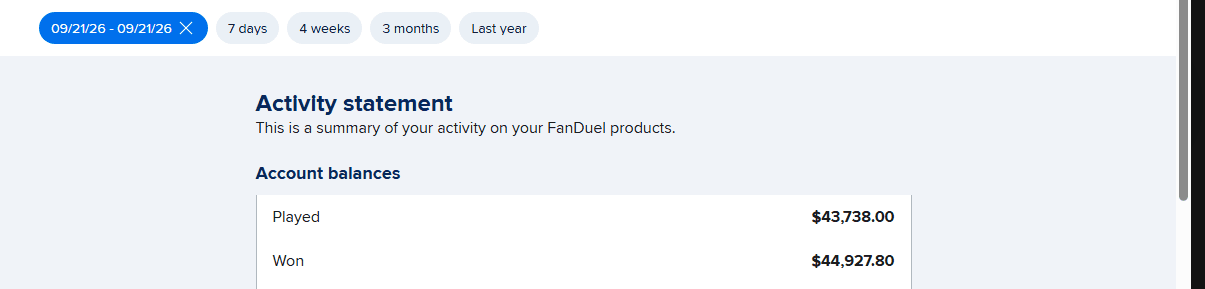
Live Betting Suspended Markets Reopen Window Edge May 2026

Live betting markets suspend dozens of times per game during injuries, scoring plays, reviews, and pace breaks. When those markets reopen, the new price often lags the true in-game state by 1-3 seconds, and that lag is one of the most exploitable structural edges in modern sports betting. The Best Bet on Sports has built +$367,520 in verified profit by attacking these reopen windows.
Live betting markets suspend dozens of times per game whenever a scoring play, injury, replay review, or pace break interrupts the action, and when those markets reopen the new price almost always lags the actual game state by one to three seconds. That latency window is one of the most exploitable structural edges in modern sports betting. The Best Bet on Sports has built +$367,520 in verified profit across more than two decades by aggressively attacking the reopen window on live spreads, totals, and player props before the market catches up to reality.
Every live betting market on every major U.S. sportsbook operates the same way. When a discrete game event occurs — a touchdown, an injury timeout, a free throw sequence, a replay challenge, the end of a quarter — the live trading system suspends all related markets to prevent stale-line trades. After a brief pause, usually two to ten seconds, the markets reopen with newly priced lines. The reopen pricing is a model output, not a human decision, and the model is anchored on the most recent game state — but it is rarely anchored on the most recent game state perfectly.
In this guide, Sports Betting TikTok walks through how suspended-market reopen pricing works, which event types create the largest mispricing windows, how to be in position to bet inside the reopen window, and why this edge ties directly to The Best Bet on Sports' core differentiator of being limited on all six major U.S. sportsbooks.
How Market Suspension Works
Every sportsbook's live trading platform monitors event feeds from official scoring providers. When the feed registers a discrete event, all markets dependent on that game state suspend automatically. The standard suspension events:
- Scoring plays in any major sport
- Injury timeouts and stoppage of play
- Replay reviews and challenge stoppages
- End of quarter, end of half, end of period
- Free throw sequences in basketball
- Penalty assessments in football
- Pitching changes in baseball
- Service breaks in tennis
- Power plays in hockey
When a market suspends, all open tickets in flight are voided. The market reopens with a new price typically two to ten seconds later. That reopen price comes from the sportsbook's live model and is intended to reflect the new game state — but the model can only price what it can measure, and there are three structural sources of slippage in the reopen window.
Why Reopen Prices Lag Reality
The reopen price reflects the official feed's understanding of the new game state, not the actual best estimate of the new state. Three reasons the reopen lags:
Information not yet in the feed. The feed reports the score change, the time remaining, and the basic state variables — but not the qualitative information that matters most. After a high-leverage scoring play, the reopen price reflects the new score and time, but not the body language, the defensive lineup the trailing team has on the floor, the foul situation that just changed, or the rotation choice the trailing coach just signaled. Bettors watching the game pick up these signals in real time. The reopen price is blind to them.
Model anchoring to pre-suspension state. Most live models use a smoothed in-game state estimate. When a discrete event happens, the model updates partially but doesn't fully discount the pre-event state. A team that just scored to take a one-possession lead late will get a reopen price that still partially reflects the pre-score "trailing team" state. The next 30-60 seconds of game play almost always show the new lead-team behavior (running clock, shifted lineup) and the reopen price drifts toward the new reality.
Latency between feed update and price publication. The feed-to-price pipeline takes one to three seconds in real terms. Bettors watching the game on a low-latency stream or in person have a one-to-three-second window of perfect information before the new live price publishes. That window is small but it is the highest-edge window in live betting.
Event Types Ranked by Reopen Edge
Not every suspension event creates equal edge. The hierarchy:
| Event Type | Reopen Edge | Mechanism |
|---|---|---|
| Injury timeout (key player) | Highest | Roster impact takes minutes to fully price |
| End of quarter (NBA) | High | Lineup change after break is not in reopen model |
| Replay review reversal | High | Score state changes, but live model is slow to adjust totals |
| Pitching change (MLB) | High | Bullpen pitcher's matchup splits are not in live model |
| Free throw sequence | Medium-high | Score updates, but pace/momentum doesn't |
| Two-minute warning (NFL) | Medium | Clock management mode shift |
| Power play (NHL) | Medium | Special teams pricing has wide model variance |
| Standard scoring play | Medium | Markets reopen quickly with tight pricing |
| Service break (tennis) | Medium | Momentum shift partially priced |
| Coach's challenge | Low-medium | Often short delay, model handles well |
The two highest-edge suspension events are injury timeouts and end-of-quarter breaks in the NBA. Both create state changes that the live model cannot fully price at the reopen.
Injury Timeout Reopens
When a key player goes down, all dependent markets suspend. The injury severity has not yet been confirmed when the markets reopen — the reopen price either assumes "player returns" or "player out" based on a probability weighting that is almost always wrong in one direction or the other.
If the player walks off under his own power and goes to the locker room, the live game total typically reopens with a small adjustment that does not fully reflect the lineup change that's about to happen. The next 90-120 seconds of game play almost always show the team adjusting to the injury, and the live total moves another 1-3 points. Bettors who picked up the new reality at the reopen had perfect entry. Bettors who waited 60 seconds saw the same direction but worse pricing.
The reverse is also true. If the player gets up and immediately returns to the floor, the reopen often over-adjusted on the assumption of an extended absence, and the live game total trades back toward the pre-injury level.
For broader live betting context, see our analysis of live betting cash out math and live betting stake sizing.
End-of-Quarter Reopens in the NBA
The NBA end-of-quarter break is one of our highest-edge recurring windows. When the buzzer sounds, all live markets suspend for the 90-130 second commercial break. During that break, both coaches finalize substitutions for the next quarter. When markets reopen as the next quarter begins, the live model has the score, the time remaining, and the box score numbers — but it does not yet have the new lineups that just walked on the floor.
A team that ended the third quarter with starters resting and bench players in the game might reopen the fourth quarter with all five starters on the floor. The live spread reopen typically reflects the third-quarter pace and lineup, not the fourth-quarter lineup that's about to play. By the time the live model catches up — usually one to two possessions in — the live spread has already moved 0.5 to 1.5 points.
This is the same in-game adjustment mechanism we documented in NBA Finals Game 2 in-series adjustments, applied to a within-game window instead of a between-game window. Both create exploitable reopen edges.
How to Position for Reopen Edges
Capturing reopen edges requires three things:
Low-latency game stream. Watching on a delayed broadcast or a slow streaming service kills the edge. The window is one to three seconds wide. Bettors on a high-latency stream are seeing the event after the reopen price has already published — they are behind, not ahead. The best position is in-person at the game or on a sub-five-second-latency stream.
Pre-positioned bet structure. When the reopen happens, you don't have time to navigate a sportsbook app, find the market, type a stake, and confirm. The bet has to be ready to go before the event. Sophisticated live bettors keep the bet slip pre-loaded with the stake and only need to tap "confirm" when the reopen hits.
A clear thesis before the event. Reopen betting is not guessing. It's executing a thesis that was developed before the game started, refined during the first portion of the game, and ready to deploy when the discrete event creates the entry window. Bettors who try to develop their thesis in the reopen window are too slow.
The reality of capturing reopen edges is that retail bettors using normal account access cannot do it consistently at scale, because the sportsbook will detect the pattern and limit the account. This is exactly how The Best Bet on Sports' accounts got limited on all six major U.S. sportsbooks. Two decades of aggressive reopen-window betting taught the sportsbooks who we were, and the limits came quickly. The verified +$367,520 across all six books was built primarily on this kind of millisecond-edge live betting.
Why Sportsbooks Limit Reopen Bettors First
Sportsbooks track every live bet by timestamp relative to the discrete events in the game. A bettor whose live action consistently lands inside the two-second reopen window is flagged as a sharp-side automated bettor and limited or restricted within weeks. The metrics the sportsbook uses are simple — average time-to-bet after each discrete event, fade-rate of subsequent line moves, and CLV on live tickets versus pregame tickets.
Limited accounts are the natural endpoint for any live bettor who builds an edge against the reopen pricing. The Best Bet on Sports has been through that arc on every major U.S. sportsbook — FanDuel, DraftKings, Caesars, BetMGM, Fanatics, and ESPN BET. The limits on our accounts are not a reputational concern. They are evidence of the strategy working. Pickers who claim to bet live aggressively but maintain unrestricted accounts at every major book are either lying about their volume or lying about their results.
Reopen Edge by Sport
The reopen edge varies by sport. The fastest sports with the most discrete events create the most reopen opportunities — basketball and football both generate dozens of suspension events per game. Baseball generates fewer but the edges per event are larger because pitching changes carry more state-change information. Hockey and tennis generate moderate volumes with moderate edges.
| Sport | Reopen Events per Game | Average Edge per Event | Total Reopen Edge per Game |
|---|---|---|---|
| NBA | 30-50 | 0.5-1.5% | 15-75% accumulated entries |
| NFL | 20-30 | 0.8-2.0% | 16-60% accumulated entries |
| MLB | 12-20 | 1.0-3.0% | 12-60% accumulated entries |
| NHL | 15-25 | 0.5-1.2% | 8-30% accumulated entries |
| College Football | 22-32 | 1.0-2.5% | 22-80% accumulated entries |
| College Basketball | 28-45 | 0.5-1.5% | 14-68% accumulated entries |
These are the structural windows our live betting dispatch is designed to attack. The full VIP package includes real-time alerts timed to the highest-edge reopen events on the day's slate. Members get our NFL, NBA, and MLB dispatch tuned to the reopen window — and the results page reflects the cumulative edge across thousands of these moments.
What This Means for Bettors Who Aren't Limited
Bettors who have not yet been limited can capture reopen edges directly. The path is straightforward — watch low-latency, develop thesis pre-event, pre-load the bet, execute on reopen. Within months of running this strategy aggressively, the account will be limited at every operator. That's the trade. The edge is real and large, but the runway is short.
For bettors who don't want to run their own limited-out account, the alternative is to use a pick service that has already been limited and is running the play for you. That's the structural reason The Best Bet on Sports exists — twenty years of getting limited at every operator means we've already paid the cost and the edge is delivered to members through email and Discord inside the live window.
Frequently Asked Questions
Why do live betting markets suspend during games?
Live betting markets suspend automatically when discrete game events occur — scoring plays, injury timeouts, replay reviews, end of quarter, free throw sequences, pitching changes, and similar interruptions. The suspension prevents stale-line trades where the live model has not yet updated to reflect the new game state. After a brief two-to-ten-second pause, markets reopen with newly priced lines that aim to reflect the updated state, though those reopen prices often lag the actual game reality.
What creates the reopen window edge?
The reopen window edge comes from three structural sources. First, qualitative information from the broadcast (body language, lineup changes, defensive adjustments) that the official feed cannot capture. Second, live model anchoring that partially smooths between pre-event and post-event states, leaving the reopen price between the two. Third, the one-to-three-second latency between the feed update and the reopen price publication, during which bettors watching low-latency streams have perfect information before the market.
Which suspension events create the largest reopen edges?
Injury timeouts on key players and end-of-quarter breaks in the NBA create the largest reopen edges. Injuries create rosters changes that take minutes to fully price into the live model. NBA quarter-end breaks create lineup changes for the next quarter that the reopen price reflects with a 1-2 possession lag. Pitching changes in baseball and replay review reversals also rank high. Standard scoring plays and coach's challenges create smaller, faster-pricing windows.
How can I actually capture a reopen edge as a retail bettor?
Capturing a reopen edge requires three things: a low-latency game stream or in-person attendance, a pre-positioned bet slip with stake already loaded and ready to confirm, and a clear pre-event thesis on what to bet if a specific suspension event happens. The window is one to three seconds wide. Bettors trying to develop their thesis after seeing the event are already too late.
Will my sportsbook account get limited for hitting reopen windows?
Yes. Sportsbooks track every live bet by timestamp relative to discrete events. Bettors whose live action consistently lands inside the two-second reopen window get flagged and limited or restricted within weeks. This is exactly how The Best Bet on Sports' accounts got limited on all six major U.S. sportsbooks. Limited accounts are the natural endpoint for any successful live-edge bettor.
Are reopen edges legal?
Yes, reopen-window betting uses publicly available information (the broadcast feed) and standard sportsbook interfaces. It is fully legal under U.S. and state betting regulations. The reason sportsbooks limit reopen-window bettors is not legality — it is profitability. The sportsbook is well within its rights to restrict an account that consistently bets at sharp prices, just as the bettor is well within their rights to chase those prices.
Does The Best Bet on Sports dispatch live alerts inside the reopen window?
The Best Bet on Sports' live alert system is timed to the highest-edge reopen events on the daily slate across NFL, NBA, MLB, and college football and basketball. Members on the 2-3 Unit and VIP packages receive real-time email and Discord alerts during the reopen window for our highest-conviction live positions. The +$367,520 in verified profit across more than two decades of betting was built primarily on this kind of live execution — and the limits on our accounts at all six major U.S. sportsbooks reflect the strategy working.
The Best Bet on Sports · 1.5M followers on TikTok
Sports Betting TikTok is the live betting account behind The Best Bet on Sports, covering NFL, NCAAF, NBA, NCAAB, MLB and WNBA markets in real time. The account has been limited on all six major U.S. sportsbooks — FanDuel, DraftKings, Caesars, BetMGM, Fanatics and ESPN BET — for winning on live betting, with $367,520 in verified profit since 2005. View full profile →
Past results do not guarantee future performance. Must be 21 or older to wager.
Related Articles
Michigan's Hail Mary vs Western Michigan: What an 18.7% Live Price Actually Paid
The Number Moved. Do You Still Bet It?
Why Some Games Never Get a Live Pick
Why Your Live Bet Got Rejected — And What It Tells You
How Fast Do You Need to Act on a Live Betting Alert?
Live Betting Cash-Out Feature Math in May 2026: When Sportsbook Cash-Out Offers Are Positive EV and When They're a Trap
Get real live betting picks
From $39.95/mo · Cancel anytime · Email + Discord delivery
● Get The Picks
Choose your package
Tap any tier below to select · Subscribe in one tap
👇 Tap any package to select it
✓ You're selecting
25 Units · $99.95/month
25 unit picks per month. Sweet spot for most bettors — plenty of action without going all-in.
- ✓25 live betting selections/month
- ✓Email + Discord delivery
- ✓All sports (NFL, NCAAF, NBA, NCAAB, MLB)
- ✓Mix of 1, 2, 3, 5-unit rated plays
- ✓Cancel anytime
Secure PayPal · Cancel anytime · No hidden fees · 21+ · +$367K verified
+$367,520 verified · Limited on 6 sportsbooks · 20 years documented · See Proof
Join Our Newsletter
Get free expert sports picks and analysis delivered weekly.