Live Betting Stake Sizing vs Pre-Game Strategy May 2026: Why Live Bets Should Be Sized Smaller, Not Larger

Live betting stake sizing should be smaller than pre-game stake sizing because live betting volatility is higher, juice is wider, and emotional decision-making distorts edge perception in real time. Most bettors do the opposite — they bet larger live because the action feels more certain, and they go broke faster as a result. Disciplined live bettors size live bets at 50 to 75 percent of their pre-game unit and protect their long-term edge.
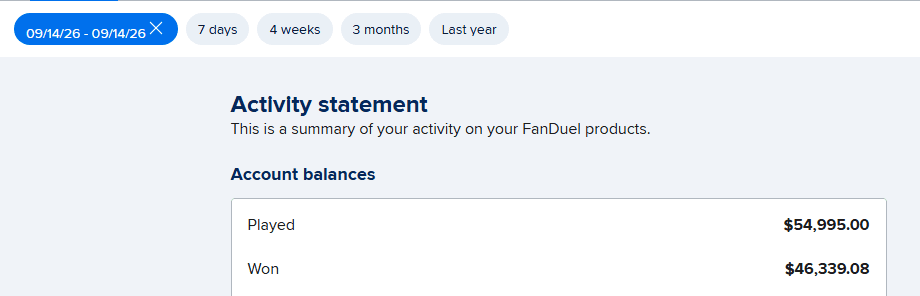
Live betting stake sizing should be smaller than pre-game stake sizing — typically 50 to 75 percent of the pre-game unit — because live betting volatility is higher, juice is wider, edges are smaller in dollar terms after juice, and emotional decision-making in real time distorts edge perception in ways that lead to oversizing. The Best Bet on Sports has captured over $367,520 in verified profit across two decades of live and pre-game betting by treating live bet sizing as a separate, smaller risk discipline than pre-game sizing. Most bettors make the opposite mistake — they bet larger live because the action feels more certain — and they go broke faster as a result. Disciplined live bettors protect their long-term edge by sizing live bets at a fraction of their pre-game unit.
Live betting is the highest-edge market available to sharp bettors who know how to read it. It is also the highest-juice, highest-volatility, most emotionally distorting market on the sportsbook. Those two facts together — large potential edge, large potential mistake — mean that live bet sizing requires a fundamentally different discipline than pre-game sizing. Most bettors get this backwards.
This guide explains why live bets should be sized smaller, the math behind the smaller-stake recommendation, the psychological traps that lead bettors to oversize live, and how to integrate live sizing into a pre-game-based bankroll plan. For broader bankroll context see our unit sizing guide and our live betting picks page.
For sport-specific live coverage, see our NBA picks and MLB picks hubs.
Why Live Bets Are Different
Five structural differences between pre-game and live betting that justify smaller live sizing:
1. Juice is wider. Pre-game sides typically run -105 to -110 at sharp books. Live sides regularly run -115 to -125, with totals sometimes reaching -130 to -140 during volatile stretches. The required win rate to break even rises with juice.
2. Variance per bet is higher. Live edges are typically smaller in absolute terms than pre-game edges. A pre-game bet might offer a 4 percent edge over fair price; a live bet often offers a 1 to 3 percent edge after the wider juice. Smaller per-bet edges combined with larger price-movement variance produce a higher coefficient of variation per bet.
3. Decision time is compressed. A pre-game bet allows hours of analysis. A live bet decision often must be made in 5 to 30 seconds. Compressed decision time correlates with worse edge identification on average.
4. Emotional context is heightened. A live bet placed during a game you are watching carries emotional weight from the game's narrative — the player you just saw make a play, the momentum swing you just felt — that distorts probability estimation.
5. Sportsbook latency creates fake edges. Live prices sometimes appear to offer huge edges because the price has not yet updated to reflect a recent play. Bettors who chase these without understanding the latency window often get caught when the price snaps back before the bet fully settles.
Each of these factors argues for a smaller per-bet stake. Combined, they argue for a meaningfully smaller live unit than the pre-game unit.
The Math Behind Smaller Live Sizing
The Kelly criterion, applied honestly, recommends that bet size scale with edge and inversely with variance. Live bets typically have:
- Smaller edge per bet (1 to 3 percent vs 3 to 5 percent pre-game)
- Higher variance per bet (wider juice, faster price moves)
- More frequent placement (a single game can produce 3 to 8 live bets)
The combined effect on optimal Kelly sizing is roughly half the pre-game stake. Most disciplined bettors land on a live unit between 50 and 75 percent of their pre-game unit.
| Bettor Type | Pre-Game Unit | Recommended Live Unit |
|---|---|---|
| Conservative | 1% of bankroll | 0.5% of bankroll |
| Standard | 2% of bankroll | 1.25% of bankroll |
| Aggressive | 3% of bankroll | 2% of bankroll |
| Sharp pro | 4% of bankroll | 2.5% of bankroll |
These are starting points, not rigid rules. A bettor with a verified edge in a specific live market — say, NBA playoff foul-trip overs — can size up within that specific market while keeping a smaller default for less-confident live spots.
Why Most Bettors Oversize Live
Three psychological traps that drive live oversizing:
Trap 1: The "I see it happening" illusion. When you are watching the game, the action feels more certain than it actually is. The team that just scored two in a row feels like it will keep scoring. The pitcher who just got hit hard feels like he will keep getting hit. These narrative-driven feelings inflate confidence beyond what the underlying probabilities support.
Trap 2: Recovery betting. A pre-game bet that is going wrong tempts bettors to "fix it" with a live bet. The live bet is then sized larger than a normal live unit because it is functionally a hedge or a recovery attempt. This is the most expensive psychological mistake in live betting.
Trap 3: Compressed feedback loop. Live bets settle within minutes. A win immediately reinforces the betting behavior; a loss immediately tempts a recovery bet. The compressed feedback loop produces tilt faster than pre-game betting does.
Each trap, by itself, can double or triple the actual stake placed compared to the disciplined live unit. Combined, they can deplete a bankroll across a single game.
How to Build a Live Sizing Discipline
Five practical rules:
1. Pre-commit to a live unit before the game starts. Write down the size in dollars. Do not let in-game emotion change it.
2. Cap total live exposure per game. A single game should never absorb more than three to four live units of total stake. If a game presents more than four high-confidence live spots, the discipline should override the urge to take all of them.
3. Never recovery-bet a losing pre-game ticket. Treat the pre-game ticket and live bets as independent decisions. If a pre-game bet is going wrong, that is information about variance, not a trigger to bet more.
4. Track live bet results separately from pre-game results. Most bettors who track combined results assume their edge is uniform. Tracking separately reveals whether the live edge is real or whether live betting is funding pre-game profit.
5. Increase live sizing only after a verified positive ROI sample. A 100-bet sample with positive CLV and positive ROI is the threshold for considering a live unit increase. See our closing line value guide for the CLV tracking method.
When Larger Live Sizing Is Justified
Three scenarios where a live bet can be sized larger than the standard live unit:
1. Documented edge in a specific live market. A bettor with a 100+ bet sample showing positive ROI in NBA live overs can size NBA live overs at the pre-game unit instead of the smaller live default.
2. Latency-window mispricings. When a sportsbook live price has not updated to reflect a clear, observable game event, the edge is large enough that even at standard sizing the EV is high. These spots are rare but justify pre-game-equivalent sizing.
3. Specific anchor strategies. Some live strategies — for example, the foul-trip live over in NBA playoffs — have well-defined trigger criteria and consistent edge size. Within a documented strategy, sizing at the pre-game unit is appropriate.
The general rule: if the edge identification is mechanical and documented, larger sizing is justified. If the edge identification is judgment-based or feel-based in real time, the smaller live unit applies.
How This Affects Bankroll Allocation
A bettor with a $10,000 bankroll using a 2 percent pre-game unit ($200) should default to a 1.25 percent live unit ($125). If that bettor finds three live spots in a single game, the total game exposure is $375 — within the three-to-four-unit-per-game cap.
Across a full month of NBA playoffs and MLB regular-season games, a disciplined live bettor might place 80 to 120 live bets at the smaller unit. Combined with 60 to 90 pre-game bets at the standard unit, the monthly stake exposure is balanced and the bankroll variance stays within manageable bounds.
The bettor who instead sizes live bets at the pre-game unit (or larger) takes the same edge profile but accepts a higher variance and a higher probability of bankroll drawdown beyond the recovery threshold. The expected value over the month may be similar, but the chance of a busted bankroll across the month rises significantly.
How This Fits the Live Betting Edge
The Best Bet on Sports's core differentiator is live betting — it is why we are limited on all six major U.S. sportsbooks (FanDuel, DraftKings, Caesars, BetMGM, Fanatics, ESPN BET). Our live betting members win because we deliver disciplined, edge-verified picks rather than chasing every in-game movement.
The same discipline applies to sizing. Members on the VIP 5-Unit live package follow our recommended sizing guidelines, which differ between live and pre-game releases for the reasons above. The smaller live unit is not a sign of lower confidence in our live picks — it is a sign of respect for the structural differences in live markets. See our results for the live-betting track record and our sports handicappers page for analyst credentials.
For the underlying research that supports our live edge, see our live betting picks page, our in-game hedge framework, our cash-out math guide, and our no-vig fair price calculator for sizing-relevant edge math.
Frequently Asked Questions
Why is live betting juice wider than pre-game juice?
Live betting juice is wider because sportsbooks face higher risk per bet. The price needs to update in real time as game state changes, and the operator does not have the option to wait for sharp action to balance the book the way they do pre-game. Wider juice covers the operator's modeling risk and the cost of the fast pricing infrastructure. The wider juice raises the required win rate to break even, which is one of the structural reasons live bets should be sized smaller than pre-game bets.
What's the right live unit if I'm a beginner with a small bankroll?
A beginner with a bankroll under $2,000 should use a 1 percent pre-game unit and a 0.5 percent live unit. With a $1,500 bankroll, that is $15 pre-game and $7.50 live. The smaller percentages protect against beginner mistakes and against the higher variance that beginners face from less-developed edge identification. As the bankroll grows and the bettor builds a verified edge, the unit can scale up incrementally.
Should I size differently across different sports for live bets?
Yes, when there is documented edge variance across sports. NBA live betting tends to have tighter juice and faster algorithm reaction than MLB live betting, which means MLB live edges are sometimes larger but more variance-heavy. NFL live betting has the smallest live edge ceiling because the operator-side pricing is sharpest. A bettor with sport-specific verified ROI can size up within the strong sport while keeping the smaller default in the weaker sport.
How do I avoid recovery-betting a losing pre-game ticket?
The most reliable method is to write down the live unit cap for the game before the game starts and treat it as an inviolable rule. A second method is to remove the live betting interface from your phone or browser during games where you have a pre-game ticket riding — eliminating the placement option eliminates the temptation. A third method is to use a separate sportsbook account for live betting that is not the same account holding the pre-game ticket. Each method addresses the same underlying psychology: live recovery bets are the most expensive mistake in sports betting.
Does Kelly criterion sizing change for live bets?
Yes. Kelly sizing depends on edge and on the underlying odds. Live bet edges are typically smaller after juice, which means the Kelly recommendation per live bet is smaller than per pre-game bet. The Kelly fraction also assumes a single, uncorrelated bet. Live bets within the same game are correlated — a live over and a live moneyline favorite both win when the game produces a high score with the favorite winning. Correlated bets require a fractional-Kelly downshift to avoid overexposing the bankroll. Most live betting decisions should use a quarter-Kelly to half-Kelly fraction relative to the per-bet calculation.
Is there a sport where live betting should be sized at the pre-game unit?
Tennis is the closest example. Tennis live markets have well-defined inflection points (serve break, set point, tiebreak), and the per-point probability math is precise enough that the live edge per qualifying bet can match the pre-game edge. A bettor with a documented tennis live edge can size at the pre-game unit. NBA, NFL, MLB, and NHL live markets have higher variance and merit the smaller live default.
How long should I track live results before adjusting my live unit?
A 100-bet live sample with positive ROI and positive CLV is the minimum threshold for considering a live unit adjustment upward. A 200-bet sample is more reliable. Adjustments downward — reducing the live unit further — should be made faster, after a 50-bet sample showing negative CLV or sustained losses. The asymmetry reflects the structural reality that recognizing a real edge takes longer than recognizing a real disadvantage.
The Best Bet on Sports · 1.5M followers on TikTok
Sports Betting TikTok is the live betting account behind The Best Bet on Sports, covering NFL, NCAAF, NBA, NCAAB, MLB and WNBA markets in real time. The account has been limited on all six major U.S. sportsbooks — FanDuel, DraftKings, Caesars, BetMGM, Fanatics and ESPN BET — for winning on live betting, with $367,520 in verified profit since 2005. View full profile →
Past results do not guarantee future performance. Must be 21 or older to wager.
Related Articles
The Closing Spread Misses by Ten Points
The 1 PM Problem: When Sunday Parlays Actually Die
Key Numbers and Parlays: The Three-Point Problem
Should Pick Service Bets Have Their Own Bankroll?
The 2026 NFL Rule Changes That Move Live Betting Numbers
Do Parlay Legs Include Overtime? How Each Leg Settles
Get real live betting picks
From $39.95/mo · Cancel anytime · Email + Discord delivery
● Get The Picks
Choose your package
Tap any tier below to select · Subscribe in one tap
👇 Tap any package to select it
✓ You're selecting
25 Units · $99.95/month
25 unit picks per month. Sweet spot for most bettors — plenty of action without going all-in.
- ✓25 live betting selections/month
- ✓Email + Discord delivery
- ✓All sports (NFL, NCAAF, NBA, NCAAB, MLB)
- ✓Mix of 1, 2, 3, 5-unit rated plays
- ✓Cancel anytime
Secure PayPal · Cancel anytime · No hidden fees · 21+ · +$367K verified
+$367,520 verified · Limited on 6 sportsbooks · 20 years documented · See Proof
Join Our Newsletter
Get free expert sports picks and analysis delivered weekly.