In-Game Hedging vs Letting It Ride in Live Sports Betting in May 2026: When to Lock Profit and When to Hold

In-game hedging in live sports betting in May 2026 is a calculated decision built on closing line value math, position size, and remaining variance — not an emotional reaction to a winning ticket. The Best Bet on Sports breaks down the formal framework for when to hedge a live bet, when to let it ride, and when to half-hedge to lock partial profit, including the live market reads that have hit limits on all six major U.S. sportsbooks.
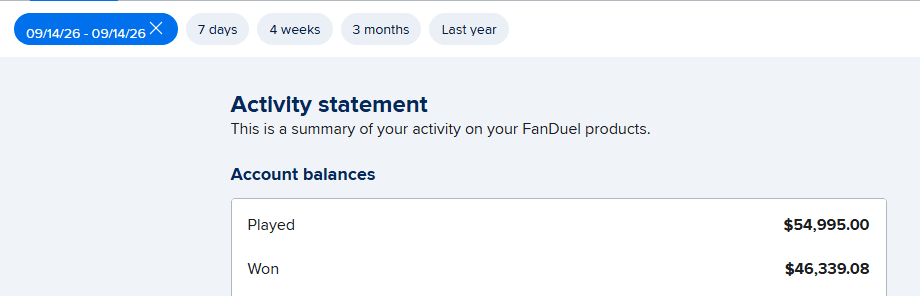
In-game hedging in live sports betting in May 2026 is a calculated edge decision built on closing line value math, position size relative to bankroll, and remaining variance in the game — not an emotional reaction to seeing a winning ticket on the screen. Across 20+ years and a verified +$367,520 in tracked profit, The Best Bet on Sports has built a hedging framework that converts the hedge-versus-ride decision into a repeatable equation, and it is the same framework that has us limited on all six major U.S. sportsbooks for live betting volume. Sports Betting TikTok, walks through the May 2026 application below.
Most live bettors hedge for the wrong reason. They see a winning ticket, feel the loss aversion of giving the win back, and lock profit at a price that destroys their edge. Other live bettors refuse to hedge for the wrong reason — they treat hedging as a signal of weakness or a violation of their original read. Both approaches throw away money. Hedging is an arithmetic decision and the arithmetic is straightforward when the framework is built before the bet is placed. Our live betting strategy framework treats every original bet as a position that may need to be adjusted as the game progresses.
What Is In-Game Hedging in Live Sports Betting?
In-game hedging in live sports betting is the act of placing a second bet on the opposite outcome of an existing live or pregame ticket to lock guaranteed profit, lock a guaranteed smaller win, or reduce variance. The hedge bet uses the live market price at the moment the hedge is placed, which is typically much different from the price of the original bet. The size of the hedge determines whether the hedge produces guaranteed profit on both outcomes, breakeven on one outcome, or partial profit lock with remaining upside.
| Hedge Type | Description | Edge Implication |
|---|---|---|
| Full hedge | Lock equal profit on both outcomes | Guarantees profit, gives up positive expected value |
| Partial hedge | Lock smaller profit, retain upside | Gives up some expected value for variance reduction |
| Stake-back hedge | Recover original stake, ride remainder | Free roll on remaining position |
| Round-trip hedge | Hedge after hedge as game flips | Compounds vig drag, rarely correct |
The full hedge is the most common and most often the wrong play. The stake-back hedge is the most underused and most often the correct play when the live market has moved sharply in favor of the original bet but meaningful variance remains.
When Should You Hedge a Live Bet?
You should hedge a live bet in three specific scenarios:
1. Position size is uncomfortable relative to bankroll. If the original bet was a 5-unit play and the live price has moved such that a hedge guarantees a 3-unit profit, the hedge is correct when the original 5-unit position represents more than 3% of the bankroll. The variance reduction is more valuable than the residual edge on a position that is too big for the bankroll. Our bankroll management framework treats position size as the primary input on every hedge decision.
2. The live price implies a higher probability than the true probability. If the original bet was a Lakers -3 ticket and the Lakers go up 12 with 8 minutes left, the live moneyline on the opposing team will reflect a probability that is often higher than the true probability of the Lakers covering. Hedging at that overpriced live moneyline locks profit at favorable expected value. The math works because the live market overreacts to score in playoff basketball.
3. Late-game variance is asymmetric and meaningful. If a parlay or futures ticket reaches a position where one event remains and that event has high variance — a single field goal in football, a single inning in baseball with the right batter due up — the hedge captures expected value by reducing variance against an asymmetric tail. The hedge size should equal the original stake divided by the live decimal odds of the hedge.
When Should You Let It Ride?
You should let it ride in four specific scenarios:
1. Position size is comfortable. If the original bet was a 1-unit or 2-unit position relative to a bankroll where 3% to 5% per bet is the standard size, the bet is small enough that the variance is acceptable and the residual edge is more valuable than the hedge profit lock.
2. The live price implies a lower probability than the true probability. If the live moneyline on your side has held at the same price or moved against you despite favorable in-game developments, the live market is underpricing your side. Hedging at the live price would mean betting against a market underpricing your edge — a clear giveaway of expected value.
3. The remaining variance is symmetric and modest. A baseball total in the 8th inning with both teams scoring at modest rates carries low remaining variance. The hedge gives up expected value to lock profit that is already mostly priced in. Letting it ride captures the remaining edge.
4. The hedge requires excessive juice. If the live price on the opposite side requires laying -200 or worse, the implied juice on the hedge is high enough that the expected value cost outweighs the variance reduction. Most hedges break even from -120 to -160. Past -180, hedging is rarely correct.
The applied framework appears in our live betting playbook for NFL, and the same logic applies to NBA, MLB, and NCAAB live markets with the sport-specific variance adjustments.
How Should You Calculate Hedge Sizing?
Hedge sizing follows a simple equation: hedge stake equals the desired profit lock divided by (hedge decimal odds minus 1). For a full guaranteed-profit hedge, the calculation reduces to: hedge stake equals (original potential payout) divided by (hedge decimal odds).
| Original Bet | Original Stake | Original Payout | Live Hedge Odds | Full Hedge Stake | Locked Profit |
|---|---|---|---|---|---|
| Lakers -3 -110 | $100 | $190.91 | +250 | $54.55 | $36.36 each side |
| Yankees ML -150 | $150 | $250 | +180 | $89.29 | $10.71 each side |
| Cowboys parlay leg | $50 | $850 | +300 | $212.50 | $587.50 each side |
The third row illustrates why parlays often produce dramatic hedge opportunities. A late-game leg of a parlay at +300 hedge odds locks a meaningful profit on both outcomes, but the trade-off is the expected value on the original parlay leg, which may have been negative anyway depending on how the parlay was constructed. The round robin parlay framework covers parlay-specific hedge math in more depth.
What Live Market Reads Inform the Hedge Decision?
Live market reads inform the hedge decision by signaling whether the current live price is overpriced, underpriced, or fairly priced relative to true probability. Three reads matter most:
1. Live line versus implied true probability. Calculate the implied probability from the live decimal odds and compare to the true probability your in-game model produces. If the live line is overpriced — implied probability higher than true probability — hedging captures positive expected value at the hedge. If underpriced, letting it ride captures positive expected value on the hold.
2. Game state versus expected variance. A live game with low remaining variance — late innings in baseball, fourth quarter possession-control situations in basketball, late drives in football with a known clock state — gives less reason to hedge because the hold is close to certain. A live game with high remaining variance — long innings ahead, clock-stopped basketball with multiple possessions remaining, two-minute drill in football — gives more reason to hedge.
3. Live market over- or underreaction signals. Live markets in NBA playoff games consistently overreact to scoring runs, which inflates the live hedge price on the trailing side. Live markets in MLB consistently underreact to baserunner advancement, which suppresses the live hedge price on the leading side. The sport-specific overreaction or underreaction direction tells you whether the hedge price is bargain or premium.
How Do Sportsbook Limits Affect Hedging?
Sportsbook limits affect hedging because hedging requires placing a second bet at meaningful size, and a bettor limited on the book holding the original ticket may not be able to hedge at full size on the opposite side. The Best Bet on Sports has been limited across all six major U.S. sportsbooks specifically because of consistent live betting performance, which has forced our hedge framework to incorporate cross-book hedging. The hedge bet is placed on whichever sportsbook offers full action on the hedge side at the best available price.
For subscribers, picks delivered through Discord, and email include both the original bet and the hedge plan when relevant, including the trigger conditions that would activate the hedge and the cross-book strategy for placing it. Our packages page lists subscription tiers, and the results page tracks the hedge framework's contribution to overall return on investment over time.
Related Strategy Reading
For deeper context on the angles covered above, our analysis of nba live betting playoffs strategy and nba playoff live betting second half strategy pairs well with this guide. Subscribers get the same hedge framework applied across our NBA picks and MLB picks feeds, with trigger conditions delivered live during games. The hardest version of the hold-or-fold call is a game that has stopped being competitive, where the live number keeps moving but the remaining outcomes have quietly collapsed — that one is worked through in when to stop live betting a blowout.
Frequently Asked Questions
What is in-game hedging in live sports betting?
In-game hedging in live sports betting is the act of placing a second bet on the opposite outcome of an existing live or pregame ticket to lock guaranteed profit, lock a guaranteed smaller win, or reduce variance. The hedge uses the live market price at the moment the hedge is placed. Hedge sizing determines whether both outcomes produce equal profit, whether one outcome produces breakeven and the other produces upside, or whether the hedge recovers the original stake while the remaining ticket runs as a free roll.
When does hedging give up expected value?
Hedging gives up expected value when the live market is underpricing your side. If the live moneyline on the original bet's side has held or moved against you despite favorable in-game developments, the market is signaling your edge is larger than the hedge price reflects. Hedging at that price means betting against the underpriced market. Hedging also gives up expected value when the hedge requires laying -180 or worse, because the implied juice exceeds the variance reduction benefit.
How do you calculate hedge stake size?
Hedge stake size for a full guaranteed-profit hedge is calculated by dividing the original potential payout by the hedge decimal odds. For example, a Lakers -3 ticket with $100 staked at -110 has a $190.91 payout. If the hedge odds on the opposite side are +250 (decimal 3.50), the hedge stake is $190.91 divided by 3.50, which equals $54.55. That hedge produces $36.36 of profit on either outcome and zero loss on either outcome.
Should you hedge a live bet that has already moved in your favor?
Whether to hedge a live bet that has already moved in your favor depends on three inputs: position size relative to bankroll, the implied probability of the live hedge price relative to your true probability estimate, and the remaining variance in the game. If position size is comfortable, the live market is underpricing your side, and remaining variance is symmetric and modest, hold. If position size is uncomfortable, the live market is overpricing your side, or remaining variance is asymmetric and meaningful, hedge.
Is the stake-back hedge a better option than the full hedge?
The stake-back hedge is often the better option than the full hedge because it recovers the original stake while leaving the remaining ticket to run as a free roll on the upside. The stake-back hedge gives up less expected value than the full hedge while still eliminating the downside risk of the original bet losing. It is most useful when the live market has moved sharply in your favor but meaningful upside remains on the original ticket.
Why are sportsbook limits a hedging consideration?
Sportsbook limits are a hedging consideration because hedging requires placing a second bet at meaningful size, and a limited bettor may not be able to place the full hedge on the same book that holds the original ticket. The hedge typically must be placed on a different sportsbook with full action on the hedge side. The Best Bet on Sports has been limited on all six major U.S. sportsbooks, which has shaped our hedge framework around cross-book execution rather than single-book convenience.
How does live market overreaction affect the hedge price?
Live market overreaction affects the hedge price by inflating the price on whichever side the market has moved against. NBA playoff live markets overreact to scoring runs, which inflates live moneylines on the trailing side. MLB live markets underreact to baserunner advancement, which suppresses live moneylines on the leading side. These directional patterns determine whether the hedge price is a bargain or a premium relative to true probability and inform the hedge-or-ride decision.
The Best Bet on Sports · 1.5M followers on TikTok
Sports Betting TikTok is the live betting account behind The Best Bet on Sports, covering NFL, NCAAF, NBA, NCAAB, MLB and WNBA markets in real time. The account has been limited on all six major U.S. sportsbooks — FanDuel, DraftKings, Caesars, BetMGM, Fanatics and ESPN BET — for winning on live betting, with $367,520 in verified profit since 2005. View full profile →
Past results do not guarantee future performance. Must be 21 or older to wager.
Related Articles
$100 to $500: 4-Leg Parlay Strategy That Doesn't Bust Your Bankroll
How to Choose a Live Betting Service: A Buyer's Guide for $199+ Monthly Subscriptions
Middling and Scalping Sports Bets in May 2026: How to Lock Edge When Lines Move
Correlated Parlay Strategy in Sports Betting: How to Stack Game Total, Player Props, and Team Totals for May 2026 Edge
Best College Basketball Pick Services of 2026 (Top 5 Ranked + Reviewed)
Lane Kiffin's Oxford Return: What LSU -2.5 Is Pricing
Get real live betting picks
From $39.95/mo · Cancel anytime · Email + Discord delivery
● Get The Picks
Choose your package
Tap any tier below to select · Subscribe in one tap
👇 Tap any package to select it
✓ You're selecting
25 Units · $99.95/month
25 unit picks per month. Sweet spot for most bettors — plenty of action without going all-in.
- ✓25 live betting selections/month
- ✓Email + Discord delivery
- ✓All sports (NFL, NCAAF, NBA, NCAAB, MLB)
- ✓Mix of 1, 2, 3, 5-unit rated plays
- ✓Cancel anytime
Secure PayPal · Cancel anytime · No hidden fees · 21+ · +$367K verified
+$367,520 verified · Limited on 6 sportsbooks · 20 years documented · See Proof
Join Our Newsletter
Get free expert sports picks and analysis delivered weekly.