Closing Line Value (CLV) Tracking in Sports Betting: How to Measure True Edge in May 2026

Closing line value (CLV) tracking is the single most reliable proxy for long-term sports betting edge because the closing line reflects the most informed market consensus, and beating it consistently predicts winning bettors. The Best Bet on Sports walks through how to calculate CLV in points and percentage terms, why short-term win-loss tells you almost nothing, and how to build a CLV tracking spreadsheet that survives variance.
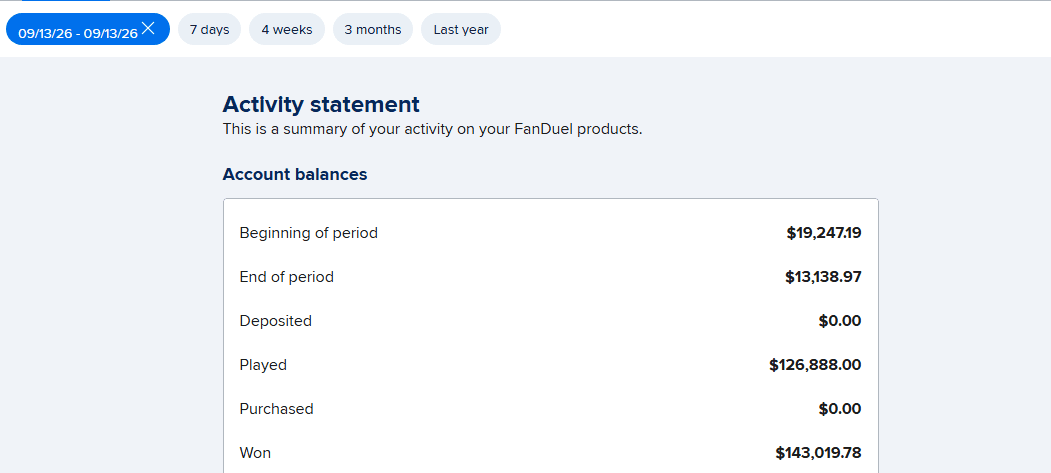
Closing line value (CLV) tracking is the most reliable single measurement of long-term sports betting skill because the closing line is the market's most informed consensus, and bettors who consistently beat it almost always show profit at sample size while bettors who lose to it almost always show losses. Across 20+ years and a verified +$367,520 in tracked profit, The Best Bet on Sports has measured CLV on every wager and used it as the primary feedback loop for refining models and pick selection. Sports Betting TikTok, breaks down how to calculate CLV correctly, why bettors who skip CLV almost always overrate or underrate themselves based on short-term variance, and how to build a CLV tracking discipline that compounds over a season.
Most sports bettors evaluate themselves on win-loss record over the past week, month, or season. That measurement is dominated by variance for any sample under 1,000 wagers, which means a bettor with no edge will look like a winner half the time and a loser the other half regardless of skill. CLV tracking solves the problem by measuring the input — beat the closing line — instead of the output. Over thousands of bets, the CLV-positive bettor wins; the CLV-negative bettor loses; the CLV-neutral bettor breaks even minus juice.
What is Closing Line Value in Sports Betting?
Closing line value (CLV) is the difference between the price you bet and the price the same wager closed at before the event started. If you bet a team at -3 and the line closed at -3.5, you have +0.5 points of CLV. If you bet a team at +120 and the line closed at +110, you have +10 cents of CLV in moneyline terms or roughly +1.5% in implied probability terms. CLV is positive when you bet a better price than the close; negative when you bet a worse price.
The closing line is treated as the market's truth because by the time the event starts, all available information has been absorbed by sharp bettors, lineup releases, weather, injury news, and late steam. Beating that consensus repeatedly is statistically equivalent to having an edge over the market, and over thousands of bets that edge translates linearly into long-term profit. Our sports handicappers team measures CLV on every published pick.
How Do I Calculate CLV in Points and Percentage Terms?
CLV calculation depends on the bet type. For point spreads and totals, CLV is measured in points and half-points. For moneylines, CLV is measured in cents (the gap between the line you bet and the line that closed) or, more rigorously, in implied probability percentage points.
| Bet Type | Bet Price | Closing Price | CLV |
|---|---|---|---|
| Spread | -2.5 | -3.5 | +1.0 points |
| Spread | -3 | -2.5 | -0.5 points |
| Total | Over 47.5 | Over 48.5 | +1.0 points |
| Moneyline | +120 | +110 | +10 cents / ~1.5% probability |
| Moneyline | -150 | -160 | +10 cents / ~1.5% probability |
| Run line | -1.5 (+120) | -1.5 (+105) | +15 cents / ~2.5% probability |
The cleanest single metric for cross-market CLV comparison is implied probability differential. Convert the price you bet and the price that closed into implied probabilities, then subtract. A consistent +1% to +2% CLV across hundreds of bets corresponds to a long-term ROI of roughly 1% to 2% above breakeven, which compounds significantly over a season.
Why Does CLV Predict Long-Term Profit Better Than Win-Loss Record?
CLV predicts long-term profit better than win-loss record because variance dominates win-loss outcomes for any reasonable sample size while CLV stabilizes much faster. A bettor with a true 53% win rate against -110 spreads has a 1-in-4 chance of being below 50% over 100 bets and a 1-in-20 chance of being below 50% over 1,000 bets. The same bettor will show measurable positive CLV — typically +0.3 to +0.7 points per spread bet — within the first 200 wagers. CLV converges; win-loss does not.
The implication is that bettors who lose money in the short term but show positive CLV are almost certainly profitable long-term, while bettors who win money in the short term but show negative CLV are almost certainly fading their long-term edge. The first bettor should keep betting; the second bettor is a coin flip away from regression. Our results page shows the long-term outcome of CLV-disciplined picking across more than 20 years.
How Do I Build a CLV Tracking Spreadsheet?
A CLV tracking spreadsheet requires six columns: date, sport, market type (spread/total/moneyline), bet price, closing price, and computed CLV. From those six inputs, calculate four rolling metrics:
1. Average CLV per bet. Sum CLV in implied probability terms, divide by bet count. Target: above zero, with a stretch goal of +1% or higher.
2. CLV-positive bet percentage. Count of bets with positive CLV divided by total bets. Target: above 55%.
3. Win rate vs CLV-implied win rate. A bettor's actual win rate should track CLV-implied win rate within 2 to 3 percentage points over 500+ bets. Larger gaps suggest variance, model error, or data entry mistakes.
4. CLV by market type. A bettor with strong spread CLV but negative total CLV has a market-specific edge and should reallocate stake accordingly.
Update after each bet with the closing price captured at the official start of the event. Avoid using mid-game prices or live prices; closing line means the price the moment the event begins. Most price-tracking services publish a "true close" feed that handles this automatically.
What CLV Threshold Indicates a Real Edge?
A consistent +1% to +2% implied-probability CLV across 500+ bets indicates a real edge. Below +0.5% CLV, the bettor is roughly breakeven against the market and will lose long-term to juice unless they are betting only the largest, most efficient markets. Above +2% CLV, the bettor has a strong edge that should compound into 3%+ ROI over a full season at standard juice. Sharps in U.S. spread and total markets typically run +0.5 to +1.5% CLV. Bettors above +2.0% CLV at scale are usually limited or banned by sportsbooks within a season — which is why The Best Bet on Sports has been limited on all six major U.S. sportsbooks (FanDuel, DraftKings, Caesars, BetMGM, Fanatics, ESPN BET) for winning too much, particularly in live betting where CLV runs higher.
How Does CLV Apply to Live Betting?
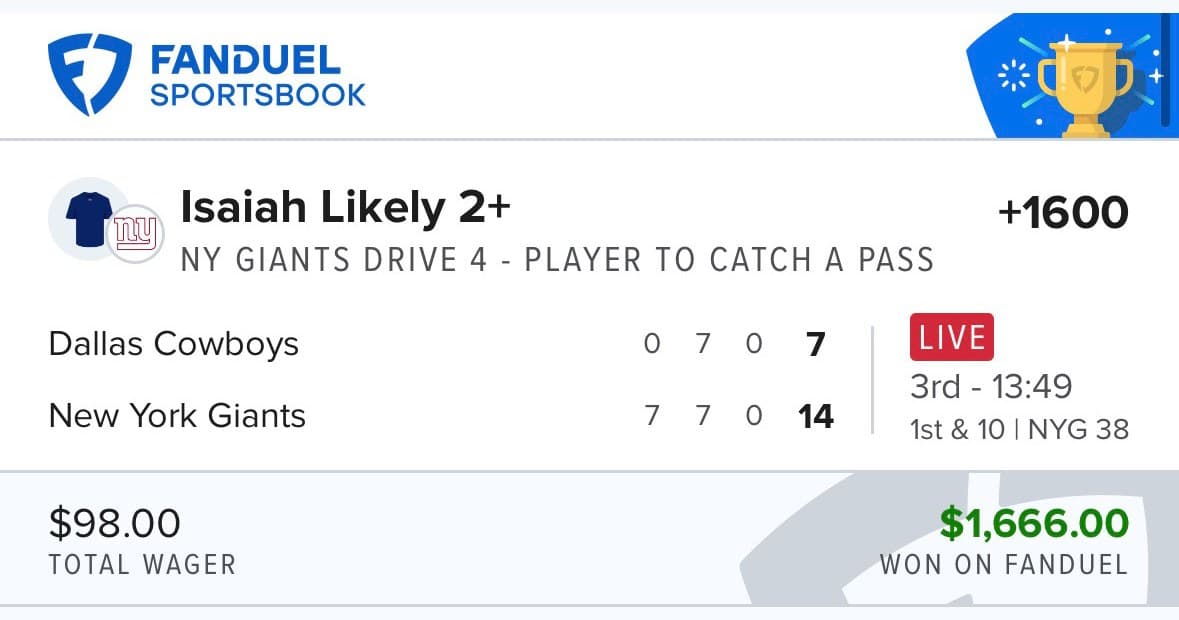
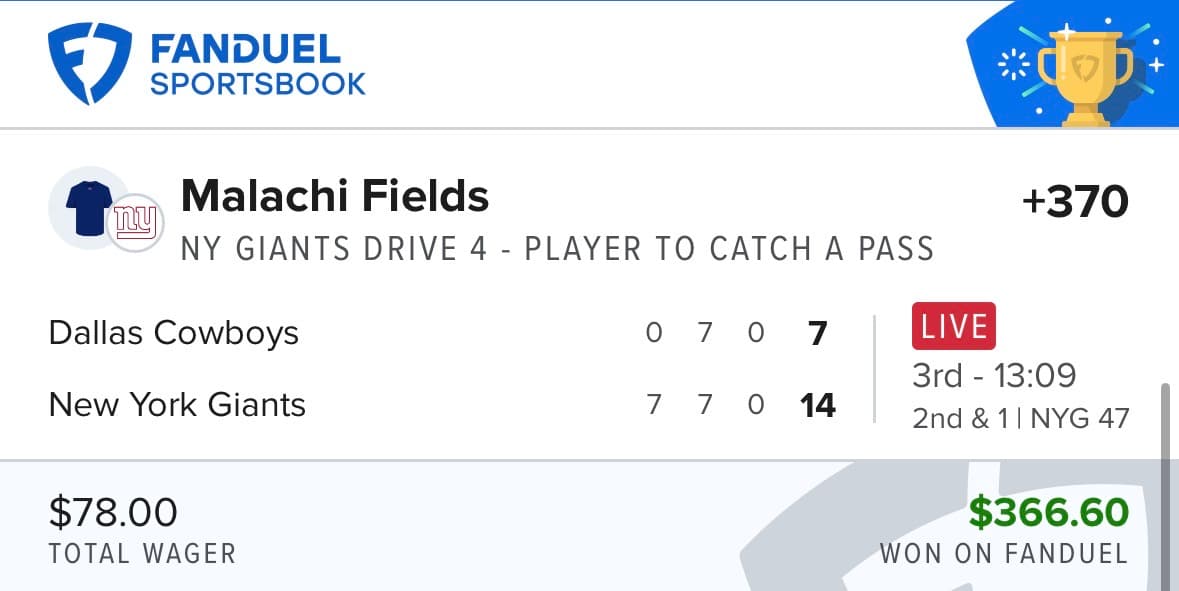
Live betting CLV is harder to measure because there is no single "closing line" inside a game — every live price is a snapshot. The applied substitute is "next-tick CLV": the difference between the price you bet and the live price 60 seconds later, after the next possession or pitch. Bettors who consistently beat the next-tick line by 1+ points on spreads or 5+ cents on moneylines are the ones books limit fastest. Live betting markets reprice slower than pregame markets, which is why next-tick CLV runs higher than pregame CLV for skilled bettors. Our football picks and NBA picks frameworks use live CLV as a primary input on in-game bets.
How Does CLV Differ Across Sports and Markets?
CLV magnitude differs across sports and markets because liquidity differs and information edges differ.
| Market | Typical Sharp CLV | Notes |
|---|---|---|
| NFL spreads | +0.3 to +0.5 points | Most efficient market, highest liquidity, smallest sustainable edges |
| NBA spreads | +0.5 to +1.0 points | Late lineup news creates regular CLV opportunities |
| MLB run lines | +5 to +10 cents | Pitcher and lineup variance widens window |
| NHL puck lines | +5 to +10 cents | Goalie news creates similar pattern to MLB pitcher news |
| Player props | +1.0 to +2.0 percentage points | Lower liquidity, slower repricing, larger sustainable edges |
| Live game spreads | +1.0 to +2.0 points | Slowest repricing, highest CLV magnitude |
The implication for the developing bettor is to start where CLV runs highest — props and live betting — rather than fighting for tenths of a point in NFL spreads, which is where the largest, sharpest pools concentrate. Our blog library covers each of these markets in deeper individual breakdowns.
What Are the Common CLV Tracking Mistakes?
Three CLV tracking mistakes reverse the metric's value:
1. Tracking final price instead of closing price. A line that closed at -3 but moved to -3.5 in the final minute before kickoff has a closing price of -3.5, not -3. Using the wrong reference price systematically over- or under-estimates CLV.
2. Tracking mid-week prices instead of close. A bet placed Tuesday on a Sunday NFL game has its CLV measured against the Sunday closing price, not the Tuesday line. Tracking against the Tuesday line misses six days of market evolution.
3. Ignoring market liquidity. A reduced-juice market or a low-limit prop market has a less informative closing line than a major-market spread or total. CLV in low-liquidity markets requires larger threshold magnitudes to indicate true edge.
Disciplined CLV tracking is the single most valuable habit a developing sports bettor can build, and the bettors who skip it almost always end up either overrating themselves on hot streaks or underrating themselves on losing streaks.
Related Strategy Reading
For deeper context on the angles covered above, our analysis of mlb fade the public betting strategy and sharp money public money line movement strategy pairs well with this guide; our sports picks reflect these same principles applied to live games.
Frequently Asked Questions
What is closing line value in sports betting?
Closing line value (CLV) is the difference between the price you bet and the price the same wager closed at before the event started. Positive CLV means you bet a better price than the close; negative CLV means a worse price. CLV measures whether you consistently beat the market consensus, and over hundreds of bets it predicts long-term profit far better than win-loss record because variance dominates short-term win-loss outcomes while CLV converges quickly.
How do I calculate CLV for a moneyline bet?
For a moneyline bet, calculate CLV by converting both your bet price and the closing price into implied probabilities, then subtracting. If you bet +120 (45.5% implied) and the line closed at +110 (47.6% implied), you have +2.1 percentage points of CLV. Implied probability differential is the cleanest cross-market metric because it works equally for moneylines, spreads, and totals once you convert each to implied probability.
Why is CLV more reliable than win-loss record?
CLV is more reliable than win-loss record because variance overwhelms win-loss for any sample under roughly 1,000 wagers. A 53% true-rate spread bettor has a 1-in-4 chance of being below 50% over 100 bets. CLV stabilizes within 200 bets and shows the bettor's true edge regardless of variance. Bettors who track only win-loss either overrate themselves on short-term winning streaks or underrate themselves on losing streaks; CLV tracking removes that error.
What is a good CLV target for a serious sports bettor?
A consistent +1% to +2% implied-probability CLV across 500+ bets indicates real edge. Sharps in major U.S. spread and total markets typically run +0.5% to +1.5%. Above +2% CLV at scale, sportsbooks usually limit or ban the bettor within a season. Below +0.5% CLV, the bettor is roughly breakeven against the market and will lose long-term to juice. Aim for +1% as a baseline and treat anything above +1.5% as a strong signal.
How does CLV apply to live betting?
Live betting CLV is measured as next-tick CLV — the difference between your bet price and the live price 60 seconds later, after the next possession or pitch. Live markets reprice slower than pregame markets, so skilled bettors typically run higher next-tick CLV than pregame CLV. The Best Bet on Sports has been limited on all six major U.S. sportsbooks largely because of consistent live-betting CLV at scale.
Can a bettor be losing money but still have positive CLV?
Yes — a bettor losing money over 100 to 300 bets can absolutely have positive CLV, and that bettor is statistically very likely to be profitable over 1,000+ bets. The reverse is also true: a bettor winning money over 100 to 300 bets with negative CLV is statistically very likely to be unprofitable over 1,000+ bets. CLV is the leading indicator of edge; win-loss is the lagging, variance-dominated indicator of outcomes.
What is the most common CLV tracking mistake?
The most common CLV tracking mistake is using the wrong reference price — tracking the price at the time the bet was placed against the price at the same time the next day, instead of against the actual closing price the moment the event started. This systematically biases CLV measurement and produces false confidence or false alarm. The reference price must be the official close, captured by a price-tracking service or by manual snapshot at game start.
The Best Bet on Sports · 1.5M followers on TikTok
Sports Betting TikTok is the live betting account behind The Best Bet on Sports, covering NFL, NCAAF, NBA, NCAAB, MLB and WNBA markets in real time. The account has been limited on all six major U.S. sportsbooks — FanDuel, DraftKings, Caesars, BetMGM, Fanatics and ESPN BET — for winning on live betting, with $367,520 in verified profit since 2005. View full profile →
Past results do not guarantee future performance. Must be 21 or older to wager.
Related Articles
Should Pick Service Bets Have Their Own Bankroll?
The 2026 NFL Rule Changes That Move Live Betting Numbers
Do Parlay Legs Include Overtime? How Each Leg Settles
What If a Live Pick Is on the Other Side of Your Bet?
Why Being Good at Fantasy Football Doesn't Make You Good at Betting
The 300-to-1 Rule: Why Your Parlay Pays Less Than the Slip Says
Get real live betting picks
From $39.95/mo · Cancel anytime · Email + Discord delivery
● Get The Picks
Choose your package
Tap any tier below to select · Subscribe in one tap
👇 Tap any package to select it
✓ You're selecting
25 Units · $99.95/month
25 unit picks per month. Sweet spot for most bettors — plenty of action without going all-in.
- ✓25 live betting selections/month
- ✓Email + Discord delivery
- ✓All sports (NFL, NCAAF, NBA, NCAAB, MLB)
- ✓Mix of 1, 2, 3, 5-unit rated plays
- ✓Cancel anytime
Secure PayPal · Cancel anytime · No hidden fees · 21+ · +$367K verified
+$367,520 verified · Limited on 6 sportsbooks · 20 years documented · See Proof
Join Our Newsletter
Get free expert sports picks and analysis delivered weekly.