Middling Sports Bets Explained: How to Catch a Middle April 2026

Middling in sports betting means placing wagers on opposite sides of the same game at different lines so both bets can win when the result falls between the two numbers. April 2026 sportsbook line movement creates regular middling opportunities in NFL, NBA, and MLB markets, especially when sharp money moves a key number after early limits open.
Middling in sports betting means placing wagers on opposite sides of the same game at different lines so that both bets can win if the final result falls between the two numbers. The Best Bet on Sports has built a $367,520 verified profit across 20+ years partly by recognizing middling opportunities when line movement opens a window between two priced numbers — particularly around NFL key numbers like 3, 7, and 10. Middling is not arbitrage; it requires a result inside a specific range, but when the middle hits, the bettor wins both sides simultaneously and pockets the full payout on each.
Middling is one of the most misunderstood concepts in sports betting. Most casual bettors confuse it with arbitrage — the practice of betting both sides of a game at different sportsbooks for a guaranteed small profit regardless of outcome. Middling is fundamentally different. In a middle, the bettor risks a small amount (the vig on the losing side) for a much larger payout if the result lands inside a specific range. It's a directional, range-targeted strategy rather than a risk-free play, and the math requires understanding implied probabilities, key numbers, and how line movement creates the windows in the first place.
For experienced bettors, middling becomes a natural extension of line shopping. Once you have accounts at multiple sportsbooks and you're already comparing prices, the small additional discipline of identifying middle windows produces several profitable spots per month across NFL, NBA, MLB, and college sports. The key is understanding when to take the middle, when to walk away, and how to size both legs so that a hit produces a meaningful gain without overcommitting bankroll on the leg that might lose.
What Middling Actually Means
A middle exists when two sportsbooks offer different lines on the same game and the gap between those lines creates a range of outcomes where both bets win. The classic NFL example: a bettor takes the favorite at -2.5 on Monday morning when the line first opens, then watches the line move to -3.5 by Sunday morning as sharp money pushes through. At that point, the bettor takes the underdog at +3.5. If the favorite wins by exactly 3, both bets cash. The favorite covered -2.5; the underdog covered +3.5; the bettor wins both legs.
The reason this is structurally different from arbitrage: arbitrage produces a guaranteed small profit regardless of outcome. Middling produces a loss equal to the vig on the losing side most of the time, but produces a much larger gain when the middle hits. The expected value depends on the probability that the result lands inside the middle window. For NFL middles around the key number 3, that probability is roughly 9–10% per game. For NBA middles around totals, it's typically 4–6%. The math has to support the bet — paying a 4% loss 91% of the time only works if the middle hit produces a 41x return on the lost vig, which is what well-priced middles can deliver.
| Outcome | Probability | Result |
|---|---|---|
| Result inside middle window | 8–12% (NFL key numbers) | Both bets win — large profit |
| Result favors one side cleanly | 88–92% | One bet wins, one loses — small loss equal to vig |
Our NFL betting analysis tracks middling windows in real time during peak movement periods on Saturday and Sunday mornings. The cleanest spots come during sharp action that pushes through key numbers, which we'll cover in the next section.
Why NFL Key Numbers Create the Best Middling Spots
NFL scoring is concentrated around specific numbers. Roughly 15% of NFL games end with a margin of exactly 3 points. Roughly 9% end with a margin of exactly 7. Smaller but meaningful clusters exist at 6, 10, and 14. These key numbers create the structural foundation for NFL middling. When a line moves from -2.5 to -3.5, or from -6.5 to -7.5, the bettor who caught the early number and added the late number is sitting on a middle that includes one of those high-frequency outcomes.
The most valuable middles cross the 3-point window. A middle of -2.5 / +3.5 wins on every game decided by exactly 3 — and roughly 9 of every 100 NFL games end on that exact margin. The implied break-even rate for paying the vig 91% of the time is well below that 9% hit rate, which makes -2.5 / +3.5 middles structurally profitable when both legs are available at standard -110 prices.
The next-best NFL middles cross the 7-point window. A middle of -6.5 / +7.5 wins on games decided by exactly 7 — about 8% of NFL outcomes. Slightly less common middles around 10 (1.5–2% hit rate) and 14 (under 1.5%) are usually too small to justify the risk unless the line move is unusually large.
Catching these windows requires moving early on one side and watching the market for the second leg. Bettors who only check lines at game time miss the early number entirely and never have the option to middle. The discipline is built around opening lines, sharp-money tracking, and patience — sometimes the second leg never appears, and the early bet stands alone.
How NBA and MLB Middling Differ from NFL
NBA and MLB middles work on similar principles but with different math. NBA point spreads don't cluster around key numbers the way NFL spreads do. There's no equivalent of the 3-point or 7-point margin frequency. NBA middling is therefore less common as a deliberate spread strategy and more common in the totals market.
NBA total middles emerge when an early line of 218.5 moves to 221.5 by tip-off. A bettor who takes the over at 218.5 and the under at 221.5 wins both legs if the game ends in the 219–221 range. The hit rate on a 3-point NBA total middle is typically 4–6%, which requires a wider gap between the prices and a larger middle window than NFL spreads to be profitable.
MLB middling shows up most often in the run line and totals markets. The fixed -1.5 / +1.5 run line doesn't create traditional middles, but the moneyline alongside the run line can produce structurally similar opportunities when the bettor takes the favorite moneyline at one book and the underdog +1.5 at another. The win-by-exactly-1 outcome — roughly 28% of MLB games — creates the middle. This is one of the higher-hit-rate middling structures available across all sports, though the payout is smaller because both legs are typically priced near even money.
Our MLB picks team and NBA betting analysis flag middle opportunities as part of daily release notes. The cleanest spots come when sharp action moves a line through a key number, opening a window that didn't exist when the early bet was placed.
When Middling Is Worth It and When It Isn't
Middling is profitable when the implied break-even rate is below the actual hit rate of the middle window. The math requires three inputs: the price on each leg, the size of the middle window, and the historical frequency of outcomes inside that window for the relevant sport.
A clean NFL middle of -2.5 / +3.5 at -110 / -110 prices breaks even at roughly a 4.55% hit rate. NFL games decided by exactly 3 hit at roughly 9–10%. The expected value is positive by a meaningful margin. A worse NFL middle — say -3 / +3 with a hook on one side — has a much lower hit rate (only games landing exactly on 3 with a push outcome on one leg) and breaks even only when both legs are priced at plus money.
The middles to avoid are the ones with windows that don't include key numbers. A -4 / +5 middle in the NFL only hits if the favorite wins by exactly 4. Roughly 4% of NFL games end on that margin. If the prices don't reflect that low hit rate, the bet loses money long-term despite the appearance of a "middle opportunity." Discipline here means understanding the underlying frequencies, not just identifying any gap between two lines.
The other category to avoid: middles that require both legs to be placed at the same sportsbook. Sportsbooks identify and restrict middling activity quickly. We are limited on all six major U.S. sportsbooks (FanDuel, DraftKings, Caesars, BetMGM, Fanatics, and ESPN BET) partly because our long-term win rate triggers automatic restrictions across the industry. Spreading middling activity across multiple books — and varying bet sizes — is part of avoiding the obvious patterns that flag accounts.
Sizing Both Legs of a Middle
The naive approach is to bet equal amounts on both sides. That's usually not optimal. The right size depends on the price of each leg and the bettor's view on each side independently. If the early bet was placed because the bettor genuinely liked the side at the opening number, the second leg is added not as an equal-weight hedge but as a smaller position designed to capture the middle window without giving up too much expected value on the original directional view.
A common structure: 1 unit on the early side at -110, then 0.85–0.95 units on the late side at -110 once the line has moved. The middle hits if the result falls in the window — both legs cash for a profit of roughly 1.7 units (1.91 winnings on each side minus the slight imbalance). If the result falls cleanly on one side, the loss is the vig on the losing leg, typically 0.05–0.10 units. The trade is small frequent losses for occasional larger wins.
For bettors who don't want to hold a directional view at all, equal-weight sizing produces a near-zero loss on the misses and a 0.91-unit profit on the hits — a pure middle play with no embedded directional opinion.
Our [education content covers sizing decisions across spread, total, and moneyline markets in NFL, NBA, MLB, college football, and college basketball. The sizing framework changes by sport because the hit rates and key-number distributions differ.
Our coverage of middling and scalping for a locked edge walks through how this plays out in practice.
Middling vs. Hedging: The Important Distinction
Middling and hedging are often confused. Hedging means reducing risk on an existing bet by placing a counter-bet that locks in profit or limits loss. The hedge typically guarantees a smaller positive or limits a downside, regardless of outcome. Middling is the opposite intent: the bettor accepts a small loss most of the time in exchange for a potentially large win when the middle hits.
A futures bettor with a 100-1 long-shot one game from cashing might hedge by betting the opposing finalist for a guaranteed payout regardless of the result. That's hedging — locking in profit. A spread bettor who placed -2.5 on Monday and adds +3.5 on Sunday isn't locking in profit; he's accepting a small loss most of the time for the chance at a large win when the game lands on 3. That's middling — opening exposure to a specific range, not closing exposure.
Both strategies have their place. Hedging is appropriate when the existing bet has appreciated dramatically (a futures ticket, a parlay one leg from cashing, a halftime live position). Middling is appropriate when the line has moved through a key number and a structurally profitable window exists. Confusing the two leads to over-hedging — locking in small profits when the original bet had positive expected value left to capture.
Frequently Asked Questions
What is middling in sports betting?
Middling is the practice of placing wagers on opposite sides of the same game at different lines, so both bets win if the final result falls between the two numbers. Unlike arbitrage, middling does not produce a guaranteed profit on every outcome — most of the time, one bet wins and the other loses, costing the bettor the vig. But when the middle hits, both bets cash, producing a much larger payout than either single bet would have returned.
How is middling different from arbitrage?
Arbitrage guarantees a small profit on every outcome by betting both sides at sportsbooks offering inconsistent prices. Middling does not guarantee a profit — it produces a small loss most of the time and a large win when the result lands inside a specific range. Middling has higher upside per hit, lower frequency, and requires understanding the probability of outcomes in the target range. Arbitrage requires only that the prices on the two sides combine to a sub-100% implied probability total.
What's the most profitable type of NFL middle?
NFL middles around the key number 3 are structurally the most profitable. A -2.5 / +3.5 middle wins whenever the favorite wins by exactly 3 — roughly 9–10% of NFL games. At standard -110 / -110 pricing, that hit rate produces clearly positive expected value. The next-best NFL middle is -6.5 / +7.5 around the 7-point key number, with an 8% hit rate. Middles that don't cross key numbers are usually unprofitable.
How do I find middling opportunities?
Middles emerge when sharp action moves a line through a key number after the bettor has already placed a bet at the early line. The discipline involves placing early bets when value first appears, then monitoring the same game across multiple sportsbooks for the opposing side at a moved number. Line shopping accounts at multiple books are essential — middles rarely exist at a single sportsbook for long because books reprice quickly to close the window.
Can sportsbooks limit me for middling?
Yes. Sportsbooks identify and restrict middling activity quickly because consistent middling implies the bettor is beating the closing line. We are limited on all six major U.S. sportsbooks partly because of this kind of long-term winning behavior. Spreading bets across multiple books, varying bet sizes, and not always immediately closing both legs of every middle opportunity are common practices for keeping accounts open longer.
How much should I bet on each leg of a middle?
The simplest sizing is equal weight on both legs, which produces a near-zero loss on misses and a moderate profit on hits. More advanced sizing involves placing a slightly larger amount on the leg the bettor genuinely likes directionally and a smaller amount on the second leg to capture the middle window. The optimal sizing depends on price, hit rate, and the bettor's directional view on the original side.
How can I subscribe to The Best Bet on Sports?
Daily picks across NFL, NCAAF, NBA, NCAAB, MLB, and WNBA — including line-movement notes that flag middling opportunities — are delivered by email and Discord. Membership tiers and pricing are listed on our subscription page. Every pick is time-stamped and tracked to the verified results page, which documents our $367,520 profit record across 20+ years of operation since 2005.
The Best Bet on Sports · 1.5M followers on TikTok
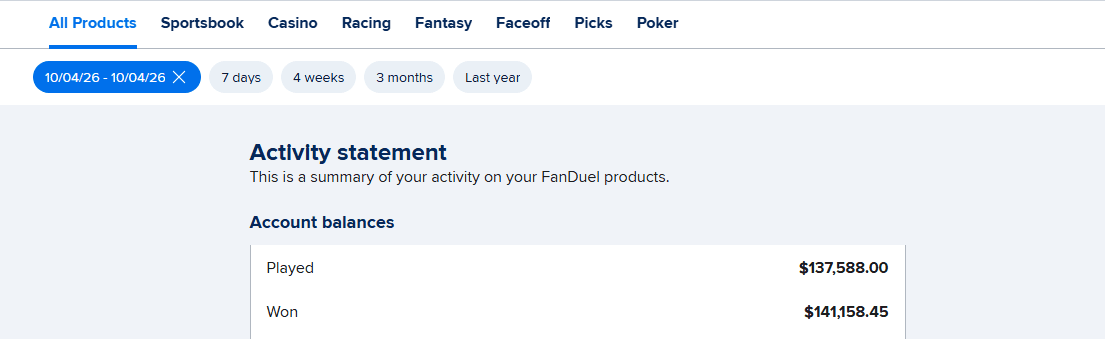
Sports Betting TikTok is the live betting account behind The Best Bet on Sports, covering NFL, NCAAF, NBA, NCAAB, MLB and WNBA markets in real time. The account has been limited on all six major U.S. sportsbooks — FanDuel, DraftKings, Caesars, BetMGM, Fanatics and ESPN BET — for winning on live betting, with $367,520 in verified profit since 2005. View full profile →
Past results do not guarantee future performance. Must be 21 or older to wager.
Related Articles
Power Ratings in Sports Betting Explained: How Teams Are Numerically Rated
Line Shopping in Sports Betting: How to Find the Best Number Every Time
Hedging Futures Bets in Sports Betting: When to Lock Profits April 2026
Kelly Criterion for Sports Betting: Optimal Bet Sizing Explained
Line Shopping in Sports Betting: How to Find the Best Odds Every Time
Key Numbers and Parlays: The Three-Point Problem
Get real live betting picks
From $39.95/mo · Cancel anytime · Email + Discord delivery
● Get The Picks
Choose your package
Tap any tier below to select · Subscribe in one tap
👇 Tap any package to select it
✓ You're selecting
25 Units · $99.95/month
25 unit picks per month. Sweet spot for most bettors — plenty of action without going all-in.
- ✓25 live betting selections/month
- ✓Email + Discord delivery
- ✓All sports (NFL, NCAAF, NBA, NCAAB, MLB)
- ✓Mix of 1, 2, 3, 5-unit rated plays
- ✓Cancel anytime
Secure PayPal · Cancel anytime · No hidden fees · 21+ · +$367K verified
+$367,520 verified · Limited on 6 sportsbooks · 20 years documented · See Proof
Join Our Newsletter
Get free expert sports picks and analysis delivered weekly.