Line Shopping in Sports Betting: How to Find the Best Number Every Time

Line shopping in sports betting means comparing odds across multiple sportsbooks to find the best available number before placing any bet. Consistently getting even half a point better on spread bets — or 5 cents better on moneylines — adds 1-3 units of expected value per season without changing a single pick. It is the single highest-return improvement most bettors can make with no additional analytical work.
Line shopping in sports betting means systematically comparing odds across multiple sportsbooks before placing any bet, ensuring you receive the best available number rather than accepting whatever one book offers. Consistently getting half a point better on spread bets — or 5 cents better on moneylines — adds 1–3 units of expected value per season without changing a single pick. Line shopping is the single highest-return improvement most bettors can make without any additional analytical work. It is not optional for serious bettors; it is a baseline competency.
Most bettors understand intuitively that their picks need to be right to be profitable. Fewer understand that the price they receive on each pick — the number and the vig — is equally determinative of long-term results. A bettor who wins 55% of their plays but consistently takes -115 instead of -105 earns less than a bettor who wins 53% and consistently finds the best available price. Execution on pricing is as important as execution on analysis.
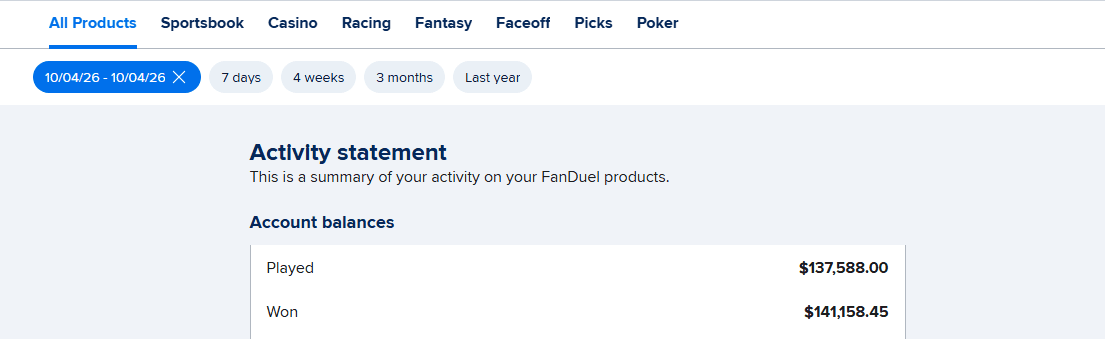
The Best Bet on Sports has documented this principle across 20+ years of operation: the difference between a profitable system and a breakeven system often comes down to line discipline rather than analytical edge. Our verified +$367,520 sportsbook profit record would not be possible without disciplined shopping across the full spectrum of available books.
What Line Shopping Actually Is
Line shopping is the practice of checking odds at multiple sportsbooks before placing a bet and selecting the book offering the best combination of line and vig for your side of the bet.
It is not complicated in concept. In practice, it requires:
1. Active accounts at multiple sportsbooks with funded balances 2. A process for comparing lines quickly before they move 3. Discipline to always check before betting, not sometimes
The friction of step 1 — maintaining funded accounts at multiple books — is the primary reason most bettors do not shop lines consistently. It requires managing multiple apps, tracking balances across accounts, and occasionally moving funds between books. Most casual bettors decide this is too much work. It is exactly this friction that creates the opportunity for disciplined bettors to capture price advantages consistently.
For access to picks delivered with specific book recommendations and exact line targets, see The Best Bet on Sports buy page.
The Mathematics of Half a Point
The single most consequential line shopping edge in spread betting is the value of a half point at key numbers. In NFL betting, key numbers are 3 and 7 — the margins of a field goal and a touchdown. An estimated 15% of all NFL games end with a final margin of exactly 3 points and approximately 9% end with a margin of exactly 7 points.
What this means mathematically:
If you consistently bet favorites at -3 versus -3.5, you win every game where the favorite wins by exactly 3 points — roughly 7.5% of all favorites covering games. Instead of a loss (if you had -3.5), you get a push. Converting a loss to a push is equivalent to gaining approximately 0.6 units of expected value per bet at -110 odds.
At 200 NFL bets per season, capturing half a point at key numbers on 20% of those bets (40 bets) across the key numbers of 3 and 7 is worth approximately 24 units of expected value — earned purely from line shopping rather than analytical accuracy.
| Scenario | Win Rate Required to Break Even | With Line Shopping Advantage |
|---|---|---|
| Flat -110 on all bets | 52.4% | — |
| Average +0.5 point per bet | ~51.5% effective | ~52.4% baseline feels like ~53.5% |
| Average +1 point per bet | ~50.6% effective | Significant breakeven reduction |
| Average -5 cents less vig | 51.5% | Effectively same as above |
These numbers compound over time. A bettor who saves 0.5 points per bet across 500 annual bets is accumulating a pricing advantage worth several units of expected value before accounting for any analytical edge.
How Lines Differ Between Sportsbooks
Not all sportsbooks carry the same line or the same vig on the same game. Differences arise from:
Sharp action: When sharp (professional) bettors hit one sportsbook with significant action, that book moves its line before other books react. The result is temporary line divergence — one book may have a team at -3 while another still shows -3.5.
House opinion: Some sportsbooks set their own lines based on proprietary models. Others copy a leader book or use consensus pricing. Books with proprietary models sometimes set lines that diverge from consensus, creating exploitable differences.
Reduced juice options: Some sportsbooks offer reduced vig products — -105/-105 instead of -110/-110. Over a full season, betting -105 instead of -110 reduces the breakeven threshold from 52.4% to 51.2%, an improvement of 1.2 percentage points applied to every single bet.
Opening versus closing lines: Books open lines at different times and sometimes hold early lines longer than others. Sharp bettors who move the line at the primary sharp book may take several hours to move the line at secondary books.
The Six Major Sportsbooks: What Each Offers
For most U.S. sports bettors, the primary lineup of available sportsbooks includes FanDuel, DraftKings, Caesars, BetMGM, Fanatics, and ESPN BET. Each has distinct characteristics relevant to line shopping:
FanDuel: Generally the largest U.S. sportsbook by handle, known for sharp early lines. Often the first to move on sharp action.
DraftKings: High volume, competitive lines, strongest promotional offers. Lines frequently match FanDuel but not always simultaneously.
Caesars: Known for elevated max bet limits and competitive line movement. Sometimes holds lines slightly longer than competitors.
BetMGM: Proprietary line-setting in some markets, which creates divergence opportunities. Active promotional market.
Fanatics: Growing operation with competitive prices in select markets. Best-number opportunities often found here during high-volume games.
ESPN BET: Penn Interactive product with unique promotional structure. Lines sometimes diverge from consensus, particularly in early morning posting.
Having accounts funded at all six provides access to the full spectrum of available prices on every bet. The Best Bet on Sports team has been limited on all six of these sportsbooks for sustained winning at live betting — a direct result of the pricing discipline we apply across every market we participate in.
For all-season picks with specific book guidance, see The Best Bet on Sports NFL picks, NBA picks, and MLB picks.
Moneyline Line Shopping: The Cents Game
On moneyline bets, the comparison unit is cents rather than points. A -180 moneyline at one book versus -170 at another represents a 5-cent edge that compounds significantly over volume.
At -180, you risk $180 to win $100. At -170, you risk $170 to win $100. On 50 bets per season at this price range, the difference is $500 in total risk on identical expected outcomes — money that goes directly to additional betting capital rather than sportsbook margin.
Underdogs offer even more dramatic line shopping opportunities. A +155 underdog at one book versus +165 at another means you win $10 more per $100 wagered on every winning bet. On a 40% win rate underdog with 30 bets at this price, the annual difference is $120 pure edge from line shopping alone.
The sports handicappers team at The Best Bet on Sports provides specific book recommendations with every moneyline pick — not just the side, but where to get the best available price.
Timing and Speed: The Practical Execution of Line Shopping
Effective line shopping requires speed. Lines move quickly after sharp action, injury news, or consensus line movements across the market. A price comparison that is meaningful at 9 AM may be irrelevant by 11 AM if significant action has moved all books to the same number.
Practical execution framework:
1. Check all six books simultaneously: Open the apps or comparison site and note the line and vig at each book for your target bet 2. Identify the best price: Determine which combination of line and vig offers the most favorable expected value 3. Act immediately: Place the bet at the best book without delay. Hesitation invites line movement 4. Record your results: Track which book offered the best price for your bet type and sport. Patterns emerge over time — some books consistently shade specific sports in your favor
The results page at The Best Bet on Sports demonstrates what a disciplined pricing approach contributes to long-term verified profitability over a 20+ year sample.
Middle Opportunities: When Line Shopping Creates Profit Regardless of Outcome
The most extreme form of line shopping benefit is a "middle" — when two books have diverged sufficiently on the same game that you can bet opposite sides and win both if the final score falls within the range between the two numbers.
Classic example: Book A has Team X -3, Book B has Team X -4. You bet Team X -3 at Book A and the opponent +4 at Book B. If Team X wins by exactly 4, your -3 bet wins and your +4 bet pushes. If Team X wins by exactly 3, your -3 bet pushes and your +4 bet wins. The middle — a 1-point window in this case — is available at no analytical cost, purely from the line discrepancy between books.
Middles are rare in efficient markets but appear most frequently: (1) in the hours after a sharp bet moves one book before others react; (2) on futures and props where books set lines independently; and (3) on spread totals at the key numbers of 3 and 7 in NFL betting, where the distribution of final margins is concentrated.
For betting education content, strategy guides, and daily analysis, visit the full blog at The Best Bet on Sports.
Related Strategy Reading
For deeper context on the angles covered above, our analysis of sharp money reverse line movement betting guide and closing line value sports betting guide pairs well with this guide; our sports picks reflect these same principles applied to live games.
Frequently Asked Questions
What is line shopping in sports betting?
Line shopping is the practice of comparing odds across multiple sportsbooks before placing a bet to find the best available price. It means never accepting the first line you see without checking competitors. The goal is to consistently get a slightly better number (half a point better on spreads, 5–10 cents better on moneylines, or lower vig) that compounds into significant expected value advantage over a full season of betting.
How much can line shopping improve my betting results?
Consistent line shopping adds approximately 1–3 units of expected value per season without changing a single pick. The exact improvement depends on how many bets you place, what markets you focus on, and how disciplined your comparison process is. In NFL spread betting, getting half a point better on key numbers (3 and 7) is worth the most per bet. In moneyline markets, the cents comparison matters most. Over a 500-bet season, a consistent half-point advantage across 20% of bets is worth approximately 24 units of expected value.
How many sportsbooks do I need for effective line shopping?
The minimum effective lineup is four sportsbooks with funded balances; the optimal lineup is all six major U.S. books: FanDuel, DraftKings, Caesars, BetMGM, Fanatics, and ESPN BET. Each book sets certain market lines slightly differently, meaning the best price rotates between books depending on the sport, game, and time of day. Having all six available ensures you can always find the best available number rather than being constrained by the offerings of a single book.
What is a middle in sports betting?
A middle occurs when two sportsbooks have diverged on the same game line sufficiently that you can bet opposite sides and have a scenario where both bets win. For example, if one book has Team A -3 and another has Team A -4, betting Team A -3 and the opponent +4 creates a middle — if Team A wins by exactly 4, one bet wins and the other pushes. Middles require a sufficiently large line discrepancy and are most common in NFL betting at the key numbers of 3 and 7.
Why do different sportsbooks have different lines?
Lines differ between sportsbooks due to different opening processes, different responses to sharp action, different public bet distributions, and different house opinions. When sharp bettors place large bets at one book, that book moves its line while others may not have moved yet — creating temporary divergence. Some books also set their own independent opening lines based on proprietary models, which creates systematic differences from consensus. These differences are the source of line shopping opportunities.
Is line shopping considered illegal or against the rules?
Line shopping is completely legal and involves no rule violations. It simply means using multiple legitimate sportsbooks to find the best available price, which is the same practice used in any competitive consumer market. Sportsbooks may eventually limit or restrict accounts that consistently take the best price on sharp lines, but this is a business decision by the book, not a legal or rule violation by the bettor. Maintaining accounts at multiple books and shopping lines is standard practice for all serious bettors.
How do I track which sportsbooks offer the best lines for my sports?
Track every bet you place, including the book used, the line obtained, and the lines available at alternative books at the time of placement. Over 50–100 bets in a specific sport, patterns emerge showing which books consistently shade their lines in your favor. Dedicated line comparison services aggregate current odds across multiple books in real time, which simplifies the comparison process. The most efficient approach is to check a comparison aggregator first, then open the specific book app to place the bet at the best price identified.
The Best Bet on Sports · 1.5M followers on TikTok
Sports Betting TikTok is the live betting account behind The Best Bet on Sports, covering NFL, NCAAF, NBA, NCAAB, MLB and WNBA markets in real time. The account has been limited on all six major U.S. sportsbooks — FanDuel, DraftKings, Caesars, BetMGM, Fanatics and ESPN BET — for winning on live betting, with $367,520 in verified profit since 2005. View full profile →
Past results do not guarantee future performance. Must be 21 or older to wager.
Related Articles
Power Ratings in Sports Betting Explained: How Teams Are Numerically Rated
Middling Sports Bets Explained: How to Catch a Middle April 2026
Line Shopping in Sports Betting: How to Find the Best Odds Every Time
Kelly Criterion for Sports Betting: Optimal Bet Sizing Explained
The 2026 NFL Rule Changes That Move Live Betting Numbers
Why Being Good at Fantasy Football Doesn't Make You Good at Betting
Get real live betting picks
From $39.95/mo · Cancel anytime · Email + Discord delivery
● Get The Picks
Choose your package
Tap any tier below to select · Subscribe in one tap
👇 Tap any package to select it
✓ You're selecting
25 Units · $99.95/month
25 unit picks per month. Sweet spot for most bettors — plenty of action without going all-in.
- ✓25 live betting selections/month
- ✓Email + Discord delivery
- ✓All sports (NFL, NCAAF, NBA, NCAAB, MLB)
- ✓Mix of 1, 2, 3, 5-unit rated plays
- ✓Cancel anytime
Secure PayPal · Cancel anytime · No hidden fees · 21+ · +$367K verified
+$367,520 verified · Limited on 6 sportsbooks · 20 years documented · See Proof
Join Our Newsletter
Get free expert sports picks and analysis delivered weekly.