Sharp Money and Reverse Line Movement: Betting Guide

Sharp money in sports betting refers to wagers placed by professional bettors whose action consistently forces sportsbooks to move lines regardless of where public betting percentages point. Reverse line movement — when a line moves opposite the direction public money would suggest — is the clearest signal that sharp money has entered a market and the book is adjusting to professional action rather than recreational volume. Understanding these dynamics and identifying when sharp money is driving line movement is one of the most valuable skills any bettor can develop.
Sharp money in sports betting refers to wagers placed by professional or highly sophisticated bettors whose action consistently forces sportsbooks to move lines, regardless of where public betting percentages are pointing. Reverse line movement — when a line moves opposite the direction public money would suggest — is the clearest signal that sharp money has entered a market. Understanding these dynamics is one of the most valuable skills any sports bettor can develop.
I've been writing about professional betting strategy for over 20 years, and nothing generates more questions from newer bettors than sharp money. How do you identify it? What does reverse line movement actually mean? Can you replicate it? This is Sports Betting TikTok, the live betting account behind The Best Bet on Sports, and in this guide I'm going to break down everything I've learned about following smart money — and why it's more nuanced than most articles make it sound.
Our team at The Best Bet on Sports has been operating across six sportsbooks since 2005, and the way lines move between FanDuel, DraftKings, Caesars, Fanatics, BetMGM, and ESPN BET has changed dramatically over that time. Understanding sharp money flow is central to how we identify value — and it's something I want every one of our readers to understand, whether they're getting picks from our team or building their own analysis.
---
What Is Sharp Money in Sports Betting?
Sharp money is betting action placed by bettors with demonstrated long-term profitability — professionals, syndicates, or sophisticated recreational bettors who have enough volume and accuracy to consistently beat the closing line. Sportsbooks track these bettors carefully. When a known sharp account places a bet, books often move the line immediately to protect themselves — even if that account represents a fraction of the total dollar volume on that game.
This is the fundamental dynamic that creates reverse line movement: a book can take $500,000 from the public on Team A and still move the line toward Team B if a sharp syndicate puts $50,000 on Team B. The books aren't line-managing based on dollar volume alone — they're managing based on whose dollars are historically accurate.
How Do Sportsbooks Identify Sharp Bettors?
Sportsbooks use sophisticated account profiling systems that track win percentage, closing line value (CLV), and bet timing across thousands of wagers. Bettors who consistently buy tickets early, beat the closing line, and have win rates above 53% are flagged as sharp. Their action triggers immediate line movement regardless of how much public money is on the other side.
This is also why sharp bettors get limited. Our article on why sportsbooks limit winning bettors covers this in full — but the short version is that identified sharps face limits of $200-$1,000 per game at most major books, forcing them to operate across many accounts and many platforms simultaneously.
---
What Is Reverse Line Movement and How Do You Spot It?
Reverse line movement (RLM) occurs when a betting line moves in the opposite direction from where the majority of public bets are going. If 73% of public bets are on Team A but the line moves from -3 to -2.5 (in favor of Team B), that's a classic RLM signal.
| Scenario | Public % on Team A | Line Movement | Interpretation |
|---|---|---|---|
| Normal movement | 65% | -3 to -3.5 | Public is moving the line, no sharp signal |
| Reverse line movement | 65% | -3 to -2.5 | Sharps on Team B, fading public |
| Strong RLM signal | 75%+ | -3 to -2 | Heavy sharp action on Team B |
| Neutral | 50-55% | -3 to -3 | No significant action either side |
| False RLM | 60% | -3 to -2.5 | Book managing liability, not sharp signal |
The key caveat — and this is where most casual bettors get burned — is that RLM data alone is not a betting system. It's a signal. Books sometimes move lines to balance liability rather than in response to sharp action. A line move on a divisional rivalry game is far more likely to reflect true sharp action than a line move on a random mid-week college basketball game where the book may be managing exposure.
How Reliable Is Reverse Line Movement as a Betting Signal?
In high-stakes, widely bet markets (NFL, NBA, major college football), genuine RLM carries a meaningful edge. Studies across hundreds of seasons of NFL data suggest that games showing clear RLM — 60%+ public on one side but the line moving toward the other side by 1+ points — resulted in the sharp side covering at roughly 54-56% over a large sample. That's not an earth-shattering edge, but it's real, consistent, and meaningful.
In lower-volume markets (college basketball mid-majors, regular-season NHL, WNBA), RLM signals are much noisier. Books move lines for all kinds of reasons in thin markets, and reverse movement is more often liability management than sharp signal.
---
How Do Steam Moves Differ From Regular Sharp Action?
A steam move is a fast, coordinated line movement that happens within a very short window — often 5 to 15 minutes — as multiple sharp accounts and syndicates bet the same side simultaneously at multiple books. Steam moves represent the most aggressive form of sharp action and produce some of the largest line swings you'll see outside of injury news.
How Can You Recognize a Steam Move in Real Time?
Steam moves are recognizable by their speed and uniformity. When a line moves from -3 to -4.5 in 10 minutes across all major books simultaneously — without any injury or lineup news — that's almost certainly a steam move. The coordination required for that kind of movement across FanDuel, DraftKings, Caesars, BetMGM, ESPN BET, and Fanatics simultaneously means a large, organized operation is behind it.
The challenge for retail bettors chasing steam: by the time you see the move has happened, you've missed the number. The professional sharps have already gotten on at -3. The retail chaser is betting -4.5. That's a full 1.5-point swing in expected value — which is often the entire edge the sharps identified in the first place.
The better use of steam move data is understanding the signal after the fact. A steamed number tells you which side the smart money wants. If you had already planned to be on that side, great — you got a good number before the move. If you hadn't, use the information to inform your other bets in that game (totals, props, live markets) rather than chasing the moved number.
---
Why Is Closing Line Value the Best Measure of Betting Quality?
Closing line value (CLV) is the difference between the line you bet and the line at game time. If you bet a team at -3 and the line closes at -5, you bought 2 points of value. Sustained positive CLV — consistently beating the closing line — is the single best predictor of long-term profitability in sports betting.
The reason: closing lines represent the most efficient, fully-incorporated price available. Every sharp bet, every steam move, every injury update has been baked in by game time. If you're consistently beating that number, you're consistently identifying value before the market does — which is the definition of an edge.
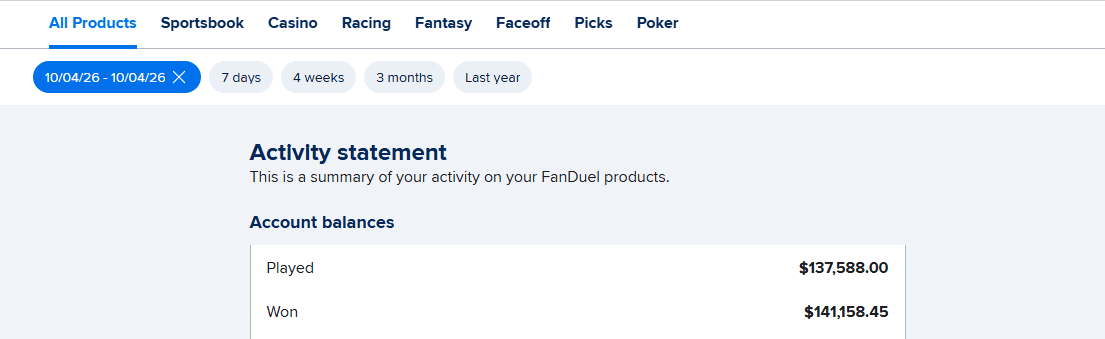
Our team at The Best Bet on Sports tracks CLV on every pick we release. Our 20-year verified record of +$367,520 across six books is directly tied to our ability to identify and bet value before lines fully adjust. You can see our full performance history on our results page.
How Do You Beat the Closing Line Consistently?
Beating the closing line requires getting your bets in early, before public money and injury news fully shape the number. Most sharp bettors bet 24-48 hours before game time, targeting opening lines that haven't fully incorporated the information their research has produced. Recreational bettors bet the morning of the game — by which point much of the early value has already been bet out of the market.
This is why line shopping across multiple sportsbooks is so critical. Different books open at different times and adjust at different rates. The same game might be -3 at one book and -3.5 at another for several hours, and identifying and acting on that difference is where professional-level edges live.
---
How Can Retail Bettors Use Sharp Money Concepts Practically?
For a bettor without access to professional syndicate data, here's how to incorporate sharp money concepts into your process:
1. Track opening lines vs. closing lines — free tools like Action Network and OddsShark show historical movement. Study which games had significant movement and which side covered. 2. Fade large public favorites in divisional/rivalry games — these matchups generate the most skewed public betting percentages and the most frequent sharp counter-action. 3. Look for splits where 70%+ of bets are on one side but the line is flat or moving against them — that's your RLM signal. 4. Shop for line differences across books — even without knowing where sharps are acting, buying the best number available is the retail bettor's equivalent of CLV management. 5. Focus on markets where public information is poorest — first-half totals, team-specific props, and live markets are where information gaps are largest.
For a foundational understanding of how lines are set and move, my article on how to read sports betting odds is a good starting point before diving deeper into sharp money concepts.
---
What Sports Have the Clearest Sharp Money Signals?
Sharp money signals are most reliable in high-volume, widely-bet markets. Here's how I rank the major sports for RLM clarity:
- NFL: Highest volume, most reliable RLM signals — the gold standard for sharp money analysis
- NBA: Very reliable in the playoffs; more noisy in the regular season due to rest management and injury ambiguity
- College Football: Reliable for major conference games; less so for mid-majors where public volume is thin
- MLB: Complex — daily games create abundant opportunities but also more noise, especially early season
- NHL: Reliable for playoff series prices; regular-season game lines have meaningful noise
For NFL betting and NBA betting, our team releases analysis that incorporates opening line movement, public betting percentages, and sharp action signals into our picks. That's part of why our model has been profitable across two decades.
---
How Does The Best Bet on Sports Incorporate Sharp Money Into Picks?
Our team's approach to line analysis goes beyond simply tracking public betting percentages. We monitor opening lines across all six of our active sportsbooks from the moment lines are posted, track movement patterns through the week, and cross-reference that movement with our own team's research on the specific matchup.
When our team's analysis and the sharp money signal align — when we like a team and we see RLM toward them — that's a strong play. When those signals diverge, we dig deeper before committing. This disciplined approach is one reason why our long-term results across NFL picks and NBA picks have been consistently above breakeven across a 20-year sample.
---
Frequently Asked Questions About Sharp Money Betting
What is sharp money in sports betting?
Sharp money refers to bets placed by professional or sophisticated bettors who have demonstrated long-term profitability. Their action is weighted more heavily by sportsbooks than public money, meaning even small sharp bets can move lines significantly.
What does reverse line movement mean?
Reverse line movement means the betting line moved in the opposite direction from where public betting percentages would suggest. For example, if 70% of bets are on Team A but the line moves from -3 to -2.5, sharp money is likely on Team B.
How do you find sharp money signals for free?
Free sources include Action Network, Bet Labs, and OddsShark, which show public betting percentages and line movement. Look for games where 65%+ of bets are on one side but the line has moved toward the other side since opening.
Is following sharp money a guaranteed winning strategy?
No. Sharp money signals produce a modest edge — roughly 54-56% against the spread in favorable conditions — not a certainty. Sharp money is one input in a broader analytical process, not a standalone system. Overrelying on any single signal, including RLM, leads to long-term losses.
What is a steam move in sports betting?
A steam move is a rapid, synchronized line movement across multiple sportsbooks caused by coordinated sharp betting from professional syndicates. Steam moves typically occur within 5-15 minutes and shift lines by 1-3+ points. They represent the strongest real-time sharp signal available.
Does public money ever win against sharp money?
Yes. Sharp money signals have roughly a 54-56% edge in favorable conditions, meaning the public side wins roughly 44-46% of those games. Short-term variance can easily produce stretches where the public side outperforms. Sharp money edges only manifest reliably over large samples.
How does closing line value relate to sharp money?
Closing line value (CLV) measures how much your bet price improved or worsened compared to the closing price. Sharp bettors consistently beat closing lines because they act on information before the market fully incorporates it. Tracking CLV is the best way to measure whether your own betting process is producing real edges.
The Best Bet on Sports · 1.5M followers on TikTok
Sports Betting TikTok is the live betting account behind The Best Bet on Sports, covering NFL, NCAAF, NBA, NCAAB, MLB and WNBA markets in real time. The account has been limited on all six major U.S. sportsbooks — FanDuel, DraftKings, Caesars, BetMGM, Fanatics and ESPN BET — for winning on live betting, with $367,520 in verified profit since 2005. View full profile →
Past results do not guarantee future performance. Must be 21 or older to wager.
Related Articles
Expert Sports Picks vs. the Nine-Leg Ticket Boom
NCAA Football Picks: The Injury Report You Might Not Get
Does a Pick Service Stop You From Learning to Bet?
Your Sportsbook's Bet History Is a Receipt, Not a Record
The 2026 Gambling Tax Change Makes Bet Volume Expensive
Can a Sportsbook Refuse to Pay You? What Actually Voids a Bet
Get real live betting picks
From $39.95/mo · Cancel anytime · Email + Discord delivery
● Get The Picks
Choose your package
Tap any tier below to select · Subscribe in one tap
👇 Tap any package to select it
✓ You're selecting
25 Units · $99.95/month
25 unit picks per month. Sweet spot for most bettors — plenty of action without going all-in.
- ✓25 live betting selections/month
- ✓Email + Discord delivery
- ✓All sports (NFL, NCAAF, NBA, NCAAB, MLB)
- ✓Mix of 1, 2, 3, 5-unit rated plays
- ✓Cancel anytime
Secure PayPal · Cancel anytime · No hidden fees · 21+ · +$367K verified
+$367,520 verified · Limited on 6 sportsbooks · 20 years documented · See Proof
Join Our Newsletter
Get free expert sports picks and analysis delivered weekly.