Power Ratings in Sports Betting Explained: How Teams Are Numerically Rated

Power ratings convert every team in a league into a single numerical strength score, and that number is the foundation of every point spread, total, and moneyline on every sportsbook. Understanding how power ratings are built, how they update through a season, and how to compare them to sportsbook numbers is the foundational analytical skill in sports betting. The Best Bet on Sports has built +$367,520 in verified profit using disciplined power rating work.
Power ratings are the single most important analytical foundation in sports betting, and most casual bettors have never built one. A power rating is a single numerical strength score for every team in a league — for example, the Chiefs as +6.5, the Bills as +5.0, the Jets as -3.0 — and it is the engine that drives every point spread, total, and moneyline on every sportsbook on Earth. Understanding how power ratings are built, how they update across a season, and how to compare them to the sportsbook's number is the difference between guessing and handicapping. The Best Bet on Sports has built +$367,520 in verified profit across more than two decades by running disciplined power rating work on every game we touch.
When a bettor looks at a Sunday slate of NFL games, the spreads, totals, and moneylines on the screen are all derivative numbers. They come from one source — the sportsbook's power rating set for the 32 teams, adjusted for home field, rest, weather, and injuries. Every line on the screen is two power ratings subtracted from each other, plus a few situational adjustments, plus a hold margin. If you understand how the underlying ratings are built, you can do the same math the sportsbook does, compare your number to theirs, and bet only when the gap is large enough to matter.
In this guide, Sports Betting TikTok walks through what power ratings are, how they are calculated, how they update through a season, how sportsbooks use them, and how disciplined bettors apply them to find value across spreads, totals, and moneylines.
What is a Power Rating?
A power rating is a single number that represents a team's expected scoring margin versus a league-average opponent on a neutral field. If the Chiefs are rated +6.5 and the Jets are rated -3.0, the implied spread on a neutral field is Chiefs by 9.5. Add a home field adjustment of roughly 1.5 to 3 points depending on the venue, and you have a fully-built point spread.
Every sport has its own scale:
- NFL power ratings typically range from +9 (elite team) to -9 (worst team), centered on 0.
- NBA power ratings typically range from +8 to -8, centered on 0, measured in points per 100 possessions for some shops and points per game for others.
- MLB power ratings convert to run lines and are typically expressed in expected runs per game versus a league-average opponent. The range is tighter — typically +0.6 to -0.6.
- NCAAF and NCAAB power ratings have wider ranges because the talent gap between top and bottom teams is larger than in pro leagues.
The power rating is the universal currency. Every other line on the sportsbook is built from it.
How Power Ratings Are Built
The basic recipe for a power rating uses three core inputs:
1. Margin of victory data. How much teams win and lose by, adjusted for opponent strength. 2. Strength of schedule. Who the team has played, weighted by those opponents' own power ratings. 3. Recency weighting. Recent games count more than older games, especially after roster changes or coaching adjustments.
The math, in plain terms, is an iterative loop. Start with every team rated at 0. Run each game through the formula — winner gains, loser loses, adjusted by margin and by current opponent ratings. After every team's full season is processed, re-run the loop using the new ratings as input. Repeat until the ratings stop changing meaningfully between loops. That's a basic power rating, and it converges in roughly five to ten iterations for a full season.
Layered on top of that base layer are situational adjustments — injuries, rest, travel, weather, motivation. Each adjustment is a measured point value applied to the rating before the spread is built. A starting quarterback injury is typically worth 3 to 7 points in the NFL. A back-to-back game on the road in the NBA is typically worth 1 to 2 points. A starting pitcher change in MLB is typically worth 0.20 to 0.50 runs.
How Sportsbooks Use Power Ratings
Every major U.S. sportsbook runs a proprietary power rating model. The model produces a "true line" — the line the sportsbook believes is fair. The posted line on the screen is the true line plus or minus a small hold margin. The book then watches betting action and shades the line based on which side is taking action and which side they want exposure on.
The bettor's job is not to beat the model. The bettor's job is to find spots where the model has it wrong — where the situational adjustments are mis-weighted, where the recency weighting is too slow or too fast, where the strength of schedule input is mis-calibrated. Those mis-pricings are where the edge in line shopping lives.
How to Build Your Own Power Rating
The four-step framework we use for every league we cover at The Best Bet on Sports:
Step 1: Pick a Base Model
The simplest base model is a margin-of-victory regression. Take every game in the season, regress on team identity, and the regression coefficients are your raw power ratings. The next step up is an Elo-style updating model where each game updates the two teams' ratings based on the result. Both work. Both are public-knowledge methods.
Step 2: Apply Recency Weighting
A team in week 12 of the NFL is not the same team it was in week 1. Injuries, schemes, and chemistry all evolve. The recency weight typically discounts older games by roughly 10 to 30% per month elapsed, depending on the sport. The exact weighting is a tuning parameter — too aggressive and the ratings are noisy, too slow and the ratings lag real team changes.
Step 3: Layer in Situational Adjustments
The published power rating is the base. The situational rating is the base plus the situational adjustments for the specific game. The most important situational inputs:
- Quarterback or starting pitcher availability
- Key skill position injuries
- Coaching changes since the rating was last updated
- Rest, travel, and back-to-back status
- Weather impact for outdoor sports
- Specific matchup advantages (pace, three-point variance, pitcher handedness)
Step 4: Compare to the Sportsbook Line
The whole point of the power rating is comparison. Your situational rating produces a spread. The sportsbook's situational rating produces a spread. The difference between the two is your edge per game. The rule of thumb our team has used for two decades is a 2-point gap in the NFL, a 2.5-point gap in college football, a 1.5-point gap in the NBA, and a 0.20-run gap in MLB. Smaller gaps than that are noise. Larger gaps than that are where the bet lives.
Why Power Ratings Are the Foundation Skill
Every advanced betting concept — closing line value, expected value calculation, Kelly criterion bet sizing — assumes you can produce a number better than the sportsbook's number. The power rating is the production engine. Without it, you are guessing about which side of a spread to take. With it, you are pricing the game yourself and betting only when the gap is real.
The bettors who consistently beat sportsbooks over decades have all built or licensed power rating models. The Best Bet on Sports has been refining the model for our football picks, NBA picks, and MLB picks since 2005. The +$367,520 in verified profit is the long-run record of the work.
How Power Ratings Tie to Live Betting Edge
The pregame power rating is the anchor. The live in-game model is the same power rating recalculated possession-by-possession or batter-by-batter based on the actual game state. That's why power rating work matters even more in live betting — the live model is your pregame model plus a game-state update, and the bettor who has the cleanest pregame model has the cleanest live read.
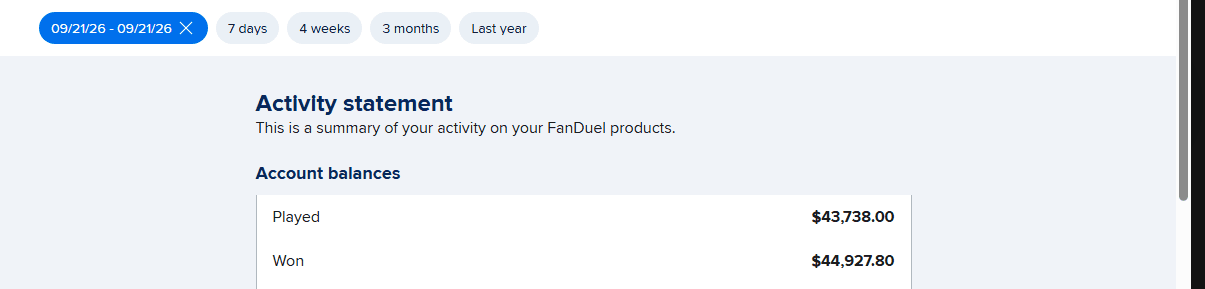
The structural reason elite live bettors get limited is that they have better power rating models than the sportsbook. The book responds to that pricing advantage by capping the bettor's stake. The Best Bet on Sports is limited on all six major U.S. sportsbooks (FanDuel, DraftKings, Caesars, BetMGM, Fanatics, and ESPN BET) for exactly that reason — our pregame power ratings and live in-game model have been pricing games tighter than the books for years.
Common Power Rating Mistakes Bettors Make
| Mistake | What goes wrong | Fix |
|---|---|---|
| Using preseason ratings into Week 6 | Stale data, missing roster turnover | Update weekly, hard reset by Week 4 |
| No recency weighting | Garbage time games count equal to playoff push games | Weight by recency and game leverage |
| Ignoring injury inputs | Wrong by 3-7 points on any QB-out game | Maintain injury-adjusted ratings nightly |
| Confusing power rating with prediction | Conflating expected margin with confidence | Power rating is the central estimate, not the bet |
| Building once, never iterating | Model drift accumulates across a season | Recalibrate monthly against actual results |
The disciplined fix on every one of those mistakes is the same — power ratings are living numbers. They update with every game played, every injury reported, and every coaching change announced. A power rating built in September and ignored through November is dead weight.
Frequently Asked Questions
What is a power rating in sports betting?
A power rating is a single number that represents a team's expected scoring margin versus a league-average opponent on a neutral field. Every point spread, total, and moneyline on every sportsbook is built from two teams' power ratings subtracted from each other, plus situational adjustments and a hold margin. Power ratings are the foundational analytical input in all sports betting.
How are power ratings calculated?
Power ratings are built using three core inputs — margin of victory data, strength of schedule, and recency weighting. The math is an iterative loop where each game updates both teams' ratings based on the result and the current rating of the opponent, with older games discounted by roughly 10 to 30% per month elapsed. The loop converges in five to ten iterations across a full season.
What is a good power rating spread for betting?
The rule of thumb is a 2-point gap in the NFL, a 2.5-point gap in college football, a 1.5-point gap in the NBA, and a 0.20-run gap in MLB between your situational power rating and the sportsbook's line. Smaller gaps are noise. Larger gaps are the high-confidence bet spots where consistent edge exists.
Do sportsbooks use the same power ratings as bettors?
Every major U.S. sportsbook runs a proprietary power rating model. The math is similar to public methods but the situational inputs and recency weighting are tuned by the book's traders. The bettor's edge is not in beating the model — it's in finding spots where the model's situational adjustments are mis-weighted compared to your own analysis.
How often do power ratings update?
Active power rating models update at least weekly, and often after every game played. Major injury news, coaching changes, and roster moves trigger ad-hoc updates between scheduled refreshes. A power rating that has not been touched in a month is significantly drifted from the current team strength estimate.
Can I build power ratings without statistical training?
Yes. The basic margin-of-victory regression model can be built in a spreadsheet with one week of work. The harder skills are picking the right recency weighting, calibrating the situational adjustments, and resisting the urge to overfit to recent results. Most disciplined bettors get to a workable model in two to three months of practice on their primary sport.
How do power ratings tie to closing line value?
The closing line is the sportsbook's final power-rating-based estimate before the game starts. Closing line value is the difference between the line you got and the closing line — a positive CLV means you beat the market's final estimate. Bettors who consistently beat the close are usually doing so because their power rating model is producing a tighter number than the book's model in specific spots.
The power rating is the single most undervalued skill in sports betting. Most bettors skip it and bet on instinct, on touts, or on yesterday's box scores. The bettors who beat the market over decades all build, maintain, and trust a power rating model. The Best Bet on Sports has been doing the work since 2005 across the NFL, NBA, MLB, college football, and college basketball, and the verified results have been the long-run record. If you want the rating-based picks and live triggers without building your own model, our member packages are how to get there.
The Best Bet on Sports · 1.5M followers on TikTok
Sports Betting TikTok is the live betting account behind The Best Bet on Sports, covering NFL, NCAAF, NBA, NCAAB, MLB and WNBA markets in real time. The account has been limited on all six major U.S. sportsbooks — FanDuel, DraftKings, Caesars, BetMGM, Fanatics and ESPN BET — for winning on live betting, with $367,520 in verified profit since 2005. View full profile →
Past results do not guarantee future performance. Must be 21 or older to wager.
Related Articles
Middling Sports Bets Explained: How to Catch a Middle April 2026
Line Shopping in Sports Betting: How to Find the Best Number Every Time
Why Being Good at Fantasy Football Doesn't Make You Good at Betting
Sports Betting Unit Sizing: Kelly Criterion, Flat Betting, and What Actually Works
Kelly Criterion for Sports Betting: The Math Behind Optimal Bet Sizing
Kelly Criterion for Sports Betting: Optimal Bet Sizing Explained
Get real live betting picks
From $39.95/mo · Cancel anytime · Email + Discord delivery
● Get The Picks
Choose your package
Tap any tier below to select · Subscribe in one tap
👇 Tap any package to select it
✓ You're selecting
25 Units · $99.95/month
25 unit picks per month. Sweet spot for most bettors — plenty of action without going all-in.
- ✓25 live betting selections/month
- ✓Email + Discord delivery
- ✓All sports (NFL, NCAAF, NBA, NCAAB, MLB)
- ✓Mix of 1, 2, 3, 5-unit rated plays
- ✓Cancel anytime
Secure PayPal · Cancel anytime · No hidden fees · 21+ · +$367K verified
+$367,520 verified · Limited on 6 sportsbooks · 20 years documented · See Proof
Join Our Newsletter
Get free expert sports picks and analysis delivered weekly.