Sharp Money vs. Public Money: How to Read Line Movement and Bet With the Pros

Sharp money vs. public money line movement reveals where professional bettors and squares are positioned on a game. The Best Bet on Sports breaks down reverse line movement, steam moves, and the betting percentage tells that separate sharp action from public chasing. Sports Betting TikTok explains exactly how to read the board and use line movement signals to find expected value across NFL, NBA, and MLB markets.
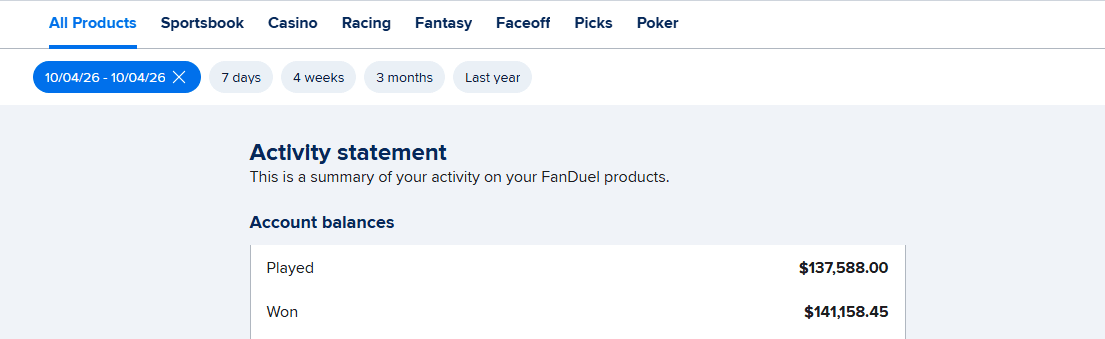
Sharp money vs. public money line movement is the most reliable real-time signal in sports betting because it reveals where professional bettors are positioned regardless of where the betting percentages sit. The Best Bet on Sports has tracked sharp action across 20+ years and a verified +$367,520 in tracked profit, learning to read three primary signals: reverse line movement, steam moves, and resistance points where lines won't break a key number despite heavy one-sided action. Sports Betting TikTok, walks through exactly how to read these signals on NFL, NBA, and MLB markets, and how to build them into a daily bankroll-discipline framework.
The board doesn't lie. When a line moves in the opposite direction of the betting percentages, when a number jumps three sportsbooks within 60 seconds, or when a line refuses to budge despite 80% of public tickets on one side — those moves carry information. Reading them correctly is what separates professional sports handicappers from casual bettors, and it's a core component of how we build positions across football picks, NBA picks, and MLB picks.
What Is Sharp Money in Sports Betting?
Sharp money is action from professional bettors — also called "wiseguys" — who consistently beat the closing line over thousands of bets. Sharp action shares several characteristics:
- Larger ticket size than public bets
- Smaller percentage of total tickets but a larger percentage of total handle
- Faster timing — sharps often bet right when lines open or right after meaningful news
- More disciplined sizing — sharp bettors rarely chase losses or increase units after a win
Public money, by contrast, shows up in larger ticket count but smaller per-bet handle. Public bettors gravitate toward favorites, overs, prime-time games, and "story" teams. The market is shaped by both, but sportsbooks weight handle more than ticket count when adjusting lines — which is exactly why line movement reveals sharp positioning.
How Does Reverse Line Movement Work?
Reverse line movement (RLM) is the single clearest sharp-money tell. It happens when:
| Public Position | Line Movement | Interpretation |
|---|---|---|
| 75% of tickets on Team A | Line moves toward Team B | Sharp money on Team B |
| 65% of tickets on the over | Total drops 1 point | Sharp money on the under |
| 80% of tickets on the favorite | Spread shortens against the favorite | Sharp money on the underdog |
The logic is straightforward. If 75% of public tickets land on Team A but the line moves against Team A, it means the dollar amount on Team B is large enough to overwhelm the public ticket count. That dollar amount is almost always coming from professional accounts.
RLM signals are strongest when:
- The betting percentage gap is at least 65/35
- The line moves at least a half-point against the public side
- The move happens at sharper books (Pinnacle, Circa, Bookmaker) before it spreads to retail books
Tracking RLM across multiple sportsbooks is one of the daily routines we run before releasing picks on our NFL picks and NBA boards.
What Is a Steam Move?
A steam move is a rapid, simultaneous line move across multiple sportsbooks within seconds of each other. When Team A goes from -3 to -3.5 to -4 across five different books inside a minute, that's a steam move. It signals that a respected betting group has sent the same wager to multiple books at once, and the books have moved their lines in lockstep to avoid getting picked off.
Steam moves are the strongest single signal of professional action. Three rules for using them:
1. Don't chase a steam move you missed. By the time you see it on a public tracker, the value is already gone. 2. Use steam moves as confirmation, not initiation. If you already had a position on Team A and you see steam on Team A, that confirms your read — but the steam itself isn't a bet. 3. Note which book moved last. The book that resisted the move longest often has the sharpest line. If they finally moved, the consensus is real.
Where Do Sharps and Squares Disagree Most?
Sharp and public money diverge most consistently in five spots:
- Prime-time NFL games — Public loves marquee matchups. Sharps look for value when public action inflates the favorite price.
- Conference rivalries with national TV — Public weights brand recognition over current talent.
- Overs in high-total games — Public anchors to recent scoring; sharps weight pace, defensive matchups, and weather.
- Public favorite money lines under -200 — Public stacks favorites in parlays; sharps fade the heavy chalk.
- Late-season "must-win" narratives — Public over-weights motivation; sharps weight roster health and rotation depth.
These five categories are where our closing line value tracking shows the largest historical gaps between betting percentages and actual results.
How Should I Use Line Movement in Daily Betting?
Build a routine. Five steps that work across NFL, NBA, MLB, and college sports:
Step 1 — Pull the opening line at every major sportsbook. Note where each book opened and at what time.
Step 2 — Note the betting percentages by tickets and by handle. Public consensus trackers publish both. Handle is more important.
Step 3 — Watch for reverse line movement. If the line moves against the betting percentages by half a point or more, flag it.
Step 4 — Cross-reference with sharp books. If Pinnacle and Circa moved before the retail books, the move is sharp. If retail books moved first and the sharp books followed slowly, it might just be public weight.
Step 5 — Compare your own analysis to the sharp positioning. If you already had a position and the sharp money confirms, hold or add. If the sharp money is on the opposite side, re-examine your analysis before betting.
This is the same daily process we run before sending picks on Discord and Email to our buy page clients.
What Mistakes Do Bettors Make Reading Line Movement?
Three mistakes show up over and over:
- Confusing line movement with closing line value. A line that moved in your favor is good only if your bet beats the closing number. Movement alone isn't profit.
- Following steam after the move is over. By the time public trackers flag a steam move, the price is gone. Chasing locks in worse value than you would've had on either side beforehand.
- Trusting tickets over handle. A game with 80% of tickets on one side and only 55% of handle on that side has a lot of small-ticket public money but balanced overall action. That's not a sharp signal in either direction.
The discipline that produces consistent results is the same one we apply to every category — NCAAF picks, NCAAB picks, and across all sports. Read the board, weight handle over tickets, confirm with sharp-book moves, and never chase after the price has moved.
How Does The Best Bet on Sports Use Line Movement Signals?
Line movement is one input in our model — not the only input. We weight it alongside:
- Matchup-specific projections
- Rotation, lineup, and rest data
- Officiating crew tendencies (NBA) and umpire profiles (MLB)
- Weather and ballpark factors
- Injury and news flow
When our internal projection aligns with sharp positioning on the board, that's a high-conviction spot — typically a 2-3 unit play. When our projection disagrees with sharp positioning, we re-examine the projection before passing or sizing down. This layered approach is why we've been limited on all six major U.S. sportsbooks — FanDuel, DraftKings, Caesars, BetMGM, Fanatics, and ESPN BET — for winning too much on live action.
Across 20+ years and the verified +$367,520 in tracked profit on our results page, the consistent through-line has been disciplined sizing, weighting handle over tickets, and never chasing line movement after the value has moved.
Related Strategy Reading
For deeper context on the angles covered above, our analysis of closing line value sports betting guide and closing line value clv tracking betting edge pairs well with this guide; our sports picks reflect these same principles applied to live games.
Frequently Asked Questions
What is sharp money in sports betting?
Sharp money is action from professional bettors who consistently beat the closing line over a large sample of bets. Sharp bets are typically larger in ticket size than public bets, smaller in ticket count but larger in handle percentage, and timed near line opening or right after meaningful news. The market shapes lines based on handle more than ticket count, which is why sharp positioning shows up in line movement even when public ticket counts run heavily one direction.
How do I identify reverse line movement?
Reverse line movement happens when a betting line moves in the opposite direction of the public ticket percentages. If 75% of public tickets are on a favorite but the line shortens against that favorite, the dollar amount on the underdog is overwhelming the public ticket count — meaning sharp money is positioned on the underdog. Track betting percentages and line movement across multiple sportsbooks daily to catch these signals.
What is a steam move and should I follow it?
A steam move is a rapid, simultaneous line move across multiple sportsbooks within seconds of each other. It signals that a respected betting group has placed the same wager at multiple books at once. Don't chase steam moves you missed — by the time you see them on a tracker, the value is gone. Use them as confirmation of an existing position, not as a bet trigger on their own.
Where do sharp money and public money disagree most often?
Sharp and public money diverge most consistently on prime-time games, marquee rivalries with national TV coverage, overs in high-total matchups, heavy money-line favorites under -200, and late-season "must-win" narratives. The public weights brand recognition, recency, and storylines; sharps weight matchup data, rotation depth, and current price relative to true probability. These five categories show the largest historical gap between public sentiment and actual results.
How does The Best Bet on Sports use sharp money signals?
We layer sharp money signals alongside our internal projections, rotation and rest data, officiating tendencies, and weather. When our projection aligns with sharp positioning, that's a high-conviction 2-3 unit play. When our projection disagrees with sharp positioning, we re-examine the projection before sizing or passing. This disciplined process is why our results page shows the verified profit figure and why we're limited on all six major U.S. sportsbooks.
Can I track line movement on my own without a paid service?
Yes. Several free sportsbook line trackers display real-time movement across major books. Build a routine: check opening lines, monitor betting percentages by tickets and by handle, watch for reverse line movement, and cross-reference with sharp books like Pinnacle and Circa. The hard part isn't accessing the data — it's interpreting it, sizing correctly, and avoiding the temptation to chase moves after the price has changed.
What's the difference between betting percentages by tickets and by handle?
Tickets count the number of bets placed on each side; handle measures the dollar amount. A game might have 80% of tickets on one side but only 55% of handle on that side, meaning the ticket count is heavily public but the dollar volume is balanced. Sportsbooks shape lines based on handle, not ticket count. Always weight handle over tickets when reading line movement.
The Best Bet on Sports · 1.5M followers on TikTok
Sports Betting TikTok is the live betting account behind The Best Bet on Sports, covering NFL, NCAAF, NBA, NCAAB, MLB and WNBA markets in real time. The account has been limited on all six major U.S. sportsbooks — FanDuel, DraftKings, Caesars, BetMGM, Fanatics and ESPN BET — for winning on live betting, with $367,520 in verified profit since 2005. View full profile →
Past results do not guarantee future performance. Must be 21 or older to wager.
Related Articles
First-Year NFL Coaches ATS, Tested
West Coast Teams at 1 PM ET: ATS Tested
Fade the Second Road Game? ATS Test
Buy Teams After a Turnover Disaster? ATS Tested
Should You Fade Rookie QBs Against the Spread? Tested
Moneyline or Spread on NFL Favorites? 11 Years Tested
Get real live betting picks
From $39.95/mo · Cancel anytime · Email + Discord delivery
● Get The Picks
Choose your package
Tap any tier below to select · Subscribe in one tap
👇 Tap any package to select it
✓ You're selecting
25 Units · $99.95/month
25 unit picks per month. Sweet spot for most bettors — plenty of action without going all-in.
- ✓25 live betting selections/month
- ✓Email + Discord delivery
- ✓All sports (NFL, NCAAF, NBA, NCAAB, MLB)
- ✓Mix of 1, 2, 3, 5-unit rated plays
- ✓Cancel anytime
Secure PayPal · Cancel anytime · No hidden fees · 21+ · +$367K verified
+$367,520 verified · Limited on 6 sportsbooks · 20 years documented · See Proof
Join Our Newsletter
Get free expert sports picks and analysis delivered weekly.