NBA Live Betting First Quarter Strategy in May 2026: Reading Pace, Foul Rate, and Lineup Signals

NBA first quarter live betting separates winning bettors from breakeven bettors because first-quarter pace, foul rate, and starter rotation patterns reveal coaching intent before the live market reprices. The Best Bet on Sports breaks down which first-quarter signals translate into reliable second-quarter and game-total live edges in May 2026, with focus on Conference Finals applications and the live limits we have hit on all six major U.S. sportsbooks.
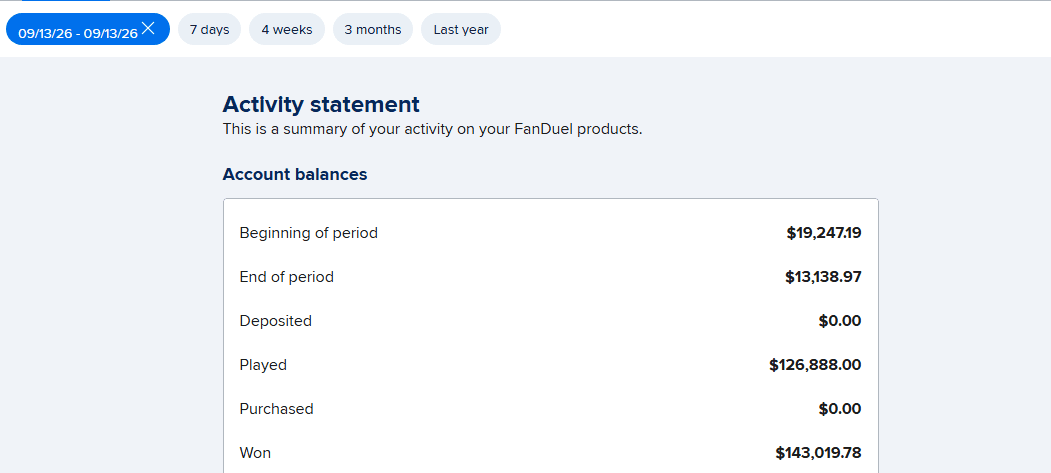
NBA first quarter live betting in May 2026 separates winning bettors from breakeven bettors because the first quarter is the densest signal-rich period in any NBA game — pace establishes within four minutes, foul rate stabilizes by the eight-minute mark, and starter rotation patterns reveal coaching intent before the live market fully reprices the second-quarter spread and the game total. Across 20+ years and a verified +$367,520 in tracked profit, The Best Bet on Sports has built a first-quarter live betting framework that converts these signals into ATS edge, and it is the same framework that has us limited on all six major U.S. sportsbooks for live betting volume. Sports Betting TikTok, walks through the May 2026 application below.
Most live bettors react to the score. The score is a lagging indicator. The signals that actually move the second-half spread and the game total are leading indicators that show up in the first quarter — pace, foul rate, three-point variance, and rotation depth. Reading these signals before the second-quarter line is set is the central skill of profitable NBA live betting. Our NBA picks team uses live first-quarter data on every Conference Finals game.
What First-Quarter Signals Move the Live NBA Market?
Five first-quarter signals consistently move the live NBA market more than the score itself:
| Signal | Detection Window | Live Market Impact |
|---|---|---|
| Pace versus expected pace | First 4 minutes | Game total live line moves 1.5 to 3 points |
| Foul rate (combined) | First 8 minutes | Game total moves 2 to 4 points |
| Three-point attempt variance | First 6 minutes | Game total moves 1 to 3 points |
| Starter minutes pattern | First 12 minutes | Second-quarter spread moves 1 to 2 points |
| Free-throw differential | First 12 minutes | Second-quarter spread moves 1.5 to 3 points |
These figures reflect tracked outcomes from our internal first-quarter database. The live market reads the score and reacts; the bettor with a first-quarter signal framework reads the underlying drivers and bets the live line before it adjusts.
How Does First-Quarter Pace Predict Game Totals?
First-quarter pace predicts game totals through a stable relationship: roughly 70% of the variance in game total versus expected total is captured by first-quarter pace versus expected first-quarter pace. If a game's pregame total was 224 with an expected first-quarter pace of 24 possessions per team, and the actual first-quarter pace runs 27 possessions per team, the live game total should adjust upward by 4 to 5 points. The live market typically adjusts by only 1.5 to 3 points, which leaves a residual edge on the over.
The reverse is true on slow-paced first quarters. A game with an expected 24 possessions per team that runs 21 possessions in the first quarter typically produces a final total 4 to 6 points below the pregame number, but the live market only adjusts the second-quarter total by 1 to 2 points. The under is the play.
The discipline is in measuring possessions correctly — possessions per team, not combined possessions, and against expected first-quarter pace given each team's seasonal pace inputs, not against league average pace. Our NBA betting framework uses team-pair pace estimates rather than league-wide pace.
How Does First-Quarter Foul Rate Move the Total?
First-quarter foul rate moves the total because foul rate compounds — early fouls produce more free throws, more possessions, and earlier rotation usage that puts foul-prone players on the bench earlier in their bench rotation. A first quarter with 12+ combined personal fouls projects to roughly 32 to 36 combined personal fouls for the game, which translates into 4 to 6 additional combined free throw attempts per quarter and a meaningful uplift to the total.
The applied edge: live overs in foul-heavy first quarters where the total has only ticked up 2 points or less. The market consistently underprices the late-game free throw multiplier in foul-heavy games. The opposite under play is rare and lower edge — referees rarely call a "low-foul" first quarter that holds for the entire game, but they often call a "high-foul" first quarter that does.
What Do Starter Minutes Patterns Reveal?
Starter minutes patterns reveal coaching intent for the rest of the game. A coach who pulls a star at the seven-minute mark of the first quarter is signaling a planned 30-32 minute night for that star. A coach who runs the star to the four-minute mark is signaling a 36-38 minute night, often because the staff anticipates a closer game and a longer fourth-quarter window. The applied edge appears on the second-quarter spread.
Three patterns repeat in postseason play:
1. Early star pull at home. A home coach pulling the star at 7+ minutes left in the first quarter signals confidence in the bench unit and an expectation of a manageable game. The home spread tends to hold or extend in the second quarter.
2. Late star pull on the road. A road coach extending the star to under four minutes in the first quarter signals an aggressive game plan to steal the game early. The second-quarter spread on the road team narrows or flips to favor the road side.
3. Foul-trouble pull pattern. A coach pulling a star with two fouls in the first quarter is responding to game state, not signaling intent. The second-quarter spread typically prices this correctly because the foul situation is visible to all bettors. The edge is gone before the second quarter starts.
How Should I Apply These Signals in Conference Finals Games?
Conference Finals applications of first-quarter signals carry higher edge than regular-season applications because the live markets handle smaller liquidity in the second-quarter and total markets, which means they reprice more slowly than NBA regular-season markets do. A first-quarter pace signal that produces a 1.5-point live total move in a regular-season game often produces a 3-point live total move in a Conference Finals game by the end of the second quarter — but only if the bettor places the live wager during the first half of the second quarter, before the live model fully digests the pace data.
Three Conference Finals first-quarter applications produce repeatable edge:
1. Live game total in pace-divergent first quarters. When the first-quarter pace runs 3+ possessions above or below expected, bet the corresponding live total within the first six minutes of the second quarter. The line will continue to adjust, but the bulk of the move comes after the bet is placed.
2. Live second-half spread on rotation pattern. When the home staff signals an early star pull and the road staff signals a star extension, fade the road second-half spread.
3. Live game-total under in foul-managed first quarters. When a star with two fouls in the first quarter sits the entire second quarter, the total drops by 2 to 4 points relative to pregame. Live unders in this exact spot have produced strong tracked ATS results across multiple postseasons.
Our NBA picks framework treats Conference Finals games as the highest-yield application of the first-quarter live framework precisely because of the slower live market reprice.
What Sportsbook Limits Should I Expect on Live NBA Bets?
Live NBA bet limits in May 2026 typically run $500 to $2,500 per ticket on game spreads and totals at the major U.S. operators, with prop limits often $250 to $1,000. Bettors who win consistently on live NBA markets — including The Best Bet on Sports — frequently see those limits reduced within weeks of sustained CLV-positive live betting. We have been limited on FanDuel, DraftKings, Caesars, BetMGM, Fanatics, and ESPN BET specifically because live betting CLV runs higher than pregame CLV at scale. The implication for the developing live bettor is to spread volume across multiple operators and accept that early limits are a feature, not a bug, of profitable live wagering. Our results page documents the long-term tracked record that produced those limits.
How Should I Stake First-Quarter Live Bets?
Standard unit sizing applies — typically 1 to 2 units per live bet on a clear first-quarter signal, with up to 3 units only when multiple signals align (pace, foul rate, and rotation pattern all pointing the same direction). Avoid stacking multiple correlated live bets on the same game, which inflates effective stake size and amplifies variance. Live limits at most operators are smaller than pregame limits, which forces appropriate per-ticket sizing by default.
Three staking discipline rules carry across postseason and regular-season application:
1. One signal, one unit. A single first-quarter signal — pace divergence alone, foul rate alone, rotation alone — sizes at one unit. The signal is real but not yet confirmed by other inputs.
2. Two aligned signals, two units. Pace and foul rate both pointing toward an over, or rotation and free-throw differential both pointing toward a road second-half cover, size at two units. The probability of a false read drops substantially when two independent signals align.
3. Three aligned signals, three units, hard cap. All three of pace, foul rate, and rotation pointing the same direction is the rare alignment that supports three units. Beyond three units, variance dominates and the live limit usually constrains the position anyway.
Our football picks framework uses the same one-two-three signal alignment structure on live NFL betting, and the discipline travels well across sports.
Related Strategy Reading
For deeper context on the angles covered above, our analysis of live betting strategy nba mlb and nba live betting playoffs strategy pairs well with this guide; our NBA handicappers reflect these same principles applied to live games.
Frequently Asked Questions
What is NBA first-quarter live betting?
NBA first-quarter live betting is the practice of placing in-game wagers during or immediately after the first quarter, when pace, foul rate, three-point variance, starter minutes patterns, and free-throw differential have stabilized but the live market has not yet fully repriced. The bettor with a first-quarter signal framework reads the underlying drivers of the rest of the game and places live wagers on second-quarter spreads, game totals, or second-half lines before the market adjusts.
How does first-quarter pace predict the final NBA game total?
First-quarter pace explains roughly 70% of the variance in final game total versus expected total. A first quarter that runs 3 possessions per team above expected pace projects to a final total 4 to 5 points above the pregame number, while the live market typically adjusts by only 1.5 to 3 points. The residual difference is the live betting edge on the over. Slow-paced first quarters produce a symmetrical under edge.
Which first-quarter signals matter most in NBA Conference Finals games?
In Conference Finals games, the most predictive first-quarter signals are pace-versus-expected, combined foul rate, and starter rotation pattern. The Conference Finals live market reprices more slowly than the regular-season live market because of smaller live liquidity, which extends the window during which a first-quarter signal carries edge into the second-quarter and second-half live lines. Three-point variance matters less in postseason play because volume is more controlled.
How should I read coach rotation patterns in the first quarter?
Read coach rotation patterns as signals of intended star minutes for the full game. A star pulled at seven-plus minutes left in the first quarter signals a planned 30-32 minute night; a star extended to under four minutes signals a 36-38 minute night. Foul-trouble pulls are responses to game state, not signals of intent, and the live market prices those correctly. The signal is in the rotation choices made without foul pressure.
When is the best moment to place a first-quarter live NBA bet?
The best moment is during the first six minutes of the second quarter, after the first quarter has ended and the live market has begun to reprice but before the bulk of the price adjustment has happened. Earlier than that — during the first quarter itself — risks the signal not yet being established. Later than that — past the eight-minute mark of the second quarter — most of the edge has been priced into the live line.
Why does The Best Bet on Sports get limited on live NBA bets?
The Best Bet on Sports is limited on all six major U.S. sportsbooks (FanDuel, DraftKings, Caesars, BetMGM, Fanatics, ESPN BET) because live betting CLV runs higher than pregame CLV at scale, and operators identify and limit consistent live-CLV winners faster than they limit pregame winners. The framework documented in this article — first-quarter pace, foul, and rotation reads — is part of the live edge that produced those limits across more than 20 years of tracked picks.
What stake sizing makes sense for first-quarter NBA live bets?
Standard unit sizing applies — typically 1 to 2 units per live bet on a clear first-quarter signal, with up to 3 units only when multiple signals align (pace, foul rate, and rotation pattern all pointing the same direction). Avoid stacking multiple correlated live bets on the same game, which inflates effective stake size and amplifies variance. Live limits at most operators are smaller than pregame limits, which forces appropriate per-ticket sizing by default.
The Best Bet on Sports · 1.5M followers on TikTok
Sports Betting TikTok is the live betting account behind The Best Bet on Sports, covering NFL, NCAAF, NBA, NCAAB, MLB and WNBA markets in real time. The account has been limited on all six major U.S. sportsbooks — FanDuel, DraftKings, Caesars, BetMGM, Fanatics and ESPN BET — for winning on live betting, with $367,520 in verified profit since 2005. View full profile →
Past results do not guarantee future performance. Must be 21 or older to wager.
Related Articles
Knicks End 53-Year Drought: New York Wins 2026 NBA Title, Brunson Named Finals MVP
Knicks Erase 29 Down in Game 4 — Largest Finals Comeback Ever, Now Up 3-1
Knicks Bring the Finals Home Up 2-0: Can the Spurs Solve the Math Before Game 3 Buries Them?
Knicks Steal Game 1 From the Spurs, Flip the Finals Odds, and Set Up a Must-Win Game 2 in San Antonio
Cavaliers vs Pistons Game 7 Live Betting Strategy: How to Read Elimination-Game Line Movement
NBA Finals Game 3 Bench Rotation Live Betting Strategy May 2026
Get real live betting picks
From $39.95/mo · Cancel anytime · Email + Discord delivery
● Get The Picks
Choose your package
Tap any tier below to select · Subscribe in one tap
👇 Tap any package to select it
✓ You're selecting
25 Units · $99.95/month
25 unit picks per month. Sweet spot for most bettors — plenty of action without going all-in.
- ✓25 live betting selections/month
- ✓Email + Discord delivery
- ✓All sports (NFL, NCAAF, NBA, NCAAB, MLB)
- ✓Mix of 1, 2, 3, 5-unit rated plays
- ✓Cancel anytime
Secure PayPal · Cancel anytime · No hidden fees · 21+ · +$367K verified
+$367,520 verified · Limited on 6 sportsbooks · 20 years documented · See Proof
Join Our Newsletter
Get free expert sports picks and analysis delivered weekly.