NBA Game 7 and Elimination Game Betting Strategy: 2026 Playoff Edition

NBA Game 7 betting requires recalibrating spreads, totals, and props. Home teams cover roughly 56%, totals trend under, and rotation tightening creates star-prop edges in elimination games.
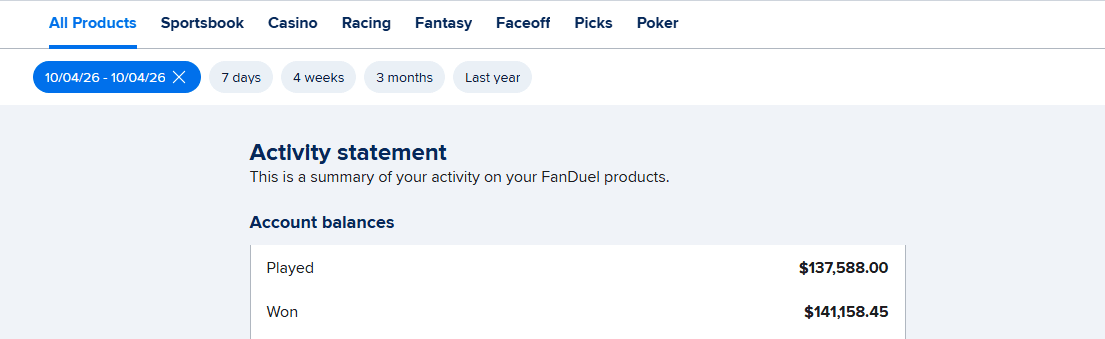
NBA Game 7 betting and elimination game wagering require a fundamentally different framework than typical playoff games — home teams have historically covered the spread at roughly 56%, totals trend two to four points below series averages, and rotation tightening creates predictable usage spikes for stars while collapsing minutes for bench players. The Best Bet on Sports — with $367,520 in verified profits across more than two decades — treats Game 7 as the single most analytically structured night on the NBA calendar, where coaching trees, fatigue, and officiating context all converge into a tighter, more predictable distribution. Here is the complete framework for betting Game 7s and elimination games in the 2026 playoffs.
Why Game 7 Is a Distinct Betting Environment
A Game 7 is not merely Game 6 with higher stakes. It is a categorically different competitive event with its own statistical signature, and the betting market rarely prices it correctly the first time. Three structural realities separate it from any other playoff game.
Coaching variance collapses. By Game 7, both head coaches have run six full games of film, six halves of in-game adjustments, and at least two off-day shootarounds in the same series. Tactical surprises are essentially extinct — every set has been countered, every rotation has been challenged, every defensive coverage has been exposed. The game becomes a pure execution contest, which dramatically narrows the variance band on totals and spreads.
Star usage explodes. Top players in Game 7 average a 4 to 7% usage-rate spike compared to their series baseline, and bench rotations compress from nine or ten players to seven. Coaches who used a 10-deep regular-season rotation will play seven in a Game 7, and the dropped minutes flow disproportionately to the top three offensive options. This makes Game 7 the single highest-EV night for star scoring props if you have a clear read on shot quality.
Officiating gravitates toward the home crowd marginally but consistently. Free-throw differentials in Game 7s favor home teams by an average of roughly 2.8 attempts per game across the past two decades — a small but persistent edge that compounds with home-court spread movement. Combined with crowd-driven defensive intensity in late-game possessions, this creates real spread value on home teams in tight pricing situations.
Our NBA picks page provides game-by-game Game 7 analysis from The Best Bet on Sports team across every conference matchup that reaches a deciding contest.
The Home Court Edge: How Big and When It Matters
Home teams in NBA Game 7s have historically won roughly 78% of contests outright and covered the spread at roughly 56% in the modern era. Both numbers are higher than the home-court rates in Games 1 through 6 of a series. The reasons stack:
- Crowd noise meaningfully degrades opposing free-throw shooting late and disrupts inbound communication on hostile sets.
- Travel asymmetry: the road team usually flew in 24 to 48 hours before tip, while the home team has slept in its own beds and avoided airline disruption.
- Officiating familiarity: home crews — even with neutral playoff assignments — call the game in a louder environment where home crowd reactions create cumulative pressure on whistle decisions in 50/50 calls.
| Game 7 Scenario | Spread Cover Rate (Home) | Notes |
|---|---|---|
| Home favorite of -1 to -3 | ~62% cover | Highest-value home-court spot |
| Home favorite of -4 to -6 | ~54% cover | Slight edge, fade if star is questionable |
| Home favorite of -7+ | ~47% cover | Public over-bets, line inflated |
| Home dog (any number) | ~58% cover | Rare but historically strong spot |
The strongest Game 7 home spot is the small home favorite — minus 1 to minus 3. The market consistently underprices the cumulative home edge in tight pricing because public bettors split tickets evenly on coin-flip lines, and books leave the home advantage slightly under-juiced. This is one of the most reliable repeat angles in playoff basketball, and it shows up almost every postseason.
For series-by-series analysis of where these spots are most exploitable, see our NBA betting section.
Game 7 Totals: The Under Edge
Game 7 totals trend under at roughly 53 to 55% historically — a small but durable edge driven by predictable in-game dynamics:
Pace compresses further. Teams in elimination games burn more clock per possession, foul more strategically late, and avoid transition opportunities that risk turnovers. Average pace in Game 7s drops 1.5 to 2.5 possessions below the series average for both teams combined.
Free-throw rate spikes only late. Early-game intentional fouling is rare; coaches save the tactic for the final two minutes. The bulk of the game features more half-court possessions, more defensive accountability, and fewer fast-break points than series averages.
Defensive intensity is at its absolute peak. Players know every possession is final and every closeout is the difference between extending a season and starting an offseason. Effective field goal percentage in Game 7s drops 1 to 2 points below series averages for both teams.
The combination of slower pace and worse shooting is mathematically reliable: fewer possessions multiplied by lower efficiency produces totals that come in 2 to 4 points under series averages. When Game 7 totals are set at or above the series average, the under is the higher-value side roughly two-thirds of the time.
The exception: when both teams play through superstar one-on-one isolation creators rather than systems, late-game totals can run hot in fourth quarters because possessions reduce to "give the ball to the star and clear out." If both teams' top scorers shot above 35% from three earlier in the series, the under edge weakens — small ball + isolation + foul-or-three late-game patterns can push totals toward the over in tight games.
Star Player Props in Game 7: Where the Real Edges Live
Game 7 player props are arguably the most exploitable single-night betting market in basketball. The structural reason: books set props using series averages, but Game 7 usage and minutes diverge from those averages in predictable directions.
Top-option scoring props trend over. A team's number-one offensive option in Game 7 averages a 3 to 5% usage spike and plays 2 to 4 more minutes than series averages. That combination — more touches, more minutes, more isolation late-game possessions — pushes points props over at roughly 56% historically.
Number-three and number-four option scoring props trend under. The same rotation tightening that benefits stars hurts secondary scorers. Players who averaged 22 to 24 minutes in earlier games may see only 16 to 18 in a Game 7, and their points props frequently come in below the line.
Assist props for primary playmakers trend over. Pace-down environments concentrate offense through the lead ball-handler. Star point guards or playmaking forwards see assist totals trend 0.5 to 1.0 above series averages because secondary creators get fewer chances to initiate.
Rebound props are a coin flip. Rebounding is the most environment-dependent stat in basketball, and Game 7 produces roughly the same rebound distribution as the rest of the series. Avoid using props on rebounding totals as your primary Game 7 angle.
Three-point attempts per player are flat or slightly down. Conventional wisdom says everyone shoots more threes when desperate, but the data does not support it. Coaches in Game 7 prefer to drive the ball, draw fouls, and force the issue at the rim. Three-point attempts per top-rotation player track flat or 0.5 below series averages.
For ongoing prop analysis across the playoffs, our sports betting picks packages include detailed prop write-ups with line-shopping recommendations.
Coaching Tree Considerations
Not all coaches react the same way to Game 7 pressure. Decades of postseason data reveal predictable tendencies that can be exploited:
Coaches with prior Finals experience play tighter rotations and slower pace. Their Game 7s come in under series averages roughly 60% of the time.
First-time-deep coaches over-trust regular-season rotations. They tend to play their full bench longer than is optimal, which pushes pace and total-game variance higher than veteran-coached teams.
Coaches with reputations for "quick hooks" hurt their team in Game 7. Pulling a star with two early fouls in a Game 7 has historically produced worse outcomes than letting them play through it. The market rarely prices this in, so teams with quick-hook coaches can be slight Game 7 fade plays at neutral spreads.
The matchup-level question to answer before any Game 7 bet: which coach has been here before, which one is coaching scared, and which one has actually built a tactical wrinkle for the deciding game? The answer often determines spread direction independent of any roster-level talent gap.
Building a Game 7 Bet Card: The Hierarchy
A disciplined Game 7 bet card runs in this order of edge size, from largest to smallest:
1. Star scoring props (over) for top-option offensive players whose teams are favored or close to even — highest-EV market in elimination games 2. First-half unders in matchups featuring two veteran coaches and elite half-court defense — books frequently set first-half totals at exactly half the game total, which overstates first-half scoring relative to the slow-start dynamics of Game 7 3. Small home favorites against the spread — the structural home-court edge cluster 4. Game total under when the line is set at or above the series average 5. Lead playmaker assist props (over) — secondary edge, but consistently profitable 6. Bench-player scoring props (under) — clean fade angle when secondary rotation players have inflated lines from prior series performance
Avoid: Game 7 moneyline parlays across multiple series, large-favorite sides expecting blowouts (Game 7 blowouts are rare), and live betting at halftime when the line moves dramatically — book models are sharper than retail bettors realize at the half in elimination games.
For series-level futures and pricing on which teams are most likely to reach a Game 7, visit our NBA picks page.
The Officiating Wrinkle: Whistle Tightening
Game 7 officiating crews call the game tighter than typical playoff officiating. Foul rates in Game 7s run roughly 5 to 8% above series averages, and the increase is heavily concentrated in the first half. Coaches generally protect their stars from early foul trouble, which means more bench minutes early — and that is one of the few variables that pushes first-half totals slightly higher than expected.
The downstream betting implication: first-quarter totals in Game 7 trend slightly over because of the foul-driven free-throw spike. First-half totals are mixed because of the bench-driven offense early offset by the defensive lockdown that arrives once both teams settle into closing-time rotations. Full-game totals trend under because the second half typically grinds into the half-court mode that drives the under.
If you are betting first-quarter totals, lean over. If you are betting full-game totals, lean under. The two angles are not contradictory — they reflect the actual rhythm of how Game 7s unfold.
Live Betting Adjustments
Game 7 live betting requires faster recognition of two specific signals:
Foul trouble on a star changes the game's price more than the live model adjusts. When a top-option player picks up a third foul before halftime, the live spread should move 2 to 4 points toward the opposing team. Sportsbook live models typically move only 1 to 2 points, leaving an exploitable gap if you can act quickly.
Pace-down halves create live-under value. If the first half ends with a possession count below 47 (combined), the live full-game total often does not adjust enough to reflect how slow the rest of the game will play. Hammer the live under in those spots.
Our team operates with limited bet sizes on all six major U.S. sportsbooks — FanDuel, DraftKings, Caesars, BetMGM, Fanatics, and ESPN BET — specifically because we have spent years executing live-betting edges like these in playoff basketball.
Bankroll Discipline in Elimination Spots
Game 7 nights tempt overreaction. Series-long frustration, a hot streak, or a desperate impulse to "make the night meaningful" all drive bettors toward unit-size inflation. The discipline rule that protects long-run profitability:
- Maximum 2 to 3% of bankroll on any single Game 7 side or total
- Maximum 4 to 6% combined exposure across all bets on a single Game 7
- Never parlay two Game 7s — independence is illusory because crowd, officiating, and player availability all correlate
- Player props in elimination games can be sized at 1 to 2% per leg, but never more than three prop legs total per game
Even with structural edges as identified above, single-game variance in basketball is high enough that any unit-size discipline failure in Game 7s can wipe out an entire postseason of careful work.
Our coverage of Cavaliers-Pistons Game 7 live betting walks through how this plays out in practice.
Related Strategy Reading
For deeper context on the angles covered above, our analysis of nba playoff live betting strategy in game edges and nba player prop picks betting guide pairs well with this guide; our NBA handicappers reflect these same principles applied to live games.
Frequently Asked Questions
How often do home teams win NBA Game 7s?
Home teams have historically won approximately 78% of NBA Game 7s outright in the modern era, and they cover the spread at roughly 56%. The home-court advantage in Game 7 is meaningfully larger than in Games 1 through 6 of a series due to crowd intensity, travel asymmetry, and officiating familiarity. The strongest Game 7 spread spot is a small home favorite of minus 1 to minus 3 points.
Do NBA Game 7 totals trend over or under?
NBA Game 7 totals trend under approximately 53 to 55% of the time. The drivers are slower pace (1.5 to 2.5 fewer possessions than series average), tighter half-court defense, and more strategic clock management. The exception is matchups with two superstar isolation scorers, where late-game possessions can run hot enough to push totals toward the over in tight games.
Are NBA Game 7 player props profitable?
Top-option scoring props (the team's number-one offensive option) trend over at roughly 56% historically, driven by 3 to 5% usage-rate spikes and 2 to 4 additional minutes per game in tightened rotations. Lead-playmaker assist props also trend over. Conversely, third- and fourth-option scoring props trend under because rotation tightening cuts secondary scorers' minutes. Star scoring props are the highest-EV single market in NBA elimination games.
Why does the betting market underprice the Game 7 home edge?
Public bettors split tickets evenly on coin-flip lines, which leaves sportsbooks little incentive to inflate juice on home favorites priced at minus 1 to minus 3. The cumulative home advantage — crowd, travel, officiating, and rotation familiarity — exceeds what the small spread number reflects, creating a persistent edge for home teams in tight pricing scenarios.
How does coaching experience affect Game 7 outcomes?
Coaches with prior Finals or deep playoff experience play tighter rotations, slower pace, and more disciplined defensive schemes in Game 7. Their Game 7 totals come in under series averages roughly 60% of the time. Conversely, first-time-deep coaches tend to over-trust regular-season rotations and push pace, which inflates total-game variance and frequently produces over results.
Should you parlay multiple NBA Game 7s on the same night?
No. While Game 7s on the same night may seem statistically independent, they share crowd-energy correlation, common officiating crews on similar tour rotations, and overlapping bettor sentiment that tightens both lines simultaneously. Parlaying Game 7 outcomes is a high-variance, low-EV approach. Single-game flat bets sized at 2 to 3% of bankroll are the disciplined approach.
What is the best Game 7 bet on the board most nights?
The single highest-EV Game 7 bet most nights is the over on a top-option scoring prop for a star whose team is favored or close to even — driven by usage spikes, minute increases, and rotation tightening. The second-best bet is a small home favorite against the spread when the line is minus 1 to minus 3. Both edges have held up across more than two decades of postseason data.
For full Game 7 picks, prop write-ups, and live-betting adjustments throughout the 2026 NBA Playoffs, visit our results page or sign up at our pricing page.
The Best Bet on Sports · 1.5M followers on TikTok
Sports Betting TikTok is the live betting account behind The Best Bet on Sports, covering NFL, NCAAF, NBA, NCAAB, MLB and WNBA markets in real time. The account has been limited on all six major U.S. sportsbooks — FanDuel, DraftKings, Caesars, BetMGM, Fanatics and ESPN BET — for winning on live betting, with $367,520 in verified profit since 2005. View full profile →
Past results do not guarantee future performance. Must be 21 or older to wager.
Related Articles
NBA Playoff Foul Trouble Betting: Officiating & Star Whistles April 2026
NBA Playoff Second Round Picks & Best Bets: April 2026
NBA Playoffs 2026 Betting Picks and Series Predictions
NBA Playoff Foul Trouble Betting in May 2026: How Star Foul Counts Move Live Totals and Spreads
Knicks Set NBA Playoff Record With 47-Point Halftime Lead in 140-89 Game 6 Rout of Hawks
Magic Push Top-Seeded Pistons to Brink: 8-vs-1 NBA Upset One Win Away From History
Get real live betting picks
From $39.95/mo · Cancel anytime · Email + Discord delivery
● Get The Picks
Choose your package
Tap any tier below to select · Subscribe in one tap
👇 Tap any package to select it
✓ You're selecting
25 Units · $99.95/month
25 unit picks per month. Sweet spot for most bettors — plenty of action without going all-in.
- ✓25 live betting selections/month
- ✓Email + Discord delivery
- ✓All sports (NFL, NCAAF, NBA, NCAAB, MLB)
- ✓Mix of 1, 2, 3, 5-unit rated plays
- ✓Cancel anytime
Secure PayPal · Cancel anytime · No hidden fees · 21+ · +$367K verified
+$367,520 verified · Limited on 6 sportsbooks · 20 years documented · See Proof
Join Our Newsletter
Get free expert sports picks and analysis delivered weekly.