No-Vig Fair Price Calculation: How to Find the True Sports Betting Edge May 2026

No-vig fair price calculation removes the sportsbook's built-in margin from a two-sided market to reveal the true implied probability of each side. Sharp bettors compute the no-vig price on every game, then compare it to the posted price. Any side priced more than 1.5 percentage points off the no-vig fair number carries a measurable edge. The math takes 30 seconds and applies to spreads, totals, and moneylines.
No-vig fair price calculation is the single most important math skill in sports betting because it strips the sportsbook's built-in margin out of a two-sided market and exposes the true implied probability of each outcome — the number sharp bettors use to grade every line for value. The Best Bet on Sports has logged over $367,520 in verified profit over two decades by attacking lines that diverge from their no-vig fair price by more than 1.5 percentage points. The math takes 30 seconds, applies to spreads, totals, and moneylines, and is the foundation for every disciplined betting decision.
Most bettors look at a number like -110 / -110 on a point spread, see "even" on both sides, and place the bet they liked from the start. That instinct is wrong. The two -110 prices imply that the sportsbook's hold (the vig, or juice) is roughly 4.5 percent on the matched market. That hold is your long-term opponent. Until you know how to remove it, you cannot tell whether a line is fair, sharp, or soft.
This guide walks through the no-vig fair price formula, the three common applications (moneyline, spread, total), and how to use the calculation to find lines that carry positive expected value across all sports. For broader context, see our line shopping guide and our sports betting juice and vig explained piece.
What Is the Vig and Why Does It Matter?
Every two-sided sportsbook market has built-in margin. When you see -110 on both sides of a spread, the sportsbook is collecting a profit margin regardless of which side wins (assuming balanced action). Convert -110 to implied probability and you get 52.38 percent. Add the two sides together: 52.38 percent + 52.38 percent = 104.76 percent. The 4.76 percent overage is the vig.
That overage exists in every two-way market: moneylines, totals, and player props. The vig is your long-term breakeven cost. To beat the sportsbook over time, you must either:
1. Hit at a percentage higher than the implied breakeven, or 2. Find lines where the offered price is mispriced relative to the true probability.
The no-vig calculation is the tool that lets you assess whether a line is mispriced.
The No-Vig Formula
The formula is straightforward. For a two-sided market with side A priced at decimal odds Da and side B priced at decimal odds Db:
- Implied probability of A (with vig) = 1 / Da
- Implied probability of B (with vig) = 1 / Db
- No-vig probability of A = (1/Da) / ((1/Da) + (1/Db))
- No-vig probability of B = (1/Db) / ((1/Da) + (1/Db))
In plain English: take the implied probability of each side, divide it by the sum of both sides' implied probabilities. The result is each side's true implied probability with the vig stripped out.
Step-by-Step Example: -110 / -110 Spread
- Convert -110 to decimal odds: 1.909
- Implied probability with vig: 1 / 1.909 = 0.5238 (52.38%)
- Sum of both sides: 0.5238 + 0.5238 = 1.0476
- No-vig probability of each side: 0.5238 / 1.0476 = 0.5000 (50.00%)
This makes sense: -110 / -110 means the sportsbook views the matchup as a true 50/50, with 4.76 percent overage as the hold. Now you have your benchmark. You bet a side at -110 only when your own model gives that side higher than 50.00 percent probability after you account for whatever edge factors you have identified.
Applying No-Vig to a Moneyline
Moneylines have wider price gaps and are where the no-vig math earns its keep.
Example: Yankees -160 / Red Sox +145
- Yankees decimal odds: 1.625
- Red Sox decimal odds: 2.45
- Implied probability Yankees: 1 / 1.625 = 0.6154 (61.54%)
- Implied probability Red Sox: 1 / 2.45 = 0.4082 (40.82%)
- Sum: 1.0236
- No-vig Yankees: 0.6154 / 1.0236 = 0.6012 (60.12%)
- No-vig Red Sox: 0.4082 / 1.0236 = 0.3988 (39.88%)
The sportsbook's true read on this game is Yankees ~60% / Red Sox ~40%. If your model says Yankees should be 63%, the Yankees moneyline at -160 carries an edge of about 3 percentage points — a meaningful gap. If your model says Yankees should be 58%, the Red Sox moneyline at +145 is the value side because the implied probability of 39.88% is below your projected 42%.
This is the core mental shift: never compare your projection to the posted price. Compare your projection to the no-vig fair price.
Applying No-Vig to a Total
Totals work the same way, but the math reveals a slightly different pattern: sportsbooks shade totals toward the public side (almost always the over) by adjusting the vig rather than the number.
Example: NBA Game Total 224.5, Over -120 / Under +100
- Over decimal odds: 1.833
- Under decimal odds: 2.000
- Implied probability over: 1 / 1.833 = 0.5456 (54.56%)
- Implied probability under: 1 / 2.000 = 0.5000 (50.00%)
- Sum: 1.0456
- No-vig over probability: 0.5456 / 1.0456 = 0.5219 (52.19%)
- No-vig under probability: 0.5000 / 1.0456 = 0.4781 (47.81%)
The sportsbook is signaling that the true probability of the game going over 224.5 is roughly 52.19%. If your projected total is 226 (which would imply over probability above 52.19%), the over carries value at -120. If your projected total is 223 (implying over probability below 50%), the under at +100 is the value side because the line is shaded toward the over.
This is a very common public-shading pattern: the sportsbook keeps the number stable but loads vig on the popular side. The no-vig calculation strips the shading away.
Applying No-Vig to a Spread
Spreads behave like moneylines mathematically (two sides, both priced near -110), but the price asymmetries reveal where sharps have moved the line.
Example: NFL Spread -3.5 (-115) / +3.5 (-105)
- Favorite decimal odds: 1.870
- Underdog decimal odds: 1.952
- Implied probability favorite: 1 / 1.870 = 0.5348 (53.48%)
- Implied probability underdog: 1 / 1.952 = 0.5123 (51.23%)
- Sum: 1.0471
- No-vig favorite: 0.5348 / 1.0471 = 0.5108 (51.08%)
- No-vig underdog: 0.5123 / 1.0471 = 0.4892 (48.92%)
The sportsbook is signaling the favorite has a 51.08% chance to cover -3.5. The juice asymmetry (-115 / -105) tells you sharp money has come in on the favorite, forcing the book to charge more for that side. If your model gave the underdog 50% to cover, the +3.5 (-105) carries a ~1 percentage point edge — small, but meaningful at -105 juice.
When the No-Vig Number Tells You to Pass
A common mistake bettors make with the no-vig calculation is treating any small gap as a green light. The numbers are sensitive to model error, weather variance, and small-sample injury news. A 0.5 percentage point gap between your projection and the no-vig fair price is not actionable. Real edge starts at about 1.5 percentage points and becomes meaningful above 2 percentage points.
Recommended thresholds:
| Edge vs. No-Vig Fair | Action |
|---|---|
| Less than 1.0 pp | Pass |
| 1.0 to 1.5 pp | Track only, no bet |
| 1.5 to 2.5 pp | Half-unit bet |
| 2.5 to 4.0 pp | One-unit bet |
| 4.0+ pp | Confirm model — likely an information gap |
If your edge looks like 5+ percentage points, double-check your inputs. The most common source of "huge edge" in a no-vig comparison is a stale projection (lineup change, weather, injury) that has not yet hit your model. The sportsbook usually has the better information when the gap looks too good.
Comparing Across Sportsbooks Using No-Vig
The no-vig fair price calculation has a second use beyond grading edge: comparing pricing across sportsbooks.
If FanDuel posts a moneyline at -160 / +135 and DraftKings posts -155 / +140 on the same game, both lines have the same favorite implied to win at roughly the same probability — but the underdog price is sharper at DraftKings. Computing the no-vig probability on both books makes the comparison clean:
- FanDuel: -160 / +135 → no-vig favorite ≈ 60.6%
- DraftKings: -155 / +140 → no-vig favorite ≈ 59.8%
The favorite is implied 0.8 percentage points lower at DraftKings. If you are betting the favorite, FanDuel is the wrong shop. If you are betting the underdog, DraftKings is the wrong shop. That is line shopping with a sharp lens. For the full strategy, see our line shopping guide.
Why Sportsbooks Limit Bettors Who Use No-Vig Math
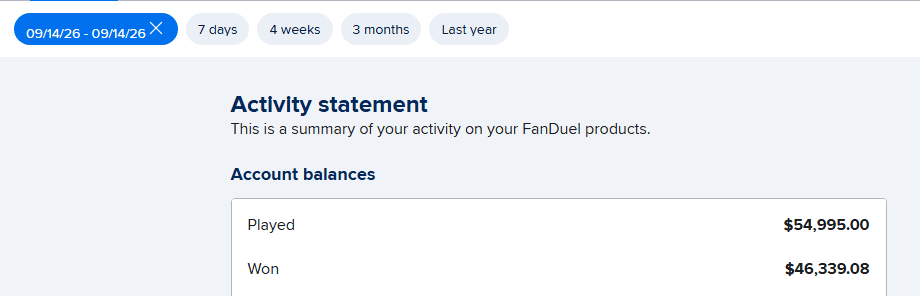
Sportsbooks track every bettor's price-taking pattern. If you consistently bet sides that beat the no-vig fair price by 1.5 percentage points or more, you will eventually be flagged as a sharp customer. Limits drop. Lines refuse to load. Promotions disappear. This is part of why The Best Bet on Sports has been limited on all six major U.S. sportsbooks (FanDuel, DraftKings, Caesars, BetMGM, Fanatics, ESPN BET) — over two decades, the math caught up with us. See our why sportsbooks limit winning live bettors breakdown for more.
Common Mistakes Bettors Make with No-Vig Calculations
1. Treating no-vig as a magic formula. It is a benchmark, not an edge. Your edge comes from your projection, not the calculation. 2. Ignoring the size of the bet. A 1.5 pp edge at -110 is real but small. Size accordingly. 3. Stale inputs. The fair price changes when injury news, weather, or lineup news hits. Always use current odds. 4. Confusing implied probability with no-vig probability. The implied probability includes the vig. The no-vig is the cleaned-up version. Always strip the vig. 5. Skipping the comparison across books. The no-vig fair price differs between sportsbooks. The book with the lowest no-vig probability for your side is the right shop.
How Our Team Uses No-Vig in Practice
Every play released by The Best Bet on Sports is graded against the no-vig fair price at multiple sportsbooks. We never release a play unless our projected edge exceeds 2 percentage points relative to the no-vig fair number. That filter is what produces the long-term results in our verified ledger.
For complete daily picks across NFL, NBA, MLB, college football, and college basketball, see our packages or browse our full results history.
Readers working through this should also see our companion piece on sportsbook hold percentage and implied probability.
Frequently Asked Questions
What is no-vig fair price in sports betting?
No-vig fair price is the calculated true probability of each side of a two-sided sports betting market after the sportsbook's profit margin (the vig or juice) has been mathematically removed. It represents the sportsbook's actual read on the game's outcome, stripped of the hold percentage. Sharp bettors use the no-vig fair price as a benchmark for grading whether a posted line carries value.
How do I calculate no-vig probability?
Convert each side's American odds to implied probability (100 / (odds + 100) for negative odds; 100 / (odds + 100) for positive odds expressed differently — most easily done by converting to decimal odds first and taking 1/decimal). Then divide each side's implied probability by the sum of both sides' implied probabilities. The result is the no-vig probability for each side.
Why does the no-vig calculation matter?
It matters because the posted price always includes the sportsbook's hold, which makes the number unreliable as a probability estimate. To compare your projected probability to the sportsbook's true read, you need the vig removed. Without it, you are comparing an apple (your model's projection) to an orange (a price that includes margin).
What is a meaningful edge versus the no-vig fair price?
Edge under 1 percentage point is too small to act on because of model error and variance. Edge between 1.5 and 2.5 percentage points justifies a half-unit bet. Edge between 2.5 and 4 percentage points justifies a full-unit bet. Edge above 4 percentage points should trigger a model audit because the gap is often the result of stale inputs.
Can no-vig math be used on player props?
Yes, but with caution. Player prop two-way markets often carry higher hold (5 to 7 percent) and the implied probabilities do not always reflect a clean 50/50 starting point. The no-vig calculation still works mechanically, but the magnitude of edge required to overcome the wider hold is higher. A 2 percentage point edge on a -120 / -110 prop is less impressive than the same edge on a -110 / -110 spread.
Does no-vig math apply to live in-game betting?
Yes, and arguably more so. Live odds move quickly and the vig fluctuates. Computing the no-vig fair price on a live line takes a few seconds and reveals which side the sportsbook is shading. Live betting markets are also where The Best Bet on Sports has built our long-term edge, which is why we have been limited on all six major U.S. sportsbooks.
Will using no-vig math get me limited at sportsbooks?
Consistently betting prices that beat the no-vig fair number will eventually flag you as a sharp customer. Sportsbooks track price-taking patterns. If you are systematically taking the side that the no-vig math says is +EV, the algorithm will pick up on it and your limits will drop. This is the price of long-term success at the sportsbook level.
Final Word
The no-vig fair price calculation is not a secret or a clever trick. It is the foundational math behind every disciplined betting decision. Sportsbooks know the formula. Sharp bettors know the formula. Public bettors do not, which is why the public continues to bet against the no-vig number every day.
Build the calculation into your daily process. Convert every line you consider to a no-vig fair price. Compare it to your model's projection. Bet only when the gap exceeds your minimum threshold. Then shop the best price across multiple sportsbooks. Done consistently, this is the math that turns a 50/50 betting record into a winning one.
For full access to our daily plays and our verified results database, see our packages page.
The Best Bet on Sports · 1.5M followers on TikTok
Sports Betting TikTok is the live betting account behind The Best Bet on Sports, covering NFL, NCAAF, NBA, NCAAB, MLB and WNBA markets in real time. The account has been limited on all six major U.S. sportsbooks — FanDuel, DraftKings, Caesars, BetMGM, Fanatics and ESPN BET — for winning on live betting, with $367,520 in verified profit since 2005. View full profile →
Past results do not guarantee future performance. Must be 21 or older to wager.
Related Articles
Key Numbers and Parlays: The Three-Point Problem
Should Pick Service Bets Have Their Own Bankroll?
The 2026 NFL Rule Changes That Move Live Betting Numbers
Do Parlay Legs Include Overtime? How Each Leg Settles
What If a Live Pick Is on the Other Side of Your Bet?
Why Being Good at Fantasy Football Doesn't Make You Good at Betting
Get real live betting picks
From $39.95/mo · Cancel anytime · Email + Discord delivery
● Get The Picks
Choose your package
Tap any tier below to select · Subscribe in one tap
👇 Tap any package to select it
✓ You're selecting
25 Units · $99.95/month
25 unit picks per month. Sweet spot for most bettors — plenty of action without going all-in.
- ✓25 live betting selections/month
- ✓Email + Discord delivery
- ✓All sports (NFL, NCAAF, NBA, NCAAB, MLB)
- ✓Mix of 1, 2, 3, 5-unit rated plays
- ✓Cancel anytime
Secure PayPal · Cancel anytime · No hidden fees · 21+ · +$367K verified
+$367,520 verified · Limited on 6 sportsbooks · 20 years documented · See Proof
Join Our Newsletter
Get free expert sports picks and analysis delivered weekly.