NBA Pace and Tempo Betting: Analytics Edge for Totals in 2026

NBA pace and tempo betting uses possession-rate analytics to find value in totals markets that sportsbooks have not fully priced. When a high-pace team meets another fast-paced offense, the combined possessions per game can dramatically exceed what oddsmakers set as the total. Understanding team pace data combined with defensive efficiency ratings and live in-game tempo shifts is one of the most quantifiable edges available in NBA betting — particularly on totals and first-half lines where pace distortions appear most frequently and most profitably.
NBA pace and tempo betting uses possession-rate analytics to find value in totals markets that sportsbooks haven't fully priced. When a high-pace team meets another fast-paced offense, the combined possessions per game can dramatically exceed what oddsmakers set as the total. Understanding team pace data, combined with defensive efficiency ratings and live in-game tempo shifts, is one of the most quantifiable edges available in NBA betting—particularly on totals and first-half lines where pace distortions appear most frequently.
Updated June 2026.
I've been writing about NBA betting for over two decades, and the evolution of publicly available analytics has fundamentally changed how sharp bettors approach totals. What was once proprietary data held only by NBA front offices is now accessible to any bettor willing to dig into pace statistics, and the oddsmakers have not caught up completely. There are still consistent pricing inefficiencies in how sportsbooks set totals based on team pace matchups, and that gap is worth exploiting systematically.
The team at The Best Bet on Sports focuses heavily on these analytical edges, particularly during the NBA playoffs when pace matchups become even more stark. This guide explains exactly how pace analytics works, which matchups create the best totals betting opportunities, and how to integrate this framework into your NBA betting process for 2026.
What Is NBA Pace and Why Does It Matter for Betting?
NBA pace measures how many possessions a team uses per 48 minutes. The league leader in pace might average 105+ possessions per game while a slow, deliberate team might grind through only 96–98 possessions. That nine-possession difference between the fastest and slowest teams represents roughly 9–12 additional points per game—a massive gap that has enormous implications for totals betting.
When a 103-pace team plays another 103-pace team, you can expect around 206 combined possessions in the game. When a 96-pace team plays a 96-pace team, you're looking at roughly 192 combined possessions. That's a 14-possession difference—roughly 18–21 additional points that should appear in the total, but oddsmakers don't always price this accurately.
Where to Find NBA Pace Data
Quality pace data is freely available at:
- Basketball Reference (per-100-possessions stats and pace factors)
- Cleaning the Glass (pace-adjusted efficiency metrics)
- NBA Advanced Stats (official league pace data by team)
- Dunks & Threes (pace matchup projections)
The key metric to track is Pace Factor, which represents the estimated possessions per 48 minutes. Combine this with Offensive Rating (points per 100 possessions) and Defensive Rating (points allowed per 100 possessions) to project expected scoring for any matchup.
How Do You Calculate Expected Scoring from Pace Data?
Here's the basic framework that analysts at services like The Best Bet on Sports use to project game totals from pace and efficiency data:
Step 1: Average the two teams' pace factors to get projected combined pace Step 2: Project each team's offensive efficiency against the opponent's defensive efficiency Step 3: Scale both projected offensive outputs to the expected pace Step 4: Add both projected scores to get an implied total Step 5: Compare to the sportsbook total to identify over or under value
| Team | Pace | Offensive Rating | Defensive Rating |
|---|---|---|---|
| Team A (Fast) | 104.2 | 118.5 | 112.3 |
| Team B (Average) | 100.1 | 112.8 | 115.6 |
| Team C (Slow) | 96.8 | 108.4 | 104.1 |
| Team D (Slow) | 97.3 | 110.2 | 106.8 |
In a matchup between Team A and Team B—a fast team versus an average-pace team—the combined pace projects around 102 possessions per team. With strong offensive ratings on both sides, the total should be substantially higher than a matchup between Team C and Team D despite similar efficiency numbers, because pace creates more scoring opportunities.
Which NBA Matchup Types Create the Best Pace-Based Totals Value?
The most actionable pace-based opportunities come from mismatched pace profiles—when a team that dramatically changes game tempo plays a team that can't control it. Specific matchup types to target:
Fast vs. Fast Matchups (Target: Overs) Two high-pace teams create more combined possessions than either team's average total suggests. If both teams average 103 possessions per game but the sportsbook set the total based on historical scoring averages, it may not fully account for the pace amplification effect when both teams play fast.
Fast vs. Slow Matchups (More Complex) The key question is which team controls the pace. Historically, faster teams tend to impose their pace—but elite slow-pace defensive teams like playoff-era Spurs or modern Heat can successfully slow down faster opponents. Research the specific matchup history before assuming the fast team dictates tempo.
Slow vs. Slow Playoff Matchups (Target: Unders) Playoff basketball naturally slows pace as defensive intensity increases and possession quality becomes paramount. When two methodical, defensive-minded teams meet in the playoffs, totals often run dramatically under regular season averages. This creates some of the best under value of the entire NBA calendar.
How Does Pace Change During NBA Playoffs?
The NBA playoffs represent the single most significant pace adjustment in the entire season, and it creates dramatic totals betting opportunities. Average NBA pace drops noticeably from the regular season to the postseason for several consistent reasons:
- Offensive set quality increases: Teams run more half-court sets and fewer transition possessions
- Defensive intensity spikes: Game-planning reduces fast break opportunities dramatically
- Foul rates change: Officials call fewer touch fouls in playoff basketball, which interrupts transition
- Clutch late-game situations: Close fourth quarters slow possessions significantly
Historically, playoff totals run 8–12 points below regular season averages for many teams. Sportsbooks adjust their opening lines, but they often underestimate this reduction for teams transitioning from pace-heavy regular season styles to playoff-specific half-court basketball. I've tracked this pattern for years writing about postseason basketball, and the under value in early playoff rounds for high-pace regular season teams is consistently notable.
For current NBA playoff picks that incorporate pace analysis, check our NBA picks service and visit our basketball betting strategy page.
First-Half Lines and Pace Betting Opportunities
First-half totals are particularly vulnerable to pace-based pricing inefficiencies. Teams establish their tempo in the first half, and high-pace teams that push transition early create first-half scoring that frequently exceeds what sportsbooks project. Meanwhile, slow-pace teams that grind through half-court sets in the first half often produce first-half unders.
The Best Bet on Sports team specifically targets first-half lines during the NBA season as a high-value market where pace analytics are least incorporated into opening lines.
Why Don't Sportsbooks Fully Price Pace Into NBA Totals?
This is the natural question—if pace data is publicly available, why do pricing inefficiencies persist? Several factors contribute:
Volume constraints: Books set hundreds of lines across multiple sports simultaneously. They rely heavily on automated models that weight historical scoring averages more than pure pace projection models.
Model anchoring: Totals tend to anchor around recent game scoring rather than recalculating from pace fundamentals each time. If Team A just had three low-scoring games, the model anchors down even if upcoming pace matchup projects higher.
Public betting influence: Public bettors push totals based on names and narratives rather than pace data. Books respond to public money pressure, which can move totals away from efficient pricing.
Backcourt and lineup variance: Pace can shift dramatically based on who's starting or available. Injury-driven lineup changes aren't always reflected quickly in totals lines.
This combination means pace-based edges persist even as the market has become more sophisticated overall.
How Does Live Betting Create Pace-Based Opportunities?
Live betting is where pace analytics become most immediately actionable, and it's where The Best Bet on Sports focuses significant attention. Real-time pace shifts during a game create live totals and spread opportunities that the automated live lines don't catch quickly enough.
Specific live betting scenarios driven by pace:
- Fast team falls behind and pushes transition: Live total should increase when a high-pace team trails and plays more uptempo to catch up
- Both teams hit multiple consecutive threes early: Triggers live resets—but total may still be priced too low if pace is high
- Star ball-handler leaves with foul trouble: This often dramatically slows their team's pace and creates live under value
- Close fourth quarter with top-ranked defensive teams: Pace collapses in clutch situations—live unders often have value
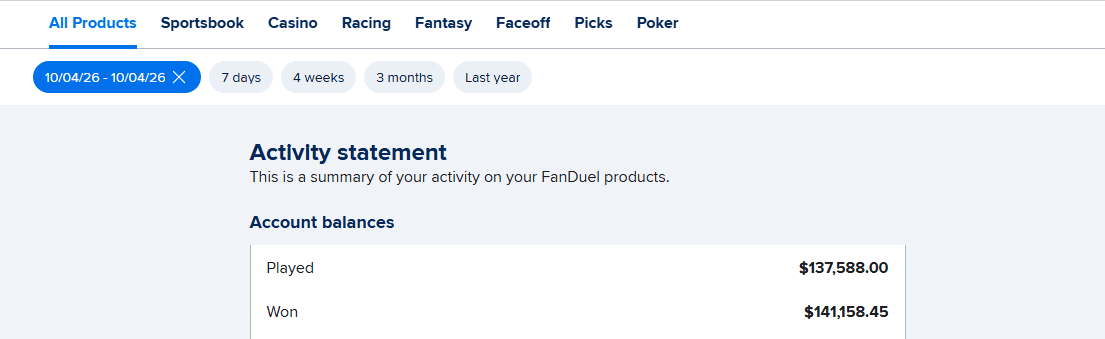
Our team monitors these real-time pace signals across all six partner books—FanDuel, DraftKings, Caesars, Fanatics, BetMGM, and ESPN BET—to find the best live total prices as games evolve. You can see our documented results at The Best Bet on Sports verified results page.
What Other Analytics Combine Well with Pace for NBA Totals?
Pace alone is a starting point, not a complete model. The strongest totals projections combine pace with:
Defensive efficiency ratings: A high-pace offense means little against an elite defense that controls possessions and forces low-percentage shots. ORtg vs. DRtg matchups fine-tune pace projections.
Three-point rate: High-volume three-point teams create more variance in scoring totals. Games with two high-3PA teams can go over or under dramatically based on shooting variance—which is a separate factor from pace.
Turnover rate: High-turnover teams create fewer total scoring possessions even if pace is high. Each turnover eliminates approximately one full scoring possession from the game total.
Rebound rate and second chance points: Offensive rebounding teams create more scoring opportunities per possession, effectively increasing scoring efficiency beyond what basic pace suggests.
For more on how our team approaches NBA totals, read our NBA betting strategy guide and our breakdown of NBA playoff over/under strategy.
How Does Rest and Back-to-Back Scheduling Affect Pace?
Fatigue has a measurable effect on pace. Teams on the second night of a back-to-back—especially road back-to-backs—show statistically lower pace and efficiency ratings. This creates specific totals opportunities when a high-pace team is playing tired.
Key rest-related pace adjustments:
- Teams on the second of back-to-back road games show pace reductions averaging 1.5–2 possessions per 48 minutes
- Three-games-in-four-nights situations compound fatigue further and reduce pace noticeably
- Teams with limited bench depth suffer more from fatigue than deep rosters with reliable rotations
- Playoff teams prioritizing health often voluntarily reduce pace in late regular season games
Understanding scheduling context alongside pace data creates a layered analytical picture that identifies when overs or unders are systematically mispriced. For scheduling-based NBA angles, read our detailed guide on NBA back-to-back betting strategy.
How to Access NBA Picks That Use Pace Analytics?
The Best Bet on Sports team incorporates pace analysis, efficiency ratings, rest factors, and live betting data into every NBA selection. With 20+ years of experience and +$367,520 in verified profit across our six partner sportsbooks, our analytical approach consistently finds totals value that casual bettors miss.
Picks are delivered via email or Discord text—whatever works for your routine. Whether you want pre-game NBA totals picks or live in-game alerts when pace creates real-time opportunities, we have delivery options to match your betting style.
Visit our NBA picks page to start receiving our plays, or check our basketball picks service for full NBA coverage.
Frequently Asked Questions About NBA Pace and Tempo Betting
What is NBA pace and why does it matter for betting totals?
NBA pace measures how many possessions a team uses per 48 minutes. Faster teams create more scoring opportunities, which directly affects game totals. When pace matchups are extreme—two fast teams playing each other, or two slow teams—the total should reflect the expected possession count, but sportsbooks don't always price this accurately, creating exploitable edges in over/under betting.
Where can I find NBA pace statistics for free?
The best free sources are Basketball Reference (pace factor and per-100-possessions stats), NBA Advanced Stats (official league data), and Cleaning the Glass (pace-adjusted efficiency metrics). These platforms provide the raw data needed to calculate expected scoring for any matchup using team pace and efficiency ratings.
Does pace drop in the NBA playoffs?
Yes, significantly. Average pace drops noticeably from the regular season to the playoffs as teams prioritize half-court offense, defensive intensity increases, and transition possessions decrease. This creates consistent under value in early playoff rounds for regular season high-pace teams, since sportsbooks often underestimate how much pace will slow in playoff basketball.
Which is more important for NBA totals—pace or defensive efficiency?
Both matter and work together. Pace determines how many possessions a game will have; defensive efficiency determines how many of those possessions result in points. The most powerful totals projections multiply expected pace by the blended offensive and defensive efficiency of both teams. A high-pace game with two elite defenses can still produce a low total.
Can pace analytics be used for NBA live betting?
Absolutely. Live betting is where pace analytics are most immediately actionable. Real-time pace shifts—when a team pushes transition after falling behind, or slows down due to foul trouble on a key playmaker—create live totals opportunities that automated lines don't adjust quickly enough to catch. This is a core part of how The Best Bet on Sports finds live NBA value.
Does rest and scheduling affect NBA pace?
Yes. Teams on the second night of back-to-back games, especially road back-to-backs, show measurable pace reductions. Fatigue limits a team's ability to push transition, effectively slowing the game and creating under value on totals. Combining rest analysis with pace matchup data produces stronger totals projections than either factor alone.
How do I get NBA picks that incorporate pace and analytics?
The Best Bet on Sports team integrates pace analytics, efficiency ratings, rest factors, and live betting signals into every NBA selection throughout the season. Our picks are available via our NBA picks service with delivery via email or Discord. Visit our basketball picks page for full NBA coverage and our results page for documented performance data.
The Best Bet on Sports · 1.5M followers on TikTok
Sports Betting TikTok is the live betting account behind The Best Bet on Sports, covering NFL, NCAAF, NBA, NCAAB, MLB and WNBA markets in real time. The account has been limited on all six major U.S. sportsbooks — FanDuel, DraftKings, Caesars, BetMGM, Fanatics and ESPN BET — for winning on live betting, with $367,520 in verified profit since 2005. View full profile →
Past results do not guarantee future performance. Must be 21 or older to wager.
Related Articles
NBA Playoffs Over-Under Betting: Totals Strategy That Works
Lu Dort Traded to the Hawks: What It Means for Betting
DeMar DeRozan Hits Free Agency: How the Betting Lines Move
Jaylen Brown Traded to the 76ers: How the Lines Move
Kawhi Leonard Traded to the Raptors: How the Betting Lines Move
Ja Morant Traded to the Blazers: How the Betting Lines Move
Get real live betting picks
From $39.95/mo · Cancel anytime · Email + Discord delivery
● Get The Picks
Choose your package
Tap any tier below to select · Subscribe in one tap
👇 Tap any package to select it
✓ You're selecting
25 Units · $99.95/month
25 unit picks per month. Sweet spot for most bettors — plenty of action without going all-in.
- ✓25 live betting selections/month
- ✓Email + Discord delivery
- ✓All sports (NFL, NCAAF, NBA, NCAAB, MLB)
- ✓Mix of 1, 2, 3, 5-unit rated plays
- ✓Cancel anytime
Secure PayPal · Cancel anytime · No hidden fees · 21+ · +$367K verified
+$367,520 verified · Limited on 6 sportsbooks · 20 years documented · See Proof
Join Our Newsletter
Get free expert sports picks and analysis delivered weekly.