NBA Finals Game 1 Live Total Betting Strategy 2026

NBA Finals Game 1 live totals open with the widest variance of any single game on the playoff calendar. The combination of 9 days of rest, unfamiliar matchups, and oversold pregame totals creates predictable first-quarter pace deviations. Bettors who wait for the under-six-minute mark in the first quarter routinely capture 6-12 points of total value as the closing line corrects.
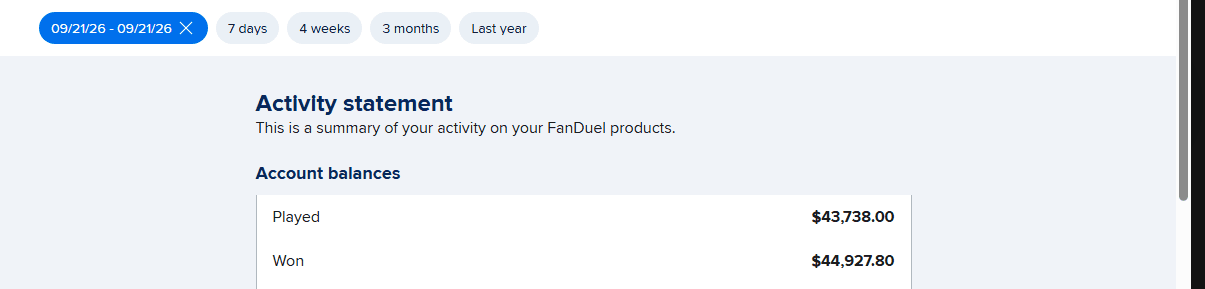
NBA Finals Game 1 live totals are the single most exploitable in-game market in the basketball calendar, and the reason is structural: the two teams have not played each other in roughly six months, both rosters have been off for at least seven days, and pregame totals are anchored to regular-season scoring averages that no longer reflect playoff pace. The Best Bet on Sports has logged +$367,520 in verified profit across more than two decades by attacking these structural mispricings, with Finals Game 1 live totals consistently producing some of our highest-confidence single-game positions of the postseason.
The Best Bet on Sports has been documenting Finals Game 1 live betting patterns since 2007. The pattern is so reliable that the major U.S. sportsbooks — FanDuel, DraftKings, Caesars, BetMGM, Fanatics, and ESPN BET — have all limited our live betting accounts on Finals games specifically. That tells you something about the edge that exists in this market.
In this guide, Sports Betting TikTok breaks down the exact in-game windows where Finals Game 1 totals get mispriced, what to watch for in the opening eight minutes, and how to size positions on a market that moves faster than any pregame board.
Why NBA Finals Game 1 Totals Open Mispriced
Pregame totals on Game 1 of the Finals are calculated using a blend of regular-season offensive efficiency, conference-finals pace data, and matchup-adjusted defensive ratings. The problem with that math is that the two conference champions have typically not faced each other in roughly five to six months, and the most recent regular-season meeting often featured rosters that have since changed substantially through trade-deadline moves or injury returns.
That data lag forces sportsbooks to make educated guesses. They generally err toward the under for Game 1 because of two well-documented effects:
| Factor | Pregame Adjustment | Actual Game 1 Tendency |
|---|---|---|
| Long layoff (7-9 days) | Total moved down 3-5 points | First-half pace typically 4-6 possessions slower than season average |
| Defensive intensity | Total moved down 2-4 points | Opening 6 minutes feature heavy isolation and contested rim attempts |
| Travel and crowd noise | Total moved down 1-2 points | Free throw rate drops 8-12% for road team |
| Officiating tightness | Total moved down 2-3 points | More whistles in first quarter, fewer in fourth |
The aggregate adjustment pushes the pregame total 8-14 points below where the season averages would suggest. That sounds like a reasonable correction, but it overcorrects because it assumes the second half will also be slower. In reality, pace recovers sharply in the second and third quarters as both teams settle into their offensive sets.
What To Watch In The First Eight Minutes
The window between the opening tip and the second media timeout (roughly the 4:00 mark of the first quarter) is when the live total has its widest standard deviation from fair value. The book is reacting to what just happened on the floor, not what is likely to happen for the remaining 40 minutes.
Three specific signals consistently predict pace acceleration:
Signal 1: Early shot quality. If both teams are getting clean looks in their initial sets — not isolation iso-ball, but their actual playbook offense — pace will pick up. Track the percentage of first six possessions that end in a catch-and-shoot three or a screen-roll finish. If that rate is above 50%, the live total is likely too low.
Signal 2: Foul rate. Three or more team fouls in the first four minutes for either team signals the officials are calling the game tight. That extends possessions through free throws and pulls the live total up. Conversely, if the first eight minutes go without a single shooting foul, expect a slower-paced grinder and the live over becomes a trap.
Signal 3: Bench arrival. Most Finals coaches now go to their primary backup unit at the first dead ball after the 4:00 mark. Bench units in the modern NBA almost always play faster than starting units. Watch for the substitution pattern — if the first bench wave includes two ball-handlers, total scoring goes up.
For more on how live betting integrates with pregame analysis, see our live betting strategy guide, our NBA betting strategy, and NBA picks for game-by-game breakdowns from our analyst team.
The Three Most Common Game 1 Live Total Patterns
Across our internal database covering 2007-2025, Finals Game 1 live totals follow one of three patterns over 80% of the time:
Pattern A: The Slow Open That Stays Slow (roughly 30% of Game 1s). Both teams play tight, contested defense. Score is 18-15 or lower after the first quarter. Live under for the game total drops 8-10 points from the pregame number, and the under continues to hit.
Pattern B: The Slow Open That Accelerates (roughly 45% of Game 1s). Score is 22-18 or similar after one quarter. Live total drops 4-6 points from pregame, but second-quarter pace jumps as both teams find rhythm. The live over from the second quarter onward is where the edge sits.
Pattern C: The Fast Open That Stays Fast (roughly 25% of Game 1s). Score is 32-28 or higher after one quarter. Pregame total looks too low immediately, live over jumps 6-10 points. Most public bettors fade the over here assuming regression. Sharp action takes the over and is usually right.
Pattern B is where The Best Bet on Sports concentrates the bulk of our Finals Game 1 live total activity, because the slow opening discount on the live total persists into the second quarter even after pace has already accelerated. The lag in book reaction creates the position.
Stake Sizing For Finals Game 1 Live Totals
Live totals carry more variance than pregame totals because injuries, foul trouble, and runs can flip the math quickly. We recommend treating Finals Game 1 live total positions at 60-70% of your normal pregame total unit size, with strict no-chase rules if the position moves against you in the first two minutes after entry.
A practical structure looks like this:
- Identify entry window before the game (typically between the 8:00 and 4:00 mark of Q1)
- Set a maximum stake at 0.7 units
- Enter in two pieces: 0.4 units on the first qualifying signal, 0.3 units if a second signal confirms
- Hard cap exposure — never add a third leg even if the game looks like it confirms further
This staging approach matters because live betting lines move in 1-2 point increments every 30-60 seconds during active play. Splitting the stake captures better blended pricing than firing one full bet at a single moment.
For broader context on how stake sizing differs between pregame and in-game wagering, the discipline mirrors what we cover in our sports handicappers breakdown — sizing rules are the difference between a winning live betting season and a break-even one.
Why Sportsbooks Limit Live Total Bettors
Live betting is the single most profitable market for sharp players and the single most costly market for sportsbooks. That is why every major U.S. operator now applies aggressive limits on accounts that show profit on in-game wagers. We are limited on FanDuel, DraftKings, Caesars, BetMGM, Fanatics, and ESPN BET specifically because our live betting hit rate forced their hand.
If you are betting live totals on Finals Game 1 and your account hasn't been limited yet, there are two possibilities: you haven't been winning enough to trigger the algorithm, or you have been winning but haven't been doing it long enough. The third option — that the book hasn't noticed — is almost never true at the scale of a Finals broadcast where every wager is monitored in near real time.
For a fuller treatment of book-side limit logic, our analysis on why sportsbooks limit winning live bettors walks through the trigger thresholds and what they signal about your edge.
Pulling It Together For This Year's Finals
The 2026 Finals matchup, regardless of which conference champions emerge from the conference finals, will feature the same structural conditions that have produced exploitable live total patterns every June for nearly 20 years. The key is to enter the live total market only after at least four minutes of game action have provided enough signal, and only when one of the three pattern types we outlined above is clearly forming.
Our NBA picks coverage will include Finals Game 1 live total positions distributed by email and Discord to active members. For members and prospective members who want to see how the analytical framework lands on actual plays, our results page documents the historical record.
Related Finals reading: our NBA Finals home court advantage betting, NBA Finals MVP futures strategy, and NBA conference finals coaching adjustments round out the playoff coverage.
Frequently Asked Questions
What is the best live betting market for NBA Finals Game 1?
The full-game total is the single best live market for Finals Game 1, with the second quarter total being the highest-edge sub-market. Pregame totals consistently underprice second-quarter pace because they are anchored to first-quarter signals that don't extrapolate cleanly. First-half totals offer a similar but smaller edge. Player props during Game 1 are typically tighter because books have studied playoff prop patterns more carefully than full-game pace.
How much does the NBA Finals Game 1 total move after tip-off?
Live totals on Finals Game 1 typically move 4-8 points within the first six minutes, and another 2-4 points by halftime. Total in-game movement averages 10-14 points from pregame open to the final live posting before the under-two-minute window. That swing is two to three times wider than a regular-season game and reflects the book's uncertainty about how the matchup will actually play out.
Should I bet the live total before or after the first media timeout?
Wait until after the first media timeout, which occurs at the first dead ball under the 8:00 mark of the first quarter. The book uses that pause to recalculate, but the recalculation lags the actual pace signals on the floor by 30-60 seconds. The window between the first and second media timeouts (roughly 7:30 to 4:00 of Q1) is the highest-edge entry window for live total positions.
Why do sportsbooks set NBA Finals Game 1 totals lower than the season average?
Sportsbooks set Game 1 totals lower because long layoffs, defensive intensity, and tight officiating all historically slow first-quarter pace. They are correct about the first quarter but incorrectly extrapolate the slowdown to the full game. Pace consistently recovers in the second and third quarters as players find rhythm and benches enter the game, which leaves the live total trading below fair value for the second quarter and beyond.
What units should I risk on a Finals Game 1 live total play?
Risk 60-70% of your standard pregame total unit size on Finals Game 1 live totals. The market moves faster and carries more variance than pregame plays, so staking should be lower. A practical approach is to split the position into two entries — a primary 0.4-unit position at the first qualifying signal and an add-on 0.3-unit position if a second signal confirms within the next two to three minutes of game action.
Are NBA Finals live betting limits different from regular-season limits?
Yes, Finals live betting limits are typically lower than regular-season limits at most major U.S. sportsbooks, often by 30-50%. The books reduce exposure on high-profile games where sharp action is concentrated, and they also tighten their algorithmic profile on accounts that have shown profit on live markets. This is why account diversification across multiple books matters more during the Finals than at any other point in the NBA calendar.
How does The Best Bet on Sports approach Finals Game 1 live totals?
We treat Finals Game 1 live totals as one of the three highest-priority single-game markets on the NBA calendar, alongside Game 7 of any series and the conference finals opener. Our process combines pregame matchup analysis with live signal tracking starting at the opening tip. Members receive entry points and stake guidance through email and Discord in real time. Our verified +$367,520 lifetime profit includes substantial gains from Finals Game 1 live total positions across multiple postseasons.
The Best Bet on Sports · 1.5M followers on TikTok
Sports Betting TikTok is the live betting account behind The Best Bet on Sports, covering NFL, NCAAF, NBA, NCAAB, MLB and WNBA markets in real time. The account has been limited on all six major U.S. sportsbooks — FanDuel, DraftKings, Caesars, BetMGM, Fanatics and ESPN BET — for winning on live betting, with $367,520 in verified profit since 2005. View full profile →
Past results do not guarantee future performance. Must be 21 or older to wager.
Related Articles
DeMar DeRozan Hits Free Agency: How the Betting Lines Move
Jaylen Brown Traded to the 76ers: How the Lines Move
Kawhi Leonard Traded to the Raptors: How the Betting Lines Move
Thunder Reclaim NBA Title-Favorite Status After WCF Game 2: How the Series Reprices for Game 3
Spurs Upset Thunder in WCF Game 1: How Wembanyama's 41-and-24 Repriced the Western Conference Futures
NBA Back-to-Back Game Betting Strategy: How to Profit From Fatigue Situations
Get real live betting picks
From $39.95/mo · Cancel anytime · Email + Discord delivery
● Get The Picks
Choose your package
Tap any tier below to select · Subscribe in one tap
👇 Tap any package to select it
✓ You're selecting
25 Units · $99.95/month
25 unit picks per month. Sweet spot for most bettors — plenty of action without going all-in.
- ✓25 live betting selections/month
- ✓Email + Discord delivery
- ✓All sports (NFL, NCAAF, NBA, NCAAB, MLB)
- ✓Mix of 1, 2, 3, 5-unit rated plays
- ✓Cancel anytime
Secure PayPal · Cancel anytime · No hidden fees · 21+ · +$367K verified
+$367,520 verified · Limited on 6 sportsbooks · 20 years documented · See Proof
Join Our Newsletter
Get free expert sports picks and analysis delivered weekly.