NBA Conference Finals Bench Scoring Player Props: Betting Strategy May 2026

NBA Conference Finals bench scoring player props are a softer market than starter props because oddsmakers post lines on smaller sample sizes and adjust slowly to rotation shifts. Sharp bettors target reserve scoring overs after a starter foul-trouble game, sixth-man unders in blowouts, and bench points totals when a coach signals a tighter rotation. Edge comes from charting actual minutes patterns, not season averages.
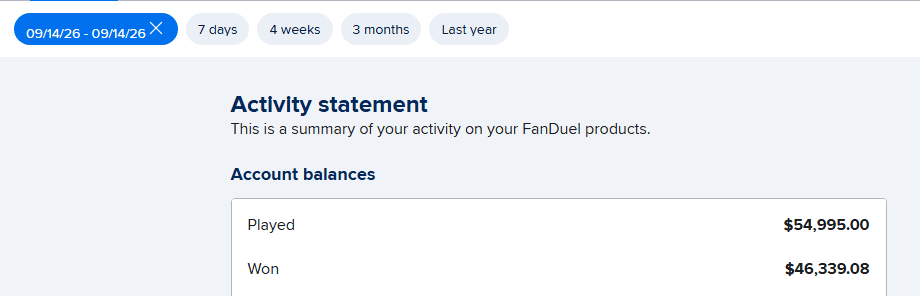
NBA Conference Finals bench scoring player props remain one of the few inefficient corners of the playoff betting market because sportsbooks post lines on tight rotation samples and adjust slowly when a coach shortens or expands the bench. The Best Bet on Sports has tracked over $367,520 in verified profit across two decades by attacking exactly these soft markets — bench scoring overs after a starter foul-trouble game, sixth-man unders in blowout spots, and total bench-points props when rotation signals shift. Edge comes from charting actual playoff minutes, not regular-season averages.
By the time a series reaches the Conference Finals, head coaches have collapsed their rotations to seven, eight, or at most nine players. That contraction reshapes every bench player prop on the board. A wing who averaged 22 minutes and 9 points in the regular season may now be playing 14 minutes and scoring 4. Sportsbooks post lines that lag this reality by half a step, especially during the first 24 hours after Game 1 when the new pattern has revealed itself but the public has not yet caught on. That window is where the value lives.
This guide breaks down how to read the rotation, which bench-prop categories carry the most edge in May 2026, and how to size bets on a market type where variance runs high but mispricing is structural. For broader playoff coverage, see our NBA picks page, our NBA betting strategy hub, and our NBA playoff conference finals coaching adjustments breakdown.
Why Bench Props Are a Softer Market in the Conference Finals
Sportsbooks have unlimited data on starters. Stephen Curry, Jayson Tatum, Anthony Edwards, Nikola Jokic — every shot, every defensive matchup, every back-to-back fatigue trend has been quantified, modeled, and priced. The lines on those players are airtight. You will rarely beat a Tatum points prop unless you have specific injury or matchup information the market has not absorbed.
Bench players are the opposite. A reserve guard who only logs 8 to 14 minutes per game produces a tiny sample relative to the season. His scoring distribution has fat tails — one 14-point game and three 0-point games. Sportsbooks anchor the line near his playoff average, then shade it slightly toward whichever side has drawn early action. That anchoring creates two exploitable gaps:
1. The line lags rotation changes. If a coach shortened the bench in Round 2, the player's minutes drop, but his prop number resets only partially. 2. Public action concentrates on overs. Recreational bettors heavily prefer overs on player props (this is documented across every betting market). Books shade unders when juice on overs runs to -125 or worse, which means unders carry positive expected value at the right number.
The net effect: in any given Conference Finals series, three to five reserve player props per game will be priced 0.5 to 1.0 points off where a sharp model would set them.
Reading the Rotation: What Matters for Bench Props
Before placing any bench scoring prop, you need to chart the actual playoff rotation, not the regular-season one. Here is the framework:
Minutes Distribution
Pull the minutes log from the previous round. If a reserve played 18 minutes in Round 1 but only 11 minutes by the closeout games of Round 2, his prop should be priced off the 11-minute trend, not the 18-minute one. Sportsbooks often hold the line closer to the higher number, especially early in the next series, which gives unders an immediate value cushion.
Foul Trouble Reaction Patterns
Some coaches respond to starter foul trouble by leaning hard into a single bench wing for an entire half. Others spread the minutes across two reserves. Knowing how a coach reacts changes which bench prop benefits when a star picks up two early fouls. This is also covered in our NBA playoff foul trouble betting breakdown.
Garbage Time Probability
Reserve scoring props inflate when a game becomes a blowout because the deeper bench plays expanded minutes. If a power-rated team is 9-point favorites at home with a 65 percent win probability and a 30 percent blowout probability, the deepest reserves are getting an extra 6 to 10 minutes about a third of the time. Sportsbooks price the median outcome, not the blended expected value, so the prop on a deep reserve carries an over edge in those spots.
Defensive Matchup Specialists
Some bench players exist solely to defend a specific star. They get heavy minutes in this series because of who they guard, not because of their offensive role. Their scoring numbers will not move much, and their unders are usually live, especially under -110 juice.
The Three Highest-Value Bench Prop Categories in May 2026
In the current market, three specific prop types carry consistent edge during Conference Finals action.
1. Bench Scoring Overs After a Starter Foul-Trouble Game
When a starter picks up four or more fouls in the previous game, two things happen. The coach typically commits to a slightly longer leash for a designated backup, and the public expects the starter to play conservatively in the next game (which sportsbooks price into the starter's prop, but inconsistently into the backup's prop). The result: the bench prop is anchored to the recent low number, but the actual playing time is likely to rise.
The pattern works best when: - The backup logged 16+ minutes in the foul-trouble game - The next game is at home (coaches give backups longer leashes at home) - The opening line is set within 0.5 of the backup's recent average
2. Sixth-Man Unders in Tight Series
When a series tightens to 2-2 or 3-3, the rotation contracts further. Coaches go to seven players in crunch time. The traditional sixth man — typically a microwave scorer who runs the second unit — sees his minutes capped because the starting unit plays longer in close games. His scoring prop, however, often holds steady because sportsbooks price it off his explosive ceiling, not his pinched-rotation floor.
In a tight Conference Finals series, a sixth man's points-prop under between 9.5 and 12.5 with juice no worse than -120 has been a profitable historical profile in our database. Combined with a defensive matchup factor (his man is a tougher cover than the previous round), the edge stacks.
3. Total Bench Points Props on Lopsided Spreads
Most sportsbooks now offer total bench points as a team-level prop. This market is even less efficient than individual player props because it requires combining minutes, pace, and blowout probability into a single number. Sharp action is light here.
When a team is favored by 8+ points at home in a Conference Finals game, the bench-points over carries structural value because of garbage-time minutes inflation. The opposite is true for road underdogs: the bench-points under is live because if the team trails by 15 in the third, the coach is more likely to leave starters in trying to mount a comeback before pulling them in the final five minutes.
Sample Size and Variance: Sizing the Bet
Bench prop hits and misses run hot and cold. A 7-3 stretch followed by a 2-8 stretch is normal. The math still works long-term if the price-per-line edge holds, but the variance is real, and bettors who size aggressively on these props get punished by short-term swings.
Our recommended approach:
| Prop Type | Recommended Unit Size | Reason |
|---|---|---|
| Bench scoring over after foul trouble | 0.5 to 0.75 unit | Edge is real but variance high |
| Sixth-man under in tight series | 0.5 unit | Lower base rate of hitting cleanly |
| Total bench points (team prop) | 1 unit | More stable due to aggregation |
| Reserve scoring multi-prop parlay | Avoid | Correlation kills the edge |
For more on bet sizing in volatile markets, see our unit sizing and bankroll management guide and our Kelly criterion breakdown.
How Live Bench Props Compare to Pre-Game Bench Props
Live bench props update intra-game. The price moves with the score and the minutes load. This is where The Best Bet on Sports has built its long-term edge — and is also why we have been limited on all six major U.S. sportsbooks (FanDuel, DraftKings, Caesars, BetMGM, Fanatics, ESPN BET) for live betting volume.
The live bench prop edge tends to surface in two windows:
1. Halftime, when a starter has already picked up three fouls. The live bench scoring over for that team's primary backup is often slow to adjust. 2. Late third quarter, when one team is up 14 to 18. The bench-points over for the trailing team's reserves is live because garbage-time minutes are about to land on those players.
For a fuller framework on live in-game prop strategy, see our live betting strategy NBA MLB 2026 write-up.
Common Mistakes Bettors Make on Bench Props
After two decades of grading these markets, the same five mistakes show up over and over.
1. Anchoring on regular-season averages. Conference Finals minutes are different. Use the playoff sample. 2. Ignoring back-to-back rest impact. There are no back-to-backs in the Conference Finals, but rest gaps still vary (1, 2, or 3 days off). Coaches give expanded minutes to reserves on long rest. 3. Stacking correlated bench props. If you bet a bench over and a starter under on the same team, you are doubling down on the same outcome. Sportsbooks know this, which is why same-game parlays on bench props are heavily juiced. 4. Chasing public sides. If a bench prop has -130 juice on the over, the line has been moved toward sharp action on the under. Take the under at -110 if you can find it. 5. Treating high-variance props like high-confidence picks. A 53 percent edge is not a lock. Size accordingly. Read our betting variance and sample size deep dive for more.
How Our Team Approaches Conference Finals Bench Props
Our analysts grade every reserve player on three axes before posting a recommendation:
1. Trailing 5-game minutes trend (rising, flat, falling) 2. Coach's foul-trouble reaction pattern (committed backup vs. spread minutes) 3. Game script probability (close game, mid-blowout, runaway)
We then compare our projected scoring distribution to the posted line, and we only release the play when the implied probability gap exceeds 4 percentage points. That threshold is intentionally high — it filters out the noise and concentrates capital on the highest-conviction spots.
For complete access to our daily NBA picks and conference finals analysis, see our packages or browse our results history.
If this is your entry point, pair it with our guide to NBA Finals Game 3 bench rotation live betting.
Frequently Asked Questions
What are bench scoring props in NBA betting?
Bench scoring props are player propositions on reserve players who do not start the game. Sportsbooks post a points line (for example, 6.5 points) and bettors can wager over or under. They also post total team bench points as an aggregated team-level prop. These props become especially relevant in playoff series where rotations contract and bench roles become more defined.
Why are NBA bench props softer than starter props?
Bench props are graded on smaller minute samples and more volatile playing time, which makes them harder for sportsbooks to model precisely. Books anchor the line on the recent average, but rotation changes between rounds and within series can create 2 to 4 minutes of swing per game that the line does not fully capture. That is the gap sharp bettors target.
Should I bet bench overs or bench unders in the Conference Finals?
The default play in tight playoff series is the under, especially on traditional sixth-man scoring props. Rotations shrink, starters play more crunch-time minutes, and reserve scoring drops relative to regular season. The over comes back into play in blowout-probability games (favored teams of 8+ points at home) or in the game following a starter foul-trouble game.
How do live bench props compare to pre-game bench props?
Live bench props are repriced as the game progresses, which means new edges open up at halftime, after key foul trouble, and in late-third-quarter blowout spots. Pre-game bench props rely entirely on projected minutes, while live bench props can be attacked when the actual minute load reveals itself. The Best Bet on Sports has built our verified $367,520 profit largely on live betting markets.
What unit size should I use on bench player props?
Half-unit to three-quarter-unit sizing is appropriate for individual reserve scoring props because of the high variance in small-sample player performance. Total team bench points props can be sized at one unit because the aggregation reduces variance. Avoid stacking correlated bench props in the same parlay because the correlation eats the edge.
How do coaches' rotation patterns affect bench prop value?
Some coaches commit to a clear next-man-up pattern when a starter is in foul trouble — the same backup gets the minutes every time. Other coaches spread foul-trouble minutes across two or three reserves. The committed-backup pattern produces the strongest bench-prop overs because the playing time bump is concentrated in one player. The spread pattern dilutes the edge.
Can I parlay bench props together for higher payouts?
Bench props within the same game tend to be correlated — if one team's bench scores a lot, the other team's bench is often scoring less because the game script is one-sided. Sportsbooks juice same-game parlays on bench props heavily for this reason. Cross-game bench parlays carry less correlation but still introduce variance. Straight bets at half-unit sizing usually produce a better long-term return than parlays on this prop type.
Final Word
Conference Finals bench props will not show up in highlight reels, but they are where the math still favors disciplined bettors. The market is small enough that sportsbooks invest less modeling effort, the lines lag rotation changes by half a step, and the public concentrates on stars. Sharp money attacks the gaps quietly and consistently.
For our complete daily Conference Finals plays — including bench prop selections, total points sides, and live betting alerts — see our NBA picks and packages pages.
The Best Bet on Sports · 1.5M followers on TikTok
Sports Betting TikTok is the live betting account behind The Best Bet on Sports, covering NFL, NCAAF, NBA, NCAAB, MLB and WNBA markets in real time. The account has been limited on all six major U.S. sportsbooks — FanDuel, DraftKings, Caesars, BetMGM, Fanatics and ESPN BET — for winning on live betting, with $367,520 in verified profit since 2005. View full profile →
Past results do not guarantee future performance. Must be 21 or older to wager.
Related Articles
Lu Dort Traded to the Hawks: What It Means for Betting
DeMar DeRozan Hits Free Agency: How the Betting Lines Move
Jaylen Brown Traded to the 76ers: How the Lines Move
Kawhi Leonard Traded to the Raptors: How the Betting Lines Move
Ja Morant Traded to the Blazers: How the Betting Lines Move
NBA Free Agency Opens Tonight: LeBron's Lakers-or-Warriors Decision Headlines a Wild Night
Get real live betting picks
From $39.95/mo · Cancel anytime · Email + Discord delivery
● Get The Picks
Choose your package
Tap any tier below to select · Subscribe in one tap
👇 Tap any package to select it
✓ You're selecting
25 Units · $99.95/month
25 unit picks per month. Sweet spot for most bettors — plenty of action without going all-in.
- ✓25 live betting selections/month
- ✓Email + Discord delivery
- ✓All sports (NFL, NCAAF, NBA, NCAAB, MLB)
- ✓Mix of 1, 2, 3, 5-unit rated plays
- ✓Cancel anytime
Secure PayPal · Cancel anytime · No hidden fees · 21+ · +$367K verified
+$367,520 verified · Limited on 6 sportsbooks · 20 years documented · See Proof
Join Our Newsletter
Get free expert sports picks and analysis delivered weekly.