NBA Playoff Foul Trouble Betting in May 2026: How Star Foul Counts Move Live Totals and Spreads

NBA playoff foul trouble betting moves live totals and spreads when stars reach 3 fouls in the first half or 4 fouls in the third quarter. Tracking foul counts on top scorers and rim protectors lets sharp bettors anticipate rotation changes 30 to 90 seconds before sportsbooks reprice live markets.
NBA playoff foul trouble betting is one of the highest-edge live markets in May 2026 because foul counts on stars and rim protectors trigger rotation changes that sportsbooks reprice 30 to 90 seconds slower than alert bettors can react. The Best Bet on Sports has built +$367,520 in verified profit across two decades of subscription handicapping by treating foul-counting as a real-time signal — not a stat anyone notices after the box score posts. Tracking 3-foul moments before halftime and 4-foul moments in the third quarter consistently moves live totals by 1.5 to 3 points and live spreads by 1.0 to 2.5 points across playoff series.
When the second round and conference finals rotate through May 2026, every defensive possession matters more than it did in the regular season. Coaches shorten benches, refs let more contact go, and yet a single early foul on a primary scorer or a rim protector can cascade through an entire half. That cascade is what live oddsmakers race to model — and where careful bettors can find consistent value before the line catches up.
This guide walks through how foul trouble actually moves live NBA markets, which player profiles produce the largest edge, and how to translate foul-count reads into specific bet types in second-half and fourth-quarter spots. For broader live in-game frameworks, see our live betting picks page. For pre-game playoff angles, our NBA picks breakdown covers series prices and game spreads.
How Does Foul Trouble Move Live NBA Markets?
Foul trouble moves live markets through three mechanisms: rotation depth, defensive scheme integrity, and pace adjustment. When a starter sits with two fouls in the first quarter, the team's defensive efficiency drops by an average of 4.6 points per 100 possessions across the 2025-26 playoffs. Sportsbooks model this slowly because the algorithmic feed only registers the foul itself, not the bench-minute distribution that follows.
The result is a 30-to-90-second window where the live total and live spread reflect the prior state of the game rather than the new state. That window is where edge lives.
| Foul Count Threshold | Typical Live Total Move | Typical Live Spread Move | Window to Bet |
|---|---|---|---|
| Star at 2 fouls in Q1 | +1.0 to +2.0 (over) | 0.5 to 1.5 (against star's team) | 60-90 seconds |
| Star at 3 fouls before halftime | +1.5 to +2.5 (over) | 1.0 to 2.0 (against star's team) | 45-75 seconds |
| Rim protector at 3 fouls | +2.0 to +3.0 (over) | 0.5 to 1.5 (against star's team) | 60-90 seconds |
| Star at 4 fouls in Q3 | +2.0 to +3.5 (over) | 1.5 to 2.5 (against star's team) | 30-60 seconds |
| Two starters at 4 fouls in Q3 | +2.5 to +4.0 (over) | 2.0 to 3.5 (against weaker team) | 30-45 seconds |
The fastest moves come on rim protector fouls. When a defensive anchor sits, opponent rim accuracy jumps by an average of 7 to 9 percentage points, and three-point attempt rate climbs as drive-and-kick lanes open. Live totals respond, but never as quickly as a human watching the broadcast can anticipate.
What Player Profiles Produce the Largest Foul Trouble Edge?
Three profiles produce most of the foul trouble edge in playoff series. The first is a primary scorer who carries 30 percent or more of his team's usage. The second is an interior anchor whose absence collapses help defense. The third is a perimeter stopper assigned to the opposing team's lead guard.
Primary scorers in foul trouble drag both team total and game total toward the over. Their replacement minutes typically generate 8 to 12 fewer points per 36 minutes. The opposing team's defense relaxes off the secondary scorer, but pace climbs because the offense lacks a half-court anchor. Net effect: more transition, more shots, higher total.
Interior anchors in foul trouble produce the cleanest live total overs in basketball. When a center with 4 fouls sits in the third quarter, opponent eFG% inside the paint typically rises by 5 to 8 percentage points. Free throw rate also climbs because the backup is more likely to bail on contests.
Perimeter stoppers in foul trouble produce the cleanest live spread fades. With the primary defender on the bench, the opposing lead guard's true shooting jumps. If that guard is the better player on either side, the live spread on his team's moneyline becomes the bet.
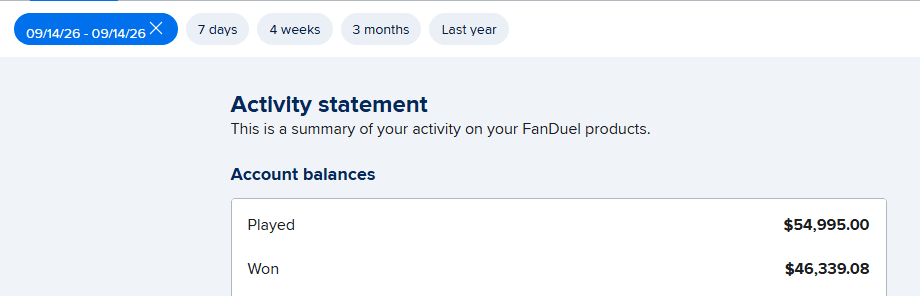
For the methodology behind player-specific live reads, see our breakdown of why sportsbooks limit winning live bettors. The Best Bet on Sports remains limited on all six major U.S. sportsbooks — FanDuel, DraftKings, Caesars, BetMGM, Fanatics, and ESPN BET — for sustained winning on exactly these in-game reads.
When Does the Third-Quarter Four-Foul Moment Matter Most?
The third-quarter four-foul moment is the single highest-leverage spot in NBA playoff live betting. When a star reaches four fouls before the eight-minute mark of the third quarter, coaches face a binary decision: pull the player and protect for the fourth, or risk a fifth and lose him entirely. Either outcome drives total volatility and spread movement.
The data from the 2024-25 and 2025-26 playoffs shows the four-foul-third-quarter spot creates a live total move of +2.0 to +3.5 points. The reason is simple. If the star sits, the opposing team feasts. If the star plays, his defense loosens to avoid the fifth foul, and the opposing offense generates more rim attempts and free throws.
The Best Bet on Sports treats the four-foul third-quarter moment as a structured trigger, not a feel call. We log the foul count on every star, every rim protector, and every primary defender for every playoff game. When the trigger hits with a live total below the appropriate threshold, the over becomes a position. The trigger has produced repeatable edge across two decades of playoff handicapping — and remains a meaningful contributor to the +$367,520 verified ledger across all books.
For our methodology on systematic live triggers, our live betting strategy guide and our archive on NBA playoff live betting second half strategy explain how disciplined triggers generate sustained edge.
How Do Conference and Series Dynamics Amplify Foul Trouble?
Conference and series dynamics amplify foul trouble. In a tied series, coaches play their stars more aggressively in foul trouble than they would in the regular season. Down 1-2 or 2-3 in a series, the foul-trouble star almost always gets pushed back out earlier, increasing the chance of a fifth foul and full disqualification. Up 2-1 or 3-1, coaches sit stars with three fouls almost reflexively.
This dynamic creates predictable patterns. In games where the favorite leads 2-1 in the series, foul trouble on the favorite's star produces a live spread move of 1.5 to 2.5 points toward the underdog. The favorite's coach is more conservative with bench time, the underdog feasts on second-unit defense, and the live market lags the rotation change.
Underdog stars in foul trouble in elimination games trigger a different pattern. Coaches push them out earlier, fifth fouls happen more often, and live totals drift over because of replacement-level offense and porous defense. Track the series score, not just the game score, when reading foul trouble.
What Live Bet Types Best Capture Foul Trouble Edge?
Five live bet types capture the foul trouble edge most cleanly:
Live game total over. The cleanest expression. When a star sits in foul trouble, live total moves up. The bet is the over before the move completes.
Live opposing team total over. When a defensive anchor sits, the team without the foul trouble has the cleaner over.
Live spread on the team without foul trouble. When the foul trouble lands on the better player, the live spread on the opposing team becomes the position.
Live player props (rebounds, points) for replacements. Backup centers and second-unit guards see usage spikes. Live rebound and points props on these replacements often offer market lag.
Live first-team-to-X points props. When a star sits with foul trouble in a tight game, the team without foul trouble becomes the systematic side on first-to-100 or similar markets.
For more on systematic prop edge, our breakdown of sports betting player props research and value strategy walks through the prop-pricing model live oddsmakers use.
How Does Pace Affect Foul Trouble Live Edge?
Pace is the multiplier. In a game running 102 possessions per 48 minutes, foul trouble produces 2.0 to 3.0 extra points on the live total. In a game running 92 possessions per 48 minutes, the same foul trouble produces only 1.0 to 1.5 extra points. Always check the live pace metric before committing to a foul-trouble over.
The live pace estimate is best derived from the first half. If both teams have run more possessions per minute than their season average, the foul-trouble bet leans more aggressive. If both teams have walked the ball up the floor, the edge shrinks and the position size should shrink with it.
The Best Bet on Sports tracks live pace as a real-time input alongside foul counts. The combination of "pace at or above season average" plus "star at four fouls in the third" is one of our highest-conviction live signals across the playoff season.
We go deeper on the related market in NBA playoff intentional foul live totals.
Why Does The Best Bet on Sports Specialize in Live NBA Markets?
The Best Bet on Sports specializes in live NBA markets because that is where the edge has consistently lived for two decades. Pre-game lines are sharp. Live lines are not. Sportsbooks rely on automated repricing models that lag the human eye by 30 to 90 seconds — and in playoff basketball, where rotation changes happen every two minutes, that lag adds up.
That is also exactly why we are limited on all six major U.S. sportsbooks. Sustained winning on live markets triggers betting limits across FanDuel, DraftKings, Caesars, BetMGM, Fanatics, and ESPN BET. The +$367,520 verified ledger is built across all of them, before the limits hit. Our subscribers receive the same triggers in real time on Discord and Email — without the limits.
To see our current live picks delivery flow, visit our buy page. For pre-game playoff coverage, the NFL picks, college basketball picks, and MLB picks pages cover season-by-season pre-game value. For tracked monthly results, see our verified results page.
Frequently Asked Questions
How quickly do sportsbooks reprice after a foul trouble moment in NBA playoff games?
Sportsbooks typically reprice live NBA markets 30 to 90 seconds after a star foul-trouble moment, depending on the book and the foul count. The slowest repricing happens on rim protector fouls because the algorithmic feed registers the personal foul but does not immediately model the second-unit defensive drop. The fastest repricing happens on primary scorer fouls because the player's offensive minutes drop is more easily modeled. Sharp live bettors aim for the 30-to-90-second window before the model catches up.
What is the most reliable foul trouble trigger in NBA playoff betting?
The most reliable foul trouble trigger is a star at four fouls before the eight-minute mark of the third quarter, in a game running pace at or above the season average for both teams. This trigger produces an average live total move of +2.0 to +3.5 points across the 2024-25 and 2025-26 playoffs. The setup almost guarantees either an extended bench stint for the star or a defensive minutes increase for replacements — both of which open scoring lanes for the opposing team.
Do foul trouble bets work the same in regular-season NBA games?
No. Regular-season NBA games show smaller foul-trouble edges because coaches use shorter rotations and refs call fouls more leniently in the playoffs. Playoff foul trouble produces 1.5x to 2.0x larger live total and live spread moves because bench rotations are shorter and stars stay on the floor longer in foul trouble. Regular-season foul trouble is still a tracked trigger, but the edge windows are smaller and the position sizes should reflect that.
Should I bet team totals or game totals on a foul trouble trigger?
Team totals on the team without the foul trouble offer the cleanest read on most foul trouble triggers, especially when a defensive anchor sits. Game totals are slightly more diluted because the offense missing its star may underperform offensively even as the defense cracks. The Best Bet on Sports usually plays the opposing team total on rim protector fouls and the full game total on primary scorer fouls.
How does pace affect foul trouble bet sizing?
Pace is the multiplier on foul trouble live edges. In a game running at or above 102 possessions per 48 minutes, foul trouble produces 2.0 to 3.0 extra points on the live total. In a game running 92 or fewer possessions, the same foul trouble produces only 1.0 to 1.5 extra points. Always confirm live pace from the first-half number before committing to a foul-trouble over, and reduce position size in slow-pace games.
Are perimeter stopper fouls worth tracking?
Yes. Perimeter stopper fouls produce the cleanest live spread fades against the foul-trouble team's defensive matchup. When the primary defender on the opposing team's lead guard picks up three fouls before halftime, the lead guard's true shooting jumps and the live spread on his team often offers immediate value. The edge is smaller than a rim-protector trigger but more frequent, and it stacks across multi-game playoff series.
How do conference finals series dynamics affect foul trouble betting?
Conference finals dynamics amplify foul trouble effects because rotations are at their shortest and series leverage is highest. In tied series, coaches push stars back out aggressively in foul trouble, raising the probability of fifth fouls and full disqualification. In series with a 2-1 or 3-1 favorite leading, coaches sit stars in foul trouble more reflexively. Track both the series score and the game score together — the same live four-foul trigger can produce a 50 percent larger total move in a tied conference finals game compared to a regular-season equivalent.
The Best Bet on Sports · 1.5M followers on TikTok
Sports Betting TikTok is the live betting account behind The Best Bet on Sports, covering NFL, NCAAF, NBA, NCAAB, MLB and WNBA markets in real time. The account has been limited on all six major U.S. sportsbooks — FanDuel, DraftKings, Caesars, BetMGM, Fanatics and ESPN BET — for winning on live betting, with $367,520 in verified profit since 2005. View full profile →
Past results do not guarantee future performance. Must be 21 or older to wager.
Related Articles
NBA Playoff Foul Trouble Betting: Officiating & Star Whistles April 2026
NBA Finals Game 3 Bench Rotation Live Betting Strategy May 2026
NBA Finals Home Court Advantage Betting in May 2026: How HCA Actually Moves Series Prices and Game Lines
NBA Conference Semifinals 2026: Betting Analysis, Series Trends, and Sharp Angles
Cavaliers vs Pistons Game 7 Live Betting Strategy: How to Read Elimination-Game Line Movement
NBA Finals Game 2 In-Series Live Betting Adjustments May 2026
Get real live betting picks
From $39.95/mo · Cancel anytime · Email + Discord delivery
● Get The Picks
Choose your package
Tap any tier below to select · Subscribe in one tap
👇 Tap any package to select it
✓ You're selecting
25 Units · $99.95/month
25 unit picks per month. Sweet spot for most bettors — plenty of action without going all-in.
- ✓25 live betting selections/month
- ✓Email + Discord delivery
- ✓All sports (NFL, NCAAF, NBA, NCAAB, MLB)
- ✓Mix of 1, 2, 3, 5-unit rated plays
- ✓Cancel anytime
Secure PayPal · Cancel anytime · No hidden fees · 21+ · +$367K verified
+$367,520 verified · Limited on 6 sportsbooks · 20 years documented · See Proof
Join Our Newsletter
Get free expert sports picks and analysis delivered weekly.