NBA Playoff Conference Finals 2026: Best Futures Bets and Bracket Analysis

NBA Playoff conference finals 2026 betting offers sharper value than pre-playoff futures because first-round results reveal real data on team health, defensive intensity, and rotation depth. The best conference finals futures target teams with favorable matchup profiles, hot three-point shooting in playoff conditions, and head coaches proven at in-series adjustments. Here is how to identify the value remaining in the bracket.
NBA Playoff conference finals 2026 betting offers sharper value than pre-playoff futures because first-round results reveal real data on team health, defensive intensity, and rotation depth that March odds could never reflect. The best conference finals futures bets target teams with favorable matchup profiles against remaining opponents, demonstrably hot shooting percentages in playoff conditions, and head coaches who have proven themselves capable of in-series adjustments. Post-second-round futures prices contain meaningful inefficiency — the window to act is narrow.
The NBA Playoffs are the most information-dense betting environment in professional basketball. Every series generates publicly visible data — lineup rotations, pace adjustments, individual shooting percentages, defensive scheme variations, and foul trouble patterns — that was simply unavailable when futures were priced in the preseason or even at the trade deadline. The bettor who processes that information faster and more accurately than the market finds real edge in late-round futures.
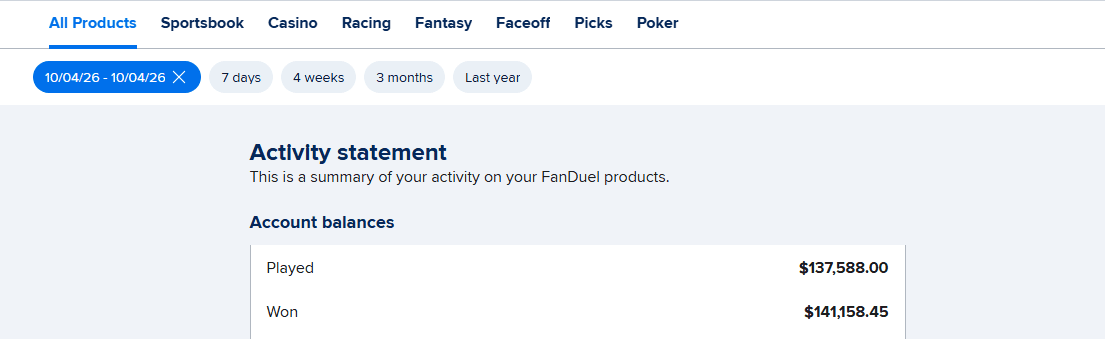
At The Best Bet on Sports, the NBA Playoffs represent one of the highest-activity periods of the calendar, with game-by-game picks, series betting, and futures positions all generating documented returns in our verified +$367,520 sportsbook profit record since 2005.
What First-Round Results Actually Tell You
The first round of the NBA Playoffs is a data collection exercise as much as a competition. By the time the second round begins, you have observable data on:
Rotation tightening: Every coach shrinks rotations in the playoffs. By round two, it is clear which eight or nine players will receive meaningful minutes for each team. Depth chart assumptions made in March have been replaced by confirmed game-time evidence.
Defensive intensity: Regular-season defensive ratings understate playoff defensive intensity because of pace differences and opponent quality. First-round DRTG against a legitimate offense is a far more useful signal than regular-season numbers.
Shooter performance under pressure: Playoff shooting percentages are lower than regular-season percentages across the board, but the decline is not uniform. Some players whose offensive games rely heavily on rhythm and movement are more severely impacted by playoff defensive physicality. First-round performance identifies who maintained efficiency and who regressed.
Injury status and management: Players nursing undisclosed injuries, managing minutes restrictions, or playing through pain reveal themselves across 4–7 games. By the conference finals, injury clarity has reached a level that preseason futures pricing could never capture.
Visit The Best Bet on Sports NBA picks for current conference finals series picks and updated futures recommendations with explicit unit sizing.
The Analytical Framework for Conference Finals Futures
Three-Point Volume and Variance
NBA Playoffs are decided heavily by three-point variance. Teams that shoot significantly above or below their regular-season three-point percentages in early rounds are likely to see regression in later rounds — statistical reversion is one of the most reliable phenomena in playoff basketball.
A team that shot 42% from three in the first round on high volume is due for regression in subsequent rounds. A team that shot 31% despite high volume from quality shooters is due for positive regression. Identifying which direction regression favors in a conference finals matchup is one of the most actionable analytical tools available.
Paint Dominance and Foul Drawing
Teams with dominant interior presence — either offensive rebounders, shot blockers, or aggressive foul drawers — hold structural advantages in playoff series because these skills are less variance-dependent than three-point shooting. Physical dominance in the paint compounds across a seven-game series in ways that perimeter shooting skill does not.
Head Coach Adjustment Cycles
The best playoff coaches — those who have sustained success across multiple playoff runs — demonstrate the ability to make significant defensive scheme adjustments between games 2 and 3 of a series. This adjustment cycle requires personnel flexibility, multiple viable defensive schemes, and the analytical staff to identify opposing tendencies quickly. Identifying which coaches in the remaining field have demonstrated this capacity versus which coaches have been one-scheme throughout their playoff histories is a meaningful differentiator.
Fatigue and Scheduling Advantages
The NBA playoff schedule creates asymmetric fatigue conditions. A team that won in five games rests more than a team that needed seven. A team that finished a series on Monday entering a series starting Thursday has a recovery advantage versus a team that won Wednesday and starts Thursday. These scheduling asymmetries are calculable and are often underweighted in conference finals futures pricing.
The NBA betting strategy content at The Best Bet on Sports covers all of these analytical dimensions in detail.
Matchup Profiles That Create Conference Finals Betting Value
The most valuable conference finals futures bets typically share one of three profiles:
The fatigue underdog: A well-rested team with a favorable matchup facing a team that survived a grueling seven-game second-round series. The fatigue discount on the exhausted favorite often creates over-value on the rested underdog's series price.
The three-point regression candidate: A team that shot unusually high three-point percentages in the first two rounds, generating public confidence and heavy series betting, now facing a defensive team that ranks in the top five in opponent three-point rate. The market has priced continued hot shooting; the analytical bettor prices regression to baseline.
The matchup nightmare: A team whose specific personnel and scheme creates structural mismatches against a more celebrated opponent. Playoff basketball is won on matchup edges, not regular-season record. The team with the fourth-best regular-season record that perfectly neutralizes the top seed's offensive system is systematically underpriced in futures markets driven by narrative.
| Matchup Profile | Why Bettors Undervalue | How to Identify |
|---|---|---|
| Rested underdog vs. fatigued favorite | Media narrative favors the winner, not the rested | Calculate days of rest differential + series length |
| Defensive team vs. hot-shooting favorite | Recent shooting luck looks like skill | Compare 3P% to full-season average |
| System-specific matchup advantage | Rankings and records drive casual pricing | Film analysis of defensive alignment vs. offensive scheme |
| Coaching adjustment edge | Head coaches underweighted in futures | Head coach playoff win rates in later rounds |
See the full results history at The Best Bet on Sports to review documented NBA playoff futures performance.
How to Size Conference Finals Futures Positions
Conference finals futures are longer-duration bets than single-game plays, which affects appropriate sizing. A standard conference finals futures position should be 1-2 units — larger than your single-game standard if the value is substantial, but with meaningful risk management given the multi-game duration and potential for a single injury to eliminate the edge entirely.
Do not size above 3 units on any conference finals futures position regardless of perceived certainty. Injuries, officiating variance, and home-court shooting luck can swing series quickly in the NBA. The value of the position exists in the aggregate — building a portfolio of conference finals positions across both conferences and directions — not in maximum concentration on a single bet.
For complete unit-sized NBA playoff picks, subscribe at The Best Bet on Sports — where conference finals series picks, game-by-game plays, and futures recommendations are delivered with explicit betting structure.
Live Betting as a Conference Finals Edge
Conference finals series create some of the best live betting opportunities on the calendar because seven-game sets develop clearly identifiable momentum patterns, adjustment cycles, and rotation tendencies. A team that is consistently outplaying the halftime score indicator in live moments — dominating paint points, getting to the line, controlling pace — but trails due to three-point variance is a buy-low live betting opportunity.
The Best Bet on Sports has been limited on all six major U.S. sportsbooks — FanDuel, DraftKings, Caesars, BetMGM, Fanatics, and ESPN BET — for winning too much at live betting. Our live betting edge in the NBA Playoffs is the clearest indicator of where the analytical process creates its most consistent returns.
For access to live betting plays and real-time pick alerts during the conference finals, visit the buy page for subscription options including same-day delivery via Discord and Email.
Conference Finals vs. Finals Futures: Which Offers Better Value?
Most bettors face the same question at this stage of the bracket: is it better to bet conference finals or NBA Finals futures? The answer depends on the specific pricing.
Conference finals futures carry shorter odds and resolve in 4–7 games, making them lower-variance than NBA Finals futures that require winning two additional series. NBA Finals futures carry more variance but also more potential return on correctly identified long-shot positions.
The standard professional approach is to build positions at the conference finals level for the most reliable value, then hedge or add exposure at the Finals level as series results clarify the field further. This layered approach captures available edge at each stage rather than concentrating all futures exposure on a single preseason bet.
For current conference finals futures recommendations and game-by-game NBA Playoffs picks, see The Best Bet on Sports sports handicappers team coverage across all four remaining series.
Related Strategy Reading
For deeper context on the angles covered above, our analysis of nba playoff foul trouble officiating betting strategy and nba playoffs first round best bets remaining pairs well with this guide; our NBA handicappers reflect these same principles applied to live games.
Frequently Asked Questions
When is the best time to bet NBA conference finals futures?
The optimal entry point for NBA conference finals futures is after second-round series end — specifically within 24 hours of the conference finals field being set. Initial prices on a fresh conference finals matchup are the least efficient, as oddsmakers set opening lines quickly to capture action before full analysis is incorporated. The first market mover after a series conclusion often provides the best available price before sharp money narrows the line.
How important is home court advantage in the NBA conference finals?
Home court advantage in NBA playoff series is worth approximately 3-4 points per game in spread markets and roughly 60-40 in series win probability. However, home court advantage diminishes in series between closely matched teams with comparable depth and coaching. The structural value of home court is largest in Game 7 situations, where teams with home court win approximately 68-70% historically. Teams with home court in a conference finals matchup carry meaningful structural advantages in futures pricing.
How does three-point shooting variance affect conference finals betting?
Three-point shooting variance is the largest source of short-term result divergence in NBA playoff series. Teams that shot significantly above their season three-point average in earlier rounds tend to regress in subsequent rounds, which means their conference finals futures are often overpriced. Conversely, quality shooting teams that underperformed from deep in early rounds represent positive regression candidates. Quantifying the deviation from baseline and the volume of attempts provides actionable signal.
Should I fade the best regular-season team in conference finals betting?
Not systematically. The best regular-season team enters the conference finals with genuine structural advantages — superior depth, proven systems, and experienced rotations. However, a team that barely survived a seven-game second-round series against a lower seed while the opponent swept or won in five deserves a serious look as an underdog. The fatigue differential and momentum asymmetry can make the regular-season underdog a better value than the surface record implies.
How do coaching adjustments affect NBA series outcomes?
Coaching adjustments account for a substantial portion of series variance in the NBA Playoffs. Elite playoff coaches — those with demonstrably high second-game and third-game adjustment rates — can neutralize talent advantages through scheme changes. Coaches who rely on a single defensive scheme and have no second-level adjustment available are vulnerable in long series against analytically sophisticated opponents. Playoff coaching track records in later rounds are underweighted in futures pricing and should inform series bets.
What role do injuries play in conference finals futures?
Injuries are the highest-impact single variable in conference finals outcomes and the most difficult to price. The best approach is to identify teams with legitimate backup options at injury-prone positions rather than concentrating futures exposure on teams whose entire value proposition depends on one player's continued health. Teams with two or three high-caliber rotation players at every position absorb injury variance better and carry lower catastrophic risk in conference finals futures positions.
How does pace preference affect conference finals matchups?
Pace creates significant matchup advantages in playoff series. A team that plays at the fastest pace in the league facing a team that thrives at the slowest pace faces a fundamental conflict that the slow team typically wins — because slowing the game reduces possessions, reduces variance, and removes the fast team's biggest structural advantage. Identifying pace mismatches and betting the series in the direction that favors the team whose pace preference is likelier to dominate provides an edge that pre-series futures prices do not fully incorporate.
The Best Bet on Sports · 1.5M followers on TikTok
Sports Betting TikTok is the live betting account behind The Best Bet on Sports, covering NFL, NCAAF, NBA, NCAAB, MLB and WNBA markets in real time. The account has been limited on all six major U.S. sportsbooks — FanDuel, DraftKings, Caesars, BetMGM, Fanatics and ESPN BET — for winning on live betting, with $367,520 in verified profit since 2005. View full profile →
Past results do not guarantee future performance. Must be 21 or older to wager.
Related Articles
NBA Conference Finals Picks 2026: Best Bets and Matchup Breakdown
2026 NBA Free Agency: How the Title Odds Are Moving
Best NBA Handicappers: How to Find Winners Who Actually Deliver
NBA Handicapper Success Stories: What Winning Bettors Do Differently
Lu Dort Traded to the Hawks: What It Means for Betting
DeMar DeRozan Hits Free Agency: How the Betting Lines Move
Get real live betting picks
From $39.95/mo · Cancel anytime · Email + Discord delivery
● Get The Picks
Choose your package
Tap any tier below to select · Subscribe in one tap
👇 Tap any package to select it
✓ You're selecting
25 Units · $99.95/month
25 unit picks per month. Sweet spot for most bettors — plenty of action without going all-in.
- ✓25 live betting selections/month
- ✓Email + Discord delivery
- ✓All sports (NFL, NCAAF, NBA, NCAAB, MLB)
- ✓Mix of 1, 2, 3, 5-unit rated plays
- ✓Cancel anytime
Secure PayPal · Cancel anytime · No hidden fees · 21+ · +$367K verified
+$367,520 verified · Limited on 6 sportsbooks · 20 years documented · See Proof
Join Our Newsletter
Get free expert sports picks and analysis delivered weekly.