NBA Handicapper Success Stories: What Winning Bettors Do Differently

NBA handicapper success stories reveal consistent patterns: winners use pace-adjusted efficiency metrics instead of raw box scores, exploit rest-day advantages that the market underprices, maintain strict bankroll discipline through inevitable cold stretches, and specialize in specific bet types where they have demonstrated edge rather than chasing action across every market. Understanding what successful NBA handicappers actually do differently — and what distinguishes their process from the losing majority — provides a blueprint for any bettor serious about long-term basketball profitability.
# NBA Handicapper Success Stories: What Winning Bettors Do Differently
Successful NBA handicappers separate themselves from the losing majority through relentless attention to scheduling dynamics, advanced statistical modeling using offensive and defensive efficiency ratings, and the discipline to pass on games where the analytical edge is thin or nonexistent. The handicappers who consistently profit from NBA betting are not the ones with secret information or inside connections, they are the ones who outwork the market on publicly available data and maintain iron discipline with their bankroll management across an eight-month season.
I have been evaluating NBA handicappers at The Best Bet on Sports for over twenty years, and the patterns among consistent winners are remarkably clear. The successful ones all share a handful of core habits that casual bettors either ignore or actively resist. What makes these success stories instructive is not the specific picks these handicappers make but the process they follow and the discipline they maintain. Anyone can tail a winning pick. What separates long-term winners from the rest is the ability to execute a proven process night after night, month after month, without deviating when emotions run high or results run cold.
What Do Successful NBA Handicappers Focus On Daily?
After two decades of working alongside some of the sharpest NBA minds in the business, the patterns among consistent winners are unmistakable. Every successful handicapper I have worked with shares a core set of analytical priorities that they execute with religious consistency.
Schedule analysis is their foundation. The NBA regular season is a grind of 82 games with constant travel, back-to-backs, and rest management strategies that teams implement differently. Successful handicappers map out scheduling advantages and disadvantages weeks in advance. They know which team is playing its fourth game in six nights, which team is coming off a cross-country flight, and which team has been sitting at home for three days waiting for one game.
These factors matter enormously in a league where effort and energy fluctuate game to game. A team playing its best basketball might look completely different on the second night of a back-to-back after flying from Portland to Miami. The box score does not tell you that the team was gassed. The schedule does.
They lean on advanced metrics rather than box scores. Points per game and win-loss records are surface-level data that the public uses. The handicappers who win consistently dig into offensive and defensive ratings, pace of play, effective field goal percentage, turnover rate, and rebounding differential. These numbers reveal how a team actually plays, not just whether they won or lost a given game.
They understand market dynamics at a professional level. The NBA betting market is heavily influenced by casual money, especially on nationally televised games. Successful handicappers know when the public is inflating a line and exploit the value created by that imbalance. Public teams in prime-time spots are routinely overvalued, and sharp NBA handicappers profit from that tendency season after season.
How Do Winning Handicappers Navigate Load Management?
Load management has transformed NBA handicapping over the past several years. Star players sitting out on the second night of a back-to-back is no longer unusual. It is expected and routine. The handicappers who adapted early to this reality have thrived while others struggled.
The key is not just knowing when a player will rest. It is understanding and quantifying how that absence affects the team's performance relative to the spread. Some teams are built with enough depth that losing their best player drops their output by two or three points. Others fall apart completely without their star. Successful handicappers have built databases quantifying the specific impact of every significant player absence across the league.
They also track how sportsbooks react to rest announcements, which is where much of the value lives. Sometimes the line overreacts to a star sitting out, creating value on the short-handed team because the public assumes the absence is more damaging than the data suggests. Other times the market does not adjust enough, creating value on the opponent. The edge lives in the gap between market reaction and actual historical impact.
| Player Impact Level | Typical Line Adjustment | Actual Performance Drop | Value Opportunity |
|---|---|---|---|
| MVP-caliber star | 4-6 points | 3-5 points | Varies |
| All-Star starter | 2-4 points | 2-3 points | On short-handed team |
| Quality starter | 1-2 points | 1-2 points | Minimal |
| Rotation player | 0-1 points | 0.5-1 point | Rarely exists |
Monitoring NBA handicappers who consistently navigate rest day scenarios profitably is a strong indicator of overall analytical sophistication and adaptability.
What Bankroll Strategies Do Winning NBA Bettors Use?
The NBA season is long, running from October through June, and the volume of games creates both tremendous opportunity and significant risk. Successful handicappers manage this reality with strict bankroll protocols that never waver.
Flat betting with rare exceptions is the standard approach among winning NBA bettors. Most wager the same unit size on every play. Occasional increases for highest-conviction spots are acceptable when the analytical edge is significantly above average, but the vast majority of the card stays flat. This approach smooths out variance over an 82-game season and prevents the emotional trap of chasing losses with escalating unit sizes.
Selective play count is critical with up to 15 games on the board some nights. The temptation to bet heavily when so many games are available is constant and powerful. Successful handicappers resist this temptation ruthlessly. They typically play three to six games per night, focusing only on matchups where their model identifies a clear discrepancy from the market line. I have seen more bankrolls destroyed by overbetting a full NBA card than by any single bad pick.
Season-long perspective keeps emotions in check. The NBA season runs eight months. Winning handicappers understand that a rough two-week stretch is meaningless in the context of an eight-month campaign. They do not chase losses, do not panic after a losing week, and do not deviate from their process when results temporarily dip. This perspective is easy to describe and incredibly difficult to maintain in practice.
What Lessons Can You Learn from NBA Handicapping Failures?
Success stories are instructive, but the failure patterns tell you exactly what to avoid. After twenty years of observing both sides, the most common reasons NBA handicappers fail are consistent and avoidable.
Overreacting to recent results is the most common failure. A team that loses three straight is not necessarily in decline. A team on a seven-game winning streak is not necessarily elite. Successful handicappers look past short-term noise and focus on underlying performance metrics that predict future outcomes rather than describe recent ones.
Ignoring the totals market leaves money on the table. Many NBA bettors focus exclusively on sides and neglect totals entirely. Some of the most consistent value in NBA betting comes from over-under markets, particularly when pace mismatches exist or when back-to-back scheduling affects energy levels and offensive execution.
Betting big on marquee matchups is a trap. The public hammers Lakers-Celtics and Warriors-Bucks, driving the lines to maximally efficient levels. The sharpest edges often exist in less visible matchups that receive less public attention and less modeling sophistication from the sportsbooks.
Chasing losses after a bad night is the bankroll killer that claims more victims than any other behavioral mistake. I have watched experienced handicappers abandon their entire process after a 1-4 night and try to make it back immediately. It almost never works and usually accelerates the decline.
The Best Bet on Sports tracks performance across all NBA bet types. Our NBA picks include sides, totals, and player props because consistent winners do not limit themselves to one market.
How Can You Apply These Lessons to Your Own NBA Betting?
Start by building a framework for evaluating NBA games that goes beyond watching highlights and reading box scores. Incorporate scheduling data, track advanced team metrics, and build a simple model that generates a projected spread for each game on the board.
Compare your projections to the market line. When the gap is significant, typically two or more points, and you understand why the discrepancy exists, you have a play worth considering. When the gap is small or you cannot explain why your number differs from the market, pass. Discipline in selection is the single trait that unites every successful NBA handicapper I have ever worked with.
Track everything in a spreadsheet. Record your projected spread, the market spread, your pick, the line you took, and the result. Review weekly and monthly to identify patterns in your winning and losing plays. This self-analysis is how you evolve from following picks to generating your own profitable plays.
How Do Successful NBA Handicappers Use Player Props?
Player props represent one of the most inefficient NBA betting markets, and the handicappers who have built the most impressive long-term records recognize this and allocate significant analytical resources to the prop market.
The inefficiency exists because sportsbooks set prop lines based partly on season averages, which do not account for specific matchup dynamics on a given night. A center averaging 10 rebounds facing a team that ranks last in defensive rebounding rate should have his prop set above his average, but books often lag in making these adjustments.
Successful prop handicappers build opponent-adjusted projections for specific statistical categories. They track how each team defends at specific positions, how pace affects counting stats, and how minute projections change based on competitive dynamics. A blowout in either direction reduces star minutes and props, while a close game extends them.
Our results page documents prop performance alongside spread and totals results because we believe full transparency across all bet types is essential for proper evaluation.
What Does a Typical Winning NBA Season Look Like?
Setting realistic expectations prevents both premature celebration and premature abandonment of a sound process. A typical winning NBA season for a strong handicapper looks very different from what most bettors imagine.
Expect monthly win rates to fluctuate between 48% and 62%. Some months will be slightly losing. Others will be very strong. The variance is normal and does not indicate a broken process. The key is the cumulative result across the full season.
A strong full-season result is plus 20 to 35 units on flat one-unit betting across 500 or more plays. Elite seasons produce plus 40 to 50 units. These numbers might sound modest, but at meaningful unit sizes, they represent substantial profit. At 200 dollars per unit, a plus 30 unit season generates 6,000 dollars in profit from NBA alone.
The path to that result includes stretches of brilliance and stretches of frustration. What separates winners from losers is the ability to maintain process through both. Visit our football picks page to see how the same disciplined approach applies across different sports, and explore our sports handicappers directory for verified professionals.
---
Related Strategy Reading
For deeper context on the angles covered above, our analysis of basketball handicapping dos and donts and best nba handicappers how to find winners pairs well with this guide; our basketball betting reflect these same principles applied to live games.
Frequently Asked Questions
What win rate do successful NBA handicappers typically achieve?
Consistent NBA handicappers generally win between 53% and 57% of their ATS plays over a full season. Given the volume of games, even a 54% win rate generates solid profit over the course of the year when combined with disciplined unit sizing. Be wary of anyone claiming rates significantly above 60% across large samples.
Is NBA handicapping harder than NFL handicapping?
They present different challenges. The NBA offers far more games and data points, which advantages model-based handicappers. However, the sheer volume of games and the impact of rest, motivation, and load management make daily evaluation more demanding. Neither is inherently harder, but they require different skill sets and time commitments. Our NFL picks and NBA picks apply sport-specific methodologies to each market.
How important are player props in NBA handicapping success?
Player props represent one of the most inefficient NBA betting markets and offer significant opportunities for knowledgeable handicappers. Books set prop lines based partly on season averages that do not account for specific matchup dynamics. Handicappers who study opponent defensive tendencies at specific positions consistently find value in this market.
What is the biggest difference between amateur and professional NBA bettors?
Professional bettors pass on far more games than they bet. An amateur might bet eight games on a busy NBA night. A professional might bet two or three after analyzing all of them. Selectivity, not volume, is the hallmark of professional NBA betting. Process discipline through losing stretches is the second biggest differentiator.
How do successful handicappers handle the NBA All-Star break?
The All-Star break creates a natural reset point for the season. Many successful handicappers use this break to recalibrate their models based on first-half data, adjust team ratings for mid-season roster changes, and prepare for the stretch run when motivation and playoff positioning create additional handicapping variables.
What tools do professional NBA handicappers use?
Professional handicappers typically use custom-built databases tracking scheduling patterns, advanced team and player metrics, referee crew data, and line movement history. They subscribe to multiple data providers and maintain accounts at numerous sportsbooks for line shopping purposes. The analytical infrastructure behind a professional NBA handicapping operation is substantial.
Can recreational bettors learn from NBA handicapper success stories?
Absolutely. The core principles that drive professional success, including schedule analysis, advanced metrics, selective play count, flat unit sizing, and emotional discipline, are all applicable to recreational bettors at any bankroll level. Start by implementing one principle at a time and building your process gradually. Visit our NBA betting page for educational content that complements professional NBA picks.
The Best Bet on Sports · 1.5M followers on TikTok
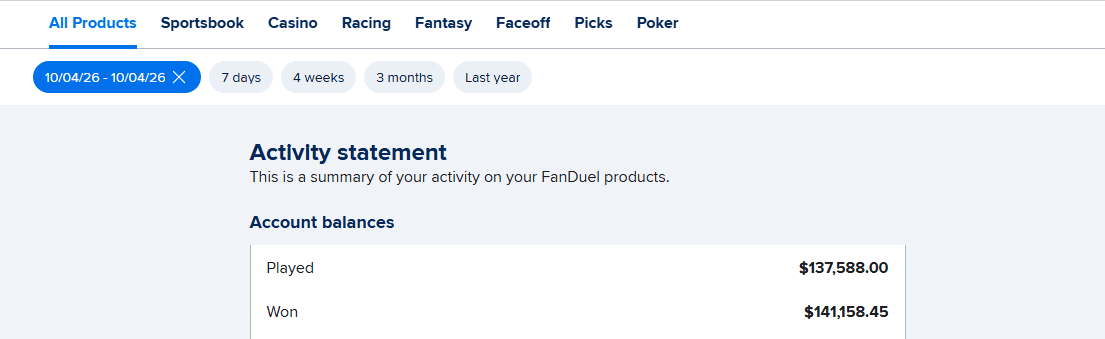
Sports Betting TikTok is the live betting account behind The Best Bet on Sports, covering NFL, NCAAF, NBA, NCAAB, MLB and WNBA markets in real time. The account has been limited on all six major U.S. sportsbooks — FanDuel, DraftKings, Caesars, BetMGM, Fanatics and ESPN BET — for winning on live betting, with $367,520 in verified profit since 2005. View full profile →
Past results do not guarantee future performance. Must be 21 or older to wager.
Related Articles
Best NBA Handicappers: How to Find Winners Who Actually Deliver
NBA Conference Finals Picks 2026: Best Bets and Matchup Breakdown
NBA Back-to-Back Game Betting Strategy: How to Profit From Fatigue Situations
NBA Playoff Conference Finals 2026: Best Futures Bets and Bracket Analysis
Best NBA Handicapper 2026: What to Look For and Who Delivers Results
Lu Dort Traded to the Hawks: What It Means for Betting
Get real live betting picks
From $39.95/mo · Cancel anytime · Email + Discord delivery
● Get The Picks
Choose your package
Tap any tier below to select · Subscribe in one tap
👇 Tap any package to select it
✓ You're selecting
25 Units · $99.95/month
25 unit picks per month. Sweet spot for most bettors — plenty of action without going all-in.
- ✓25 live betting selections/month
- ✓Email + Discord delivery
- ✓All sports (NFL, NCAAF, NBA, NCAAB, MLB)
- ✓Mix of 1, 2, 3, 5-unit rated plays
- ✓Cancel anytime
Secure PayPal · Cancel anytime · No hidden fees · 21+ · +$367K verified
+$367,520 verified · Limited on 6 sportsbooks · 20 years documented · See Proof
Join Our Newsletter
Get free expert sports picks and analysis delivered weekly.