Basketball Handicapping Dos and Don'ts: Avoid These Common Betting Mistakes

Basketball handicapping dos and don'ts define the line between profitable NBA and college basketball bettors and the losing majority. The biggest dos include tracking schedule fatigue, using pace-adjusted efficiency metrics over raw box scores, and maintaining flat-unit bankroll discipline through every cold stretch. The biggest don'ts are chasing losses after a bad night, overvaluing star power without checking the line, and ignoring the fundamental differences between how NBA and college basketball markets price games.
The biggest dos in basketball handicapping are tracking schedule fatigue, using pace-adjusted efficiency metrics over raw box scores, and maintaining flat-unit bankroll discipline through every cold stretch. The biggest don'ts are chasing losses after a bad night, overvaluing star power without checking the line, and ignoring the fundamental differences between NBA and college basketball markets. Mastering these rules separates long-term winners from the losing majority.
I remember sitting in my office during the 2012 NBA season, staring at a spreadsheet that showed I was dead even after 300 plays. Three hundred carefully analyzed bets and nothing to show for it. The frustrating part was that my game analysis was strong -- I was picking the right sides more often than not. The problem was everything around the picks: chasing after bad nights, betting games I had not fully researched, and treating NBA and college hoops as interchangeable. Once I identified and eliminated those process errors, my results improved dramatically without any change to my actual handicapping methodology. After more than 20 years at The Best Bet on Sports, I have compiled the essential dos and don'ts that I wish someone had drilled into my head from day one.
Do: Build Your Entire Analysis Around Schedule and Rest Factors
Basketball is the sport where scheduling matters most to betting outcomes, and it is not even close. The NBA's 82-game regular season means teams are constantly managing fatigue, travel, and rest. College basketball adds the complication of young bodies, academic schedules, and wildly different travel situations. These factors create predictable patterns that sharp handicappers exploit every single day of the season.
Track how many games each team has played in the last seven days. A team playing its fourth game in six nights is a measurably worse version of itself, regardless of raw talent. The starters play fewer minutes, the bench gets more run, intensity drops in the fourth quarter, and shooting percentages -- particularly from three-point range -- decline noticeably. These effects are not theoretical. They show up consistently in the data year after year.
Back-to-backs remain the most actionable schedule spot in basketball betting. Teams on the second night of a back-to-back, especially on the road, cover the spread at a lower rate than the market typically adjusts for. The line might move a point or two to account for the fatigue, but the actual performance drop is often larger. Conversely, teams with two or more days of rest facing a fatigued opponent have a structural advantage that the line frequently underprices.
Incorporate rest differential into every single game you evaluate. The gap between a rested team and a tired one is worth one to three points on the spread depending on the specific circumstances, and when the market does not account for it fully, you have found value. I calculate rest differential as the first step in my daily handicapping process, before I even look at matchup specifics or statistical comparisons. Our NBA picks always factor in schedule and rest analysis before anything else.
Don't: Treat NBA and College Basketball as the Same Sport
This is one of the most common and expensive mistakes in basketball betting. The NBA and college basketball are fundamentally different sports from a handicapping perspective, and the strategies that work in one do not automatically transfer to the other. I see bettors make this mistake constantly, and it costs them real money.
Pace of play varies dramatically between the two levels. NBA games feature faster possessions, fewer turnovers per possession, and higher scoring. College games use a shot clock that is five seconds longer, and many programs play deliberately slow tempos that compress scoring into tight windows. This means totals markets behave very differently -- a 145-total in college requires completely different analysis than a 220-total in the NBA.
Talent distribution is far more uneven in college basketball. The NBA has relatively balanced rosters compared to college, where a single dominant player can carry an entire team. This makes individual matchups more impactful in college and requires more granular player-level analysis. When a college team's best player goes down with an injury, the impact is often two to three times larger than losing a comparable player in the NBA because the roster depth simply does not exist at the college level.
Market efficiency differs significantly between the two levels. The NBA market is sharper because it receives more betting volume and more professional attention. College basketball, especially mid-major conferences, has softer lines with more exploitable inefficiencies because sportsbooks cannot devote equal resources to pricing 350 teams accurately. Smart handicappers adjust both their approach and their bankroll allocation to take advantage of these efficiency differences. Explore dedicated basketball handicappers who specialize in the specific league you are betting rather than generalists who cover everything superficially.
Do: Use Advanced Metrics and Stop Relying on Win-Loss Records
Win-loss records tell you who has won games. They do not tell you who is playing well, who has been lucky, or who is likely to win future games. This distinction matters enormously in basketball handicapping because the spread market already prices in win-loss records. If you are basing your analysis on the standings, you are using the same information as every other casual bettor and the sportsbook algorithms.
A team can be 8-4 while being outplayed in most of those games thanks to close-game variance, lucky bounces, and opponents' end-of-game collapses. Another team can be 5-7 despite outperforming their opponents statistically in nearly every contest. The 8-4 team has an inflated line because the market respects their record. The 5-7 team is undervalued because the market discounts theirs. This is where edges live.
Focus on metrics that measure actual performance independent of results. Offensive and defensive efficiency ratings -- points scored and allowed per 100 possessions -- are the foundation of sound basketball analysis. Effective field goal percentage tells you how well a team shoots when adjusting for the extra value of three-pointers. Turnover percentage measures ball security. Offensive rebounding rate captures second-chance opportunities. Free throw rate indicates how often a team gets to the line.
| Advanced Metric | What It Measures | Why It Matters More Than Record |
|---|---|---|
| Offensive Efficiency | Points per 100 possessions | Normalizes for pace differences |
| Defensive Efficiency | Points allowed per 100 possessions | True defensive quality |
| Effective FG% | Shooting adjusted for 3-point value | Better than raw FG% |
| Turnover Rate | Turnovers per possession | Ball security indicator |
| Offensive Rebound Rate | % of available offensive boards | Second-chance opportunities |
| Free Throw Rate | FTA per FGA | Getting to the line matters |
These metrics, often called the Four Factors when combined, explain the vast majority of basketball outcomes. Build your analysis around them, and you will make better predictions than bettors who rely on the standings. Our results page demonstrates the difference this analytical approach makes over a full season.
Don't: Chase Losses After a Bad Night No Matter How Tempting It Feels
Basketball offers games nearly every night during the season, and that availability is both a blessing and a curse. After a losing night -- and everyone has them -- the temptation to load up on the next slate to get even is overwhelming. The games are right there. The opportunity to recover feels immediate. Resist this temptation with everything you have, because chasing losses is the single fastest way to destroy a profitable basketball betting approach.
Chasing leads to three destructive behaviors that compound on each other. First, you bet on games you have not fully analyzed because you need action to recover. This means you are placing wagers without genuine edges, which is the definition of gambling rather than handicapping. Second, you increase your unit size to recover faster, exposing your bankroll to catastrophic risk on bets that are already weaker than your typical plays. Third, your emotional state clouds your judgment, making every decision incrementally worse than it would be under normal circumstances.
The best basketball bettors I have worked with over my 20-year career all share the same response to a losing night. They review their process, confirm their analysis was sound, verify that they were on the right side of closing line value, and move forward at the same stake level the next day. They do not change anything about their approach because of short-term results. They trust the sample size and they trust their edge.
The NBA season is 82 games per team spread across six months. The college season runs from November through April with conference tournaments and March Madness extending into late March. That is an enormous amount of time. Any losing streak -- even a brutal two-week stretch -- represents a small fraction of the total sample. You do not need to recover everything tomorrow. You need to make good bets consistently and let the math work over time.
Do: Pay Close Attention to Line Movement and Public Betting Percentages
Understanding who is betting what and how the line reacts provides context that pure statistical analysis cannot replicate. Line movement tells a story about where the money is flowing, and learning to read that story gives you an edge that data-only handicappers miss.
When a line moves against the public betting percentage, that is typically an indicator of sharp money on the other side. For example, if 75 percent of bets are on Team A at -3 but the line moves to Team A -2.5, professional bettors are taking Team B in sufficient volume and dollar amount to move the market against the public tide. This reverse line movement is one of the most reliable signals in basketball betting and has been a consistent part of my process for over a decade.
Public teams in marquee matchups are consistently overvalued by the market. When the Lakers play the Celtics on national television, recreational money floods in on whichever team has the better narrative or the hotter recent stretch. This inflates the line beyond what the actual matchup merits and creates value on the other side. I actively monitor public betting percentage data as part of my daily routine and use it as a confirming or disconfirming indicator for my statistical analysis.
Steam moves -- sudden, sharp line movements across multiple books simultaneously -- indicate coordinated professional action. When I see a line move from -4 to -5.5 within 20 minutes across three or more sportsbooks, that tells me serious money with a real edge is entering the market. I do not always follow steam moves blindly, but I always investigate them and often find that my own analysis supports the direction of the move.
Don't: Ignore Totals and Player Props Just Because Sides Feel More Familiar
Many basketball bettors focus exclusively on spread betting and miss some of the most profitable markets available. This is a significant missed opportunity, especially in the current market environment where prop lines and totals are consistently less efficient than side lines.
Totals in basketball are heavily influenced by pace matchups, and the market often sets totals based on simple averaging rather than detailed pace analysis. When a team that plays at the fastest pace in the league faces a team that grinds out possessions, the total is harder for the market to set accurately because the outcome depends on which team controls the pace. These pace mismatches create consistent value on unders or overs depending on the specific dynamics of how each team imposes its tempo.
Player props offer even more inefficiency than totals. Books set prop lines partly on season averages, which do not account for specific opponent defensive tendencies, recent rotation changes, or game script projections. A guard facing a team that ranks last in perimeter defense is a fundamentally different proposition than the same guard facing the league's best backcourt defenders. Handicappers who study these individual matchups find edges in the prop market with remarkable regularity.
I allocate approximately 30 percent of my basketball betting volume to totals and props, and that allocation has consistently produced a higher ROI than my side bets. The edges are larger and more frequent in these markets because they receive less sharp attention. Visit our NBA betting resources for daily analysis that covers sides, totals, and props across every slate.
Do: Keep Detailed Records and Review Them at Least Monthly
You cannot improve what you do not measure, and this principle applies to basketball betting more than almost any other endeavor. Logging every bet with precise detail and reviewing those records regularly is the single most impactful habit a bettor can develop, yet the vast majority of recreational bettors never do it.
Log every bet with the date, sport, league, pick, line, odds, stake, and result. Include a brief note on your reasoning for each play -- something as simple as "rest advantage plus under-valued road team" is enough to create a searchable database of your own decision-making patterns. At the end of each month, review your records for patterns that reveal your genuine strengths and weaknesses.
Are you more profitable on unders than overs? Do you perform better in college basketball than the NBA? Are your Monday plays stronger than your Saturday plays? Do you win more on favorites or underdogs? These patterns are invisible without records but obvious once you track them. They tell you exactly where to lean in and where to scale back.
The Best Bet on Sports tracks every play across every sport for exactly this reason. Accountability to the numbers is what separates professionals from hobbyists. Our results page exists because we believe in total transparency, and we encourage every bettor to hold themselves to the same standard. The connection between careful record-keeping and long-term profitability is not coincidental -- it is causal. You can also explore our football picks for our approach to NFL and college football handicapping.
Do: Develop Separate Processes for NBA and College Basketball
Because the two levels are fundamentally different -- as I discussed earlier -- your handicapping process should be tailored to each rather than applying a one-size-fits-all approach. The best basketball bettors I know have distinct frameworks for NBA and college games, and they allocate their time and bankroll differently between the two.
For NBA handicapping, emphasize schedule analysis, rest patterns, lineup monitoring, and pace-adjusted efficiency metrics. The data is abundant, the rosters are stable during the season, and the market is sharp enough that finding edges requires detailed situational analysis. Focus your NBA handicapping on the spots where schedule and rest create structural advantages or where public perception has inflated a line beyond its fair value.
For college basketball handicapping, emphasize conference-specific tendencies, home court advantage quantification, and tempo mismatch analysis. The data is less reliable early in the season but becomes increasingly useful once conference play begins. Mid-major and small-conference lines are softer than power-conference lines and represent the best opportunity for edge-finding. Spend your college basketball research time on the leagues that receive less public attention, not on the nationally televised games that everyone is watching.
If this is your entry point, pair it with our guide to the WNBA All-Star and record season coverage.
Related Strategy Reading
For deeper context on the angles covered above, our analysis of best nba handicappers how to find winners and nba handicapper success stories pairs well with this guide; our NBA handicappers reflect these same principles applied to live games.
Frequently Asked Questions
What is the most common basketball betting mistake?
The single most common mistake is betting too many games. With up to 15 NBA games on a given night and dozens of college games on busy days, bettors feel compelled to have action on most of them. Selectivity is a skill that directly correlates with profitability. The best basketball handicappers pass on far more games than they play, limiting their card to their three to six strongest edges per night. Every additional forced play dilutes your overall performance and increases your exposure to variance.
Should I bet NBA or college basketball?
Both markets offer opportunities, but they require fundamentally different approaches and expertise. The NBA has sharper lines but more reliable data and smaller talent gaps. College basketball has softer lines, especially in smaller conferences, but less consistent data and higher game-to-game variance. Many successful bettors focus on one level rather than splitting their attention between both. Choose the level where your knowledge is deepest and build from there.
How important is home court advantage in basketball handicapping?
Home court advantage in the NBA has declined over the past decade but still matters, typically worth two to three points on the spread. In college basketball, home court advantage remains significant and can be worth four to six points or more at certain venues with intense student sections and hostile atmospheres. Factor it into your analysis, but do not overweight it at the expense of more predictive variables like efficiency metrics and schedule spots.
How do I know if a basketball handicapping service is legitimate?
Look for documented, multi-season results that include both wins and losses with timestamps showing picks were released before games started. Verify that the service uses a consistent unit system and that their claimed ROI is mathematically realistic -- sustained ATS rates above 60 percent are virtually impossible and should raise immediate red flags. Check our sports handicappers page for vetted options.
What role does coaching play in basketball handicapping?
Coaching is underrated in basketball handicapping. Coaches who make strong halftime adjustments consistently create second-half value for their teams. Coaches who manage rotations intelligently during back-to-back situations preserve their best players for critical moments. Tracking coaching tendencies -- particularly in-game adjustment patterns and timeout usage -- adds a layer of analysis that pure statistical approaches miss.
How should I adjust my approach during the NBA playoffs?
NBA playoff handicapping requires different thinking than regular season analysis. The sample within each series grows with every game, allowing for increasingly precise adjustments. Home court advantage increases in the playoffs due to crowd intensity and refereeing tendencies. Coaching adjustments become more impactful because coaches have days between games to prepare. Reduce your volume and increase your selectivity during the playoffs, betting only games where you have identified a specific edge that the market is not pricing correctly.
Is it possible to be profitable betting basketball without watching games?
Yes, but watching games adds context that numbers alone cannot capture. You can build a profitable approach using purely statistical methods, but supplementing that with selective game viewing -- particularly to assess defensive effort, lineup chemistry, and coaching decisions -- gives you an edge over data-only handicappers. I recommend watching at least two or three games per week with a specific analytical purpose rather than casually watching for entertainment.
The Best Bet on Sports · 1.5M followers on TikTok
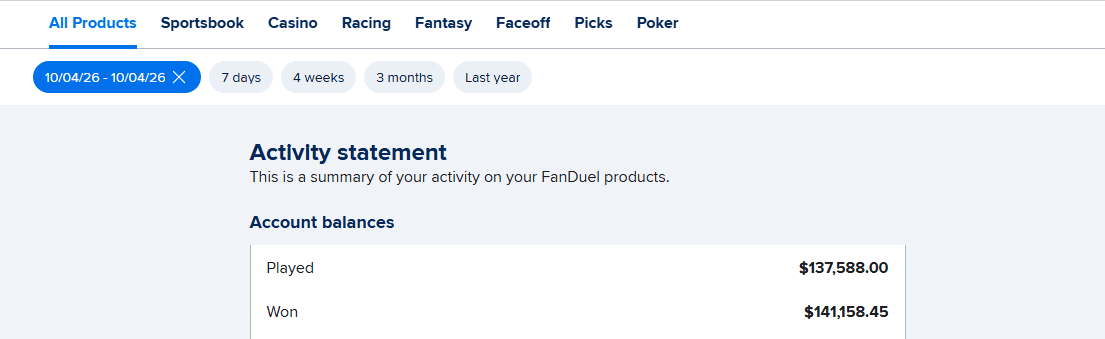
Sports Betting TikTok is the live betting account behind The Best Bet on Sports, covering NFL, NCAAF, NBA, NCAAB, MLB and WNBA markets in real time. The account has been limited on all six major U.S. sportsbooks — FanDuel, DraftKings, Caesars, BetMGM, Fanatics and ESPN BET — for winning on live betting, with $367,520 in verified profit since 2005. View full profile →
Past results do not guarantee future performance. Must be 21 or older to wager.
Related Articles
Basketball Handicapping Tips for NBA and College: A Complete Guide
Basketball Betting Tips and Strategy Guide: NBA and College Hoops
College Basketball Picks Today: How to Bet NCAAB Games Successfully
NBA Player Prop Picks: How to Find Value in Points, Rebounds, and Assists Lines
The WNBA Playoff Race Is Over. The Seeding Fight Is Where the Money Is
NBA Betting Strategy Guide: How to Win More on Basketball Bets
Get real live betting picks
From $39.95/mo · Cancel anytime · Email + Discord delivery
● Get The Picks
Choose your package
Tap any tier below to select · Subscribe in one tap
👇 Tap any package to select it
✓ You're selecting
25 Units · $99.95/month
25 unit picks per month. Sweet spot for most bettors — plenty of action without going all-in.
- ✓25 live betting selections/month
- ✓Email + Discord delivery
- ✓All sports (NFL, NCAAF, NBA, NCAAB, MLB)
- ✓Mix of 1, 2, 3, 5-unit rated plays
- ✓Cancel anytime
Secure PayPal · Cancel anytime · No hidden fees · 21+ · +$367K verified
+$367,520 verified · Limited on 6 sportsbooks · 20 years documented · See Proof
Join Our Newsletter
Get free expert sports picks and analysis delivered weekly.