Basketball Betting Tips and Strategy Guide: NBA and College Hoops

Basketball betting tips that produce real profits start with mastering pace-adjusted efficiency metrics, understanding rest and schedule advantages, exploiting the player prop market, and maintaining flat-unit bankroll discipline across both NBA and college hoops. The bettors who win long-term in basketball are not the ones who bet the most games but the ones who select the right spots across spreads, totals, props, and live markets using a repeatable analytical process built on data rather than gut instinct.
Basketball betting tips that actually produce profits start with mastering pace-adjusted efficiency metrics, understanding rest and schedule advantages, exploiting the player prop market, and maintaining flat-unit bankroll discipline across both NBA and college hoops. The bettors who win long-term are not the ones who bet the most games but the ones who select the right spots across spreads, totals, props, and live markets with a repeatable analytical process.
Three years into my handicapping career, I thought I was a basketball expert. I watched every game, knew every roster, and had strong opinions on every matchup. But I was breaking even at best. The turning point came when a sharper bettor I respected told me to stop watching games and start reading spreadsheets. He was half joking, but the point was real -- my intuition was not as valuable as I thought it was, and systematic analysis of pace, efficiency, and schedule spots was worth far more. That lesson reshaped my entire approach at The Best Bet on Sports, and it is the foundation of every basketball betting tip in this guide.
How Do You Develop a Winning Basketball Spread Betting Strategy?
Spread betting is the bread and butter of basketball wagering, but most bettors approach it with gut feelings rather than a structured process. Building a winning strategy starts with creating your own power ratings and comparing them against the market, then identifying situations where the gap between your number and the posted line represents genuine value.
Create independent power ratings before looking at any posted lines. Rank every team based on offensive efficiency, defensive efficiency, pace, and recent form weighted appropriately. In the NBA, you can build reliable ratings after approximately 20 games into the season. In college basketball, wait until conference play begins before trusting your numbers because non-conference schedules vary wildly in difficulty. The goal is to generate your own projected spread for every game so you can identify where the market is off by two or more points.
Understanding key numbers in basketball is different from football. There are no rigid key numbers like three and seven in football, but margins of three, five, and seven points show up slightly more often in NBA final scores than other margins. More importantly, half-point line moves carry significant value over large sample sizes. Getting a team at -6.5 instead of -7 might seem trivial on a single bet, but over 500 plays that half point will save you money on pushes and near-misses that add up to real profit.
Closing line value is the single best predictor of long-term betting success in basketball. If you bet a team at -4 and it closes at -5.5, you captured genuine value regardless of whether that specific bet wins or loses. Track your closing line value religiously -- it tells you whether your process is actually sharp or whether you are just running hot. At The Best Bet on Sports, we emphasize closing line performance as the primary measure of handicapping skill because it is the metric that correlates most strongly with long-term profitability.
| Spread Betting Metric | What It Tells You | Target Benchmark |
|---|---|---|
| ATS Win Rate | Raw winning percentage against the spread | 54%+ over 200+ bets |
| Closing Line Value | Average line improvement from bet to close | Positive CLV consistently |
| ROI | Return on investment after juice | 3-8% long-term |
| Unit Profit | Net units won on flat betting | Positive across full season |
| Win Rate by Confidence | Performance at different unit levels | Higher units = higher win % |
Respect the closing line. If you consistently find yourself on the wrong side of line moves -- betting a team at -3 only to see it close at -1.5 -- your process needs adjustment. You are either betting too late, following public money instead of leading it, or your analysis is missing factors that sharper bettors are capturing.
What Are the Best Strategies for Betting Basketball Totals?
Totals betting in basketball is where many sharp bettors make the bulk of their profit, and there is a straightforward reason for this. The public overwhelmingly bets overs because casual fans prefer rooting for high-scoring games. This persistent public bias creates consistent value on unders throughout both the NBA and college basketball seasons.
Pace projection is everything in totals betting. The total is fundamentally a pace prediction. If two NBA teams combine for 200 possessions and score 1.10 points per possession on average, you are looking at a 220-point game. If they combine for 185 possessions at the same efficiency, the expected total drops to roughly 204. Getting the possession count right is more important than getting the efficiency estimate right because offensive and defensive efficiency are relatively stable game to game, while pace varies based on the specific matchup.
Second-half scoring patterns create opportunities for sharp totals bettors. NBA games tend to slow down in the fourth quarter of competitive contests because teams play tighter defense, manage the clock more carefully, and take fewer transition opportunities. Blowouts do the opposite -- reserves play freely and both teams push pace because the outcome is decided. This creates a bimodal distribution where games tend to go significantly over or under rather than landing near the total.
Rest and travel impact totals more than sides. A tired team on the second night of a back-to-back might still cover a spread if the opponent is weaker, but fatigue consistently drags down offensive efficiency across the board. Shooting percentages decline, turnovers increase, and defensive intensity drops. These factors push games under the posted total more often than not. I weight rest factors more heavily in my totals analysis than in my side analysis.
Conference-specific tendencies matter enormously in college basketball totals. Big East games historically play to higher totals than Big Ten games because of different officiating styles and playing philosophies. Sun Belt games have different pace profiles than AAC games. Knowing the baseline tempo expectation for each conference gives you an edge when setting your own totals projections. I maintain conference-level pace averages throughout the college basketball season and update them weekly. Check our NBA betting page and basketball handicapping resources for daily totals analysis built on these principles.
How Can You Profit From Basketball Player Props Consistently?
The player prop market has exploded in recent years, and it remains the most inefficient major market in basketball betting. Sportsbooks set thousands of prop lines daily using algorithms that cannot fully account for matchup specifics, minute fluctuations, game script projections, and coaching decisions that unfold in real time. This creates persistent edges for bettors willing to do the detailed work.
Target minutes-driven props as your starting point. Points, rebounds, and assists are all heavily correlated with playing time. If you project a player to play 36 minutes instead of the 32 the book is pricing in, his prop lines across the board become undervalued. Monitor rotation patterns obsessively. A coach who has been running a nine-man rotation and suddenly goes to eight because of an injury creates immediate prop value for the remaining starters and key bench pieces.
Matchup-specific adjustments are where human analysis beats algorithmic line-setting. A center's rebounding prop should be evaluated differently against a team that crashes the offensive glass aggressively versus one that prioritizes getting back in transition. A guard's assist prop changes based on whether the opposing defense switches everything -- which limits drive-and-kick opportunities -- or plays drop coverage, which opens up passing lanes. These matchup details require watching actual game film, not just reading stat sheets.
Correlation plays add another dimension to prop betting. When you believe a game will be high-scoring, player overs across the board become more attractive because more possessions and more shot attempts lift individual stat lines. When you project a blowout, the starters on the winning team might play fewer minutes in the fourth quarter, making their props less likely to hit. Game script awareness is essential for prop betting and is something that algorithms handle poorly.
I also look for props on players coming off rest or returning from minor injuries. A star who missed two games and returns to full minutes often has props set conservatively based on his pre-absence averages, not accounting for the fact that he is likely to play heavy minutes and be featured aggressively by the coaching staff. Our basketball handicappers page at The Best Bet on Sports features expert selections across all of these market types.
What Live Betting Edges Exist in Basketball That Most Bettors Miss?
Live betting in basketball is the fastest-growing market and one of the most exploitable for bettors with discipline, preparation, and the ability to resist emotional reactions to in-game momentum swings. The key to profitable live betting is having done your pre-game homework so thoroughly that you can identify when the live line has overcorrected.
Overreaction to early runs is the most consistent live betting edge I have found. An NBA team goes on a 12-2 run to start the game and suddenly the live spread shifts dramatically, sometimes by five or more points from the pre-game line. But early-game runs in basketball are extremely common and usually regress toward the pre-game expectation. If your pre-game analysis showed the game as a pick-em, a team falling behind by eight points in the first quarter does not fundamentally change the outlook. The live market overcorrects to these early swings, and fading the overreaction is a documented edge.
Third-quarter NBA adjustments represent another exploitable pattern. Coaches make their biggest tactical adjustments at halftime. Teams that trailed in the first half because of a specific schematic issue frequently come out differently in the third quarter with adjusted defensive coverages, new offensive sets, or changed rotations. Betting on teams whose coaches are known for strong halftime adjustments -- and there is data to identify these coaches -- is a real edge that persists throughout the season.
Foul trouble opportunities appear multiple times per game. When a key player picks up early fouls and goes to the bench, the live line adjusts to reflect his absence. But if that player is coming back in the second half with full minutes, the adjustment may be too large. I monitor foul situations in real time and bet accordingly when the market overreacts to a temporary absence that will be resolved after halftime.
End-of-game free throw dynamics push games over the live total more often than the market accounts for. Late-game fouling in close contests creates scoring bursts that inflate the final score by four to eight points in the last two minutes. If a game is tracking under with four minutes left but the score is close enough to trigger intentional fouling, the live under is not as safe as the number suggests. I have made significant profit by recognizing this pattern and taking live overs in close games with three to four minutes remaining.
How Should You Manage Your Basketball Betting Bankroll Effectively?
No strategy works without proper bankroll management, and basketball's long season with daily game availability makes discipline both more important and more difficult than in football. The temptation to bet heavy on a Tuesday night NBA slate because you had a strong Monday is real, and resisting that temptation is what separates profitable bettors from recreational ones.
The best basketball bettors risk between 1 and 3 percent of their bankroll per game, with occasional 4 percent plays reserved for their strongest edges. They never chase losses after a bad night, never increase unit size during a losing streak to recover faster, and never bet more than 5 percent of their bankroll on any single game regardless of confidence level. I have followed these rules for over 20 years and have never had a season where bankroll management was the reason I lost money.
Track everything in a detailed spreadsheet or dedicated tracking app. Record the date, teams, bet type, line, odds, stake, and result for every single wager. Review your results weekly and monthly to identify patterns. You might discover that you crush NBA totals but break even on college spreads, which tells you exactly where to focus your energy and where to reduce your volume. Without detailed records, you are guessing about your own performance -- and guessing is the opposite of what profitable betting requires.
Set stop-loss limits for individual days and weeks. If I lose four units in a single day, I stop betting for the rest of that day regardless of how many games remain on the slate. If I am down eight units for the week, I reduce my Sunday volume to my three strongest plays only. These guardrails prevent the catastrophic losing sessions that can wipe out weeks of patient, disciplined grinding. Visit our results page to see how disciplined bankroll management translates to documented long-term performance.
How Do Schedule Spots Create Consistent Edges in NBA Betting?
Schedule analysis is one of the most reliable edges in NBA betting because the patterns are persistent, measurable, and still underpriced by the market despite being well-documented. The 82-game regular season creates predictable fatigue and motivation patterns that sharper bettors track daily.
Back-to-backs remain the most actionable schedule spot in basketball. Teams on the second night of a back-to-back, especially on the road, cover the spread at a lower rate than the market typically adjusts for. The fatigue effect shows up most clearly in shooting percentages from three-point range and free throw rates. Star players increasingly sit these games out entirely in the modern NBA, making roster monitoring essential before placing any wager on a back-to-back situation.
Rest advantages of three or more days create the opposite effect. Teams coming off extended rest tend to be sharper early in games and maintain their intensity deeper into the fourth quarter. First-half and first-quarter bets become particularly attractive when one side has had four days off and the other played last night. The difference in early-game energy is often visible before the first timeout.
West Coast road trips consistently create edges for sharp bettors. Eastern Conference teams traveling west for multi-game road trips historically underperform, particularly in the second and third games of the trip. The body clock adjustment is real -- a team playing at 10:30 PM Eastern feels very different from one playing at 7:30 PM local time. Conversely, West Coast teams playing early afternoon tip-offs in the Eastern time zone face the same issue in reverse.
Games before and after marquee matchups offer another schedule-based angle. Teams frequently underperform in the game immediately following a high-intensity nationally televised rivalry game. The emotional letdown after a primetime contest against a heated rival is difficult to replicate the very next night against a less glamorous opponent. I track these lookahead and letdown spots throughout the season at The Best Bet on Sports and find consistent value in fading the team coming off the emotional high.
What Are the Biggest Mistakes Basketball Bettors Make Repeatedly?
After two decades in this industry, I see the same mistakes destroy basketball bettors year after year. Identifying and eliminating these errors from your process is often more valuable than finding new edges, because every dollar you stop losing is just as valuable as every dollar you start winning.
Betting too many games is the single most common and most destructive mistake. With up to 15 NBA games on a given night and dozens of college basketball games on Saturdays, bettors feel compelled to have action on most of them. Selectivity is not just a nice idea -- it is a measurable skill. The best basketball handicappers at The Best Bet on Sports typically play five to eight games per night in the NBA, not twelve or fifteen. Every additional game you force into your card beyond your genuine edges dilutes your overall performance.
Overvaluing star power without checking the line is another persistent error. Everyone knows that a team with a healthy superstar is better than one without, but the market knows it too. The spread already accounts for star players being in the lineup. Betting a team simply because their star player is healthy is not finding an edge -- it is paying the market price for something everyone already knows.
Ignoring the differences between NBA and college basketball costs bettors money in both markets. The pace of play, the talent distribution, the officiating styles, and the market efficiency levels are all fundamentally different between the two levels. Strategies that work in one do not automatically transfer to the other. I recommend treating NBA and college basketball as essentially separate sports from a handicapping perspective, with distinct processes for each.
Our football picks page covers our NFL analysis, and our NBA picks page handles daily basketball selections across both levels.
That same logic carries over to WNBA same game parlay strategy, which covers the adjacent setup in detail.
Related Strategy Reading
For deeper context on the angles covered above, our analysis of nba back to back game betting strategy and basketball handicapping dos and donts pairs well with this guide; our NBA handicappers reflect these same principles applied to live games.
Frequently Asked Questions
What is the easiest basketball bet type for beginners?
NBA totals are the most accessible entry point for new basketball bettors because the analysis is more straightforward than picking sides. You are projecting combined scoring rather than predicting a winner, which involves fewer variables. Start by tracking pace data and rest patterns, and you will develop an intuitive feel for when games are likely to go over or under within your first month of focused analysis. Totals also have a built-in edge because the public heavily bets overs, creating consistent under value.
How many basketball games should I bet per day?
Quality over quantity is the golden rule that separates winners from losers. Most successful basketball bettors play three to six games per night during the NBA regular season. In college basketball, you might find more opportunities because of the larger number of games and softer lines, but selectivity remains paramount. If you are betting more than ten games on any given night, you are almost certainly forcing plays and diluting your edge.
Is live betting basketball more profitable than pre-game betting?
Live betting offers larger individual edges when you find them, but the margins are thinner and the speed required is higher. The best approach is to use pre-game betting as your foundation and supplement with live bets when specific in-game situations create value you identified in your pre-game preparation. Do not live bet as a separate strategy without thorough pre-game research -- that is just gambling on momentum, which is a losing proposition long-term.
How important are injuries in basketball betting?
Injuries are critical in both NBA and college basketball, but the market's reaction to injury news is where the real betting edge lives. A single player in college basketball can represent 30 percent or more of a team's production, making individual absences enormously impactful. In the NBA, star injuries can swing a line by three to five points. The key is evaluating whether the market has overreacted or underreacted to the injury news, not just knowing about it.
What is the best stat to use for basketball handicapping?
Adjusted offensive and defensive efficiency ratings -- points per 100 possessions -- are the most reliable foundation for basketball handicapping at both levels. Raw points per game is misleading because it does not account for pace differences between opponents. A team scoring 110 points per game while playing at the fastest pace in the league is less efficient than a team scoring 105 at a moderate pace. Efficiency ratings normalize for this and give you an accurate picture of actual team quality.
Should I bet NBA or college basketball?
Both markets offer opportunities, but they require fundamentally different approaches. The NBA has sharper lines but more consistent data and smaller talent gaps between teams. College basketball has softer lines, especially in smaller conferences, but higher variance due to younger players and roster inconsistency. Many successful bettors focus on one level or the other rather than splitting attention. If you are just starting, pick one and build expertise before expanding.
How do I handle a long losing streak in basketball betting?
First, review your process rather than your results. If your analysis was sound and you were on the right side of closing line value, the losing streak is variance and will correct itself. Do not increase unit sizes to chase losses, do not add games to your card to create more recovery opportunities, and do not abandon your strategy. Reduce volume to your three or four strongest plays per night and maintain your standard unit size until the streak breaks. The season is long enough to recover from any stretch of bad variance without changing your approach.
The Best Bet on Sports · 1.5M followers on TikTok
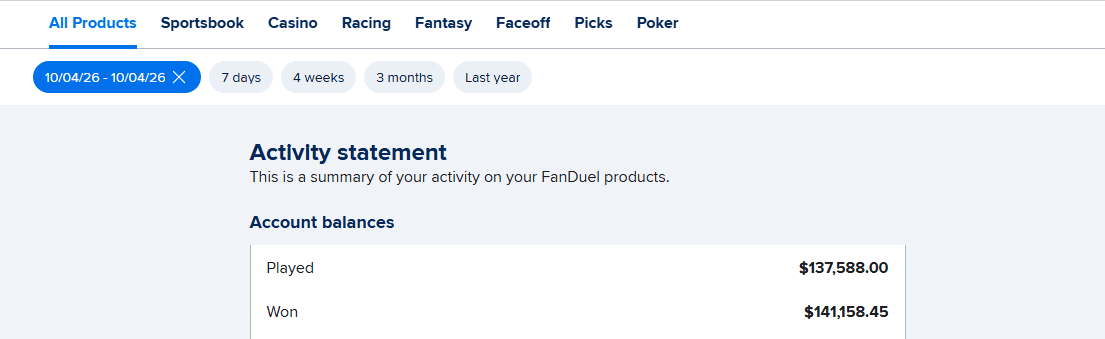
Sports Betting TikTok is the live betting account behind The Best Bet on Sports, covering NFL, NCAAF, NBA, NCAAB, MLB and WNBA markets in real time. The account has been limited on all six major U.S. sportsbooks — FanDuel, DraftKings, Caesars, BetMGM, Fanatics and ESPN BET — for winning on live betting, with $367,520 in verified profit since 2005. View full profile →
Past results do not guarantee future performance. Must be 21 or older to wager.
Related Articles
The WNBA Playoff Race Is Over. The Seeding Fight Is Where the Money Is
Basketball Handicapping Dos and Don'ts: Avoid These Common Betting Mistakes
Basketball Handicapping Tips for NBA and College: A Complete Guide
College Basketball Picks Today: How to Bet NCAAB Games Successfully
NBA Betting Strategy Guide: How to Win More on Basketball Bets
NBA Player Prop Picks: How to Find Value in Points, Rebounds, and Assists Lines
Get real live betting picks
From $39.95/mo · Cancel anytime · Email + Discord delivery
● Get The Picks
Choose your package
Tap any tier below to select · Subscribe in one tap
👇 Tap any package to select it
✓ You're selecting
25 Units · $99.95/month
25 unit picks per month. Sweet spot for most bettors — plenty of action without going all-in.
- ✓25 live betting selections/month
- ✓Email + Discord delivery
- ✓All sports (NFL, NCAAF, NBA, NCAAB, MLB)
- ✓Mix of 1, 2, 3, 5-unit rated plays
- ✓Cancel anytime
Secure PayPal · Cancel anytime · No hidden fees · 21+ · +$367K verified
+$367,520 verified · Limited on 6 sportsbooks · 20 years documented · See Proof
Join Our Newsletter
Get free expert sports picks and analysis delivered weekly.