Basketball Handicapping Tips for NBA and College: A Complete Guide

Basketball handicapping tips for NBA and NCAAB start with understanding pace-adjusted efficiency metrics, identifying schedule-based advantages in professional games, recognizing conference-specific edges in college hoops, and building separate analytical frameworks for each level. Bettors who treat NBA and NCAAB the same way consistently leave money on the table because the two markets behave fundamentally differently in how they price games, react to public perception, and create exploitable inefficiencies throughout the season.
Successful basketball handicapping starts with understanding pace-adjusted efficiency metrics, identifying schedule-based advantages in the NBA, recognizing conference-specific edges in college hoops, and building separate analytical frameworks for each level. Bettors who treat NBA and NCAAB the same way consistently leave money on the table because the two markets behave fundamentally differently in how they price games and create exploitable inefficiencies.
My first profitable basketball season came in 2006, and it happened almost by accident. I had been losing money treating every basketball game the same way until I stumbled onto a simple insight: the teams I was winning on shared one common trait. They were all rested teams in pace-mismatch situations where I had correctly predicted which team would control the tempo. That realization became the foundation of my basketball handicapping process at The Best Bet on Sports. Twenty years later, pace analysis remains the most important single factor in my daily work. Here is everything I have learned about handicapping basketball at both levels.
Why Does Pace Analysis Matter More Than Any Other Factor in Basketball Handicapping?
Pace is the single most overlooked variable among recreational basketball bettors, and understanding it gives you an immediate edge over the majority of the market. Two teams can both score 85 points per game, but one does it in 75 possessions while the other needs 90. That distinction changes literally everything about how you should handicap the matchup.
In the NBA, pace data is readily available through multiple statistical databases and is relatively stable throughout the season for most teams. Teams that play fast create more possessions, which means higher variance and more total points. When a fast team meets a slow team, the critical question is which team dictates the pace. The answer determines whether the game plays to the over or under, and it significantly influences the spread because a slow game reduces the number of possessions available for the faster team to exploit its offensive advantages.
College basketball pace analysis is even more valuable than NBA pace analysis because the variance between teams is dramatically wider. You will find teams averaging under 60 possessions per game in conferences like the Big Ten matched up against teams pushing 75 possessions in up-tempo leagues. That 15-possession gap creates massive opportunities in the totals market, especially early in conference play when oddsmakers are still calibrating their pace-matchup models.
I build my own pace-adjusted projections for every basketball game I evaluate. The process is straightforward: I take each team's average possessions per game, adjust for the opponent's pace influence, and project a possession total for the specific matchup. Then I multiply by each team's points per possession to generate a projected score. Comparing my projected total against the posted number identifies potential totals plays, and comparing my projected margin against the posted spread identifies potential side plays. This systematic approach is the backbone of everything we do at The Best Bet on Sports.
| Pace Analysis Factor | NBA Impact | College Basketball Impact |
|---|---|---|
| Possessions per game variance | 95-107 range | 58-78 range |
| Tempo control predictability | Moderate - both teams influence | High - slower team usually dictates |
| Totals market efficiency | Sharp - harder to find edges | Softer - more exploitable |
| Data availability | Excellent from game 10+ | Reliable after conference play starts |
| Pace mismatch frequency | Common - 5+ per night | Very common - 15+ per day |
What Schedule Spots Create the Most Reliable Betting Edges in the NBA?
The NBA regular season is a grind of 82 games across six months, and not every game carries the same weight for the players on the floor. Schedule spots are situations where one team has a significant rest, travel, or motivation advantage over another, and these advantages translate into measurable betting edges that persist year after year.
Back-to-backs are the most documented and most actionable schedule spot. Teams playing the second night of a back-to-back lose roughly two to three percentage points of ATS value on average compared to fully rested teams. When that back-to-back is also on the road, the impact increases. Star players increasingly sit these games out entirely in the modern NBA, which means you cannot just check the schedule -- you must monitor injury reports and lineup news in real time before placing any back-to-back wager.
Rest advantages of three or more days create a meaningful edge on the opposite end of the spectrum. Teams coming off extended rest tend to be sharper in the early minutes, shoot better from three-point range, and maintain defensive intensity deeper into the fourth quarter. First-half and first-quarter bets become particularly attractive when one side has had four days off and the other played last night. The energy gap is often visible before the first timeout.
West Coast road trips consistently create edges for sharp bettors who track travel patterns. Eastern Conference teams traveling west for multi-game trips historically underperform against the spread, particularly in the second and third games of the trip. The body clock adjustment is real and measurable -- players accustomed to 7:30 PM Eastern tip-offs are suddenly playing at what feels like 10:30 PM to their internal clocks.
Games before and after marquee matchups offer another reliable angle. Teams frequently underperform in the game immediately following a high-intensity nationally televised contest. The emotional letdown after a primetime rivalry game is difficult to replicate against a less glamorous opponent the very next night. I track these lookahead and letdown spots throughout the season and have found consistent value in fading teams coming off emotional peaks.
How Do Conference Play Edges Work in College Basketball Betting?
Conference play in college basketball is where patient, disciplined handicappers make their money. The transition from non-conference to conference play represents a fundamental shift in the quality and reliability of available data, and bettors who recognize this shift gain a significant advantage.
Once league play begins, you have meaningful head-to-head matchup data, consistent officiating crews within conferences, and far more reliable pace and efficiency numbers than the non-conference schedule provided. Early-season results against cupcake opponents tell you almost nothing about how a team will perform against conference competition. Conference results against comparable competition tell you nearly everything. I essentially reset my power ratings when conference play begins and rebuild them based on league-only performance.
Home court advantages vary wildly in college basketball and represent one of the most important adjustments in your handicapping process. In the NBA, home court is worth roughly three points across the board regardless of venue. In college basketball, it ranges from two points at a half-empty mid-major arena to eight or nine points at hostile environments with intense student sections and rabid fan bases. Knowing the specific venue adjustment for each team is critical to accurate spread projections.
Travel matters more in college basketball than at any other level of competition. NBA teams fly chartered jets everywhere and stay in luxury hotels. College teams sometimes bus to conference games, share hotel rooms, and deal with class schedules that limit practice time on road trips. Mid-major teams playing weeknight road games after Tuesday afternoon classes face fatigue factors that never appear in a box score but absolutely show up in second-half performance.
Browse our college basketball picks for daily selections built on these conference play principles, and check our results page for documented performance over multiple seasons.
What Are the Key Differences Between Handicapping NBA and College Basketball?
The two levels share a court and a rulebook that is mostly similar, but the handicapping approach should differ substantially between them. Applying the same framework to both is one of the most common and most expensive mistakes I see basketball bettors make.
Talent gaps between teams are dramatically different at each level. In the NBA, the gap between the best and worst teams is relatively narrow -- even the worst NBA team has multiple players who would be all-conference performers in college. In college, a top-ten team can beat a bottom-tier conference opponent by 40 points without breaking a sweat. This means spreads in college are often much larger and harder to predict accurately because blowout potential is genuine in a way it rarely is in the NBA.
Roster turnover creates a fundamentally different analytical challenge. NBA rosters are mostly stable during the season, with trades and signings being discrete events you can adjust for. College rosters change every year through graduation, transfers, and early entry into the NBA draft. Early-season college handicapping requires more estimation and projection than NBA handicapping, which means more potential value for those willing to do the homework on roster changes and their likely impact.
Three-point variance is significantly higher in college basketball. College games feature more three-point variance because of smaller season sample sizes and younger shooters who are less consistent. A team can shoot 45 percent from three one game and 25 percent the next. This makes totals betting in college inherently more volatile and requires wider confidence intervals in your projections.
Officiating differences between conferences are a factor in college that does not exist in the same way in the NBA. Different conferences have different foul rate baselines, different tolerance for physical play, and different tendencies on charge-block calls. Big Ten games historically feature more whistles and more free throw attempts than Big 12 games. That difference impacts pace, total points, player foul trouble, and which teams can play their preferred style. Our NBA picks and expert basketball handicappers cover both levels with analysis tailored to each. Explore dedicated basketball betting resources including the NBA back-to-back game betting strategy guide for situational edge-finding.
How Should Beginners Approach Basketball Handicapping Without Getting Overwhelmed?
Start with one level and one bet type. If you want to bet the NBA, focus exclusively on sides for a full month before adding totals or props. If you prefer college basketball, start with totals in a single conference where you can build genuine expertise quickly. Track every bet you make in a spreadsheet, including your reasoning for each play.
After 50 bets, review your results and look for patterns in where you are winning and losing. You might find that you are strong on totals but weak on sides, or that your conference tournament plays are profitable but your regular season picks break even. These patterns tell you where to focus your energy and where to pull back until you develop the necessary skills.
Do not bet every game on the schedule. The best basketball handicappers at The Best Bet on Sports typically play five to eight games per night in the NBA, not twelve or fifteen. Selectivity is your greatest advantage over the sportsbooks because they have to set lines on every game while you get to choose which ones to attack. Use that freedom aggressively by passing on anything that does not meet your standards for edge identification.
Resist the urge to follow picks from social media accounts without understanding their methodology. Following someone else's plays without understanding why they are making each pick teaches you nothing and makes you dependent on their continued accuracy. Instead, use professional picks as a learning tool -- study the reasoning behind each selection and compare it to your own analysis to identify what you are missing.
How Do Injuries and Lineup Changes Impact Basketball Handicapping at Each Level?
Injuries are the most unpredictable variable in basketball handicapping, and managing injury information properly is a skill that separates professionals from amateurs. The impact of injuries differs dramatically between the NBA and college basketball, and understanding those differences is essential.
In the NBA, star player injuries can swing a spread by three to five points, but the team still has enough talent to compete. When a second or third option goes down, the impact is smaller but still meaningful. The key to profitable injury-based handicapping is evaluating whether the market has overreacted or underreacted to the news. If a star player is ruled out and the line moves four points, but your analysis says the true impact is only two points, there is value on the team that lost the player.
In college basketball, injuries are more impactful and less efficiently priced. A single player in college can represent 30 percent or more of a team's offensive production, and the drop-off to the replacement is often severe. When a key college player is ruled out, the market sometimes underreacts because the line adjustment does not fully account for how central that player is to the team's offensive system. Tracking injury news through beat reporters and local media sources gives you information advantages that national bettors do not have.
How Important Is Film Study in Modern Basketball Handicapping?
Numbers tell you what happened. Film tells you why. The best basketball handicappers combine statistical analysis with selective game viewing to develop a complete picture of how teams and players actually perform in specific situations.
I do not watch every NBA game, but I watch portions of at least 10 games per week with a specific analytical purpose. I am looking for how teams defend pick-and-roll actions, whether their transition defense has improved or declined, how bench units perform in specific lineup combinations, and whether coaching adjustments are being implemented effectively. These observations add context to the numbers and often explain why a team's statistical profile does not match their results.
In college basketball, film study is even more valuable because the statistical databases are less comprehensive and the game-to-game variance is higher. Watching how a team handles full-court pressure, how their post players perform against physical interior defense, and how their guards react to trapping half-court sets provides insights that no spreadsheet can deliver. Visit our football picks page for similar analytical depth applied to NFL handicapping.
Our coverage of the WNBA All-Star and record season coverage walks through how this plays out in practice.
Related Strategy Reading
For deeper context on the angles covered above, our analysis of college basketball handicapping strategies and football handicapping system explained pairs well with this guide; our college basketball picks reflect these same principles applied to live games.
Frequently Asked Questions
Is it easier to handicap NBA or college basketball?
The NBA is generally easier to handicap because of more consistent data, stable rosters, and smaller talent gaps between teams. The data is more reliable and available earlier in the season, which allows for more confident projections. College basketball offers more inefficient lines because oddsmakers cannot devote equal attention to 350-plus teams, but the volatility is higher and the data is less reliable. Many sharp bettors prefer college for the softer lines despite the added difficulty of projecting outcomes.
How important are injuries in basketball handicapping?
Injuries are critical at both levels but impact each differently. A single player in college basketball can represent 30 percent or more of a team's production, making individual absences enormously consequential. In the NBA, star injuries can swing a line by three to five points. The betting edge comes not from knowing about injuries -- everyone has that information -- but from correctly evaluating whether the market has over or underreacted to the news.
What is the best stat to use for basketball handicapping?
Adjusted offensive and defensive efficiency ratings -- points per 100 possessions -- are the most reliable foundation for basketball handicapping at both levels. Raw points per game is misleading because it does not account for pace differences between opponents. A team averaging 110 points while playing at the fastest pace in the league may actually be less efficient than a team averaging 105 at a moderate pace. Efficiency ratings normalize for pace and give you a true measure of team quality.
How do I build power ratings for basketball teams?
Start with adjusted offensive and defensive efficiency from a reliable source like KenPom for college or Cleaning the Glass for the NBA. Factor in pace, recent form weighted more heavily than early-season results, and home court advantage. Compare your projected spread against the posted line and identify games where the discrepancy is two or more points. Track your results to validate and refine your ratings throughout the season.
What is the best time of year to bet basketball?
In the NBA, the most exploitable edges appear during heavy scheduling periods in January through March when back-to-backs and rest disparities are most frequent. In college basketball, conference play from January through early March offers the most reliable data and the best line-finding opportunities. Conference tournament week and March Madness first rounds also create structural edges for prepared bettors.
How much bankroll should I allocate to basketball betting?
Allocate your bankroll based on where your edge is strongest. If basketball is your primary sport, dedicate 40 to 60 percent of your total sports betting bankroll to it. Within basketball, split between NBA and college based on your track record in each. Use flat betting at 1 to 3 percent per play and never exceed 5 percent on any single game. Keep detailed records to validate that your allocation matches your actual performance.
Can I be profitable betting basketball without watching games?
Yes, purely statistical approaches can be profitable in basketball betting. However, adding selective game viewing improves your analysis by providing context that numbers alone cannot capture. I recommend watching at least a few games per week with specific analytical goals rather than watching every game casually. The combination of statistical rigor and observational insight produces better results than either approach alone. Check our sports handicappers page to find experts who combine both approaches.
The Best Bet on Sports · 1.5M followers on TikTok
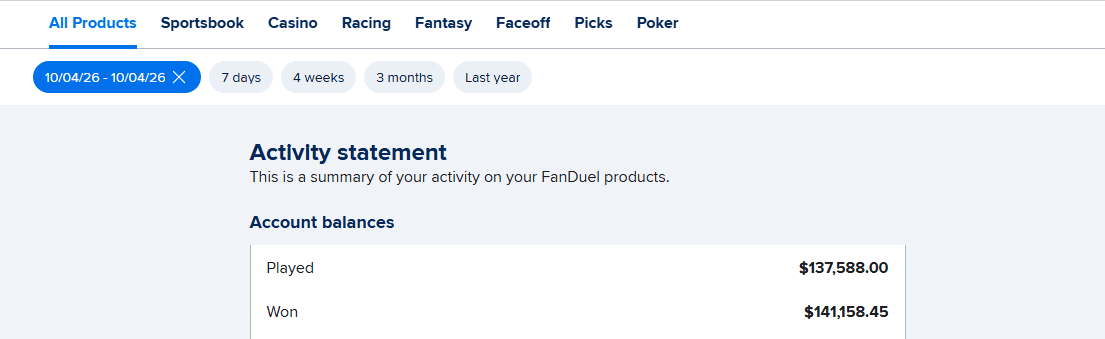
Sports Betting TikTok is the live betting account behind The Best Bet on Sports, covering NFL, NCAAF, NBA, NCAAB, MLB and WNBA markets in real time. The account has been limited on all six major U.S. sportsbooks — FanDuel, DraftKings, Caesars, BetMGM, Fanatics and ESPN BET — for winning on live betting, with $367,520 in verified profit since 2005. View full profile →
Past results do not guarantee future performance. Must be 21 or older to wager.
Related Articles
Basketball Handicapping Dos and Don'ts: Avoid These Common Betting Mistakes
Basketball Betting Tips and Strategy Guide: NBA and College Hoops
College Basketball Picks Today: How to Bet NCAAB Games Successfully
The WNBA Playoff Race Is Over. The Seeding Fight Is Where the Money Is
NBA Betting Strategy Guide: How to Win More on Basketball Bets
NBA Player Prop Picks: How to Find Value in Points, Rebounds, and Assists Lines
Get real live betting picks
From $39.95/mo · Cancel anytime · Email + Discord delivery
● Get The Picks
Choose your package
Tap any tier below to select · Subscribe in one tap
👇 Tap any package to select it
✓ You're selecting
25 Units · $99.95/month
25 unit picks per month. Sweet spot for most bettors — plenty of action without going all-in.
- ✓25 live betting selections/month
- ✓Email + Discord delivery
- ✓All sports (NFL, NCAAF, NBA, NCAAB, MLB)
- ✓Mix of 1, 2, 3, 5-unit rated plays
- ✓Cancel anytime
Secure PayPal · Cancel anytime · No hidden fees · 21+ · +$367K verified
+$367,520 verified · Limited on 6 sportsbooks · 20 years documented · See Proof
Join Our Newsletter
Get free expert sports picks and analysis delivered weekly.