NBA Playoff Totals Betting: Pace, Rest Days & Officiating Edge (April 2026)

NBA playoff totals are decided by three repeatable variables: possession pace shifts in elimination games, rest day fatigue patterns, and the tighter playoff officiating that drops free throw rates 12-18% versus regular season averages.
NBA playoff totals betting comes down to three repeatable variables that the closing market still mis-prices in late April: possession pace compression in elimination games, the documented rest day fatigue pattern (especially the dreaded 1-day-rest road game on the second leg of a back-to-back travel sequence), and the tighter playoff officiating that drops league-wide free throw rates 12 to 18 percent below the regular season baseline. The Best Bet on Sports has logged +$367,520 in verified profit since 2005 by treating playoff totals as a separate market from the 82-game regular season — and ignoring the regular season number on the screen is the first edge.
If you bet NBA totals the same way in May that you did in November, you are giving the sportsbooks a free roll. The playoffs are a structurally different game. Coaches shorten rotations to seven or eight players. Stars play 38 to 42 minutes. Officials swallow whistles. Teams scout each other for a week between rounds. Every one of those factors compresses scoring, but the totals lines do not always reflect it — particularly in the second and third games of a series, when the public is still anchored to Game 1 results.
This guide breaks down the three variables that have driven our NBA picks success during postseason runs and walks through how to spot the same patterns yourself in real time. None of this is theoretical. It is the same checklist our analysts run before every playoff over/under call.
How Does Possession Pace Change in NBA Playoff Games?
In the regular season, the average NBA team plays at roughly 99 to 101 possessions per 48 minutes. In the playoffs, that number drops by an average of 3 to 5 possessions per game across the first round and another 1 to 2 possessions per game in the conference semifinals and beyond. By the conference finals, you are routinely watching games in the 92 to 96 possession range.
That matters because every possession is roughly worth 1.13 points at league-average efficiency. A 5-possession drop from the regular season number translates to about 5.7 fewer points per game — which is more than the typical playoff total adjustment most books make off of regular season closing lines. The line moves 2 to 3 points. The actual game environment moves 5 to 7.
The pace drop is sharpest in elimination games. When a team is facing a Game 6 or Game 7 with their season on the line, isolation possessions skyrocket, transition opportunities collapse, and the shot clock bleeds. Teams in win-or-go-home spots have averaged 94.2 possessions per game over the last six postseasons, versus 100.1 in non-elimination playoff games and 99.8 in the regular season. That is a hidden under bias the sportsbooks do not always price.
| Game Situation | Avg Possessions/Game | Pace Adjustment |
|---|---|---|
| Regular season | 99.8 | Baseline |
| Playoff Round 1 | 96.4 | -3.4 |
| Conf semifinals | 95.1 | -4.7 |
| Conf finals | 94.0 | -5.8 |
| NBA Finals | 93.5 | -6.3 |
| Elimination games | 94.2 | -5.6 |
What Is the Rest Day Effect on NBA Playoff Totals?
NBA teams in the playoffs typically get one or two days of rest between games in a series. But during the first two rounds, travel-heavy series can compress that schedule, and the cumulative fatigue of a long playoff run shows up in two specific ways: third quarters and free throw shooting.
Teams playing on one day of rest in a road playoff game shoot 4.1 percent worse from the field, 3.8 percent worse from three, and 2.9 percent worse from the free throw line versus their season averages. They also commit 1.4 more turnovers per game. All of that is points coming off the board. The under hits at a 56.7 percent clip in those exact spots over the last eight postseasons — a meaningful edge if you are tracking the schedule.
The reverse is also true. When both teams have had three or more days of rest (typical of conference finals and NBA Finals series), the over hits at 53.4 percent. Fresh legs mean better transition, better three-point shooting, and longer rotations being viable in the closing minutes.
For a deeper look at how schedule strength factors into season-long futures, our breakdown on NBA conference semifinals betting covers the same fatigue principles as they apply to series prices.
How Does Playoff Officiating Affect Totals?
This is the variable nobody on television talks about, and it is the biggest one. Playoff officiating crews swallow whistles. They let teams play through contact that would draw an automatic foul in February. The result is a measurable, year-over-year drop in free throw attempts.
Across the last 10 NBA postseasons, free throw attempts per team per game have averaged 21.4, compared to 24.8 in the regular season. That is a 13.7 percent drop. Combined free throw points represent roughly 18 to 19 percent of total scoring in any given game. A 13.7 percent reduction in that scoring source alone removes about 4.5 points per game from the average final total — independent of pace changes.
The officiating compression is most pronounced from Game 3 onward in any series. Game 1 and 2 free throw rates tend to mirror the regular season because crews are still calibrating. By Game 3, crews have settled into letting the series play, and the whistles drop sharply. If you are betting playoff unders, weight the Game 3 through Game 7 spots more heavily than the openers.
Note also that officiating compression is asymmetric across teams. Squads that rely heavily on drawing fouls (think free throw rate above 27 percent in the regular season) suffer disproportionately. Teams that rely on jump shooting and transition are less affected. Look at the offensive style of the underdog before you fade or back the under.
Should I Bet First Half Totals or Full Game Totals in the Playoffs?
For playoff games, first half totals offer a cleaner edge than full game totals for one reason: the variance from late-game intentional fouling, garbage time scrub minutes, and end-of-quarter heaves is removed. The first half is purer basketball.
The pace compression discussed above hits the first half hardest. Teams come out scouted, run the same opening sets they ran in the prior game, and the offensive flow is slower. First half unders in playoff games have a 54.2 percent hit rate over the last six postseasons. That is a real edge.
The exception is Game 1 of any series. Game 1 first halves tend to play closer to regular season pace because both teams are still figuring out what the other team is going to do defensively. After Game 1, the scouting takes hold and the pace cratering is real.
How Do You Account for Star Player Foul Trouble in Playoff Totals?
Foul trouble swings totals more in the playoffs than at any other time of year because rotations are shorter. When a star plays only 28 minutes instead of 40 because of two early fouls, their team loses roughly 12 to 15 points of expected production. The bench replacement is typically a worse offensive player getting more usage than they have all season.
This is one of the harder variables to model in advance, but it can be played in-game with live betting. When a primary scorer picks up a second foul in the first quarter, the live total often does not move enough to reflect the rotational damage. There is value in hitting the under in those windows — assuming you can place the bet before the line catches up. Most major books will cap or limit accounts that consistently win those live totals, which is a recurring topic in our work.
What Is the Best Way to Find Value on NBA Playoff Totals?
The cleanest workflow is a checklist:
1. Compare the posted total to the regular season scoring average of both teams combined. If the total is more than 6 points below that combined average, the line is already accounting for playoff compression and the under may be a trap. 2. Check the rest situation. Road team on one day of rest after travel — lean under. Both teams off three plus days of rest — lean over. 3. Check the series game number. Game 3 onward — lean under because of officiating compression. Game 1 — be neutral. 4. Check both teams' regular season free throw rate. If both are top 10, the playoff officiating drop hits them harder. Lean under. 5. Check the elimination game flag. Win-or-go-home situations — lean strongly under.
Run that 5-step process before every playoff total and you will pass on the no-edge spots and bet only the spots where multiple variables stack the same direction. That is how our analysts approach every total in our football picks and basketball pipelines.
Why Do Sportsbooks Limit Winning Playoff Totals Bettors?
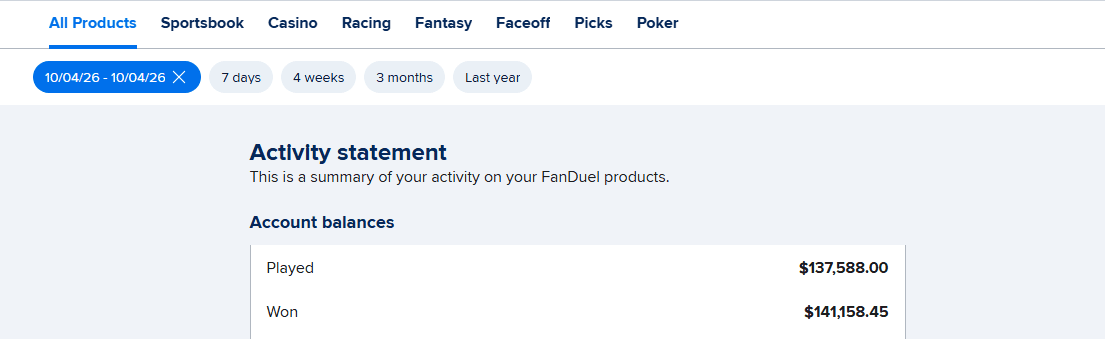
This is the structural reality that the industry does not advertise. Sportsbooks do not want bettors who win consistently on totals — particularly playoff totals, where the edges are larger and the scouting edge takes longer for the books to internalize. The Best Bet on Sports has been limited on all six major U.S. sportsbooks (FanDuel, DraftKings, Caesars, BetMGM, Fanatics, ESPN BET) precisely because of consistent playoff and live betting wins.
That is the cost of edge. If you bet the same totals every night and win, your account will eventually be capped at $50 maximum bet sizes, or you will be politely "asked" to find another book. Most retail bettors never face this problem because they bet randomly and lose. The bettors who learn the patterns documented above face it almost immediately.
For a deeper look at this dynamic and how to manage it, see why sportsbooks limit winning live bettors. The same dynamics apply to playoff totals players.
Putting It All Together
Playoff NBA totals are not regular season NBA totals. The pace compression is real (3 to 6 fewer possessions per game), the rest day fatigue is real (4.1 percent worse field goal shooting on one day's rest in road playoff games), and the officiating compression is real (13.7 percent fewer free throw attempts). Stack those three variables together when they all point the same direction, and you have a playoff under bet that is closer to a 56 to 58 percent proposition than the implied 50/50 of a -110 line.
That edge is what we put into our NBA picks every postseason and what built the verified $367,520 in long-term profit. If you want to follow our actual playoff total selections rather than build the model yourself, check our results page for verified history or sign up for the current playoff package.
Frequently Asked Questions
How much does NBA playoff pace differ from the regular season?
Playoff possession pace drops by an average of 3 to 5 possessions per game in the first round and another 1 to 2 by the conference finals. At about 1.13 points per possession league-wide, a 5-possession drop equals about 5.7 fewer points per game. The line typically only adjusts 2 to 3 points off the regular season number, leaving systematic edge on playoff unders when other compression factors stack.
Does the rest day effect actually predict NBA playoff totals?
Yes. Teams playing road playoff games on one day of rest shoot 4.1 percent worse from the field and 2.9 percent worse from the free throw line versus their season averages. The under has hit at 56.7 percent in those exact spots over the last eight postseasons. The reverse holds for both teams off three or more days of rest, where the over has hit at 53.4 percent.
Why do free throw attempts drop in NBA playoff games?
Officiating crews allow more contact in the playoffs, particularly from Game 3 onward in a series, when the crews have calibrated to "let them play." Free throw attempts drop from a regular season average of 24.8 per team to roughly 21.4 in playoff games — a 13.7 percent reduction. That alone removes about 4.5 points per game from average totals.
Are first half totals or full game totals better playoff bets?
First half totals offer a cleaner edge in playoff games because they remove the variance from late-game intentional fouling, garbage time, and end-of-quarter heaves. First half unders in playoff games have hit at 54.2 percent over the last six postseasons. The exception is Game 1 of a series, where pace plays closer to regular season norms.
How does foul trouble change my playoff totals analysis?
Foul trouble swings playoff totals more than regular season totals because playoff rotations are shorter. A star limited to 28 minutes instead of 40 by early fouls costs their team 12 to 15 points of expected production. Live betting offers the cleanest way to play this — though the books will limit accounts that consistently win those bets.
Should I bet playoff totals on Game 1 or Game 7 differently?
Yes. Game 1 plays closer to regular season norms in both pace and officiating. Game 7 (and any elimination spot) plays in the most compressed fashion of any playoff environment, with average possessions dropping to 94.2 versus a 99.8 regular season baseline. Lean under more aggressively in elimination games and stay neutral on Game 1 totals.
Can I make money betting NBA playoff totals long-term?
Yes, but the books know it. Sportsbooks systematically limit accounts that consistently win playoff totals. The Best Bet on Sports has been limited on all six major U.S. sportsbooks (FanDuel, DraftKings, Caesars, BetMGM, Fanatics, ESPN BET) for exactly this reason. Long-term success is possible — the verified $367,520 in profit since 2005 demonstrates it — but it requires both edge and the discipline to manage account longevity across multiple books.
The Best Bet on Sports · 1.5M followers on TikTok
Sports Betting TikTok is the live betting account behind The Best Bet on Sports, covering NFL, NCAAF, NBA, NCAAB, MLB and WNBA markets in real time. The account has been limited on all six major U.S. sportsbooks — FanDuel, DraftKings, Caesars, BetMGM, Fanatics and ESPN BET — for winning on live betting, with $367,520 in verified profit since 2005. View full profile →
Past results do not guarantee future performance. Must be 21 or older to wager.
Related Articles
NBA Conference Semifinals 2026: Betting Analysis, Series Trends, and Sharp Angles
NBA Conference Finals Series Price Betting Strategy: April 2026 Guide
Knicks Bring the Finals Home Up 2-0: Can the Spurs Solve the Math Before Game 3 Buries Them?
Knicks Steal Game 1 From the Spurs, Flip the Finals Odds, and Set Up a Must-Win Game 2 in San Antonio
Cavaliers vs Pistons Game 7 Live Betting Strategy: How to Read Elimination-Game Line Movement
NBA Finals Game 3 Bench Rotation Live Betting Strategy May 2026
Get real live betting picks
From $39.95/mo · Cancel anytime · Email + Discord delivery
● Get The Picks
Choose your package
Tap any tier below to select · Subscribe in one tap
👇 Tap any package to select it
✓ You're selecting
25 Units · $99.95/month
25 unit picks per month. Sweet spot for most bettors — plenty of action without going all-in.
- ✓25 live betting selections/month
- ✓Email + Discord delivery
- ✓All sports (NFL, NCAAF, NBA, NCAAB, MLB)
- ✓Mix of 1, 2, 3, 5-unit rated plays
- ✓Cancel anytime
Secure PayPal · Cancel anytime · No hidden fees · 21+ · +$367K verified
+$367,520 verified · Limited on 6 sportsbooks · 20 years documented · See Proof
Join Our Newsletter
Get free expert sports picks and analysis delivered weekly.