NFL 2026 Season Opener Betting Preview: Week 1 Handicapping Strategy and Best Bets

NFL season opener betting for 2026 is uniquely profitable because sportsbooks are working with limited data — every team's roster has been remade through free agency and the draft, and oddsmakers set Week 1 lines based heavily on prior-season reputation rather than confirmed current-year performance. The handicapper who correctly identifies which offseason additions matter most, which prior-year metrics were outliers rather than true talent signals, and which coaching changes will produce immediate scheme improvements has a meaningful edge over the opening market.
NFL season opener betting is uniquely profitable because books are working with limited data — every team's 2026 roster has been remade through free agency and the upcoming draft, and oddsmakers set Week 1 lines based heavily on prior season reputation and projected depth rather than confirmed current-year performance. The handicapper who correctly identifies which offseason additions matter most and which prior-year metrics were outliers rather than true talent signals has a meaningful edge over the opening market.
I start mapping NFL season-opener betting angles the moment the Super Bowl ends. By the time Week 1 rolls around, I have six months of information advantage built up. Offseason moves, draft capital allocation, coaching changes, training camp injury reports, and preseason performance all feed into a picture that the opening lines do not fully reflect.
Week 1 is simultaneously the most uncertain and most structured betting slate on the NFL calendar. Uncertain because no 2026 in-season performance data exists yet. Structured because the schedule release, preseason, and 6 months of offseason news give you concrete information if you know where to focus.
This guide lays out exactly how I build my Week 1 NFL betting framework every year — and what to watch for heading into the 2026 season.
Why Is Week 1 NFL Betting Different From the Rest of the Season?
The NFL regular season betting market gets more efficient each week as real 2026 performance data accumulates. By Week 8, the market has seen 7 games from every team and has processed injury reports, depth chart changes, and trend data. Lines are tight and sharp.
Week 1 is the opposite. Lines are set with the thinnest information base of the entire season, and the public pours money onto recognizable teams, big-name quarterbacks, and last year's superstars. That public money creates mispricing relative to true probabilities.
Our NFL betting coverage leans into these Week 1 angles each September. Three systematic Week 1 tendencies I have documented over 20 years. For expert NFL picks on every Week 1 game, see our football picks hub and explore our sports picks packages:
Defending Super Bowl Champions are Overbet. The public loads up on the defending champion every September because the brand is fresh in memory. Historically, the defending Super Bowl champion goes under their expectation in Week 1 at a higher rate than any other team type. Books know this and shade the line — but the public still takes the defending champ at inflated prices.
Teams With New Head Coaches Are Underpriced in Week 1. New head coaches install systems in the offseason with no in-game data. Their opponents have zero film on the 2026 version of that offense or defense. This information deficit cuts both ways, but new-coach teams as home underdogs in Week 1 have historically performed above the spread at better than market rates.
Thursday Night Opener Favorites Are Overpriced. The NFL Kickoff game on Thursday night gets massive public money — it is the first football of the season and everyone is betting their favorite team. Prime-time openers feature the most inflated favorite prices on the entire Week 1 slate. Backing the underdog or simply fading the public in Thursday openers is a profitable systematic approach.
How Do Offseason Moves Impact Week 1 NFL Betting Lines?
The offseason is where Week 1 value is built. A team that lost their starting center and left tackle in free agency has a line that does not fully reflect the offensive line degradation because those moves are three months old and the casual bettor has not tracked them. That is the edge.
The offensive line changes I track most carefully for Week 1:
Interior line continuity. Teams that retained their same three interior linemen from the prior season perform significantly better in Week 1 than teams with new interior combinations. Chemistry and communication matter enormously early in the season when the scheme is still being installed under game conditions. If a contender rebuilt their guard and center positions in the offseason, I treat their Week 1 offensive line as a question mark regardless of individual talent.
Quarterback situation. New quarterbacks — whether through trade, free agency, or draft — need time to build chemistry with receivers. A new QB's first 4 games are the worst window for betting that offense. If a team signed a new starting QB this offseason, their Week 1 total and spread are almost always better bets from the under/underdog side.
For more on how quarterback changes affect season-long value, see the NFL power rankings betting guide and explore our complete football picks analysis each week of the season.
Coordinator changes. A defensive coordinator installing a new scheme cannot replicate by Week 1 what a coordinator entering Year 3 of the same system has built. Week 1 defense for teams with new coordinators is less disciplined, assignment-sound, and situationally prepared. Teams with first-year defensive coordinators face more early-season scoring exposure.
| Offseason Change Category | Week 1 Betting Implication |
|---|---|
| New head coach | Underpriced as home underdog |
| New starting QB | Fade as favorite, target under |
| New OC (offense returning) | Small negative impact, monitor camp |
| New DC | Over lean, opponent scoring up |
| Interior OL rebuilt | Fade as heavy favorite |
| Defending Super Bowl champion | Overpriced, fade outright or ATS |
| Offseason free agency additions (1-2 pieces) | Neutral — need training camp confirmation |
What Preseason Information Actually Matters for Week 1 Betting?
This question is critical because most bettors either ignore preseason entirely or overweight it. Neither extreme is correct.
Preseason results mean almost nothing. Head coaches play starters minimally and use preseason for installation and evaluation, not winning. Preseason ATS records have zero correlation with regular season performance — I have never used preseason win/loss in my Week 1 models.
What preseason information does matter:
First-team offensive timing and execution. When starters play in weeks 2 and 3 of the preseason, watch their tempo, route running precision, and quarterback accuracy on short and intermediate routes. This tells you something about early-season offensive readiness.
Defensive line depth and rotation. In preseason, you see the full defensive rotation that will be used in base packages. If the second and third defensive linemen look dominant against opposing first-teams in preseason, the Week 1 front seven is deeper than the prior year's stats suggest.
Injury severity and recovery timeline. The most important preseason information is injury status. A team that loses a starting cornerback in week 3 of preseason has a depleted secondary entering Week 1 — and the line does not fully adjust to a practice-report "probable" that was actually limited all camp.
Training camp reports on specific units. I follow beat reporters for every team I intend to bet in Week 1. A team whose running back situation is cloudy in camp is a team I cannot accurately project for early-season totals.
Which NFL Division Matchups Offer the Best Week 1 Value?
Divisional matchups in Week 1 are among the most frequently misbet games on the calendar, and my approach to them is counterintuitive.
The public assumes divisional familiarity advantages the team that won the division the prior year. My data shows the opposite. Division rivals who lost to a stronger division winner last season have the best offseason scouting intelligence on that division leader. They have watched tape from three games against them, know their base packages, and built their offseason additions specifically to address matchup problems.
I target divisional underdogs in Week 1 specifically when: 1. The underdog lost to the favorite twice in the prior season but both games were close (within a touchdown) 2. The underdog made a targeted offseason addition that addresses their specific weakness against the favorite 3. The favorite is a divisional champion with roster continuity who enters camp as a comfortable opening favorite
This package produces above-market divisional underdog wins in Week 1. Teams that were close but lost to a division rival in the prior year are sharper in Year 2 matchups — and Week 1 divisional games concentrate that dynamic.
How Do I Build NFL Week 1 Totals Picks?
Totals are more predictable in Week 1 than spreads because offensive and defensive quality correlates more strongly year-over-year than winning margin. A team that ranked in the top 5 in offensive efficiency the prior season is almost always a top-10 offense the following year — scheme, quarterback, and weapons retention drive that stability.
If you prefer curated plays, see our premium picks packages. My Week 1 totals approach:
Back the over on retained offensive excellence. Teams that retained their starting QB, top two wide receivers, and offensive coordinator entering 2026 are predictable. Books set their totals conservatively because they are uncertain about regression. I target these teams for overs when the total is set at or below their prior season average scoring.
Under teams with new starting QB. New quarterbacks need time to get comfortable in their offense. A team that ranked 8th in points per game with a prior QB but has a new starter this year will almost certainly score less in Week 1, regardless of the new QB's talent level. The under on those team's game totals is a consistent early-season edge.
Weather watch for September openers. Most Week 1 games are in September when weather is not yet a major factor in southern markets. But northern and midwest stadiums can get early cold snaps. Track 7-day forecasts as Week 1 approaches and target unders in games projected for under 55 degrees with wind.
What Are the Biggest Traps in Week 1 NFL Betting?
The trap I most want to warn you about: overreacting to offseason media narratives. Every August, three or four teams are declared "Super Bowl favorites" or "surprise contenders" based on offseason additions. The public bets those teams heavily in Week 1. If you are following the same narrative the media is following, you are not finding value — you are paying for public perception.
The teams the media is excited about in the summer are consistently overpriced in Week 1 because that excitement translates into public betting demand. I have watched this happen year after year. The sharp money knows the narrative is priced in and fades these "exciting" teams before Week 1 data can validate or disprove the hype.
The other trap: home underdogs with massive crowd support. Week 1 home crowd energy is at its peak — fans are excited after a 6-month absence, stadium atmosphere is electric, and visiting teams are not yet road-tested for the 2026 season. Home underdogs getting 3 or more points in Week 1 cover at a profitable rate, especially when the home team has a fresh crowd and the road team is facing a travel disadvantage.
For my official Week 1 picks as the 2026 season approaches, check our NFL picks page where expert NFL handicappers publish full game-by-game breakdowns. Review my documented NFL record on the Results page, and see the NFL power rankings betting guide and NFL over/under betting guide for deeper context on what matters most heading into a new season.
---
Frequently Asked Questions
Why is NFL Week 1 betting different from later in the season?
Week 1 lines are set with the least in-season data of the entire year. Books rely heavily on prior season reputation and projected depth rather than 2026 performance evidence. This creates more mispricing than any other point in the season, particularly on teams that underwent significant offseason changes that the public has not fully processed.
Should you bet NFL favorites in Week 1?
Heavy favorites in Week 1 are among the worst bets on the slate. Defending Super Bowl champions and teams hyped by the summer media are consistently overpriced due to public betting demand. Week 1 is when fading the public and backing situational underdogs offers the most edge — particularly divisional underdogs and home teams getting 3+ points.
Do preseason results predict Week 1 performance?
No. Preseason win/loss records have zero correlation with regular season results. What matters in preseason is first-team offensive timing, defensive rotation depth, and injury severity for key players. Watch the starters' execution in preseason weeks 2 and 3, not the final score.
What offseason changes most affect Week 1 NFL odds?
Quarterback changes have the biggest Week 1 impact — new QBs consistently underperform in early games. Interior offensive line rebuilds are the most underpriced negative. New defensive coordinators installing schemes produce worse Week 1 defensive performances than returning coordinators. New head coaches as home underdogs have historically been undervalued.
Is it worth betting NFL futures before Week 1?
Yes, if you find division winner or conference futures priced before Week 1 depth charts are finalized. The earliest futures have the most uncertainty but also the most mispricing. My approach is to take small positions on futures I identify based on offseason analysis, then revisit at Week 4 when early-season data is available for a second round of futures betting.
How do divisional matchups affect Week 1 betting?
Divisional underdogs in Week 1 are systematically underpriced when they faced the favorite twice in the prior season in close games. The losing team has extensive film knowledge of the favorite's tendencies and typically made targeted offseason additions. Divisional familiarity cuts against the prior-year winner in Week 1 more than the market reflects.
Where can I find expert NFL Week 1 picks for the 2026 season?
As the season approaches, my complete Week 1 preview and individual game picks will be posted on the NFL picks page. For a complete Week 1 framework, also browse our NFL betting strategy hub and connect with our NFL handicappers who specialize in season-opener situations. I also recommend reviewing the NFL power rankings betting guide and the NFL point spread betting guide to build a full picture before betting Week 1.
The Best Bet on Sports · 1.5M followers on TikTok
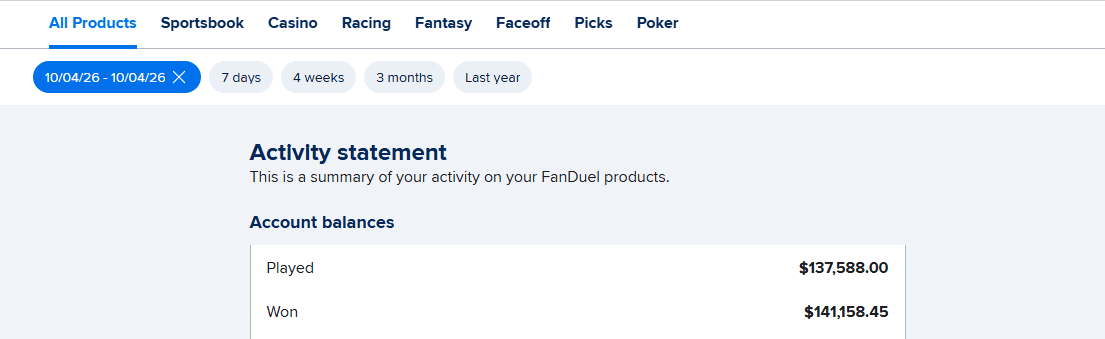
Sports Betting TikTok is the live betting account behind The Best Bet on Sports, covering NFL, NCAAF, NBA, NCAAB, MLB and WNBA markets in real time. The account has been limited on all six major U.S. sportsbooks — FanDuel, DraftKings, Caesars, BetMGM, Fanatics and ESPN BET — for winning on live betting, with $367,520 in verified profit since 2005. View full profile →
Past results do not guarantee future performance. Must be 21 or older to wager.
Related Articles
NFL Week 1 2026: Twelve of Sixteen Games Open Inside a Field Goal
NFL Draft 2026: How Quarterback Moves Shape Season Futures Betting
NFL Expert Picks: Chiefs vs 49ers — Breaking Down the NFL's Premier Rivalry
NFL Over/Under Betting Guide - How to Beat NFL Totals in 2026
How NFL Betting Units Work - A Complete Guide for Sports Bettors
Commanders 33, Seahawks 31: The Season's Biggest Upset
Get real live betting picks
From $39.95/mo · Cancel anytime · Email + Discord delivery
● Get The Picks
Choose your package
Tap any tier below to select · Subscribe in one tap
👇 Tap any package to select it
✓ You're selecting
25 Units · $99.95/month
25 unit picks per month. Sweet spot for most bettors — plenty of action without going all-in.
- ✓25 live betting selections/month
- ✓Email + Discord delivery
- ✓All sports (NFL, NCAAF, NBA, NCAAB, MLB)
- ✓Mix of 1, 2, 3, 5-unit rated plays
- ✓Cancel anytime
Secure PayPal · Cancel anytime · No hidden fees · 21+ · +$367K verified
+$367,520 verified · Limited on 6 sportsbooks · 20 years documented · See Proof
Join Our Newsletter
Get free expert sports picks and analysis delivered weekly.